 R2 Thoughts for You
What Should I Give Up To Forgive?
Posted on February 21, 2011 Leave a Comment

"Forgiveness is giving up hope that the past could ever have been any different."
What should I give up to forgive? What does that mean? After all, the word forgive contains the two words, “for” and “give,” which should mean I am “for giving” and not “giving up.”:-)

"To forgive is to set a prisoner free and discover that the prisoner was you." --Lewis B. Smedes
For this post, I will focus on the following two definitions of forgive.
1. to cease to blame or hold resentment against (someone or something)2. to grant pardon for (a mistake, wrongdoing, etc.)
Now, these definitions are all appropriate and I agree with their correctness. Having stated that, when I try to forgive a wrongdoing that affects me in a profound manner, I can’t simply grant pardon, cease to blame and/or hold resentment. I have found this to especially true when someone severely betrays my trust. But, who owns this problem of “me not being able to forgive?” ME!
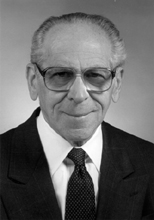
"The stupid neither forgive nor forget; the naive forgive and forget; the wise forgive, but do not forget" --Thomas S Szasz
As I have proclaimed in many of my posts, the main purpose of my blog is “writing for learning.” In this case, I am writing to learn why and how I can be a more forgiving person. Why should I forgive? That’s an easy question. Not forgiving is mentally unhealthy.
When I don’t forgive, I find I have vented-up anger. That anger causes undue stress on my body and, more importantly, undue stress on those close to me. Besides anger, other negative feelings such as hurt, hatred, resentment, dissension, ill-will, revenge and abuse can arise from not forgiving. Of course, forgiving usually has to be done by the person normally thought of as the victim. Considering that, how should “the victim” approach the act of forgiving and at the same time, shed the feeling of being a victim?
Let’s contemplate some different points of view of forgiveness and how they might give me a way to forgive.

Forgiveness means giving up all hope for a better past.” --Lily Tomlin
When I blame or hold resentment against someone or something, I have a natural feeling to want what caused the blame or resentfulness to be made right. Of course, it is usually impossible to go back in time and change what happened. So, what can I do, in the present, to change the past? Uhmmmmmm…? Here are some points of view about forgiveness that I find insightful.
“To forgive is to set a prisoner free and discover that the prisoner was you.” —Lewis B. Smedes
This quote suggests that I can treat need to forgive like the need to release a prisoner – forgiveness will set me free!
“The stupid neither forgive nor forget; the naive forgive and forget; the wise forgive, but do not forget” —Thomas S Szasz
Mr. Szasz suggest that if I am wise, then I will forgive, but not necessarily, forget.

"Forgiveness is giving up hope that the past could ever have been any different." --Oprah
“Forgiveness means giving up all hope for a better past.” —Lily Tomlin
Lily Tomlin’s quote gives me a way of living in the present and at the same time, facing the past.
“Forgiveness is giving up hope that the past could ever have been any different.” –from Oprah
I like this last one, from Oprah, the best. It is similar to Ms. Tomlin’s quote, but adds the realistic view that past is what it is! In order to forgive, I need to accept that the past will not change and therefore give up all hope that it could and will ever be different. I need to accept the past for what it was/is and use the present to help myself move forward.
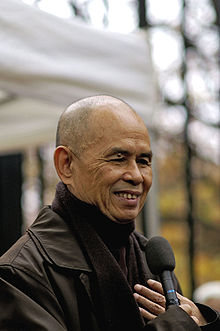
“When there is a mature relationship between people, there is always compassion and forgiveness.”--Nhat Hanh
Thich Nhat Hanh, a Buddhist monk, is quoted as saying:
“When there is a mature relationship between people, there is always compassion and forgiveness.”
I’ve read that Nhat Hanh’s key teaching is that, through mindfulness, we can learn to live in the present moment instead of in the past and in the future. Dwelling in the present moment is, according to Nhat Hanh, the only way to truly develop peace, both in one’s self and in the world. For me to be present in the present, I must forgive or be doomed to trying to make the past different – an impossibility!
Ok, so what, specifically, should I do if I want to forgive? Though, not necessarily easy, I think the following steps will give me a method that enables me to forgive.
1) Choose the intent to forgive.
2) Allow new feelings to come in while still experiencing the anger, hurt, hatred, etc. left from the blame and resentment.
3) While experiencing the negative feelings, I need to constantly say to myself that I no longer want these feelings to be a part of me.
4) Be patient while I give up all hope that the past could ever have been any different.
Forgiveness is a form of healing. Healing, whether mind or body, takes time. In other words, I can’t expect forgiveness to instantly happen. Like a wound on my skin, I need to take care of it and be patient while it heals.
So, what should I give up to forgive? I should give up all hope that the past could ever have been any different!
Can I? Yes!
Have I, yet? No!
Will I? Yes! :-)

Who Should You Be?
Posted on February 17, 2011 Leave a Comment

Who should you be? The only person who isn't taken. YOU!
Who should you be? Probably, you know the answer, immediately! Who should you be? The only person who isn’t taken. YOU! :-)

"People who are trying to not be themselves are fighting against themselves!"
On the surface, this sounds obvious, but many of us are often not trying to be the “only person who isn’t taken.“ The people who are trying to not be themselves are fighting against themselves. They are literally living a lie. This is a lie that can only be corrected when they are true to themselves.
Ok, so let’s assume you agree that you should be yourself. How do you do it? How many times in the past have you had the opportunity to be yourself and instead, chose to be something different? For example, perhaps you wanted to impress someone by pretending you had a lot of experience that you didn’t really have. Maybe you purposefully implied that you knew something that you didn’t know in order to make a favorable impression. In order to be yourself, you will have to “unlearn” all of these parts of you that have been misrepresented.

Really, is it more risky to be yourself compared to someone else?
Is it risky to be yourself? As you unlearn the parts of you that aren’t the real you, you will have to take risks. Most likely, the main reason you were not yourself in the past is due to not wanting to risk your self-esteem. Yes, being yourself involves risk. But, not being yourself often results in living a lie. And, living a lie is often risky because you have to be concerned/worried about others discovering the truth. In other words, there is risk involved no matter which route you take – trying to be yourself or someone else. So, why not be your true self?
So, again, how do you do it? What are some techniques that you can use – other than unlearning the parts that aren’t really you? One technique is to try being yourself for just one day. For one day, do only what your inner-self “tells” you to do. Forget or unlearn what isn’t the real you and do what you think reflects what your inner-self thinks you should do.

This is the way I express myself! :-)
Another important consideration when trying to be yourself is the need to express yourself – to show the world who you really are. This need is demonstrated in many ways. Some examples of this need expressed, at different age levels, are: an infant’s cry, a teenager’s stylish expression and an adult’s need to display maturity. It’s natural to want to express yourself and it’s important to make sure the “person you are expressing” is YOU!
We all have a deep psychological drive to be “present in the present.” In other words, we all have needs that can only be satisfied in the present. The greatest of these needs is to make clear to the world that “I am!” This is closely related to the identity statement of, “I am me” or “I am who I am.” The point is that you are who you are and not someone else. It is natural/normal for you to want your presence recognized and valued by others. It is much more difficult for that to happen when you are trying to not be yourself.
In summary: trying to be yourself, doing what your inner-self tells you to do and satisfying the need to express yourself, leaves you with only one true path to follow in life – your path. Perhaps, Shakespeare said it best in his play, Hamlet: “To thine own self be true.”
Who should you be? The only person who isn’t taken. You! :-)
Should You Always Tell The Truth?
Posted on February 14, 2011 1 Comment

"If someone asks you whether or not you like her recent hair style and you don't, should you be truthful?" This woman is modeling "Bandeau Imperatrice" hairstyle.
Recently, I had a discussion with a friend about the duality of truth and lies. We discussed whether the opposite of truth is a lie and vice-versa. Much of our discussion involved whether telling the truth is always the best policy. For example, if someone asks you whether or not you like her recent hair style and you don’t, should you be truthful?

George Washington could not tell a lie - he chopped down the cherry tree!
OK, so what are my thoughts regarding truth and lies? Well, first of all, a well-known statement comes to mind: “The truth hurts!” I have heard that many times and agree that the truth often does hurt. Of course, the truth may hurt when the truth is not what you want to hear and your self-esteem depends upon it. Often times, we want to hear the opposite of truth in order to enhance our self-esteem. But really, isn’t self-worth more important than self-esteem? Why maintain self-esteem and lower self-worth?
I think we sometimes know the truth when we ask a question, but the truth is not what we really want to hear. Why? Perhaps, because it will hurt our feelings. What we really are hoping for is someone to tell us what we want to hear and not necessarily, what is the truth. In this case, lying to protect the person’s feelings seems like an easier way to keep whatever relationship we had before the lie.

How does she look? Remember, lying to protect someone else's feelings can be very damaging in the long run.:-)
Actually, I think lying to protect someone else’s feelings can be very damaging in the long run. When we know the truth and we tell a lie, we have to then know both, the truth and the lie. This leads to confusion and dishonesty in the relationship. I think humans are programmed to seek the truth. Lies go against human nature.
Let’s focus on truth and lies in relationships, and not in, for example, law, sports, government, politics, contracts, business, retail, etc. Lying to someone, no matter what the relationship, can be devastating and may undermine the integrity of the relationship for a long time. Think about it, how do you feel about someone lying to you? Do you really want those around you to withhold truths that they think aren’t what you want to hear? Or, would you rather hear the truth, no matter what?

"Lies are 'rooted' in truth - the yin and yang?"
Consider the yin and yang of it. What do I mean? Well, in our minds, when we consider telling the truth, we must weigh it against the apparent hurt the truth will cause. In other words, we need to seek balance. For every truth, there is a lie that could be told. But, how do we know how much the truth will help or hurt as compared to a lie? We don’t!
If we lie, we must know that what we did is not “real.“ We are attempting to “live a lie.” We are trying to make reality fit our thinking instead of making our thinking fit reality. Eventually, we will have to face reality (since the only place we can live is in reality) and own-up to our lie. This happens constantly in life. For non-relationship examples, consider such issues as global warming, war, Enron fraud, Bernie Madoff, etc. All of these have lies at the center of the problem. I’m not proposing they are lies, but only that they became a problem because of lies.

I don't see any global warming!
How do you like the truth? Up front with no regard for your feelings? Or, do you like it tactfully, with affection and softness, such as “Please remember, we said we’d be up front and truthful with each other, so here it is…” or “I don’t know everything, but here is what I think about…..” My guess, is you like the truth delivered tactfully.
I think the truth doesn’t have to hurt. It’s not the truth that many people don’t want to hear, but the spirit in which the truth is given. What really hurts is feeling we have to, or must, cover-up our true thoughts and emotions. If we want our relationships to get bigger and stronger, then honesty and truth must be our ultimate goal.

"What really hurts us are the lies. The truth does the opposite, it heals."
Of course, we will not always be truthful. That is human nature, which is an integral part of all of us. Since we are human, we are not perfect. Having stated that, it’s important that we set aside all ideas that deception of those close to us is something we should do for anyone’s good. Hiding the truth leads to living a life of lies. None of us need that.
Considering truth and lies, what really hurts us are the lies. The truth does the opposite, it heals. The truth sets us free! Set yourself free in life and never have to worry about what is right or wrong. Be an imperfect person who strives to be a truthful person. That’s making your thinking fit reality!
Should you always tell the truth? Only when you shouldn’t lie! :-)
Are You Taking The Good Things In Life For Granted?
Posted on February 10, 2011 Leave a Comment

Cherry blossoms! A good thing that is taken for granted? :-)
Are you aware of any good things in your life? I know that I need to constantly remind myself of the good things in mine. Are you like me, in that you often take things for granted? Why does it often seem like we are programmed to take the good things in our lives for granted?

This man seems to appreciate the "good things in life." (Retired Man For Good Life Issue)
My “mind’s memory” often screens-out the bad things and only allows me a subconscious memory of the good. This has been true for all of my life. When I concentrate and/or meditate on a time period of my life, I can remember bad things, but during most of my waking time, my mind seldom “brings-up” the bad.
OK, so how does not being aware of the bad things in life affect me? Well, I think, in a way, it forces me to take-for-granted the good things. If all I subconsciously remember are the good things, then how do I really know they are good? Now, stay with me on this – I think that balance, in the sense where I balance the good with the bad, would and should allow me to not take the good things in life for granted. How can there be balance when my mind is only considering “one end of the balance scale?”
Now, it is somewhat obvious to me, that I need to consciously think about the good and bad things in my life. Of course, I don’t know about your situation, but mine is such that I have a lot of good things that I should be aware of. Really, here I am sitting at a computer and typing this post, while in relatively good health with a satisfying life-style and wonderful friends.

Here's a person concerned about balance!
Please, don’t be deceived by my choice of adjectives, in the preceding paragraph, regarding my health, life-style and friends. I’m the first to admit that all three are always changing. Then again, life is a series of changes and my health, life style and friends are always changing. Right now and in the foreseeable future, the adjectives of good, satisfying and wonderful seem most appropriate.
Good, Satisfying and Wonderful! I (now) think it is very important to express these positive feelings in words. Doing so, brings them to the conscious part of our thinking and therefore, gives us a more joyous and fulfilling life. Most likely, all of us could and should express our feelings of gratitude for the good things we have in life. This will not only help us, but it will also help others to realize and feel grateful for the good things they have. The expression of gratitude can be contagious!

Cupid making a list of the "good things in life.":-)
One last confession to make to you, the reader – I did make a list of the good things in my life that I thought I was taking for granted. I was amazed at how hard the list was to start, but how easy it was to continue. Once I got started there seemed to be no end. Wow, what a good feeling it was to focus only on the good things in life AND not take them for granted!
Are you taking the good things in your life for granted?
Does What Others Do, Bother You?
Posted on February 7, 2011 Leave a Comment

Does what others write bother you?
Does what other people do bother you? Are you often bothered by the things that other people do? When you reflect on it, does it happen more times than you’d like?

Should I, the captain, resign?
I did a post in May of 2009 entitled, “Are You Captain Of The Universe,” where I argued that if you are such a “captain,” then you should resign your position. Click here if you would like to visit the post. I mention that post because if you are letting what other people do bother you, then perhaps you are at least, subconsciously, considering yourself a Captain of the Universe. You see, people who are easily irritated by the things that other people do, often blame others for their irritation. They also tend to think these other people should do what they think is the right thing to do – they want to take charge like a captain of a ship.
For those that are bothered by what other people do, what are their reasons for being bothered? Where should they look for the reasons? As mentioned before, they generally blame other for being bothered. In other words, they are blaming the person(s) who they are bothered by for their irritation. Does that seem reasonable? Who owns your feelings? Is it reasonable to give someone else control over your feelings? I don’t think so!

Does what others do, bother you?
Often, when a person is bothered by what other people do, s/he thinks there is a right AND wrong way to do almost everything. This is an easy trap to fall into. Speaking from personal experience, it’s very easy to think that, “my way is the right way.” So often in life, we are expected to make decisions where we must choose the “right way.” For example, think of driving, shopping, raising a family, working, etc. For all of these normal things in life, a person is encouraged to make decisions that are considered to be right or correct. I think it’s easy to, at least subconsciously, fall victim to thinking that the decisions are ones that involve one right and one wrong choice. It is also easy to expect others to think similarly. I’m not stating we should have these expectations, but when we do it often leads to us being bothered by what other people do.

Rules, not just for you, but for everyone!
It’s fine for a person to have rigid rules for her/himself, but it’s not fine for the person to compel others to follow these same rules. Too often, others see this compulsion as an irritant and will break the rules out of spite. Even if a person goes along with the needless rules of the compulsive person, it’s usually for keeping the peace and not because s/he agrees with them.
Perhaps the most important negative consequence of being bother by what others do is the unhealthy relationships that are created. A relationship that is the result of someone going along with your unnecessary rules/expectations is imbalanced and insincere. And, of course, if the relationship is the result of someone who constantly breaks your unnecessary rules, then it will be imbalanced and filled with exasperation.

You want me to take inventory of my self-imposed rules?
For our own well-being, I think it’s important for each of us to take inventory of the self-imposed rules we live by and get rid of the ones that serve no purpose other than keeping us confined and stressed. Most importantly, we shouldn’t directly or indirectly force our standards on others. If you do, then you are assuming the role of a captain of the universe and undoubtedly, are letting what others do bother you.
So, does what others do bother you? If so, then are you the person who can change what the others are doing? Are you in charge of them? Are you their captain? If so, then RESIGN your command and let them take charge of themselves. Each person must be her/his own captain – in charge of her/himself!
Knowing that I’m not in charge of what you do, I encourage you to take charge and leave a comment. :-)
What’s Redeeming About Dreaming?
Posted on February 3, 2011 Leave a Comment

Hollywood Actors Dream Roles: Actor Roddy McDowall as Ariel in the Tempest.
One possible meaning of the word “redeem” is to fulfill. Is there anything redeeming about (lucid) dreaming. Does it help a person become fulfilled? I think so!

Can you dream that you're in the middle of a scene that looks like an impressionist's painting?
Let’s start this out with a dream. If you could live and play in an environment that was your perfect dream-place, what would it be? What kind of place or environment would allow you to be the best person you could be? OK, take a few minutes out of your busy life and DREAM!
Have you done it? That is, have you completed your dream? I didn’t ask if you accomplished your dream – only, did you actually dream it? :-)
Let’s assume you did the dreaming – so, where was it? Were you in the middle of a scene that looked like an impressionist’s painting? Were you in the middle of a big city like downtown Chicago? Were you on top of a cliff overlooking an ocean that looked like it went on forever? Maybe you dreamt you were in another country. The possible places are only limited by your imaginations.
What was the decor like in your dream? If your dream took you to the woods, was the decor rustic or traditional country? Did your dream have you in the middle of a desert or on a glacier? What did it look like around you in your dream?

"What are the chances of a painter creating a picture of a vase of flowers, without first, having a vision or dream of what it should look like?"
Is your dream in a place that you can really visualize? Can you put yourself in the life of your dream and know what it feels like? Can you smell it? Can you taste it? In other words, can you “sense” it? I ask these questions because, I think if you don’t have clarity regarding what your ideal environment is like, then you most likely will not be able to create it. Think about it, what are the chances of a painter creating a picture of a vase of flowers, without first, having a vision or dream of what it should look like? Slim to none, I think.
Before our mind can give us what we want, we must have a clear and strong idea of what that is. We must give strong, vivid and frequent visualizations of our ideal/dream place to our mind before our mind will be able to focus on it. And, if you are going to dream, then make your dream as big as you can. Big dreams and small dreams take the same amount of mental time.
Due to my age and experience, I have known many who have realized their dreams. But, what were their dreams? One of my friend’s dreams was to retire and do nothing. Well, he retired and did nothing and now is tired of doing nothing. The point here is to illustrate that we must be careful regarding our dreams and whether they are really dreams for making our life better or, for example, just escaping our current and temporary hectic life.

Don't stop before you start!
Perhaps, the most important lesson from not dreaming is the old, “stopping before you start” syndrome. Don’t quit before you start or when the going gets tough. Of course, quit if you aren’t willing to ask for help. Quit if you don’t believe you can. Quit if you don’t think you deserve it. Quit if you think others are better than you. Quit if ……………..
Don’t quit — believe you can! After all, it’s only a dream. :-)
So, what or where is your dream place? Now that you have dreamt it, start working toward realizing it.
What’s redeeming about dreaming? It’s a good start toward a fulfilling life. Wow!
Is Life Always Broken?
Posted on January 31, 2011 Leave a Comment

LIFE cover 12-28-1953: Mosaic of the Madonna and Child on a background of gold at the Basilica of St. Mark
Is life always broken? Well, yes and no! In one sense, life is broken in that it has a beginning and end. It’s broken into states of being awake and sleep. But, it’s not broken in the sense that we are either alive or not! Let me explain what inspired the question in the title.

Like the Madonna in the above pictured mosaic, "a life is like a mosaic - it is a whole made up of broken (events)."
Recently, I heard the word “mosaic” used on a radio talk show. The person who used it, followed with a simple explanation that a mosaic is a whole made up of broken pieces. I think that her simple explanation of a mosaic is an excellent metaphor for life. A life is like a mosaic – it is a whole made up of broken events. Now, let me clarify the use of broken; I don’t mean for the word “broken” in this mosaic metaphor to imply any strong negativity regarding life. If you think about it, usually an event is only an event when it has a start and finish, therefore broken within a continuum of time. When we look back on life, don’t we see it in terms of different phases, levels, eras and/or events?

A "life-mosaic" can be damaged just like this "Damaged Roman mosaic depicting Alexander the Great (L) engaged in battle w. a chariot riding Darius III, king of Persia, at Issus"
So, how can viewing life as a mosaic be of help to us? I don’t know about you, but I often find myself thinking about my own life in terms of a few outstanding past events and whatever is presently happening. In other words, I am incorrectly thinking that my life is just a few broken pieces and not as a beautiful mosaic of which the new broken pieces are being added to create an even bigger one. Another idiomatic saying that illustrates this is: “We can’t see the forest for the trees.” Though that saying is good, for this posting, I will stick with the use of a mosaic for my metaphor.
The main point of using mosaic as a theme for this post is how it fits as a metaphor for a life. The mosaic can be a beautiful work of art where the finished product is made up of many broken parts that by themselves, lack the completeness and beauty of the whole. When attending a memorial service for someone who has died, I’m often reminded of how a life has such a “mosaic-quality.” It is not unusual for those in attendance at such a service to make remarks about how the deceased would have loved the memorial.

"Can't see the 'Joshua Tree' forest for the trees!":-)
What is meant by those who remark that the deceased would have loved the memorial? Usually, I think, it is how beautiful her/his life was when viewed holistically. Not the view of the last-days or one particular incident, but from childhood to the end. Various events are pointed out, happy times remembered and interesting stories told that demonstrate how the life of the deceased is so fondly admired. In other words, all the broken events in one’s life creates a “mosaic work of art (life).”
Do you see your life as a beautiful mosaic?
Are You Longing For Lifelong Learning?
Posted on January 27, 2011 Leave a Comment

The beginning of lifelong learning?
Are you a lifelong learner? Have you grown up resisting learning? Is learning something you dread? Do you avoid learning whenever possible? Do you ever stop learning?

Lifelong Thinker! :-)
I think many people would give some “negative-leaning” answers to previous five questions. Most humans are born with a natural desire for learning. Most young children have a vibrant curiosity that allows them to investigate and/or study almost anything. So what happens as we get older? Why do so many of us view learning as difficult and unpleasant? Many of us start out as active learners, ready to learn almost anything, and then end up turned-off to learning. In fact, I know people who immediately say no to anything that involves learning something new. Why?
Before I address the why of learning that is turned-off, I think it is interesting to note that if you “google” lifelong learning, you will get over 500,000,000 hits. Wow! Yes, that is impressive, but what does lifelong learning mean to most of us? I think most of the websites about lifelong learning refer to programs for adult education classes.

What do children learn when you say your bored?
There is nothing wrong with adult education classes, but learning is something that we should always be doing and we shouldn’t wait to take a formal class. In fact, I think humans are always learning, but an important question is, “What are they learning?” It seems to me the word “focus” should come into to play here. You see, whatever we focus on, either consciously or subconsciously, is usually what we end up learning something about.
Of course, interest also plays a role in most of our learning. A synonym of interest is curiosity and as mentioned before, almost all children have a vibrant curiosity. OK, so you can most likely see where I’m going with this. We, as humans, are born with a natural curiosity and desire for learning. Sometime, during our childhood, we seem to lose this curiosity and desire. Why?

A bored child. This doesn't look like the beginning of a lifelong learner!
Maybe some of us get turned-off to learning because that is what we are taught to do. Whaaaaat…..? Parents, relatives, teachers, religious leaders, government officials, etc. often teach us, through what they do and how they do it, to expect failure, boredom and disappointment from what we do in life. Many of these people are held in high esteem by children and therefore are believed. Children often behave based on what they believe. In fact, adults usually behave based on what they believe. If we don’t have anything in our education to counter these negative beliefs and behaviors, then they become part of who we are – people who think that learning means failure, boredom and disappointment. OUCH!
So, what should we do, if we have a negative attitude toward learning? Unlearn that negative attitude. Failure is normal. Learn from it. Boredom is a mental feeling that only the person who is bored is responsible for. Disappointment, I believe, is a normal feeling that when experienced, should be treated as an emotion to learn from.

It's great to know that failure, boredom and disappointment are past and present concepts that do not imply what will happen in the future.
All three of the previously mentioned feelings – failure, boredom and disappointment – are past and present concepts that do not imply what will happen in the future. Learn from them and move on. Is that a simple answer? Yes and no. Yes, in the sense that describing what to do is short and easily stated. No, in the sense that doing it must be done over a complete lifetime with many failures, boring times and disappointments. In other words, we must always be learning how to learn. Also, many studies have shown that active learners stay healthier, live longer and have an outstanding quality of life. Yea!
So, if life is what you want, then lifelong learning will help it last longer with better quality. Shouldn’t we all develop a longing for lifelong learning? Longing for lifelong learning! Don’t you love the aliteration? :-)
Why Affirmations For Positive Change?
Posted on January 24, 2011 3 Comments
Visualize - Affirm - Change
In a recent post on change, I made reference to affirmations. I mentioned that if you want to change, one way of doing so is to visualize your change, make what you visualize into an affirmation, and repeat the affirmation over and over and over… For this post, I will discuss affirmations and how they can help us facilitate the personal change we desire.

Affirmations can help you change!
So, what should you do in order to change and become a better person? This is an important question for all of us. When you are faced with the realization that something you are thinking and/or doing is not helping you to be that better person you want to be, then what should you do? One good tool to use is an affirmation. An affirmation, something that you assert strongly, is a present-tense, positive statement of a desired outcome.
In order to change in a positive way, you need to know what the change is and then set out on a plan for changing. Usually, knowing what the change is means you must first stop what you are currently thinking and doing. Then, visualize what the new thought or deed should be and change. It’s the “and change” that becomes the hardest for many.

Using affirmations I have changed my rage to contentment!
The “and change“ part is where the tool of affirmation can help. For example, suppose you want to become a better person by not becoming full of rage every time someone does something to you that you don’t like. A specific example might be the rage you feel when, while driving, someone cuts you off and glares at you as if you have no right to be on the road. In order to become a better person, you decide that you want to become, in general, a more loving person and specifically, a person who treats all people with respect and courtesy in every possible circumstance. This changed way of treating people now becomes your affirmation.
Given the before-mentioned affirmation, what will happen the next time someone cuts you off? It’s possible you will still respond, almost automatically, in a most disrespectful manner! Does that mean that this idea of becoming a better person, using affirmations, doesn’t work? Not really!

Did Dr. Martin Luther King use affirmations?
You see, before, when you responded in the disrespectful manner, you probably would not have recognized your disrespectful behavior as anything different or unusual. Now, because of your affirmation and the promise to yourself, you would most likely feel a sense of guilt. You now know this is not the way you want to behave and realize that is the way the old you acts. You say to yourself that next time, “I will respond differently.” Therefore, your affirmation gives you the visualization and direction to change into someone who intends to behave in a respectful and courteous manner, no matter when or how you are provoked.
By saying your affirmation over and over again, you visualize and realize how your new behavior feels – day in and day out. After awhile, your new and desired behavior will become second nature to you. In this manner, you eventually will not remember any other way.
Affirm yourself into being better!
Affirm yourself to comment! :-)
Why Not Change, For A Change?
Posted on January 20, 2011 1 Comment

Change is inevitable! Yes, this animal WILL change!
The only thing that is constant is change! To change everything simply change your attitude! Change is inevitable! To learn means changing your mind! These are all statements about change that I have heard and used through most of my adult life.

"The universe (Milky Way) is change; our life is what our thoughts make it."
Many well-known people throughout history have made insightful statements about change. For example: “Nothing endures but change” is a quote from Heraclitus (540 BC – 480 BC). The statement is similar to my first statement: “The only thing that is constant is change!” Another quote, from a person who lived a long time ago and has a similar message that brings our thinking into the process, is from Marcus Aurelius Antoninus (121 AD – 180 AD): “The universe is change; our life is what our thoughts make it.” The simple word, change, represents an important concept for humans. We can’t avoid change and we shouldn’t ignore it.
A question involving change that I have often heard and asked is: “If you could change one thing about your life, what would it be?” When thinking about this question one must realize that many things in life cannot be changed. We cannot change how tall we are nor can we change how old we are. On the other hand, we can change many things that we think are impossible at first glance.

Eat the sandwich, one bite at a time!:-)
Many of us want badly to change something that is changeable, yet we are unsuccessful. Why? Wanting to badly is a wonderful start. Having stated that, wanting to badly usually won’t get you anywhere, by itself. Actually, neither will the use of affirmations and visualizations, if that is all you do. This is because when we want to make a major change in our life we often try to “bite off too much.” Think of a change that you want to make as the act of eating a big sandwich. In order to eat the sandwich you must consume it one bite at a time. If you try to eat it in one bite you are overwhelmed by its size and either give up or choke! Either way, change in that manner is usually impossible.

Affirm over and over again the change you visualize!
If you really want to get started making a major change in yourself you should pick one reasonable/small part of the change to begin with. For example, suppose you wanted to become a more loving person with your mate. Instead of trying to change everything that causes you to not be a loving person, you should, instead, choose one part of your relationship that needs improvement. You might focus on always being cognizant when your mate is in your presence. This concept of “being present in the present” is valuable as motto to follow always and is especially so when relating to loved ones. This would be an excellent “first bite” toward consuming the “sandwich” of becoming a more loving person with your mate.
In general, make the change you want into an affirmation and repeat it over and over and over… Visualize how you will feel and behave after the change is made. Keep repeating your affirmation that supports your visualization. Make a plan, have sub-goals (those bite-size changes), and develop tasks that support the change. Hold yourself accountable and reward yourself as you achieve your sub-goals.

Consider your life to be your house in which its biggest room is the room for CHANGE.
Don’t worry about how long it takes — only be concerned that you are on track and working toward the change you want. Keep track of your progress and keep in mind that the journey is more important than the destination.
Life is a journey of constant changes, of which we have more control of than we often realize. Embrace change and make it a positive for your life.
Finally, here’s another (metaphorical) way of thinking about changing. Consider your life to be your house in which its biggest room is the room for change. Now, make that room for change a room for improvement and you will be on your way to having a better life.


 R2 Thoughts for You