 R2 Thoughts for You
Why Question?
Posted on December 13, 2010 1 Comment

How about this question?
Is it possible to write a complete posting on my blog using only questions?
Do questions help keep the reader’s interest?
Will you, the reader, be able to understand this message, if the message contains only questions?
What is Socratic Questioning?
Do questions cause you to think of more questions?
Why do questions make us think?
Do answers cause you to think of more answers?
Do questions or answers drive thinking?
Do you find this posting more confusing and/or thought-provoking, than ones that contain most sentences that are not questions?
Is your mind “swirling” and your nerves “on edge” because of the questioning format of this posting?
Do you like “thought-provoking” questions and/or “fun” questions?
Are these “thought-provoking” or “fun” questions?
*What is the most fundamental concept of human thought?
*Do we live in our minds?
*Should we try to make reality fit our thinking or should we try to make our thinking fit reality?
Are these “fun” or “thought-provoking” questions?
*How far east can you go before you’re heading west?
*Are eyebrows considered facial hair?
*Why does caregiver and caretaker mean the same thing?
*Why are there interstate highways in Hawaii?
*If there’s a speed of sound and a speed of light is there a speed of smell?
*What do Greeks say when they don’t understand something?
*If prunes are dehydrated plums, where does prune juice come from?
*What is another word for “thesaurus”?
*If you try to fail, and succeed, which have you done?
*What’s a question with no answer called?
*What’s an answer with no question called?

Do questions make us think?
OK, why questions? Do you think that questions, more than any other single thing, cause humans to create new thoughts? Are the new thoughts that are caused by questions, tend to be different points of view, connections of concepts, intellectually interesting inferences, etc.?
This posting was the result of a single question in my mind. “Could I write a post for my blog using only questions?” The answer – I almost did! :-)
I end with a poem, containing only questions, entitled:
FOuR HOW, WHERE, WHY, WHO, WHAT and WHEN?
–Ron Rogers
How many breaths will it take to run a mile?
 How many seconds will it take to wait a while?
How many battles do we need for us to win?
How many delays do we need before we begin?
Where are we going in order to be here?
 Where are the assured when they feel fear?
Where are the signs on the road to success?
Where are the repressed when we confess?
Why do we smile when one makes a gaffe?
 Why do we cry when we laugh?
Why do we love what others hate?
Why do we depend so much on faith?
Who is alone and lives in a city?
 Who is successful but deserves our pity?
Who is unfaithful but receives our trust?
Who is unfair but still is just?
What is hot and also cold?
 What is young when our wish is old?
What is east as well as west?
What is known and not assessed?
When does time explain the present?
 When does youth become adolescent?
When does friendship become love?
When does reality make an example of?
What are your comments?

Why, Generally, Does It Have To Be Bad To Be Newsworthy?
Posted on December 9, 2010 Leave a Comment

Is this newsworthy?
Recently, I heard someone make the following statement: “Why is the news so bad, isn’t there anything good to report?” I have had that same thought many times throughout my life. I have not done a statistical analysis on this, but I think that during a thirty-minute news program, at least two-thirds of the program is about negative or “bad” news. I’ve always thought that all we need to do in order to have positive news, is to simply find and report it.

Stocks are up, but I didn't buy any! Is that BAD news?
Now, I’m unsure about simply saying “good or positive” news is something that we can find and then report on it. You see, I think we really won’t consider “good or positive” news, worthy of being broadcast as news. In other words, we really don’t want good news – we want news!
I know you are probably thinking, “what does he mean – news, but not good news?” Here are some definitions of news: (1) a report of recent events (2) previously unknown information (3) matter that is newsworthy (4) something significant that happens (5) interesting or important information not previously known or realized. I copied all of these definitions from various on-line dictionaries and for my purposes here, I would like to focus on the last one. News – interesting or important information not previously known or realized. On the surface, I think the definition is clear and straightforward. But, when we think deeper into what “not previously known or realized” means when applied to the way we use the news in today’s society, an “AHA” moment occurs.

Gas is high and it's perhaps causing global warming. I have plenty for sale. Is that news?
Something positive or good, generally, isn’t something that’s “NOT previously known or realized.” There are many people doing many great things all of time. Consider where you are as you read this. Think about all of the people in the immediate area where you are located. What are they doing? Perhaps, some are cleaning, some working, some are exercising, some are … The point is, that most, if not all, are doing good and positive things. News must be interesting or important information not previously known or realized.
If we reported on what the large majority people were doing on a regular basis, it wouldn’t be news. It simply wouldn’t be considered interesting or important information not previously known or realized. Why? Well, as mentioned before, I believe most people are doing good and positive things on a regular basis. Reporting on what most people are doing wouldn’t be news. News, must be out-of-the-norm. It must be unusual. It must be not previously known or realized. Therefore, when someone commits a horrible crime, it is news. When someone does a heartwarming act, it is the norm and therefore, not “newsworthy.”

I'm a law-abiding person and I take good care of my dog. Is that news?
For one of my jobs, many years ago, I met with representatives of the local newspapers for the purpose of trying to get the newspapers to give more positive recognition of the accomplishments of our local high school students. In the meetings, the representatives from the newspapers would emphasize the need for fair and balanced reporting of the students’ accomplishments. When I asked them what they meant, they responded with fair, meaning: the accomplishment must be deserving of recognition, and balanced, meaning: equal recognition for all schools in the area. I told them that was unreasonable since, if one school won first place in the state and only one first place award was given, then it’s impossible to equally recognize other schools for such an accomplishment.

If you saw me, would it be news?
While meeting with the newspapers’ representatives, I also argued that if a group of students in a school did something “negative,” such as steal all of the computers, then the newspapers would report it, but if the same students did something positive, such as win a state-wide contest in mathematics, then we would be lucky to have the students mentioned in the paper. The negative event would be “front-page news” and the positive event would be “last-page mentioned.”

Where no news is good news!
The interesting thing about this conversation with the representatives from the newspapers is that they agreed with me. They proclaimed that the negative event is more newsworthy than the positive event. Why? Because, most of the time, students are winning awards, not stealing, doing good deeds, etc. and only when they do something out-of-the-norm, i.e. bad, do they do something that is NEWS! Ouch!
So, why, generally, does it have to be bad to be newsworthy?
*To be newsworthy, it must be something that’s interesting or important information not previously known or realized.
**We know that most of what humans do is good.
***When bad things happen, that is the exception and not the rule, therefore, the bad or negative events are interesting or important information not previously known or realized and that’s NEWS!
So, generally, does it have to be bad to be newsworthy? Yes! :-(
What do you think?
Is It WORTH Knowing Your PURPOSE?
Posted on December 6, 2010 2 Comments
For well over eight years after I retired, I had a fundamental question in my mind. The question was: “What is my purpose?” In other words, does my life have an important purpose? This question arose quite unexpectedly. You see, I retired over ten years ago and my purpose before retiring, though not explicit in my mind, was my profession.

What is the purpose of this meeting?
Before my profession, my purpose was being a student and preparing for the profession. But when I retired, I discovered that I was confused about the apparent lack of a “sense of purpose.” I remember telling anyone who asked me what retirement was like, that I unexpectedly found it difficult to find a sense of purpose. I guess I had never thought purposefully about purpose until then. “Purposefully about purpose” – don’t you just love that statement? :-)
OK, so what is my purpose, now that I have had over ten years to think about it? That’s still a good question. I want my life to have an important purpose, and I know I’m the only one who can determine what that purpose is. Looking back on my life, I now realize I sincerely believed that being a good teacher – my profession for most of my working life – was an important purpose in my life. So now, since I’m no longer teaching, what is my purpose? I didn’t realize before retirement, that I would need to rethink my purpose when I retired. When I bring up this issue with fellow retirees, I often get a confusing look. Some, if not all, seem to know what their purpose is, OR they don’t think it is important enough to even consider.

My purpose is to be worthwhile!
Before I go any further, I should point out a possible point of confusion. I have often confused purpose with worth. In this case, I’m referring to worth as a personal or moral value that’s not monetary. I now realize, that it is important to NOT look outside of yourself for worth. You see, at the beginning of my professional career, I would often judge my worth by how well I was doing in my profession.
Judging my worth by how well I was doing in my profession, as I see it now, was a mistake. When we look outside ourselves to feel worthy, we are creating a dilemma where we must constantly work for approval, acceptance, control and yes, even love, in order to feel worthy. We then make our self-worth dependent upon a career, an income, our appearance, our family, our neighbors, and the list goes on and on and on ….. If we lose our job, or our appearance (due to looking or feeling older), or our family grows older and moves, or our neighbors move, etc., then there goes our worth! Hopefully, you can see where I’m going with this; your self-worth must come from your inner-self. In fact, we all have an inner value, and it is there for each person to find for her/himself.

Everything is not quantifiable!
I believe a sense of purpose helps me live a more satisfying life. It is important for me to give meaning to what I do and NOT for what I do to give me meaning. Therefore, what is my purpose? My purpose is almost the same as it was before I started my profession — to be a student that is preparing for tomorrow.
Oh, and what is my worth? The only way I can answer that question is with a spin-off of an Einstein quote: “I’m non-quantifiable!” In other words, my worth is ∞!
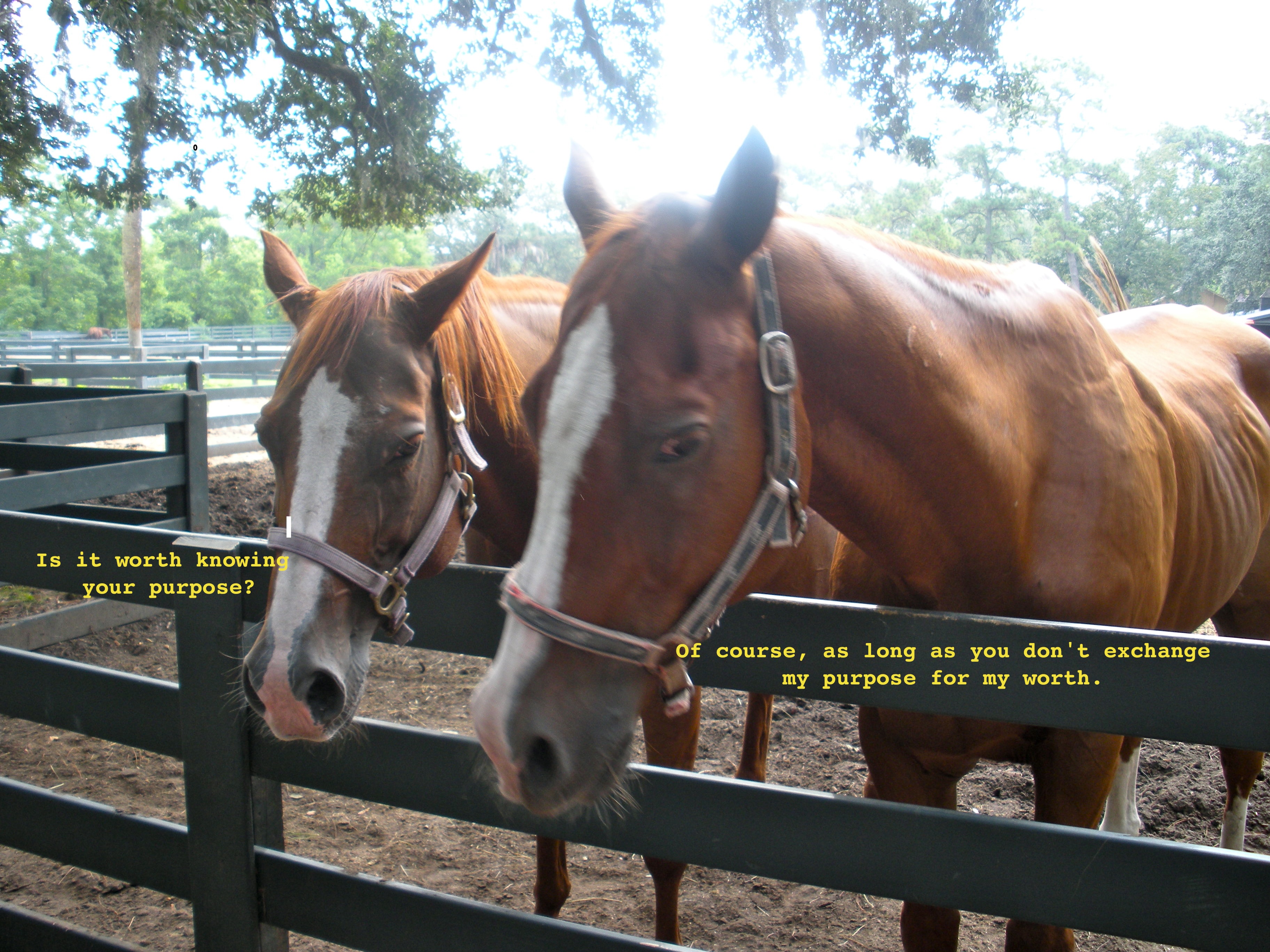
Is it worth knowing your purpose? Of course, as long as you don’t exchange purpose for worth. :-)
Don’t you think this is worth a comment? :-)
Does Pursuing Goals Conflict With “Enjoying The Moment?”
Posted on December 2, 2010 Leave a Comment

"Seize the moment" and visit New Orleans?
In many of my posts, I’ve written about the importance of pursuing goals. I have sometimes stated, or at least implied, that goals are essential to achieving overall success in life. Recently, I have been questioning that line of thinking. In other words, I have had some doubt as to whether or not I should take the approach of always pursuing goals in order have the best life.

If I'm constantly pursuing the goal of good health, then how can I enjoy the moment?
One of the questions that caused me to challenge this thinking was: “If I’m constantly pursuing goals, then how will I ever be able to just ‘enjoy the moment’?” You see, constantly pursuing goals seems contradictory to another fun and exciting aspect of life – spontaneity. If we do things spontaneously, are we destined to not have success in life? In other words, is it true that success depends upon establishing, pursuing and not deviating from goals?
If I’m constantly pursuing goals, then how will I ever be able to just, enjoy the moment? A good question! So what’s the answer? Suppose my goal is to travel to Florida. I make my plans, I travel to Florida and stay in all of the places I have reservations for and then, an opportunity comes-up for making it an extended vacation. But, in order to take advantage of this new opportunity, I must give up some, if not all, of my goals for the end of my vacation, including many related goals once I returned home. In other words, if I pursued my original goals, I would not be able to enjoy the moment. There’s a conflict between pursuing goals and enjoying the moment!

Englewood, FL at sunset, Spring of 2005. From here to New Orleans. "Just enjoying the moment!" :-)
This has happened to me in the past. A particular example occurred in the Spring of 2005. My wife and I had bought a week’s use of a condominium in Englewood, Florida. While there, we received an e-mail from a friend who suggested that we go to New Orleans, LA after our week in Englewood. We had not planned for that, in fact, our goal/plan was to go home after our Englewood trip for a general Spring clean-up of our house and yard, culminating with a social gathering that we were hosting.
Now, I realize many of you might think changing the goal/plan of Spring clean-up, etc. to extending our current vacation was no “big-deal.” I’ll admit, that the main plan/goal of a general Spring clean-up, upon hind-sight, was not that important – that is, UNTIL you realize how my obsessive compulsive behavior affects my everyday thinking. Before I go any further with this, I should make clear that I have NOT been diagnosed as a person who has OCD (obsessive-compulsive disorder). I simply have “self-diagnosed” myself to better explain how I act and react. And, of course, I am obsessed and compelled to self-diagnose myself. :-)

"For my part, I travel not to go anywhere, but to go."
The previous story about extending a vacation, though not a life-defining moment, does point out a way of enjoying the moment and deviating from the overall pursuing of a goal. What I realized when I decided to extend the vacation was that I am not traveling to go somewhere, instead I’m traveling to go! Out of fairness to the author of Treasure Island, I must admit that the previous statement is a variation of a Robert Louis Stevenson‘s quote of: “For my part, I travel not to go anywhere, but to go. I travel for travel’s sake. The great affair is to move.”
I think that success in life must depend, on some part, the ability to enjoy whatever I can at any given time, even if it involves changing goals. There is an important aspect of living and being “present in the present” that demands we reconsider our goals (which are for the future) and consider an adjustment so we live the only time we ever can – the present!
Can It Be Great, If You Have To Wait?
Posted on November 29, 2010 Leave a Comment

"So what, if I have to wait - it can still be great!"
If you have to wait, can it be great? It depends! It depends upon what you do or can do while you wait. Let’s explore the question and what the answer depends upon.

Is it great to make them wait? :-)
What do you do when you are forced to wait for someone or something? I know when I have been stuck in traffic, I’ve noticed that a lot of people become angry. At least, that is my interpretation based on their body language, horn honking and the driving of their cars in and out of different traffic lanes in a dangerous manner. Also, I have talked to people who have told me stories of their frustration of having to wait in a doctor’s offices, check-out lines, license offices, registration lines, restaurant seating areas, post offices, etc. The number of different places and situations that provide us “opportunities” to wait are almost unlimited.

How can I make this wait, great? :-(
So, if you are like me and encounter many places and situations that cause you to have to wait, then how can this be great? Based on what I noticed while being stuck in traffic or the frustration expressed in the many stories about waiting in lines, I think many who are having to wait are experiencing harmful stress. The stress from waiting can be understood and dealt with. For more on how to find quick stress relief, please click here. Though the stress caused by waiting is real and can be serious, I’m not going to focus on that particular problem.
The main purpose of this post is to respond in a positive manner to my initial question: “Can it be great, if you have to wait?” You see, when you are waiting, you usually have two possible ways of handling your wait. You can either work yourself into a stressed-out mess or you can treat the time you are waiting as a gift or present-of-time. Some say that’s why the we call the “now-time” the present – it is a present or gift! :-)
This present is a gift! :-)
So, it can be great, if you have to wait, provided you are able to use the time you’re waiting as a present of time. (Pun intended with the double meaning of present:-) When you are waiting, consider accepting the situation and use the gift of time to create solutions to problems, commit to memory important information, read, develop goals, and/or do physical/mental exercises. These suggestions aren’t all-inclusive. There are many different ways that a person can make the present of time become a less stressful and positive growth experience.

Is it great that I'm a WAITer? :-)
Perhaps, the most important idea related to dealing with having to wait is to be mentally creative. Use the time to creatively think how you can become a better person. What good will you do to focus your thinking on waiting? How will you be able to live the best life you can by stressing out over having to wait? If you have to wait, don’t hate the time, but instead, use the time to create a better you. When you have to wait, create a positive attitude – something that only you can change.
There is another type of stress caused by waiting. It’s the stress one has when s/he is a procrastinator. Of course, this kind of waiting is more “self-caused” than the waiting one has to do when stuck in traffic, waiting in a check-out line, etc.

I'm not a procrastinator, I'll stop smoking tomorrow!
Procrastination usually implies the act of putting off tasks or actions to a later time or waiting to start a task or action until the last-minute. Is it great, if you wait to start a task or action until the last-minute? I think, for most people, it isn’t. This, of course, assumes you don’t have to wait, but instead, are choosing to do so. The waiting involved in procrastination isn’t great!
Excluding the waiting involved in procrastination, if you have to wait, then it can be great with the proper attitude. Most of the negativity encountered in waiting can be changed into a positive experience, if you choose to do so. It’s another case where, “to change everything, simply change your attitude,” is the best approach for improving your life experience.
Oh great, now I’ll have to wait for comments! :-)
What Does A Baby-Boomer Have To Be Thankful For?
Posted on November 25, 2010 Leave a Comment

Feeding Thanksgiving Dinner! ;-)
Having been born in 1946, I am considered a “baby-boomer.” In fact, the baby-boomer generation began with Americans born in 1946.
My father met my mother in 1944 while he was in the Navy, fighting in World War 2, and she was a comptometer operator in San Francisco. He was discharged in 1945, they married and I was born in June of 1946, along with over 3,400,000 other Americans, thereby “starting a boom” in the population that continued through 1964.
In the Spring of 1964, I graduated from St. Dominic High School in O’Fallon, MO, and five years later, in the Spring of 1969, I graduated from Truman State University (aka Northeast Missouri State University).

Let's Give Peace A Chance! A Symbol From The Sixties!
As you can see, I was in high school and college during the “sixties“ – the time when many expressions we currently assume always had meaning, actually came into existence. So, what are some of these expressions that are used when referring to that era?
The following are all expressions that I remember from the sixties. Each expression is in hypertext, in case you would like to read more about it. Also, in parenthesis, is the time in my life when I first heard the expression.
**Sex, Drugs and Rock N Roll (in college)
**Make Love, Not War (in college)

Shirtless male drummer & dress-wearing female flutist jamming during Woodstock music festival, Bethel, NY, Aug. 1969
**Flower Power (in college)
**Hippies (in college)
**Beatlemania (in high school)

The Beatles in 1964 - The beginning of "Beatlemania."
**Woodstock (Summer after graduation from college)
**Motown (in high school)

The Jackson Five with their parents, Joseph and Katherine. They signed with Motown in November of 1968
**Turn On, Tune In, Drop Out (in college)
**Civil Rights Movement (in high school)
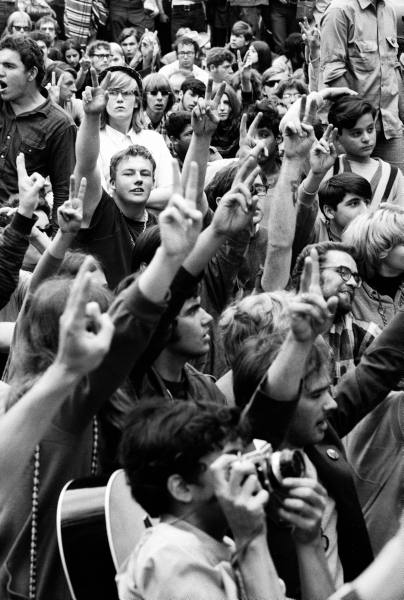
Peace sign flashing, anti-election protestors in Grant Park during a demonstration against the Democratic National Convention, Chicago, IL, Aug. 1968
**Yippies (in college)

Yippie led anti-election protestors outside City Hall, San Francisco, CA, Oct. 1968
**Man Walking On The Moon (Summer after graduation from college)

Astronaut Edwin Aldrin saluting American flag after being second man on moon during Apollo II mission, July 1969
Along with the expressions mentioned above, I’ve provided some pictures and/or symbols that reflected the era – the time when many baby boomers “came of age.” I hope you found the pictures interesting and enlightening.
Ok, now you can see a little of what this baby boomer encountered during the sixties. Perhaps, I should rephrase the question in the title and write, “What does the beginning baby boomers’ generation have to be thankful for?”
Should we be thankful for Beatlemania? Should we be thankful for Woodstock? Should we be thankful for the civil rights movement? Should we be thankful for a man walking on the moon? Should we be thankful for … I say, YES!
These are all important parts of our history. They helped shape our society into one that is much more diverse and rich in population, culture, art, politics, music, science, etc. We all need to be thankful for our history which helped us learn and grow into a generation that has more education, more privileges and a greater quality of life than any previous generation.
I’m thankful today for my life – truly a gift, which is why it is called the present! :-)
Happy Thanksgiving To All!
Who’s Responsible For Your Emoting?
Posted on November 22, 2010 Leave a Comment

Is this tree emoting?
Note to my readers: This post is about emoting and I have “emotionally splattered” paragraphs of words, in order to get you, the reader, to “feel the ’emoting’ and consider who owns it.” I hope at the end, your emotion is one of being glad. At least, glad that you’re not mad! :-)
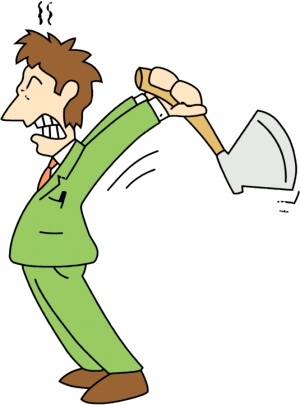
Does this man appear to be emoting?
Have you ever heard someone say, “you make me emote?” Probably not, but I’ll bet you have heard something like, “you make me angry,” or “he is boring.” Now, I realize that emote usually refers to acting, or at least, that is how I am used to using it. On the other hand, emote, the root word of emotion, seems like an appropriate way to collectively express all of the words that are used for our “mental (emotional) feelings.” I’m referring to words like anger, love, boredom, fear, joy, etc., where the feeling we have is mental instead of physical.
I heard someone recently say: “That man was boring.” He further explained that the person was boring because he explained something, like a college professor. Well, what does that mean? If I am listening to an explanation given by a college professor and am bored, then who is responsible for me being bored? Am I responsible for my emotion or is the college professor? Really, how can someone make another bored?

Do you think the news makes this guy angry?
On a related topic, I remember when I was a teenager and my dad would say things that would “make me angry.“ I would tell him how I felt and he would simply say, “get over it.” At the time, it seemed like an impossible task. I thought he was just putting me off and not addressing the real problem of, “him making me angry.” Of course, I now realize that he didn’t make me angry, but instead, I made me angry. I own the problem of my anger and I should not put the blame on anyone but me.
There are times when I’m able to build a barrier that shields me from negative feelings. In fact, I was eventually able to do that with my dad. When he would do something that would normally make me angry, I was able to build a barrier in my mind that kept those negative vibes he was giving, from “causing” me to be angry. Now, of course, I was just controlling my own emotions. I didn’t literally build a barrier; I just took charge of my own thinking!
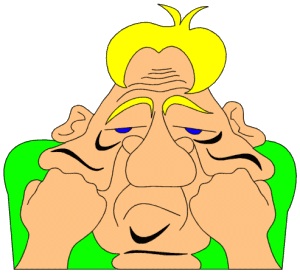
Who is responsible for my boredom?
It is common for children to blame others for how they feel. It is also common, for adults to say something, such as, “you make me happy.” Now, I realize when someone says, “you make me happy,” s/he might think the happiness is the direct result of her/his positive relationship with the other person. The emotion of joy is mentally felt because of the thinking of the person who is feeling it. Of course, we are not going to express ourselves in that manner, but we should be careful about what we say. I think when a person constantly says something such as, “you make me mad,” that a form of rote learning occurs. In other words, your words become your thinking.
You make me emote – NO!
I make you emote – NO!
You make you emote – YES!
I make me emote – YES!
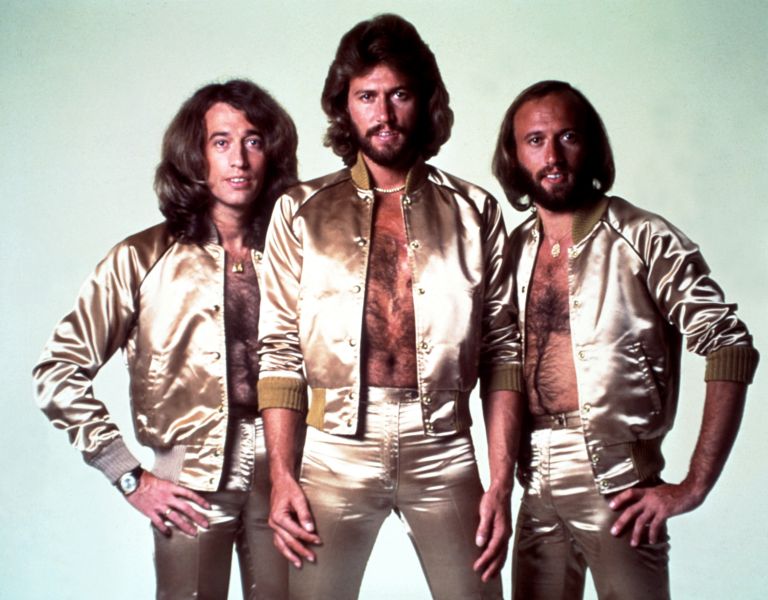
Bee Gees - Emotion!
Emotion! Why is it so full of feeling? Is emotion all about feeling? Does emotion have anything to do with motion? Perhaps, emotion is a bunch of feelings in motion! Can you control your emotions? Have I made you emote?
Perhaps you feel that songs make you emote? Many of my friends say that music often is emotional for them. The Bee Gees wrote a song for Samantha Sang, in the 1970s, entitled: “Emotion.”
It was and is a song that is filled with emotion. (At least the name is. :-) I wonder if that was the Bee Gees’ purpose for writing the song – to cause the listener to be filled with emotion. If you emote as a result of listening to their song, did the song make you emote?
Click here, if you would like to read the lyrics and/or hear the Bee Gees (& Samantha Sang) sing “Emotion”.
So, who’s responsible for your emoting?
Do you have an emotional comment? :-)
What’s So Mysterious About Sedona, AZ?
Posted on November 18, 2010 Leave a Comment

Sedona, Arizona, as viewed from the plateau where Sedona's airport is located.
Note: This post is meant to be a combination of a travel journal and a discussion about the mysterious aspect of Sedona, AZ. Please click on a picture if you would like to see it enlarged.
On a recent trip to Sedona, Arizona, the one word that kept creeping up in my mind was “mystical.”

A villa resort, in Sedona, with the picturesque red mountains in the background.
That area of the United States is known for its red picturesque mountains and as I discovered, while spending a week in the Sedona area, it’s also known for vortexes. Yes, vortexes and not vortices, is the way the “locals” spell it.
So what is a vortex? The way I had used the word, before visiting Sedona, was to describe a whirlwind, whirlpool, or in general, something that swirls and tends to force everything towards a center while swirling around.

Possible picture of a vortex. Notice the energy field in the sky.
Hurricanes, tornadoes, cyclones, eddies, etc., are examples of vortexes or vortices. In Sedona and the surrounding area, vortexes are swirling centers of subtle energy coming out from the surface of the earth. The vortex energy is not exactly electricity or magnetism, although it does, supposedly, leave a slight measurable residual magnetism in the places where it is strongest.

Sedona shopping area.
When my wife and I first drove into Sedona, it seemed that every other building had some advertisement regarding mysticism, vortexes, crystals, new age, Native American goods, naturalists, etc. We, like almost everyone else, were in awe of the beautiful natural red-rock mountains. The mystics, Native Americans, new age enthusiasts, naturalists, etc., all consider the area to be a special place for healing and renewal.

The sacred red rock area of Sedona!
Specifically, Native Americans have both a practical and spiritual relationship with the Sedona area. The land was always respected for the food and shelter it provided, and was also used for spiritual practices. The native people gathered together at the sacred sites they created for ceremonies, healing and to offer prayer. Remnants of these sacred sites can still be found in ruins around Sedona. Sedona has also become a gathering place for New Agers, who believe the region emanates a mystical power.

My wife, George and the jeep!
We arrived in Sedona on Saturday evening, and while visiting a tourist information center we signed-up for a two-hour jeep tour of the area. Our guide, George, was a nice sixty-six year old ex-marine who we found to be extremely interesting and complex.
George started out by explaining the terrain, how it was formed, why the rocks are red, how the Native Americans valued the area, etc. He explained how the area has been used for many western movies and that John Wayne produced his first movie there.

An area near Sedona used for many western films.
George told us that almost 100 feature films and countless video productions and commercials have been shot either in full or in part in the Sedona area. After showing us a few of the more famous scenic regions and places where a lot of the movies were filmed, he began explaining the medicinal value of many of the plants we were driving by.
When, George, our guide for the jeep tour, pointed out the various medicinal plants, we started asking him questions regarding his opinion of their actual value. He then started explaining everything from a much more personal perspective.

The herb Rosemary - used for stomach upsets, digestive disorders and headaches.
George told us that he had, for most of his life, considered himself to be a warrior. Since he had been a marine, that made perfect sense. But, then he proclaimed he no longer thought of himself as a warrior. He had literally had a life-altering experience six-months ago. He went to see his doctor for a regular check-up and the doctor immediately admitted him into the hospital and performed an operation to unclog an artery. During the operation, George claimed he “passed over to the other side!” In other words, he died and then came back to life. He said his doctor had to revive him twice during that time.

Church of the Holy Cross. Perhaps, this helped George to "see the light."
It’s what George told us next, that I found most interesting. He told us he “saw the beautiful white light, met and talked with his dead father, and then felt a profound sense of calm.” Having this experience, he said, also changed the way he thought about himself and life. It was because of the experience of “dying and coming back to life,” that he was no longer a warrior, but instead, is a peaceful and loving person who now believes fighting is to be avoided at all cost.

No, this isn't an example of sitting and meditating! :-)
George was married and divorced twice and since his “death” experience, both of his ex-wives have told him they no longer hate him, but instead love the person he has now become. It was truly, for him, a life-altering experience on many different levels.
After George returned us to our place of stay, I started paying more attention to the mysterious aspect of Sedona. As we took various trips through the outlying canyons and mountains, I noticed places where people had parked their cars, walked to an open space, laid out a blanket and were meditating. Some of the areas were designated vortexes.

R2 and Kathy at the double vortex. Can you see the energy? :-)
On one of our day trips, we drove up Oak Creek Canyon, and then out of the canyon by driving up a “switch back” road. We stopped at a scenic view at the end of the switch back that was designated as a double vortex. in this case, it was “double” because it was an “upflow and lateral combination” vortex
The “scenic view” was also a place where Native Americans (Navajo) sold jewelry. While there, I bought my wife a special set of earrings that have a “swirling” vortex design that means a new beginning. The earrings are made out of silver, which according to the native americans, provides emotional balance, strengthens, and promotes self-improvement. Now, that’s some energy! :-)

The "swirling" vortex earrings that mean a new beginning!
An interesting fact about our visit to the “scenic view” at the end of Oak Creek Canyon is that it wasn’t until the next day that I realized the place was a designated vortex. But, while I was there, I truly did feel an indescribable sense of power permeating my body. At the time, I thought it had to do with going from the bottom of the canyon to the top or perhaps just the freshness of the air. Now, frankly, I don’t know. I guess I’m agnostic regarding vortexes. :-)
So, what’s so mysterious about Sedona? Native American sacred area, new age mystical power region, vortex energy fields and a sincere local person who died and came back to life. Doesn’t that make it a little mysterious? :-)

R2 bids you good-bye from "The Cowboy Club" - John Wayne, Jimmy Stewart, Elvis Presley and many others used this "watering-hole" while filming westerns in Sedona.
Are You Living Your Life The Best Possible Way?
Posted on November 15, 2010 Leave a Comment
If we embrace "change," are we living our lives the best way we can? :-)
How can I tell if I’m living my life the best way I can? That question pop into my mind all of a sudden. Actually, I was talking with someone who asked me what I do, now that I’m retired. I started thinking about all of the answers I had given before: “I do some part-time work,” “I fix-up my old house,” “I blog,” and sometimes, I give the smart-alec answer of, “I do whatever I want.” But, is this living my life the best possible way? I think my answers don’t necessarily reflect someone who appears to be living a life the best way he can.

Happiness is blogging?
So, how can I tell if I’m living my life the best way I can? One possible way is when I think my life is full of what I like to do and I’m comfortable, both mentally and physically. I think this happens when I’m optimistic about the future, but at the same time, I’m happy to be present in the present. I’m living my life the best way I can when I’m happy being the best I can be. That means accepting who I am and feeling comfortable with the person I’m becoming.
You see, being retired and one year from Medicare, places me in an interesting societal nuance. Role models of lively and active people my age tend to be actors in advertisements featuring health problems. For example, a person my age will be portrayed as having a frequent urination problem – s/he will take an advertised medicine and then will become lively, active and shown smiling while walking pass a restroom. On the other hand, most active and lively people used in commercials and movies are in an age group of 18 – 30 years old.
Now, this is NOT good role model! :-)
Now, it is important to take medicine when needed to cure an ailment. But, if I am going to live my life the best way I can, I need to see myself as a lively and active person without necessarily having to take medicine. That means, ailments need to be shrugged-off as much as possible. I shouldn’t dwell on them, especially the aches and pains. Generally, we are what we think we are and we all should concentrate on keeping our mental health sound.
Life expectancy is up from just 45 in 1900, to 75 for men and over 80 for women in 2010. According to the Social Security Actuarial Life Table, I’m projected to live until I’m 84. That’s quite an increase in life expectancy since the beginning of the 20th century! Of course there is a likelihood of some physical decline as I get older, but what about my mental health? Being older doesn’t necessarily mean that I will have mental problems. In spite of the fact that physical and mental health are interrelated, I think I have a better chance of staying strong mentally than I do physically.
Some of what we see here is to protect an engine!
I compare the mental aspect of my life to that of an engine and the physical aspect to the case or body that holds the engine. The purpose of the case is to protect and enable the engine to operate as it was designed. The case will naturally be affected by the outside elements just as our bodies are. The engine is affected by how it is maintained just as our minds are. With proper care and creativity, the engine can operate well even though the case or body is broken. So it is with our minds.
How (can we) and what (should we do to) keep our minds healthy? First, as much as possible, ignore aches and pains. Instead of focusing on aches and pains that comes with age, concentrate on mental growth and the improvement of the quality of thinking. Don’t fear or be threatened by change, since life depends upon it. When change occurs, respond with a sense of purpose, a desire to learn and lots of patience. Be present in the present and optimistic about the future. Use the past as a teacher and fear only fear. In summary, take control of your own mind so you can better control your life.

It looks like he loves what he's doing!
But, are you living your life the best possible way? After focusing on keeping our minds and bodies as healthy as possible, how do we know if we are living our lives the best possible way?
Please consider the following questions.
Most of the time:
Do you love what you are doing?
Are you comfortable with who you are?
Do you admit your mistakes and try to learn from them?
Are you looking forward to the future?
Do you accept change as a necessary part of life?
Are you content with accepting your life?
If you answered “yes” to all of these questions, then you’re well on your way to living your life the best possible way. If you answered no to any of them, it’s time for you to do some work on your “engine!” :-)
What do you think?
Good Grief, What Are The “Good Old Days?”
Posted on November 11, 2010 3 Comments
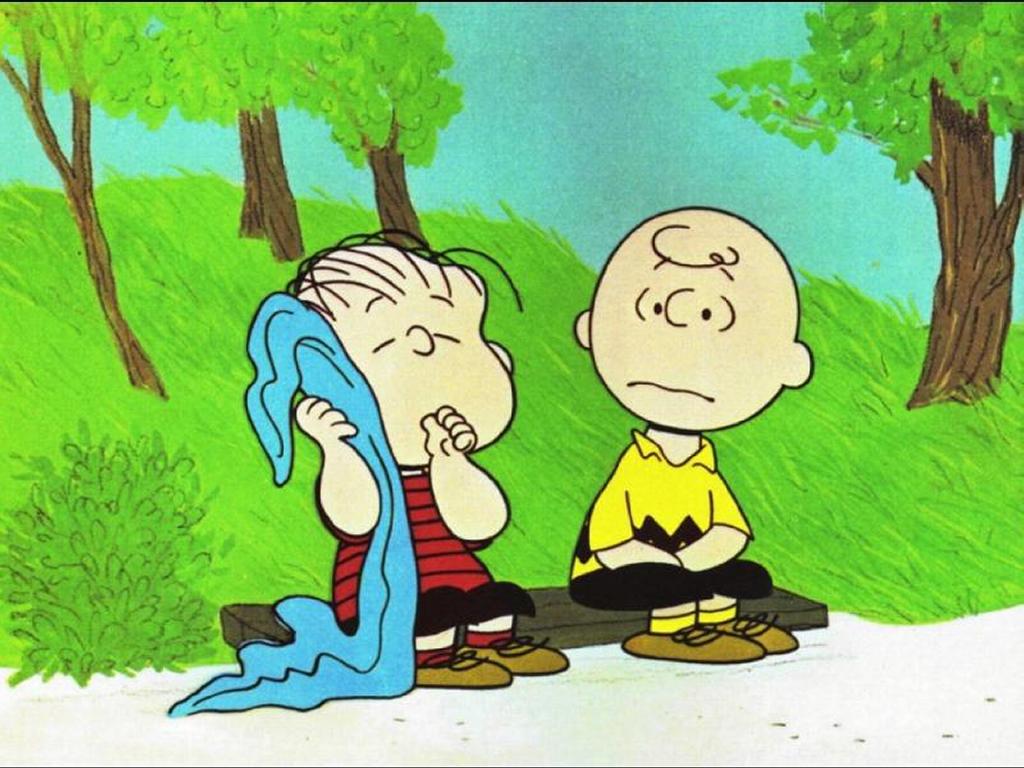
Linus: "Life is difficult, isn't it, Charlie Brown?" Charlie Brown: "Yes, it is. But I've developed a new philosophy. I only dread one day at a time."
“Good grief, Charlie Brown!” What are the good old days? I start this off with a famous quote attributed to Charles Schulz and his writing in the well-known Peanuts comic strip. The Peanuts comic strip ran from 1950 to 2000. During that time span, I undoubtedly experienced some of my “good old days!” :-)
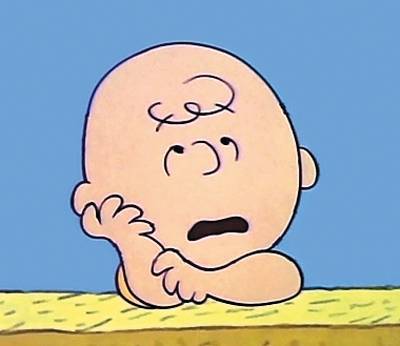
Good grief, are these the good old days?
I was talking to a friend recently, and he made the statement: “Those were the good old days.” He was referring to the late sixties, when both of us were in college and had some life-defining moments. A few years ago there was a New York Times article about the sixties (1960 – 1970) being the “good old days.” The article was, primarily, about using the sixties as a theme for advertising. During our conversation, my friend talked about how great life was in the good old days of the late sixties. Now, I am not denying there was a lot of good in those days, but were they really the good old days? Compared to what?
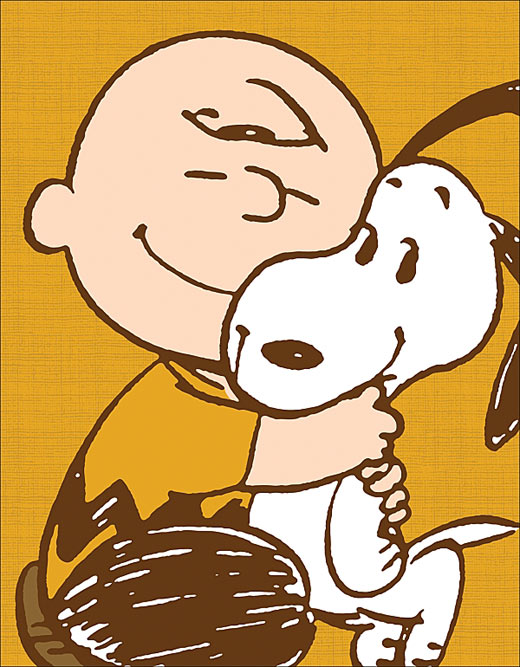
“Happiness is anyone and anything that's loved by you.”
I don’t think there is anything wrong with talking about the good old days, but if one does it too much, then it can create problems. How can talking about the good old days create problems, you might wonder? Well, when we spend a lot of time talking about the past (good old days), we often find fault in the way things are today. We tend to use the good old days as a standard for judging the present. Of course, there are times when the past is better than the present, but if we think that nothing is as good as the good old days, then we fall victim to affirming it as the truth. In other words, we make the good old days, in our mind, our present reality. To say it in another way, we become prejudiced against anything in the present. We don’t give the present a chance, because NOTHING is as good as the good old days.
In the book of life, the answers aren't in the back.
I think it is important to realize that we are always moving toward the future. With that in mind, we must also watch out for remaining “stuck in the present.” Just like my friend keeps referring to the good old days, I don’t want to think that the future won’t be better than the present. If I do, then all I will be able to think about is the present and how things are now. Consider this question – what are we becoming, if we think we are what we are accomplishing? I think what we are becoming is usually more important than what we are accomplishing.
OK, so what should we do?
Forget the past? NO – learn from it.
Forget the present? NO – live in it.
Forget about the future? NO – stay grounded in the present, but focus on the future by visualizing and affirming what you want it to be!
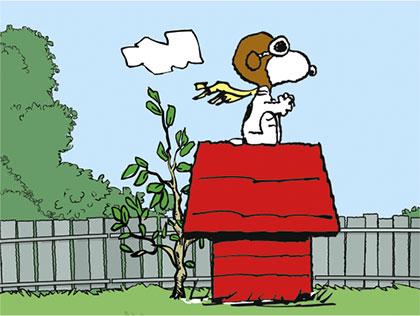
Yesterday I was a dog. Today I'm a dog. Tomorrow I'll probably still be a dog. Sigh! There's so little hope for advancement.
So, what are the “good old days?”
The future, if emphasis is placed on “good.”
The past, if emphasis is placed on “old.”
The present, if emphasis is placed on “days.”
What are your “good old days?”


 R2 Thoughts for You