 R2 Thoughts for You
What Does E = mc² Have To Do With Medicine?
Posted on July 24, 2013 5 Comments
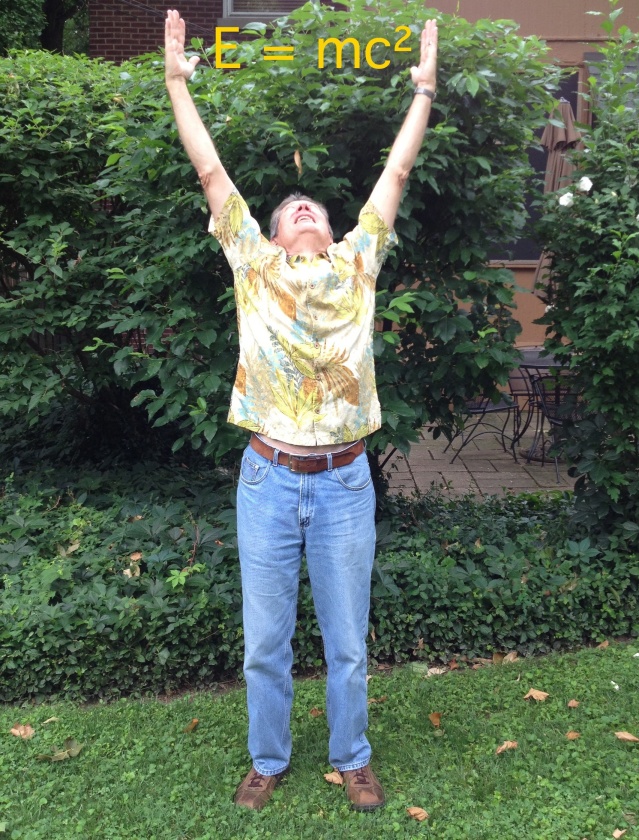
R2 and an energy exercise sometimes called: “Heaven Rushing In.”
E = mc²
Energy = mass X (speed of light) X (speed of light)
To begin the quest of answering the question, “What does E = mc² have to do with medicine?”, I’ll, firstly, refer to a dictionary and consider the definition of medicine. From the definition, in my dictionary, I find many different meanings of the word medicine. For example, a meaning of the word medicine that I’m not interested in is: “Something that serves as a remedy or corrective i.e., medicine for rebuilding the economy; measures that were harsh medicine.” But, the most used form of the word is exactly what I have in mind. That definition of medicine has two parts:
a. The science of diagnosing, treating, or preventing disease and other damage to the body or mind.
b. The branch of this science encompassing treatment by drugs, diet, exercise, and other nonsurgical means.
The two parts both speak to how I want to use the word medicine, but neither mention the word, energy. Why not? Or, perhaps the better question is: “Why should a definition of medicine include energy?” Part b, of the second definition, does include the phrase: “…other nonsurgical means.” So, I suppose we could conclude that the use of energy in medicine is an example of nonsurgical means. But, from my own personal experience, I can’t recall a health care professional ever using the word energy as an integral word for diagnosing, treating, or preventing disease and other damage to my body, mind, or spirit.
“Modern allopathic medicine is the only major science stuck in the pre-Einstein era.” –Charlotte Gerson
For the past twenty months, I have been actively involved in trying to improve my health and well-being by using alternative and complementary medicine. Before that, I was regularly using allopathic medicine and did my best to utilize the expertise of my primary care physician(s) and other specialists. A little less than two years ago, after considering my age and some of the recent stress-inducing life-events I had encountered, I began an earnest search for something that would improve the state of my health. My regular doctors prescribed pharmaceuticals that had side-effects which were, in my opinion, worse than the symptoms for which the drugs were prescribed to correct. They offered no advise for exercise and/or life-style changes as a way to improve my health. There were no suggestions offered for eliminating the cause of my problems. I felt helpless and with no solution, other than acceptance of my current state of health. Frankly, I did not feel empowered in my own healing process. Ouch! :-(
I think the act of caring for my healthy body is like the act of fine-tuning a violin. There’s always a little fine-tuning that will improve the body.
Having little success with the more traditional approach to medicine and receiving advise from those who are close to me that I should seek professional help, I made an appointment with Dr. Simon Yu, MD. Immediately, he started me on what I now consider to be one of the most energetic paths toward wellness I have ever encountered. In order to improve my health, he considered such things as heavy metal poisoning, parasites, and allergies. Dr. Yu made specific suggestions regarding my diet and its impact on my health. He also assessed my overall health using Acupuncture Meridian Assessment, also known as EDS – Electrodermal Screening and EAV Meridian Assessment. At first, I was skeptical about the validity of his assessment tools, but after following his prescriptions, I’ll readily admit that the results are good. Because of Dr. Yu’s influence, my outlook on life and healthcare has been forever changed.
One of Dr. Yu’s analogies, regarding healthcare, is the comparison of the body (including mind and spirit) to a violin. The living body is never perfect and can always be adjusted toward the goal of obtaining perfection. The violin is never perfect, and it can always be fine-tuned toward the goal of “perfect” sound. So, he suggested thinking about the act of caring for a healthy body like the act of fine-tuning a violin. I like this analogy and have added one other dimension. When a violin is being tuned, you listen to the sound it makes in order to decide how to tune it. Well, our body makes a “sound” when we feel pain. Looking at pain as a way my body tells me where and what attention it needs, can be helpful, if I have a way to give it the proper attention. And, this is where ENERGY comes in!
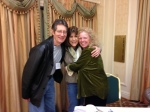
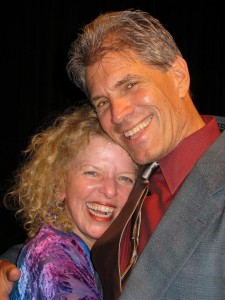
Ron (R2), Kathy, and Donna Eden –March 9, 2013
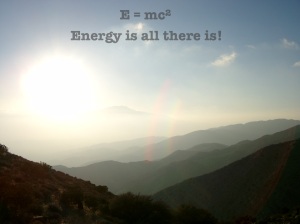
Albert Einstein gave us the formula, E = mc², which relates energy to mass. Donna Eden, who is among the world’s most sought after, authoritative, and joyous spokespersons for energy medicine, interprets this formula simply as: “Energy is all there is!” To simplify this discussion, let’s categorize energy into two forms: flowing energy and congealed energy. Usually, when energy is mentioned, it’s the flowing energy that comes to mind. But, congealed energy (matter) is very much a part of us and in order to holistically view our mind, body, and spirit, we should think of everything in nature as energy. When we do, we have a different paradigm for life. As Eden proclaims; “Energy is the life force and when we have it, we’re alive, and when we don’t, we’re not.”
Do I have a life force?
Energy medicine refers to techniques that involve the putative energy fields. Although it has not yet been able to be measured by conventional methods, those who work with this type of energy, like Donna Eden, claim they can see it with their own eyes or that they can sense it with their hands or bodies. The field of Energy Medicine involving putative energy fields is based on the fundamental premise that all physical objects (bodies) and psychological processes (thoughts, emotions, beliefs and attitudes) are expressions of energy. Another example of: “Energy is all there is.” Using this logic, all bodies are believed to be infused with a subtle energy or life force. This life force is known by a variety of terms corresponding to different traditions. In traditional Chinese medicine it is called qi (pronounced CHEE), in the Judeo-Christian tradition it is called spirit, and in Ayurvedic medicine it is represented in the doshas.
Before going any further into this discussion on energy and its connection to medicine, I would like to revisit the beginning of my time with Dr. Yu, and explain how I began my energetic medicinal journey. :-) On the third Tuesday of each month, Dr. Yu, and an associate, Chaplain Paul Johnson, offer a free monthly wellness group meeting. Looking for a way to improve my body’s health, holistically (body, mind, and spirit), I started to regularly attend the group meetings. During one of the meetings, Pam Cornwell, an Eden Energy Medicine practitioner who is associated with Gateway Energy Medicine and Harmony Health Care, presented a twenty-minute session on energy medicine. During her presentation, she demonstrated a version of a Five-Minute Daily Energy Routine and challenged us to do it daily, for thirty days, and if we did, we would notice a positive change. So, I took her up on her challenge and she was correct. I did notice a positive energetic change after thirty days AND I was hooked-on energy medicine. :-)
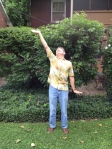
R2’s favorite exercise: “Connecting Heaven and Earth.” This brings fresh oxygen to the cells, activates the immune system, and helps ease insomnia.
Below, are some hyper-text titles of YouTube URLs featuring Carey Phillips, an Eden Energy Medicine practitioner. The Five-Minute Daily Routine that I did as a challenge, included each of these eight YouTube exercises. One of the more interesting aspects of doing Energy Medicine exercises is that the “no-pain, no-gain” mentality isn’t appropriate. What you don’t want to do, is stress your body.
If you’re interested in watching any of the short YouTube videos, which demonstrate eight of the Five-Minute Daily Energy Routine exercises which I do at least once every day, please click, below, on an individual title. They’re each named to help us remember them and for adding descriptive vocabulary to our conversations about Energy Medicine.
So, what is it about Energy Medicine that I’m “hooked-on?”
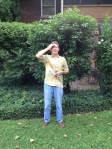
R2, HOOKING-UP! This exercise has, so far, “cured” a 50-year old back problem. Wow!
Well, besides the positive change Energy Medicine made in my mind, body, and spirit, it also gave me a strong sense of personal healthcare empowerment. This strong sense of empowerment has resulted in me being able to self-administer procedures on my body for the purpose of assessing which systems are out of balance. I, then, am able to implement corrective actions by building healthy and resilient energy patterns throughout my body, therefore enabling my body to heal itself. That, for me, is powerful! No longer do I feel I’m at the mercy of choosing the appropriate doctor at the right time for the correct procedure to help my body heal from a current problem. And, you can tell by the picture, on the right, that not only am I “hooked-on”, but I’m also “hooked-up.” :-)
Let me be clear that I am well aware there are many who view Energy Medicine as quackery or worse. Click here if you wish to read some negative comments. I am not shunning allopathic medicine, but instead, using Energy Medicine to compliment and enhance the value and power of traditional western (allopathic) medicine. Also, please understand that I am NOT trying to convince anyone to follow my lead. This blog post is a personal “writing for learning” exercise with a secondary purpose of sharing my current thinking about this positive addition to my life: Energy Medicine.
“Conventional medicine, at its foundation, focuses on the biochemistry of cells, tissue, and organs. Energy medicine, at its foundation, focuses on the fields that organize and control the growth and repair of cells, tissues, and organs, and on ways of influencing those fields. This affords energy medicine several strengths in comparison with the conventional medical model. Six of these strengths can, in fact, be thought of as the PILLARS that establish energy medicine as a significant development in health-care.” Donna Eden and David Feinstein
Patient Empowerment, which I mentioned in a previous paragraph, is one of six Pillars of Energy Medicine, listed in a scholarly article, published in 2008, and written by Donna Eden and her husband, David Feinstein, PhD. Click here for a PDF file containing the entire article. These pillars have helped me better understand the promise Energy Medicine holds for improving the health of those of us who choose to use it. Here’s a list of all six Pillars.
1. REACH: Energy medicine (EM) can address biological processes at their energetic foundations so is able to impact the full spectrum of physical conditions.
2. EFFICIENCY: EM regulates biological processes with precision, speed, and flexibility.
3. PRACTICALITY: EM fosters healing and prevents illness with methods that can be readily, economically, and noninvasively applied.
4. PATIENT EMPOWERMENT: EM includes methods that can be used on an at-home, self-help basis, fostering a stronger patient and practitioner partnership in the healing process.
5. QUANTUM COMPATIBILITY: EM adopts non-linear concepts consistent with distant healing, the healing impact of prayer, and the role of intention in healing.
6. HOLISTIC ORIENTATION: EM strengthens the integration of body, mind, and spirit, leading not only to a focus on healing, but to achieving greater well-being, peace, and passion for life.
Besides the above article, Donna Eden is directly, and/or indirectly, responsible for many more publications and audio-visual products regarding Energy Medicine. One of her more recent books, The Little Book Of Energy Medicine, contains a brief overview of EM. The following insightful summary is quoted directly from her book.
The Little Book of Energy Medicine
In Energy Medicine, energy is the medicine and energy is also the patient. With energy as the medicine, the natural, vital, Life Force that is your birthright can be harnessed and directed to cure your ills and to uplift your spirit. With energy as the patient, you can restore energies that have become weak, disturbed, or out of balance and heal your body as well.”
———
I will now share some statements that reflect what I consider to be, at this point in my life, basic principles of Energy Medicine.
Hopefully, from these statements, you will be able to see how I “view” Energy Medicine and what I have internalized as important concepts.
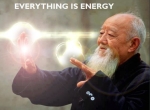
We are energy!
1) Everything is energy. My physical body consists of mass and using Einstein’s famous formula, the product of my body’s mass and c² = Energy. Energies — both electromagnetic energies and more subtle energies–form a dynamic infrastructure of the physical body.
2) My body has “energy-flows” (like rivers) that connect all organs. The health of those energies in terms of flow, balance, and harmony is reflected in the health of my body. Conversely, when my body is not healthy, corresponding disturbances in its energies can be identified and treated. Some of these vital energy-flows are referred to as meridians. Click here to visit a site that illustrates the location of the various meridians.
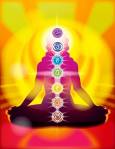
The position of seven energy vortexes (chakras).
3) There are certain places in my body where energy gathers and forms vortex-like shapes in addition to the “energy-flows.” The major vortex-like energies are often called chakras. These vortex-like energies can get out-of-balance and need attention in order to improve my health.
4) The energies that form my body should have appropriate movement, space, balance, and crisscrossing. To overcome illness and maintain good health, my body needs its energies to:
a) Move and have a space to continue to move — energies may become blocked due to toxins, muscular or other constriction, prolonged stress, or interference from other energies.
b) Move in specific patterns — generally in harmony with the physical structures and functions that the energies animate and support. “Flow follows function!”
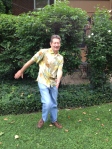
R2 Cross-Crawling “I am at my best, health-wise, when my “energy-flows” cross.”
c) Maintain balance with other energies—-the energies may lose their natural balance due to prolonged stress or other conditions that keep specific energy systems in a survival mode.
d) Cross over — at all levels, from the micro level of the double helix of DNA, extending to the macro level where the left side of my brain controls the right side of my body and right side to the left. I am at my best, health-wise, when my energy-flows cross.
5) Flow, balance, and harmony can be noninvasively restored and maintained within my energy system by:
a) Tapping, massaging, pinching, twisting, or connecting specific energy points on the skin.
b) Tracing or swirling the hand over the skin along specific energy pathways.
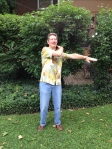
R2 tracing his hand over his skin along a specific energy pathway resulting in a calming effect.
c) Exercises or postures designed for specific energetic effects.
d) Focused use of the mind to move specific energies.
e) Surrounding an area with healing energies (one person’s energies impacts another’s).
6) As energy flows, it can get blocked, like a dam blocking a river, and I often feel the blockage as pain. Pain is a way in which my body “tells me” it needs some attention. It is more than just a distress signal; it is a distress signal that demands that you fix the problem and, if you can’t, then figure-out how you can. Pain is often the result of energy not flowing properly.
7) My body can act as a magnet with the energy. Body parts, like my hands, can be used to attract and repel energy.

“…body parts, like my hands, can be used to attract and repel energy…”
8) There is a “protective-like” energy field around each of us. This energy field is like the atmosphere around the Earth. Acting like a second skin, it protects me from energetic radiation that exists all around us. Without a strong energy field, chronic illnesses, heart problems, allergies, etc. can more easily become a problem in my quest to be as healthy as I can be. Through various exercises and procedures, I can strengthen my personal protective-like energy field.
——–
And, finally, some ending questions:
So, what does E = mc² have to do with medicine?
Energy is the medicine AND the patient, for all of us.
Perhaps, E = mc² should mean: “Energy equals Medicine times the speed of light squared.” :-)
How does Donna Eden answer the question: “What is Energy Medicine?”
Click here for Donna Eden’s answer.
Am I skeptical of EM?
I was!
Why am I not skeptical of EM, now?
Because it works!
Do you have enough energy to comment? :-)

Is Memory Reality?
Posted on April 12, 2013 1 Comment
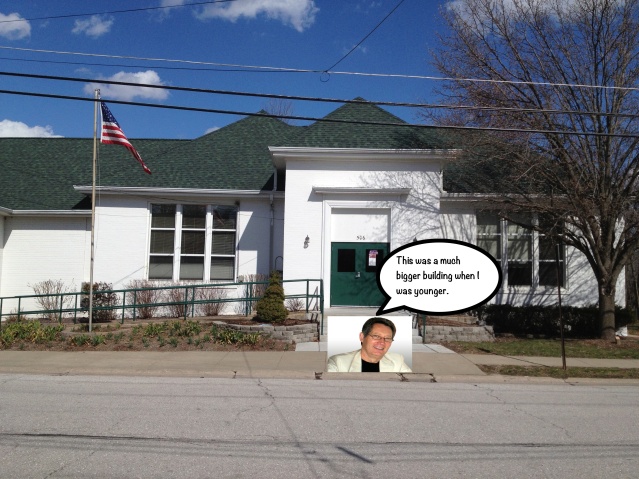
The building that used to be R2’s elementary school. It seemed so much bigger in the 1950s.
A few days ago I was asked a specific question about a meeting I attended in 2000. I explained exactly what happened in the meeting and was asked the follow-up question: “Was that really what happened?” I immediately answered: “Yes, that’s what I remembered.” Well, just because that’s what I remembered happening, is that really what happened?
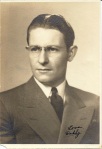
At five years old, R2 didn’t think his Dad, pictured above, could catch him. A real memory?
Recently, I drove by the building that used to house my elementary school. It’s now used as a senior assisted-living facility. The building seems a lot smaller than I remember. Of course, it’s not unusual for a person to reflect on his childhood and not have correct memories of shapes and sizes experienced during that time. So, is my childhood memory reality?
My father died when I was five years-old. I remember very little of my father, but having stated that, I do think I vividly remember a few special times with him. One special incident, I often recall, is when I told my father that he couldn’t catch me, if I ran away from him. I then ran from him and he caught me after I had only run a few yards. I couldn’t believe how fast he was, for an older man (in his thirties:-). But, my Mom had told me that story over and over. Did I remember the incident or am I repeating something from my mother’s memory? Is my memory reality?
Last week, my wife and I went to a restaurant for dinner. I remember it was a Chinese restaurant. But, what did I have to eat that evening? Well, I know I had rice. :-) What else? I wasn’t sure, until I asked my wife. She immediately named everything we had. I remember, now that she has reminded me. Or, do I remember? Am I simply repeating what she remembered? Is my current memory reality? Is her memory reality?

Did I REALly eat Chinese food, if I can’t remember what I ate?
So, why do I keep going back to my memory? How can I talk, think, or live without using my memory? But, is my talking, thinking, or living based on reality when I use by memory? Don’t I hold on to my memory because it defines me? For example, when I’m asked my thoughts about almost anything, I refer to what I know about it and then respond. What I know is often known through memory. Is that reality?
I think I know my wife very well. As I bring her to mind (she’s not here, with me, as I write this) and think about what I really know about her, do I have an accurate picture of her? Everything I’ve recalled about her is from my memory. When I describe her to someone else, it’s all from my point of view. Would she be described by her sister, who knows her well, as having the same likes, dislikes, personal traits, etc., that I declare she has? No! I’m really describing her based on my perspective. Everything in my description is relative. Is my memory, which depends upon my point of view, reality?
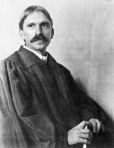
“Time and memory are true artists; they remould reality nearer to the heart’s desire.”
–John Dewey
Considering everything I’ve written so far, it seems that I very seldom have contact with the real. At least, when I’m using my memory, the unreal appears to be the norm. My senses are constantly using my memory to determine what I’m seeing, tasting, smelling, hearing, and feeling. And, what I determine is based on my perspective. So, my memory depends on my point of view, but reality doesn’t depend on any point of view – it simply is.
Is memory reality? No! What is memory compared to reality? Memory is a story about reality from a point of view.
John Dewey wrote: “Time and memory are true artists; they remould reality nearer to the heart’s desire.” Perhaps, memory is more of what my heart desires and less of reality.
What Is A Spiritual Feeling?
Posted on February 5, 2013 6 Comments

R2 enjoying a spiritual feeling — a “conscious recognition of being alive”
Have you ever had a spiritual feeling? Most likely, you have, but can you describe it? Well, recently, I was faced with trying to find the appropriate vocabulary for describing and identifying the spiritual feelings I have had.

This gives me a backache physical feeling. :-(
I believe that we, as humans, have at least three “parts” of our being: mind, body, and spirit. If I’m asked to identify/describe mental feelings, there is a rather extensive vocabulary readily available to do so. Consider the following words: anger, glad, mad, happy, bored, afraid, sad, delighted, furious, disgusted, elated, … In some ways, the list seems to be unlimited.
If I’m asked to identify/describe my bodily (physical) feelings, again there seems to be a rich vocabulary that makes it easy for me to communicate how I feel. Some of these words/phrases are: sore, tired, nauseous, energized, cramped, pinched-nerve, numbness, tingling-sensation, Charley horse , muscle-spasm, and all of the “aches,” i.e. headache, backache, toothache, groin-ache, neck-ache, …

Is an angelic feeling a spiritual feeling?
But, when I want to identify/describe a spiritual feeling, what are my word/phrase choices? Well, we do have a few good ones, such as: awed, secure, joyful, and uplifted. On the other hand, I feel limited when I’m attempting to describe spirituality and the feelings associated with that aspect of my being.
Is the feeling of being limited, when I attempt to describe spiritual feelings, a spiritual feeling? Hmmm….. I’m unsure, but it does beg the question: “What is a spiritual feeling?” In order to answer the question, let’s first consider the meaning of feeling. Feeling has many definitions, but for my purposes, feeling is: “conscious recognition.” So, if I’m in awe of a beautiful landscape, then I am experiencing a conscious recognition from the spiritual aspect of my being.
What is a spiritual feeling? So far, I have it defined as: “Spiritual feeling is a conscious recognition of an aspect of spirituality.” If I know what spirituality is, then perhaps, I’ll have this elusive topic nailed-down.

“I consciously recognize that you’re alive. Is this spiritual?”
Recently, a friend introduced me to the following description of spirituality: “Spirituality is the individual, subjective experience of and from which a person derives purpose, meaning, and hope.” Using this description of spirituality, what would a spiritual feeling be? Let’s consider the feeling of awe. Previously, I wrote that awed describes a spiritual feeling. If that’s true, then awed is a conscious recognition of an individual, subjective experience of and from which I derived purpose, meaning, and hope. Hmm…, It doesn’t seem to fit. For example, if I look at the Grand Canyon and have a feeling of awe, then am I deriving purpose, meaning, and hope from that individual, subjective experience? I don’t think I am!
There must be another way to view the “spirit” part of my being. Let’s do some more exploring. Spirit is from the latin word spiritus, meaning breath OR spirare, meaning to breathe. When a human-being is breathing, we often consider the human to have the Qi, (Qi is not Quite Interesting:-) or energy of life. In other words, the spirit aspect of a live being is directly related to the being’s energy of life. Using the root meaning of spirit, I think it is reasonable to imply that a spiritual feeling is a conscious recognition of being alive. From my point of view, the words: awed, secure, joyful, and uplifted, seem to fit better with this view of spirit.
“Let’s first discuss how you feel spiritually, then we’ll address your physical and mental feelings.”
So, what is a spiritual feeling? For now, I’ll settle on spiritual feeling is a conscious recognition of being alive. When I have a spiritual feeling, I’m experiencing a feeling that comes directly from my energy of life. Having stated that, I’ll now try to find more than the before-mentioned four words to identify/describe a spiritual feeling. Consider the following: content, calm, alive, frail, insecure, peaceful, quiet, shaky, tough, solid, bold, adequate, immortal, empty, relaxed, exhausted, vivacious, helpless, …
Perhaps, there’s always a spiritual feeling that precedes any other type of feeling. After all, the spiritual feeling comes from our life energy and we must be alive in order to feel. Think about it! If you are feeling angry (mental feeling), then perhaps you first felt inadequate (spiritual feeling). Or, if you have a headache (physical feeling), then perhaps you first felt exhausted (spiritual feeling). This could help explain why spiritual health is so important to our overall health.
What do you think or feel? :-)
What Are The Most Important Questions Facing Humankind?
Posted on January 14, 2013 2 Comments
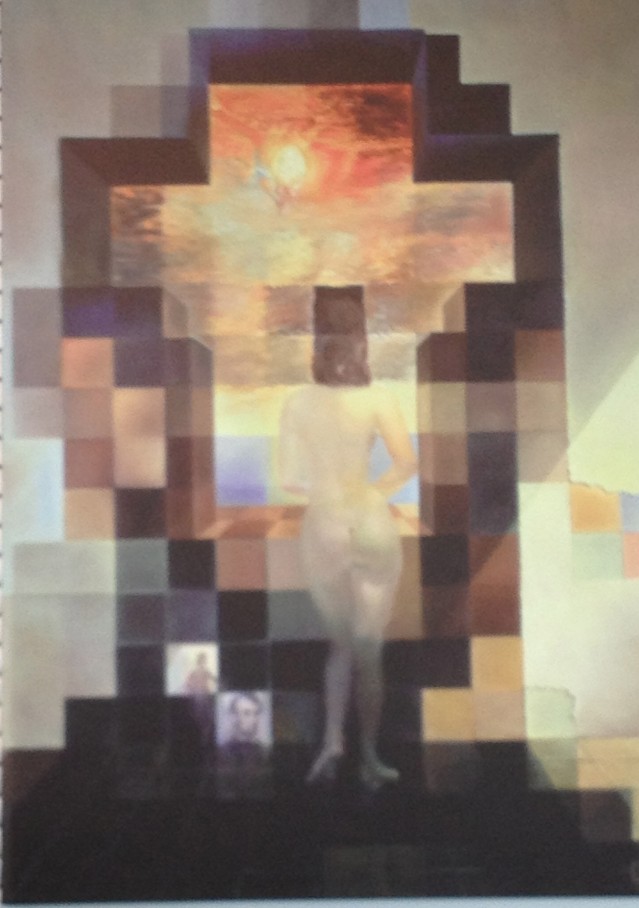
The important question here is: “What’s your point of view?” :-)
‘Lincoln in Dalivision’ was created based on the Dali painting ‘Gala looking at the Mediterranean Sea’ which at a distance of 20 meters is transformed into the portrait of Abraham Lincoln. NOTE: Back away from your computer screen if you can’t see the “big” picture of Lincoln.
Once Albert Einstein was asked, “What is the most important question facing humankind?” Einstein responded by asking another question: “Is the universe a friendly place?”
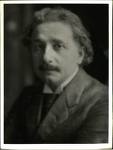
Einstein: “Is the universe a friendly place?”
Hmm…, I think the answer to Einstein’s question is yes. Why? Well, if you think it isn’t, then where is the unfriendliness? Generally, the universe seems to be friendly in the sense that it provides a way for us to live our lives, to be comforted, and is not antagonistic. Of course, we humans need to act like it is friendly in order for us to come to that realization. The universe is a friendly place; humankind’s actions often makes the universe unfriendly.
Another important question I think we should consider is: “How can we eliminate evil?” Some say evil is the result of God giving us free will. Of course, the existence of God must be accepted before you can blame evil on God’s gift of free will. Maybe, evil is just part of our maturing process. How would we be able to develop virtues, if we didn’t have evil? For example, the virtue of courage would be difficult to develop if we never had to face evil. But, no matter how we establish what evil is, how do we eliminate it?

I have a challenge that I need to overcome – how to stop the toilet from running before you have to run to the toilet. :-)
Though it’s not always the most important question, I often wonder what approach we should use to obtain what we need/want in life? Do you think we should have to struggle for what we get? Are our lives, primarily, a never-ending struggle? I don’t know about you, but I certainly feel a sense of struggle on a somewhat regular basis. You see, I feel pressure to overcome life’s daily challenges by solving the problems associated with them. For example, if I wake-up and notice a toilet is constantly running, I immediately feel an anxious need to fix the toilet. This, then turns into a challenge that I need to overcome – how to stop the toilet from running before I have to run to the toilet. :-)
In the third paragraph, I posed the question: “How can we eliminate evil?” Most likely, we can’t, but then again, I can’t even explain what evil is. Perhaps, this is why Einstein, on another occasion, is quoted as saying, “The real problem is in the hearts and minds of men. It is not a problem of physics but of ethics. It is easier to denature plutonium than to denature the evil from the spirit of man.”
Really, all of these important questions seem to have a central theme – the struggle of humankind. Is life an unending struggle? Well, when I view life as such, I usually view my life through anxious or panic-stricken eyes. Of course, that doesn’t help with the struggle or my health. So what should I do? About all I can do is to change my point of view. What would I do if I was willing to let what I see as a struggle be easy? Well, in my case, when I purposefully look for easier ways to approach what I consider a struggle, a sense of inner-peace comes over me.
It’s “bearly” a problem when I change my point of view. :-)
When I change my point of view and attain inner-peace, I’m usually able to turn any struggle into a “solved problem.” For example, recently I was faced with a major presentation that I thought required me to memorize a large amount of words. I struggled over this dilemma for days before I asked myself, “How could I do this differently?” After exploring possible answers to the question, I realized that I didn’t have to memorize all of the words and instead, I could use notes to help with the presentation. Immediately, there was a sense of peace that came over me and my anxiety left. As you can see, I adjusted (changed) my point of view, answered the question, and the struggle became a solved problem.
Again, what are the most important questions facing humankind? I’ve listed a few important ones, but ultimately, I think we will all have more personal questions that are more important to us than the ones facing humankind. Now, of course, these personal questions may be directly related to those facing all humans, but we will usually focus on them from a very personal point of view. When we consider our important questions, we should use them only for stimulating our thinking. We should not turn them into a struggle that results in causing us anxiety and panic.

I’m NOT unfriendly and evil, it’s just your point of view!
I believe that life is here to be appreciated and enjoyed. If we are considering negativity, such as general unfriendliness, evil, or our latest struggle that’s causing us anxiety and panic, we are going to have a difficult time appreciating and enjoying life. It’s important to change from the negative frame of mind to the positive where we change our struggle (question) into an easier approach by changing our point of view.
What makes point of view such an important element of our thinking process? Point of view (mental perspective) gives us a frame of reference, or orientation, for our thinking. When we are seeking answers to questions, or solving problems, we are always doing so from a point of view. Without considering other points of view, we will remain fixed in our approach to solving a problem or answering a question. It is similar to negotiating by demanding there is only one way to accomplish a goal. We each think from a point of view and we are each capable of changing our point of view.
Have a question/problem? Your point of view will help you (with the answer/solution).
So what’s the most important (personal) question facing you? “What is my point of view?“ At least, that’s R2’s point of view. :-)
What’s your point of view?
What Is Self-Love?
Posted on December 4, 2012 2 Comments
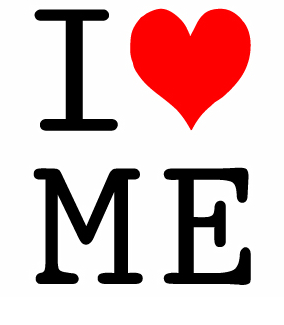 This post has been, and is a work of love, pun intended. :-) I have had numerous titles for it, but all were asking the question, in one form or another: What is love? As you can see, I finally settled on being specific about a certain kind of love — self-love.
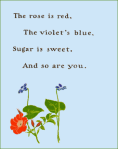
Perhaps, this is a poem appropriate to say to yourself.
First, I should point out that this is not my first attempt at trying to nail-down this elusive subject of love. On one of my most recent attempts, I used the title of the Cole Porter song, What Is This Thing Called Love?, and came to the conclusion that love, like art, is in the mind (eyes) of the beholder. This isn’t even the first time that I have tried to discuss self-love. In a post entitled, What Does “I Love You” Mean To You?, published in March of 2010, I invited the reader to go to a private place and say over and over again, “I love you” to her/himself. To read either of these please click on their hyper-texted titles.
Awhile back, I was in a meeting and the word “love” was being used in a way that I found confusing. The meeting was a Wellness Support Group that met at the office of Dr. Simon Yu. During the meeting, various participants suggested that in order to become healthier and overcome various problems we need to focus on self-love. I found the emphasis on self-love confusing in the sense that we use the word love in so many different contexts. For example, a person can say she loves ice-cream, her dog, her country, her mother, a song, a movie, her mate, etc. Generally speaking, each of these “loves” are different. So what is meant by self-love?
In all of my previous posts regarding love, I never tried to view love from a scientific and/or measurable perspective. I’m sure you would love for me to do so. :-) Is it possible to scientifically measure love? Well, there have been attempts to measure love using a MRI machine to analyze changes in the brain when patients are “in love.” There are also various attempts at scientifically defining love from a behavioral (operational) perspective. Using an operational definition won’t allow us to measure love, but if we accept the definition, we will be able to recognize it characteristics.

So, this is who I should love. Hmmm…..
Maybe we can’t, or shouldn’t, measure love as a quantity of something that we have. In an article which described the use of a MRI machine for measuring love, patients’ brains were flooded with the chemical dopamine when they were thinking about their loved ones. When the patients thought about non-loved ones, their brains weren’t flooded with dopamine. Besides dopamine, it was established that many other chemicals are released and bonded while a person is “in-love.” All of the chemicals can be measured, but does than mean we can measure love? Probably not! You see, determining the existence and quantity of chemicals in our bodies only helps us compare specific samples. We are, rightfully, placing the sample before the whole.
I think, in order to measure love and interpret the results, we need to be able to compare the existence and quantity of the before-mentioned chemicals with known measures that produce measurable outcomes. Simply stated, it’s the old problem exemplified by the question, “Who or what do you love more?” Take, for example, two siblings who claim that they are each “loved more” by a parent. How are we to compare the existence and quantity of the “love” chemicals with known measures that produce measurable outcomes? How are we? I don’t know!
Perhaps, Einstein’s wonderful quote about measurement is appropriate at this time, “Not everything that can be counted counts, and not everything that counts can be counted.” I believe this discussion about love and self-love leaves me with only one conclusion: Even though love counts, it can’t be counted. :-)

Donald Trump – an example of someone who manifests self-love??????
So, what is self-love? Literally, it is the love of oneself. Having stated that, it is NOT an obsession with oneself. If I’m obsessed with myself, then the appropriate term to use would be narcissism, especially if I exclude all others. And, it is NOT vanity, which is based on conditions. Instead, self-love implies unconditional love for oneself. Narcissism leans toward obsessing over oneself and excluding others. Vanity leans toward meeting conditions, such as getting an extreme make-over, and then believing I should be loved because of my beauty. Self-love is love that is directed toward all that I am – my emotions, thoughts, actions, body, … Therefore, self-love is not the emotion of love that I normally think of when I love another person, but is simply the mental and physical act of treating myself favorably.
Why is self-love important? Think about the one person you are always with. The one person you cannot escape from. Who is that person — YOU! Do you want to be with a person that you love? Well, when you love yourself, you are always with a least one person you love.
The longest and most powerful relationship you’ll ever have is the relationship you have with yourself. So, why not make that long and powerful relationship one that is filled with love? As a small beginning for enhancing that powerful relationship, start today by never saying anything bad about yourself, especially in your own head. Be good to your body. Make this the first day of the rest of your life to treat yourself favorably, both mentally and physically.
To thy oneself, be loving! :-)

What’s Wrong With The Mirror’s Reflection?
Posted on March 5, 2012 1 Comment
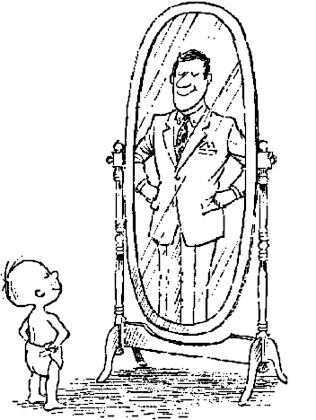
Hmmm...., Is this me or who I want to be?
When you look into the mirror, what do you see? Most likely, you see you! :-) What’s wrong with that? Well, nothing necessarily, but using the mirror as a metaphor, what “tense” do you see yourself. What??? Well, I’ll admit that word “tense” is stretching things a little, but what I’m suggesting is when you look at yourself, do you see yourself as you are now, or as the person you can become? In other words, do you generally “see yourself” as the person you are presently, or as the person you will be in the future?
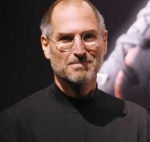
Steve Jobs - A creative visualizer!
Using your imagination, you can also view yourself in your mind. The mind can act as a mirror reflecting who you think you are now or will become. Many competitive athletes use the technique of creative visualization to help outperform their opponents. When using creative visualization, a person uses her/his imagination to visualize an outcome as a specific behavior or event. This is similar to using the mind as a mirror to reflect what you can become.
Your self-image is what you’re seeing when you view yourself in your mind. Is it fixed? In other words, is your self-image usually the same image each time you view it? Should it be? I’ve known people who think they look and act like they did when they were much younger. They don’t see themselves as they are now or will be in the future, but instead, as they were.

Wow, what an expanding self-image! :-)
Now, I do think there is a time when we should remember how we were in the past. But, that time should not be always. If it is, then we are trying to live in the past. Impossible! Of course, we can only live in the present, so we do need to have a true and present self-image. A present and true self-image is needed in order to see ourselves as others do. It’s difficult to be true to yourself unless your present self-image is true. So, past and present self-images are necessary and useful, but NOT necessarily sufficient for an exciting and accomplished life.
"That's not what I want to see, but how do you feel?" Hmm....
People with true, but expanding self-images will see themselves as what they can become. They will see themselves as they are, but will not be restricted to only that view. When you see yourself as the person you can become, you immediately give direction and set goals for yourself. How can you be what you can’t see?
Past and present self-images are necessary and useful, but a clear future self-image should be a primary focus. A good focused vision of what you want to be in the future gives you a goal and purpose. So, look into the mirror and see the person you want to be. When you see it, you can be it!
What’s wrong with the mirror’s reflection? Nothing, if it reflects who and what you are, as well as who and what you want to be.
Mirror, mirror on the wall, what is the future for us all? :-)
Should We Look For Gnu (New) Ways?
Posted on February 23, 2012 Leave a Comment
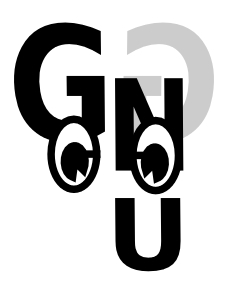
Instead of "always doing it the way you did before," try something GNU! :-)
Throughout my life and on many different occasions, I’ve heard (the) reason(s) for doing something, stated as: “We always do it this way.” In other words, don’t do it in a new (or the recursive acronym – gnu :-) way, but continue doing it the same old way.
Of course, there’s merit in doing something because it was proven to work in the past. If we’re familiar with what we’ve done, then we will have a certain degree of confidence in doing it “like before.” If it has worked in the past, then we readily assume it will work in the present. And, it might!

"GNU is a recursive acronym for 'GNU's Not Unix!" Now, there's a new or gnu way of not doing it because that's the way it's always been done. :-)
So, why consider doing it differently? If we do something a certain way because, we always do it that way, then what are we giving up by not trying a different way?
Consider Henry Ford and his invention of the Ford assembly line. He decided to have the cars move to the workers instead of the “we always do it this way” of having the workers move to the cars. That simple switch revolutionized the automobile industry. How did Ford think of this? I’ll bet he didn’t know exactly what the result would be when he decided to change his assembly line. I’ll also bet he was operating on a hunch. He decided to do something that wasn’t the way it had always been done.
How can we get out of the rut of doing something the way it has always been done? One way is by using the old education adage: “start with a clean slate.” Literally, start out with nothing from the past. I’m not saying we shouldn’t use past knowledge, but I am saying we should set it aside, as much as possible, in order to have a fresh new look at what we’re trying to do. Do some what if-ing. Consider the implications and consequences of the “what if’s” and then, if they seem reasonable, try them.

Henry Ford decided to have the cars move to the workers instead of the "we always do it this way" of having the workers move to the cars.
Starting out with a clean slate allows the creative part of thinking to be manifested. As long as we use our critical thinking to help assess the creative output from our mind, we should be able to have fresh approaches to problems, while still using what we know from the “way we have always done it.”
For a change, consider trying new approaches to some of the mundane parts of your life. Instead of mowing your grass by going back and forth, try going round and round. Instead of going to the grocery store using your usual route, try a completely different one that takes you by a new area. Instead of eating a salad at the beginning of the meal, try eating it at the end of the meal. There are many times during a normal day that we could change our approach and reason of, “we always do it this way.”
By getting rid of the reason, “We always do it this way,” we will be able to have a new look at our present and future. Too often, people are stuck in the past by not trying new ways of doing things.

"If you always do things a certain way based on previous methods, then your vision of the future is like the past."
Think about it – if you always do things a certain way based on previous methods, then your vision of the future is like the past. You have nothing new to look forward to. This is especially true for those of us who are “up-there in years.” We have so much history that we can’t imagine a new and different way of doing something. “That’s the way we’ve always done it!”
How about a fresh and new look on life? Let’s use the philosophy behind the statement, “we always do it this way” sparingly.
Consider changing the statement to, “We always DID it that way, but now we are considering new ways.”
Should we look for new ways to do what we do?
Well, if we like stale and mundane, then no.
If we don’t want “freshness” in our approach to doing what we do, then no.
But, if we want to learn from the past AND not necessarily repeat it, then yes, we should look for new ways to do what we do. :-)
Really, Am I Responsible For My Emotions?
Posted on February 14, 2012 3 Comments
Are we responsible for all of our emotions?
In April of 2009, I presented a post entitled, “You Make Me Emote!“ In the posting, I declared that each person is responsible for her/his emotions. I have been thinking a lot about that declaration lately. It’s possibly much more complex than I originally thought. In other words, maybe the simplicity of declaring each person is responsible for her/his emotions needs to take into account the many reasons for emoting, along with the imperfection of humanity. Hmmm… Let’s explore this further.

Who’s responsible for your emotion of love – Cupid or you?
Having recently experienced the complex emotion called grief, I’m immediately confronted with the powerful statement made by H. L. Mencken: “For every complex problem there is an answer that is clear, simple, and wrong.” So, as I consider emotions that I find negative and then say, “I am responsible for them,” should I simply declare they all are my responsibility? Am I taking responsibility for something that I shouldn’t?
Perhaps, we should investigate the cause of our emotions before determining responsibility. So, what causes our emotions? What causes me to feel angry? Suppose someone hits me with his fist. The first thing I feel is the physical pain of being hit. The next feeling might be anger. If so, what caused the feeling of anger? Is it because I’m feeling physical pain? No, because the feeling of physical pain doesn’t necessarily produce the emotional feeling of anger. Take, for example, the pain resulting from accidentally bumping your head while getting into a car. Usually, there would be no direct emotional feeling of anger from the physical pain felt after the accident. The point is, that a certain emotional feeling doesn’t necessarily come from a particular physical feeling.
So, what causes these things you (and, I) call emotions? In the past, I’ve answered that question with a simple three-letter, one-word answer: “YOU!” Yes, you are the cause of your emotions. I know in my previously mentioned posting, I never specifically stated that each person causes her/his emotions. Instead, I talked about owning our emotions and not blaming anyone else for them. We not only own our emotions, but we’re also the cause of them.
Assuming each person causes her/his emotions, is s/he responsible for them. In other words, does cause imply responsibility when dealing with emotions? If I cause my anger, am I responsible for it? If I cause my happiness, am I responsible for it? I suppose the answer is yes to both questions, but somehow, it doesn’t seem to fit reality. Many people, including myself, will make sincere statements like: “Kathy makes me happy!” or “Ron made me mad!” In these types of cases, we are saying (and most likely mean) that Kathy and Ron caused and are responsible for the emotions.

Some say I cause negative emotions, especially when I’m full:-)
If we cause AND are responsible for our emotions, then I think it’s our thinking that’s at the root of our emoting. What I mean is we shouldn’t blame an external source for our emoting. If I am responsible for my own thinking, then I am the cause for my emoting.
Of course, circumstances can make it difficult to not emote in a particular way. For example, when I experienced a death of a close loved-one, my grieving was difficult and for me to say that it was caused by me is hard to accept. On the other hand, if I don’t take responsibility for my grieving and not accept that I caused it, then how will I ever be able to overcome it? Either I control it or it controls me!
So, am I responsible for my emotions? YES! But, what controls my emotions? MY THINKING!
Remember, we are not emoting due to what happens; we are emoting due to what we think about what happens.
What do you think?
How Can I Create A Creative Me?
Posted on February 3, 2012 3 Comments
"Let's see, how can I create a creative me?"
Last year, a close friend and I were walking and she made a comment about wanting to learn how to paint using watercolors. She also said that she has never been able to create a painting that is good. After talking about all of the creative things she wanted to do, but never did, she then summarily stated: “I simply am not creative!”

"I'm an impressionist artist, are you impressed?"
I responded by saying that I thought creativity could be learned, and if one’s standards for a creative endeavor, like painting, were lowered, then that person could create a good painting. I used examples of impressionism and cubism which, from my point of view, have standards that allow the result to not look like a photo of the model used for the painting. Also, in reference to standards, I think the artist should set her/his own standards. This is especially true when the artist is creating for her/himself.
Creative people are not born creative. In other words, I don’t think the nature-part of us dictates our creativity, but I do think the nurture-part plays a role. Children, who are raised in an environment which stifles their creativity by forcing them to live up to unreasonable standards, will tend to think they aren’t able to create art. They will not attempt to create, therefore exemplifying the old adage of, “use it or lose it.” They don’t use their creative thinking and therefore, lose it! :-(
Creativity requires us to use our creative mind. Think of the creative mind as a muscle. If you don’t use a muscle, it will become weak and eventually, will be unable to perform as it normally would. We all know that exercising our muscles make them stronger. The same is true for our “creative mind.”
So, what should we do in order to become a painter, musician, sculptor, builder, writer, cook, dancer, etc….? Well, one thing we shouldn’t do is nothing. The best way to become more creative is to create. Generate lots of ideas and decide, using your own standards, which ones to keep. Break a routine and do something differently.

How do you exercise your creative mind? One way is to get a brush, some watercolor and a surface to paint on and paint!
Generally, creativity means change and doing something in a different way. In other words, lots of BS! Now, I know what you are most likely thinking when I used BS. No, it doesn’t mean BullS**t, but instead, BrainStorming. :-)
So, what should you do if you want to paint a picture using watercolor? Get a brush, some watercolor and a surface to paint on and PAINT! Simple? Yes, if you can obtain the materials AND the “creative brain-muscle.”
How can I create a creative me? Well, one way is to become more creative.
How do I become more creative? Exercise my creative mind!
How do I exercise my creative mind? One way is to get a brush, some watercolor and a surface to paint on and paint! :-)
Do you want to exercise your creative mind? Create a comment for this post. :-)
Is Tomorrow Forever?
Posted on January 27, 2012 2 Comments
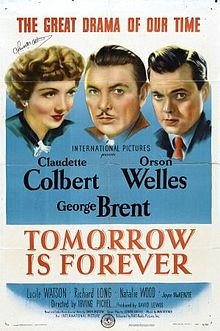
Is tomorrow forever?
Recently, I watched the movie, “Tomorrow Is Forever“ starring Orson Welles and Claudette Colbert. It’s a film that was originally released in 1946. Even though I have seen it many times, I watched it again because – it starred an actor I’ve always enjoyed, Orson Welles, and most importantly, my curiosity about the title.
Perhaps, "Tomorrow Is Forever" is a pie-chart type of a statement. It gives us another way of viewing our life.
From my point of view, “Tomorrow Is Forever,” is an intriguing statement. When I first thought about the statement, it seemed like a “pie in the sky” statement. It was while watching the movie, “Tomorrow Is Forever,” and trying to figure out why the movie used the title, that I realized how thought-provoking the expression is. At least, it is for me.
Perhaps, I should make clear that “tomorrow is forever” is an expression that, when it is applied to one particular life, doesn’t seem to ring true for me. That is, when we consider each of our lives, individually, then our tomorrows, as living persons, aren’t forever. But, when thinking about tomorrow in a more general sense, tomorrow not only seems to be forever, but the expression also provides a short and succinct alternative for such things as: “an expanding universe,” “the future is now,” “live for the future,” “the present influences the future,” etc….
So, is tomorrow forever? Let’s look at it from a future point of view. Is the future forever? Well, a future may not include a living me, but the future, in some form, is forever. As I go to bed at night, I assume that tomorrow contains my living future. I set an alarm to wake-up in the future. I live as though tomorrow is forever. In fact, why shouldn’t I? What is accomplished by not thinking that tomorrow is forever? Only a pessimistic and/or negative outlook on life. Ouch!
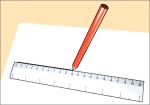
Drawing the "line segment on a ray" to represent my life. :-)
Looking at this from a different point of view, I can see a mathematic metaphorical “way” of representing my life. I see it as “line segment on a ray.” Of course every ray contains an unlimited number of line segments, but for my metaphor, I see the time from my birth to the present as a line segment that is constantly getting longer. And, the future? Well it is truly a ray that has its endpoint at the present and goes on forever! :-) Therefore, the metaphor is a geometrical ray that has an endpoint, my birth, and then continues to my present — the line segment. The future or tomorrow completes the ray.
Birth •———– Present ———- Future ———— ➜
The preceding paragraph is a bit abstract. In a less abstract manner, there have been at least two books that have the title of “Tomorrow Is Forever.” One written by Gwen Bristol and another by Barbara Faith. The book by Ms. Bristol contains the story used for the movie mentioned above and Ms. Faith’s book is much different, but still makes use of a story about a person escaping the past while viewing life as though tomorrow is forever.

"Yesterday is gone, gone, but tomorrow is forever." -- Dolly Parton
A little different twist to exploring the question, “Is tomorrow forever?”can be seen in a song written by Dolly Parton, in 1970. In it she wrote and sang the following:
Take my hand and run with me
Out of the past of yesterday
And walk with me into the future of tomorrow
Yesterday must be forgot
No looking back no matter what
There’s nothing there but mem’ries that bring sorrowYesterday is gone, gone, but tomorrow is forever
Click here to hear a YouTube video of Dolly Parton and Porter Wagoner singing Tomorrow Is Forever.
The first three lines, “Take my hand and run with me, Out of the past of yesterday, And walk with me into the future of tomorrow,” gives the impression that a person can always leave the past and, from a present point of view, “walk into the future of tomorrow.” Wow! Perhaps, in order for any of us to be optimistic, we need to view tomorrow as forever. :-)
So, is tomorrow forever? As an optimistic person, I must say YES! What do you think?


 R2 Thoughts for You