 R2 Thoughts for You
To Change Everything, Simply Change…….?
Posted on June 5, 2009 1 Comment

At the end, this will change!
The only thing that is constant is change! To change everything simply change your attitude! Change is inevitable! To learn means changing your mind!
These are all statements about change that I have heard and used while teaching students. A question involving change that I have often heard and asked is: “If you could change one thing about your life, what would it be?”
When thinking about this question one must realize that many things in life cannot be changed. We cannot change how tall we are nor can we change how old we are. On the other hand, we can change many things that we think are impossible at first glance.
Many of us want badly to change something that is changeable yet we are unsuccessful. Why? Wanting to badly is a wonderful start. Having stated that, wanting to badly usually won’t get you anywhere by itself. Actually, neither will the use of affirmations and visualizations, if that is all you do. This is because when we want to make a major change in our life we often try to “bite off too much.” Think of a change that you want to make as the act of eating a big sandwich. In order to eat the sandwich you must consume it one bite at a time. If you try to eat it in one bite you are overwhelmed by its size and either give up or choke! Either way, change in that manner is usually impossible.
If you really want to get started making a major change in yourself you should pick one reasonable part of the change to begin with. For example, suppose you wanted to become a more loving person with your mate. Instead of trying to change everything that causes you to not be a loving person you should instead, choose one part of your relationship that needs improvement. You might focus on always being cognizant when your mate is in your presence. This concept of “being present in the present” is valuable as motto to follow always and is especially so when relating to loved ones. This would be an excellent “first bite” toward consuming the “sandwich” of becoming a more loving person with your mate.
In general, make the change you want into an affirmation and repeat it over and over and over. Visualize how you will feel and behave after the change is made. Keep repeating your affirmation that supports your visualization. Make a plan, have sub-goals (those bite-size changes), and develop tasks that support the change. Hold yourself accountable and reward yourself as you achieve your sub-goals.
Don’t worry about how long it takes — only be concerned that you are on track and working toward the change you want. Keep track of your progress and keep in mind that the journey is as important as the destination.
Life is a journey of constant changes of which we have more control of than we often realize. Embrace change and make it a positive for your life.
Consider your life to be your house in which its biggest room is the room for change. Now, make that room for change a room for improvement and you will be on your way to having a better life.

It’s the end AND it has changed :-)

Is Affirmation A Tool You Use?
Posted on June 3, 2009 Leave a Comment

WHAT should you do in order to become a better person? This is an important question for all of us. When we are faced with the realization that something we are thinking and/or doing is not helping us to be that better person we want to be, then what should we do? One good tool to use is an affirmation. An affirmation, something that you assert strongly, is a present-tense, positive statement of a desired outcome.
In order to change in a positive way we need to know what that change is and then set out a plan for changing. Usually, the knowing what the change is, means first, stopping what we are currently thinking and doing. Then visualize what the new thought or deed should be and change. It’s the “and change” that becomes the hardest for many.
The “and change” part is where the tool of affirmation can help. For example, suppose you want to become a better person by not becoming full of rage every time someone does something to you that you don’t like. A specific example might be the rage you feel when, while driving, someone cuts you off and glares at you as if you have no right to be on the road. In order to become a better person, you decide that you want to become, in general, a more loving person and specifically, a person who treats all people with respect and courtesy in every possible circumstance. This changed way of treating people now becomes your affirmation.
Given this affirmation, what will happen when the next time someone cuts you off and you respond automatically in a most disrespectful manner? Does that mean that this idea of becoming a better person using affirmations does not work? Not really!
Before, when you responded in the disrespectful manner, you probably would not have recognized your disrespectful behavior as anything different or unusual. Now, because of your affirmation and the promise to yourself, you would instantly feel guilty. Now you know this is not the way you want to behave and realize that is the way the old you acts. The next time, you say to yourself, I will respond differently. Therefore, your affirmation gives you the visualization and direction to change into someone who intends to behave in a respectful and courteous manner, no matter when or how you are provoked.
By saying your affirmation over and over again, therefore visualizing it and realizing how it feels day in and day out, your new and desired behavior will become second nature to you. In this manner you eventually will not remember any other way.
Affirm yourself into being better!
I’m looking forward to your affirmation comment.

Affirm R2
What Value Are Values, If Not For You?
Posted on May 30, 2009 Leave a Comment

Are your “values” important? Are others’ values important? Most likely, everyone would answer yes to the previous questions. Let’s concentrate on the values of others and how important it is for us to know them.
When I was a teacher, I often would focus on what each individual student’s values were. You see, by knowing what my students valued, I was able to relate my lessons to what they deemed important and were willing to work for. Many of my students, for example, valued their parents’ favor. Other students valued their work for God. And others, valued education as their “ticket” out of poverty. I believe it is important to know the values of those we wish to motivate.
There is no way that I could motivate all of my students based on what each valued, but I could respect and honor each student for their own individual value(s). Ultimately, it is their value(s) that motivate(s) them to do well. As a teacher, boss, parent, etc., we must allow those we are responsible for, to use their values to motivate themselves. Our purpose, metaphorically, is to “build that bridge so they can get to the other side, then cheerfully collapse so they build their own bridges in the future.”
OK, so in order to motivate, it is important to know what the “motivatees” value. How do we find that out? I think by listening and asking. Don’t talk about what you value, but instead, ask what they value. Don’t watch what you do, but instead, watch what they do. Don’t read about what you like, but instead, what they like. Don’t watch what you necessarily are interested in, but instead, watch what they are interested in. I’m sure by now, you see what I’m getting at. In order to motivate someone, you must “build that bridge” from where that person’s interests are, to where you are motivating them to. The start of the bridge is where their interest(s) is/are, and the end of the bridge is “the goal of your motivation.”
Yes, in order to motivate there must be a goal – at least that is what I think. In order to have a goal that the “motivatees” will “buy into,” we need to appeal to their values. So what value are values? One important value of values is to help with motivation. This is true when someone is trying to motivate another, or self-motivation. When we base what we are doing on good solid values, we, as humans, find it easier to pursue goals. Pursuing goals is easier when we are motivated to do so. We are motivated when we feel what we are working toward, is in sync with our values.
If you want to motivate your children, a team, your employees, etc., then you should present the motivation in terms of something they find meaning in, and not, necessarily, what is meaningful to you. You must know, not only what you value, but also, what they value.
Evaluate, then Motivate! :-)
I value your comment(s).

Plan To Make Hope A Goal!
Posted on May 27, 2009 Leave a Comment
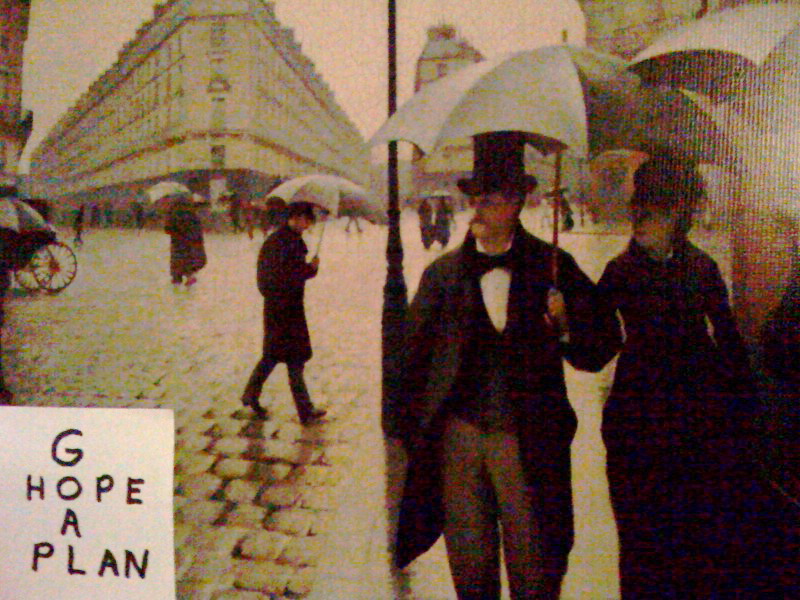 Recently, I wrote about hope. In the posting, I tried to explain why hope is not sufficient as a “way of life.”
Hope tends to be something we wish for and if we do nothing but hope, then we will, most likely, end up with only the wish. Most people want their wishes to come true. Wishing or hoping is only a start. They are good, but then what?
When we hope, we are usually thinking about the future. We hope or wish for a special birthday present. Maybe we hope or wish for a new car. If all we do is hope or wish AND we get what we want, then we have what might be called a miracle. Perhaps, we got it because of a fairy godparent or an angel. I’m not trying to convince you, the reader what to have faith in, but I believe, in general, it is better to not leave one’s wishes and hopes up to angels, fairies or miracles.
So what should we do? Turn the hope or wish into a goal. Devise a plan that specifically illustrates how you are going to reach your goal. The word “goal” is used in various sports for a good reason. It describes the end result of a desired outcome. If we use football as an example, the word “goal” is used for a line that must be reached in order to score. When you are playing football, you hope/wish to reach the goal line in order to score. But just wishing or hoping will most likely not get you there. Instead, your team will huddle, devise a plan and then, attempt to accomplish your goal of getting to the goal line.
Hopefully, you can see my point. Goals are much more specific than hope or wishes. You start with hope, turn it into a goal, and then devise a plan for accomplishing your goal.
PLAN TO MAKE HOPE A GOAL!
What About The Good Things In Life?
Posted on May 24, 2009 Leave a Comment
| “We can always choose to perceive things differently. You can focus on what’s wrong in your life, or you can focus on what’s right.” | |
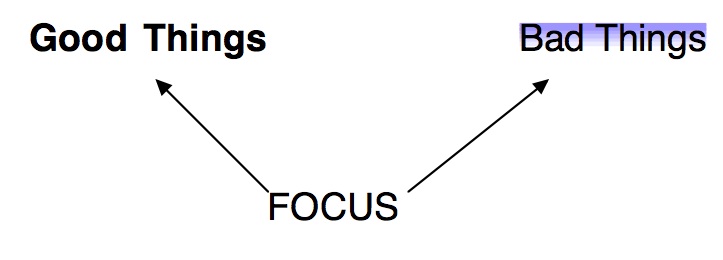
When should you focus on the good things and leave the bad things unfocused?
Are you aware of any good things in your life? I know that I need to constantly remind myself of the good things in mine. Are you like me, in that you often take things for granted? Why does it seem like we humans are programmed to take the good things in our lives for granted?
My mind’s memory often “screens out” the bad things and only allows me a subconscious memory of the good. This has been true for all of my life. When I concentrate and meditate on a time period of my life, I can remember bad things, but during most of my waking time, my mind seldom “brings up” the bad.
OK, so how does not being aware of the bad things in life affect me. Well, I think, in a way, it makes me “take for granted” the good things. If all I subconsciously remember are the good things, then how do I really know they are good? Now, stay with me on this – I think that balance, in the sense where I “balance” the good with the bad, would and should allow me to not take the good things in life for granted. How can there be “balance” when my mind is only considering “one end of the balance scale?” 
POST NOTE, not, post-it note:-) This post is an example where I am “writing for learning.” You have probably noticed that I am writing as though I am “thinking (writing) out loud.” Indeed, I am!
Now, it is somewhat obvious to me, that I need to consciously think about the good and bad things in my life. Of course, I don’t know about your situation, but mine is such that I have a lot of good things that I should be aware of. Really, here I am sitting at a computer and typing this posting, while in relatively good health with a satisfying life-style and a wonderful family. Please don’t be deceived by my choice of adjectives regarding my health, life-style and family. I’m the first to admit that all three are always changing. Then again, life is a series of changes and my health, life style and family are always changing. Right now and in the foreseeable future, the adjectives of good, satisfying and wonderful seem most appropriate.
I now think it is important to express these feelings in words. Most likely, all of us could and should express our feelings of gratitude for the good things we have in life. This will not only help us, but it will also help others to realize and feel grateful for the good things they have. The expression of gratitude can be “contagious!”
One last confession to make to you, the reader – I did make a list of the good things in my life that I thought I was taking for granted. I was amazed at how hard the list was to start but how easy it was to continue. Once I got started there seemed to be no end. Wow, what a good feeling it was to focus only on the good things in life AND not take them for granted!
Are you taking the good things in your life for granted?
Hocus Pocus – It’s Time To Focus!
Posted on May 20, 2009 Leave a Comment

Hocus
Hocus pocus, it’s time to focus!
This is a saying that I have often used while teaching high school students. It is meant to, in a non-offensive and “cute” way, encourage all to focus on what is currently being taught. Now, I know that you may be familiar with the children’s movie Hocus Pocus, but this expression has nothing to do with it. In fact, the movie was released in 1993, but I started using the expression in the 70’s.
Thinking of focusing and how it is used in photography gives an excellent metaphor for helping us understand how to deal with the complexities of life. When taking pictures, we want a sharp and clear focus of our photographic subject. In a similar way, we want that same sharp and clear focus for our everyday life.
Life can be confusing due to the wide and overwhelming array of choices we are faced with. These choices or options must be dealt with realistically. We cannot solve problems with the strategy of considering all the choices and options presented us in life. In a similar manner, we cannot take a focused picture when we try to bring clarity to every object in our view. We must focus our picture by deciding what to focus on.

Pocus
It is important to bring, as much as possible, all of our attention and energy toward solving a problem or dealing with a particular endeavor. We need to concentrate our attention similar to the need of focusing our camera. Even if we are in a crisis where our attention appears to be required everywhere at once, when we choose to focus our attention on one aspect of the problem, a solution becomes much easier. Solving one aspect of the problem then makes it possible to turn to another aspect, then another until it is possible to arrive, eventually, at the overall resolution.
I believe we live in our minds. An unfocused mind is an unfocused life. What we think, how we think and our life experiences depend on what we choose to focus our attention and energy. A photographer must decide what to focus on and what not to. So also every thinker must decide what to focus his of her thinking on. If not, the mind wanders and focuses on whatever the latest worry, concern, external stimulus or other vagueness. The result can easily be an unfocused picture!
Take charge of the situation by focusing on the problem. Hocus pocus, it’s time to focus. :-)

It’s time to FOCUS!
Is Hope Enough?
Posted on May 16, 2009 Leave a Comment

I hope this post is hopeful. :-)
What is hope? There are many definitions, but most relate hope to: trust, wish, expectation, plan, goal or dream. Often, the antonym for hope is pessimism. Let’s talk about hope in terms of trust, wish, etc., and consider whether we sometimes should not hope and/or be pessimistic.
Consider the following proverb:
As long as we have hope, we have direction, the energy to move, and the map to move by. We have a hundred alternatives, a thousand paths and infinity of dreams. Hopeful, we are halfway to where we want to go; Hopeless, we are lost forever.
The message in the proverb is nice and uplifting, but I disagree with what I think is implied. If I am interpreting it correctly, hope implies direction, alternatives and many paths. I think hope does help with dreams, and being hopeless will lead us toward being lost, but more is needed than hope, in order for us to have direction, energy, etc.
OK, so what do I mean when I say that more is needed than hope? Consider the following quote from Dale Carnegie.
“Most of the important things in the world have been accomplished by people who have kept on trying when there seemed to be no hope at all.”
You see, hope is important, but more is needed than just hope. When there seems to be no hope, then what? There must be commitment to the goal/plan or considering alternate points of view, as two examples needed in addition to hope.
Another way illustrating this idea is simply describe in this quote from Charlotte Perkins Gilman.
“However, one cannot put a quart in a pint cup.”
Or, consider the following quote from Dorothy Thompson.
“Fear grows in darkness; if you think there’s a bogeyman around, turn on the light.”
When trying to put a quart in a pint cup, we need more than hope in order to complete the task. Perhaps, a reality check! :-) If you think there is something in a dark room, don’t “hope it” away, but instead, turn on the light.

Hopefully, I have made my point; in my opinion, hope alone is not sufficient. We need hope and ??????; We don’t need hope or ??????
Let’s consider the and ??????
I start with a quote from Don Quixote.
“Sanity may be madness but the maddest of all is to see life as it is and not as it should be.”
This helps us see that we must look toward the future and not accept life as it is. In this sense, hope for a future that is “as it should be,” has us considering the positive aspects of hope.
How about this quote from Lin Yutang?
“Hope is like a road in the country; there was never a road, but when many people walk on it, the road comes into existence.”
Here is another view, metaphorically speaking, that clarifies how hope is important to help us create “the path we travel in life.” Note, I wrote path, not direction. Uhmmmmm!
Before we get too hopeful about hope, please consider the following from Friedrich Nietzsche.
“Hope is the worst of evils, for it prolongs the torments of man.”
Also, what do you think about the following quote from George Bernard Shaw?
“He who has never hoped can never despair.”
Am I for or against hope? Of course, I am for hope. I’m just wanting to point out that, in my opinion, hope is necessary but not sufficient for a fulfilling life.
How about a quote from our current president, Barack Obama, illustrating how important hope is, and has been, to America.
“We’ve been warned against offering the people of this nation false hope. But in the unlikely story that is America, there has never been anything false about hope.”
It’s not unusual to have a president speak of hope. In fact, Bill Clinton was from Hope (Arkansas). :-)
I end with a quote from Winston Churchill.
“The pessimist sees difficulty in every opportunity. The optimist sees the opportunity in every difficulty.”

I HOPE you will comment :-)
Are You A Captain Of The Universe?
Posted on May 13, 2009 7 Comments

A Captain of the Universe? No, not Captain Universe. :-)
Many captains exist in our lives. We have captains in armies, on sport teams, on ships, in leadership groups, and many other groups. But, perhaps, one place where you never consider having a captain is the universe. Perhaps you have worked with someone or lived with someone who acted as though s/he was captain of the universe. Or maybe you are acting as though you are such a captain.
Captains of the universe are often very much into having everyone behave according to their rules. They want all of us to march according to their orders. Their vocabularies are filled with words like “should,” “have to,” and “expect.” Though these words are not necessarily bad words to use, they can indicate, especially if used on a regular basis, that the person is a “captain of the universe.” These are often people who are not fair minded – people who lack empathy and are not rational in a fair minded sense.
These captains find fault everywhere they look and everywhere they go. They are bothered by others with annoying habits – habits that they think cause them to be unhappy. These captains often display egocentrism and constantly run into incompetence and inconsistencies.
Captains of the universe feel you are lucky to have them around to tell you how to do things right. But, we usually resent being told by these captains what we are expected or have to do. Often, we find ways to be a mutineer on the captain’s “ship of life.” We will do things that deliberately mess things up.
People don’t like hearing “you have to.” This is not good motivation. Good motivation is never based on the fear of what happens if you don’t do something. When the captain says “you have to,” you think of this as restrictive and something that must be done without your ownership to the thought process. In other words, the captain is not only telling you what to do, but implying you must do it without you being convinced in your own mind that this is the right thing to do.
Now, consider if you are a captain of the universe. If so then it is time to resign that position. There is only one captain that you should be and that is captain of yourself. You can always find things that you “should do,” “have to,” etc. You don’t need to be captain of the universe when you have a full time job just being captain of yourself. Make the universe a happier place by finding those things in yourself that need changing in order to make yourself happier. To change everything, simply change your attitude toward yourself! You’ll be happier and so will the universe.
If you are a captain of the universe then perhaps the first verse of Walt Whitman’s famous poem, O Captain! My Captain! is appropriate.
O Captain! my Captain! our fearful trip is done,
The ship has weather’d every rack, the prize we sought is won,
The port is near, the bells I hear, the people all exulting,
While follow eyes the steady keel, the vessel grim and daring;
But O heart! heart! heart!
O the bleeding drops of red!
Where on the deck my Captain lies,
Fallen cold and dead.
Let the captain (of the universe) fall, figuratively speaking, cold and dead!
**I would love to read your comments.**

Free Software Expo – Is It Free?
Posted on May 9, 2009 Leave a Comment

A sketch of Free Software Expo held at Westport Plaza
Well, here’s a first for me. I’m at the Free Software Expo representing the St. Louis Bloggers Guild. I feel somewhat inadequate representing the Guild, but I do have help. Mike, a fellow member of the Guild, is here and any questions I can’t handle, he can.
OK, so I’m at the Expo and I’m blogging. What’s that have to do with the price of eggs today? Well, nothing regarding eggs, but of course, that’s only a figure of speech. Really, the Expo is very interesting to me, but not for the reason you might imagine. I have watch three presentations about “stuff” that I have no prior knowledge of.
In fact, attending the Expo, reminds me of my first few days in Greece – I did an earlier posting on my visit there – where I didn’t understand any of the language, but enjoyed my time immensely. One of the main comparisons between my visit to Greece and my attendance at the Free Software Expo is that “it was all Greek to me.” Of course, I’m speaking about the lack of understanding the language.
At the Expo, two of the presentations I observed, used many words that I, personally, didn’t have meaning for. Now, I can imagine you thinking that there is no way he can find this interesting. Wrong! It was interesting in the way a student would find a class interesting where the lesson, though very challenging, introduced her/him to a whole new world. It was fascinating to see and hear about the language, art and science of Linux and Unix, along with many extensions of these operating systems for computers.
Many times when I reflect back on experiences such as attending this Expo, I have one simple but lasting “idea” that I leave with. Well, I had a most surprising one this time. It has to do with the word “free.” Now, I can imagine you sitting there asking yourself, “what could be so surprising about the word free?” Good question!
Free, when it comes to free software, doesn’t mean that it is necessarily free. If software doesn’t cost any money it still may cost. It’s the use of the word “free” that is “trickier” than I imagined. The Free on-line dictionary definition of free contains multiple meanings and, to be honest, I am familiar with most. Having stated that, I also must admit, that I have not considered, before now, how the word “free” in misused in my mind. In the past, when I saw something that was free, I considered the meaning to be either, without monetary cost OR able to do what I want to do.
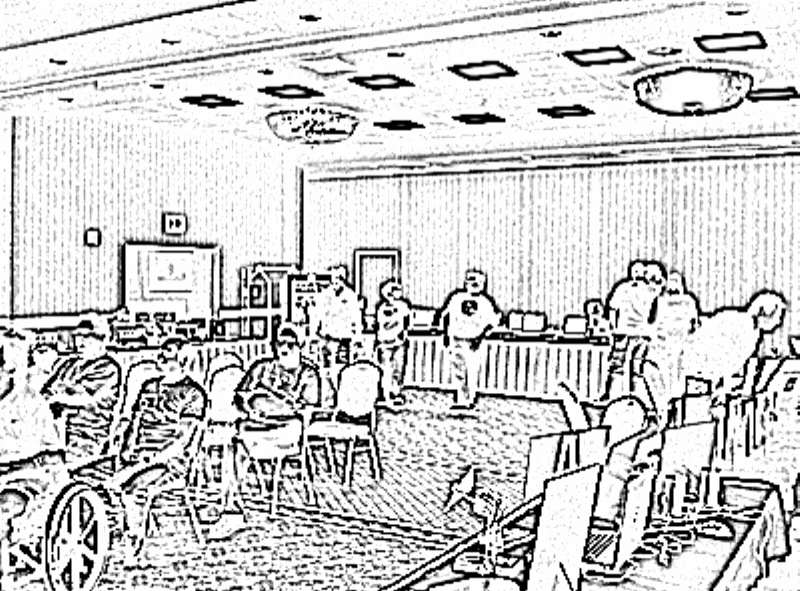
Free Software Expo – View of some of the audience
Free Software — without cost. Yes and No. It could be free, but cost you to use it.
Free Software — able to do what I want to do. Yes and No. You could use it, but not be able to do what you want to do.
Both of the above mentioned “Free Software” explanations are short. For more detail, please visit the following link. Free/Open Source
Feel “free” to comment. :-)
What Is Love?
Posted on May 7, 2009 Leave a Comment

A love post for today. I have been wanting to write this for some time. This post has been started and stopped more times than I can remember. I “flirted,” no pun intended, with it on Valentine’s Day, but was only able to address the subject of the day and my Valentine.
You see, I want to understand what love is from my point of view. On the surface, it seems like it should be a simple thing, but the more I think of it, the more I’m not sure. Love has so many different meanings. At least, when I looked for definitions and descriptions, I found an incredible amount of diversity. So, what is love (to me)?
Well, love is not friendship, but friendship can be a part of love. Love is not thoughtfulness, but thoughtfulness can be a part of love. Love is not tenderness, but tenderness can be a part of love. Love is not a relationship, but a relationship can be a part of love. As you can see, once I start a sentence with what love is not, I am able to say that what it isn’t, is part of what it is. Wow!
The most common antonym of love is hate. Having stated that, I believe that love is so complex that hate, as an antonym, is insufficient. If I don’t love, it doesn’t necessarily follow that I hate. If I don’t hate, it doesn’t necessarily mean that I love. This “love thing” is really hard to nail down. At last, I think I can see what Cole Porter was “getting at” when he wrote: WHAT IS THIS THING CALLED LOVE?
 Let’s approach this from a different angle, or point of view. Instead of trying to explain what love is, I’m going to use some favorite quotes about love and then add my comments.
First, from Mark Twain.
“Love is the irresistible desire to be irresistibly desired.”
Uhmm. A desire to be desired. Yes, especially when “irresistible” is added. Love is a strong desire in humans that seems to be universal.
———————————-
Number two is from Elizabeth Browning.
“Love doesn’t make the world go round, love is what makes the ride worthwhile.”
I really like this way of viewing love. It speaks to love as something like spice is to food. Here’s another way to view it, using a food metaphor: “love is like an excellent dessert to an otherwise, average meal.”
———————————-
Number three is from George Sand.
“There is only one happiness in life, to love and be loved.”
This quote is insightful due to singling out love as unique in human emotion. If we would change happiness to unhappiness, then the result, no matter what other emotion we used, would not be complete.
———————————–
Number four is from the Talmud.
“Where love is, no room is too small.”
Have you ever thought about being in a room and choosing who you want with you? No matter what size the room? Uhmmmm…..
————————————
Number five is from Dr. Seuss.
“When you are in Love you can’t fall asleep because reality is better than your dreams.”
I realize this is “metaphorically speaking,” but I think it really “hits home” regarding love. “In love” is a feeling that takes precedence over all other aspects of our life. We can’t “dream” it better. Nicely stated, Dr. Seuss.
The rest of the quotes are anonymous. I list them without comment. They are all sayings that I like and feel have value in helping us with a better answer to: What is love?
“Just because someone doesn’t love you in the way you want them to,
doesn’t mean that they don’t love you with all they’ve got. “
————————————
“Love is friendship set on fire.”
————————————
“My love for you is a journey; Starting at forever, And ending at never.”
————————————
“Love puts the fun in together, The sad in apart, The hope in tomorrow, The joy in the heart.”
————————————
We were given: Two hands to hold. Two legs to walk. Two eyes to see. Two ears to listen. But why only one heart? Because the other was given to someone else. For us to find.
————————————
I WOULD LOVE TO READ YOUR COMMENTS!


