 R2 Thoughts for You
When Is The Last Time You Spent Some Quality Time With You?
Posted on October 4, 2010 1 Comment

Solitude!
“I never found the companion that was so companionable as solitude. We are for the most part more lonely when we go abroad among men than when we stay in our chambers.” ~Henry David Thoreau, “Solitude,” Walden, 1854
Let’s think about being alone. Another word related to this idea is solitude. Are you comfortable being alone or “in solitude?”

I spend lots of quality time alone.
When was the last time you spent some quality time with yourself? I know this may sound a little weird, but there is really only one person you ever have to live with and that person is YOU! In fact, you are the only person that is with you 24/7. Now, there is nothing profound about these statements, but I must admit that the thought of living with myself is relatively new to me. I, before now, just never thought much about it.
I have always wondered about hermits and how they were able to live a fulfilling life by themselves. As a child, I read about hermits and now frankly, I couldn’t imagine living their kind of life. You see, I converted to Catholicism when I was eleven years old. I did so because I wanted to. I was not pressured in any manner. I state this so you, as the reader, can better understand why I took the study of my new religion willingly and very seriously. While trying to learn as much as possible about Catholicism, I read the Bible and many other writings that sometimes referred to hermits.

Never be afraid to sit awhile and think!
In the old testament of the Bible, there is an implied and described way of life, now known as a desert theology, where hermits would seek God by living alone in the desert. Many early Christian hermits lived in the desert and generally, followed the desert theology way of life. As I learned about seeking God by being alone, I would often imagine myself as a hermit. Eventually, I rejected the idea of ever becoming one, but I still, to this day, wonder about such an existence.
It has been said that man is a social animal. How does a hermit live and still remain human? I suppose the hermit must be comfortable with the only person he has to live with — himself. Well, he is not alone — he has himself! :-)
Speaking of solitude, if you put prisoners in solitary confinement, then you are giving them extra punishment. Most of the prisoners that are placed in solitary confinement go a little crazy, but a few will use the time as a positive way to grow. Perhaps, the ones that go a little crazy, do so because they’re not used to being alone.
Too much solitude feels like a punishment, but some is absolutely essential, if we are to grow in a positive way. It is solitude that allows us to do the deep thinking needed for sorting life out. I have read that one reason therapy works so well is that it provides built-in time and structure to focus inward. Perhaps, this is the lesson in the often quoted statement from A Raisin In The Sun by Lorraine Hansberry: “Never be afraid to sit awhile and think.”
I have been sitting around and thinking about the only person I have to live with. What do you think of the only person you have to live?

Should We Attack Personal Attacks?
Posted on September 30, 2010 1 Comment
Recently, I have been reading an open forum that is provided by my subdivision. The forum is on the website for the subdivision and gives the residents a place to report observations about the neighborhood, advertise items for sale, announce events and express concerns. For this post, I would like to discuss what I have observed lately when my neighbors made use of the latter, expressing or “airing-out” concerns.
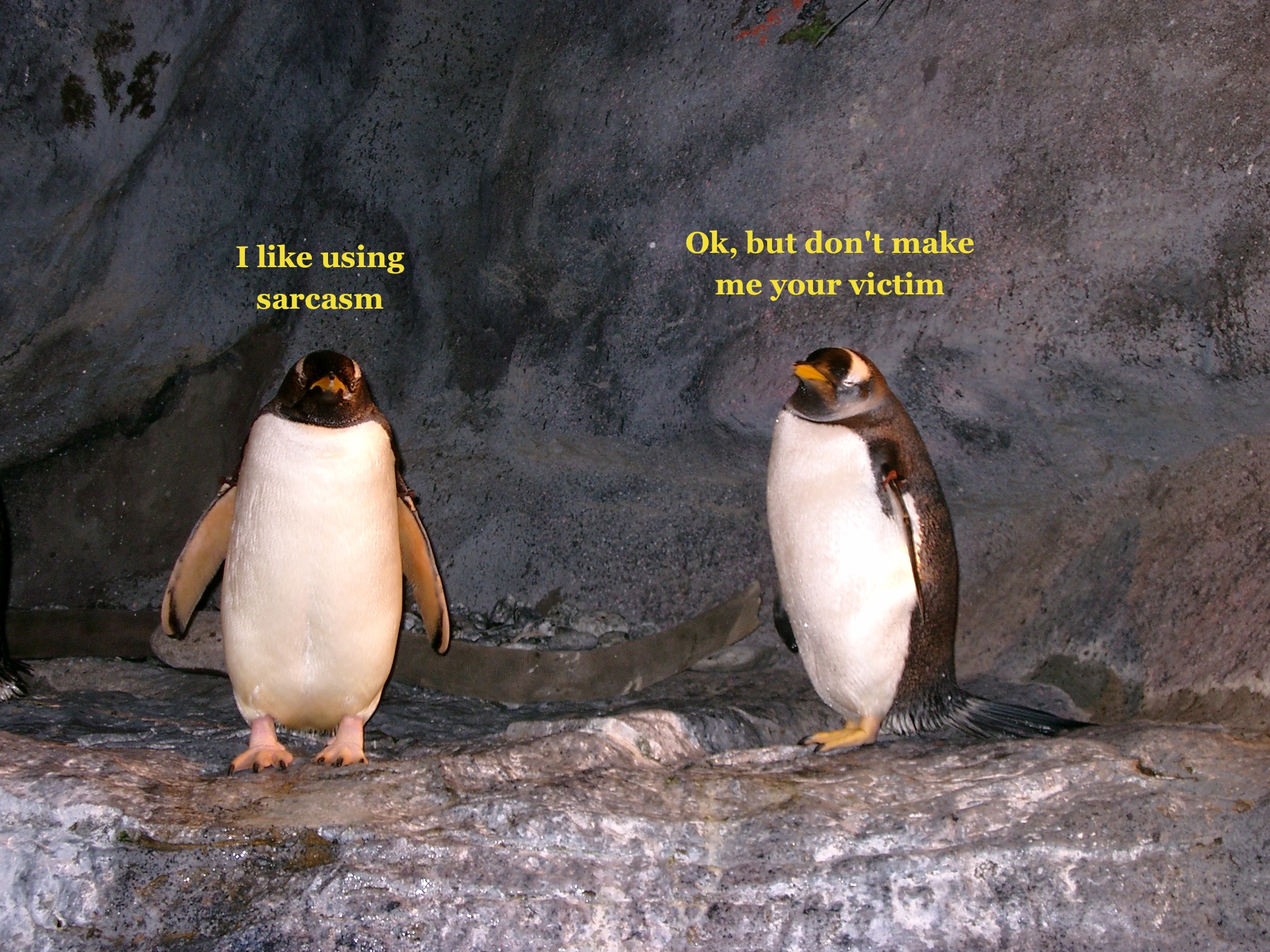
Ok, so why am I wanting to discuss about how my neighbors having been “airing-out” on the website? You see, many of the posts regarding concerns about issues in the neighbor have become personal attacks on some of the people who have “aired” their concerns. Frankly, many of the posts are unfair, from my point of view. There has been a strong use of sarcasm by some and many have chosen to remain anonymous. I assume the ones who were anonymous didn’t want to be personally confronted. in other words, they were anonymous because they didn’t want to be personally attacked. There were even a few posts where the author explicitly stated that was the reason for the anonymity.

I use an axe instead of sarcasm on my victims!
Regarding the use of sarcasm, I have often proclaimed that sarcasm is humor that always has a victim. I know that many times, when using sarcasm, irony and satire is involved. How ironic from a satirical point of view! :-) From my point of view, sarcasm, though sometimes extremely funny and entertaining, is not a form of humor that should be emphasized nor strived for. Now, I realize that I might be in the minority regarding the use of sarcasm, but, sarcastically speaking, what does the majority know? :-)
But, back to the “airing-out” concerns and the personal attacks often written in response to these concerns, I have noticed how some respond to the personal attacks by “attacking-back.” They express anger and hurt; they write long responses and sometimes hint at retaliation. On the other hand, there are others who either don’t respond to the personal attacks, or simply brush them off. This difference in the way the two groups handle the personal attacks is at least interesting, if not insightful.

Not a personal attack, but instead, a “purple” attack! :-)
How can some deal with personal attacks by simply brushing them off, while others seek revenge or retaliation? I think it has a lot to do with self-esteem. A person with high self-esteem will not be bothered by personal attacks as much as one who has low self-esteem. Usually low self-esteem reflects low self-worth. A person with low self-worth doesn’t see her/himself having great value. Such a person can feel incompetent, yet will often try to project an image of confidence by speaking/writing with bravado. This is what I think I’m observing while reading the responses of some of my neighbors’ airing-out concerns – a lot of bravado writing that does little more than make the writer feel good.

Abraham Lincoln
I once read about an encounter between President Abraham Lincoln and one of his commanders in the Civil War, General George McClellan. Lincoln visited McClellan in order to get a first-hand evaluation of how the war was going. When McClellan arrived to his headquarters from the battlefield, instead of greeting Lincoln, he went upstairs to clean-up. Later, McClellan sent his maid down to tell Lincoln that he was tired and was going to bed without seeing him. One of Lincoln’s aides said, “You’re not going to let him get away with treating you like that, are you? Won’t you relieve him of his command?” Supposedly, Lincoln thought about it for a few minutes and then said, “No, I’m not going to relieve him. McClellan wins battles and I would hold his horse and polish his shoes, if it would hasten the end of this bloodshed by one hour.” Lincoln, in my opinion, was demonstrating high self-esteem. He was secure enough with himself that humility was an easy response to insults. McClellan wasn’t a threat to his self-worth. Lincoln did not attack the implied personal attack! Instead, he was rational and humble.
So, should we attack personal attacks? Attack with insults, sarcasm, anonymity, anger, and/or revenge. NO! Attack with rationality and humility. YES!
What do you think?
Do Your Thoughts Become Your Character And Then Your Destiny?
Posted on September 27, 2010 Leave a Comment
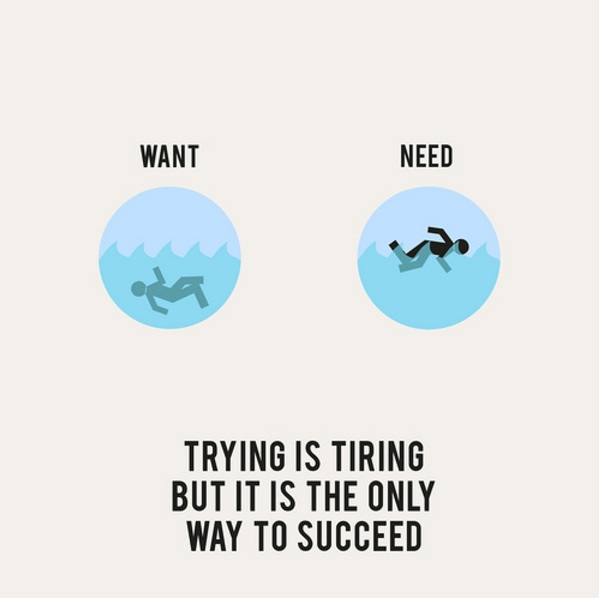
Maybe this thought will lead to your destiny!
“Watch your thoughts, they become words.
Watch your words, they become actions.
Watch your actions, they become habits.
Watch your habits, they become character.
Watch your character, for it becomes…
your destiny.”
Last year a friend of mine sent the above quote. I don’t know the source but I do know that it moved me. I like the “transitiveness” of it.

I’m thinking I’m a bad guy!
I have thought for quite a while that we live in our minds. That is, we are what we think and what we think becomes our reality. This is especially true when we are considering preferences, likes, etc. For example, if I think I’ve had a good time then I had a good time. OK, enough of the philosophy! :-)
Let’s look deeper into the quote. Our thoughts become words. The first dramatic example that came to my mind was Adolph Hitler. Before his rise to power in Germany, he lived in Vienna, Austria, where he did a lot of thinking and those thoughts, eventually, became the words that he used as a politician. Those words, first in writing his book, Mein Kampf, and then through his powerful speeches, became actions.
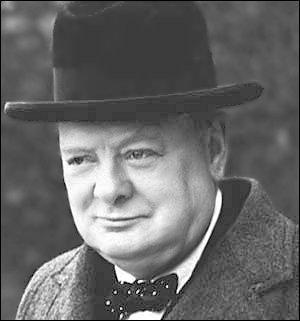
I THINK Churchill was a CHARACTER with a DESTINY!
Now, those actions were something that were not only his actions, but also those of his followers and/or armed forces. And, indeed, they did become habits. That leads us to character. Hitler’s character, in the long run became not only his, but also his army’s destiny. The destiny of fighting what became a losing battle against the forces of those who couldn’t accept, tolerate or live with his thoughts, words, actions, habits, character and/or destiny.
The preceding two paragraphs were meant to be my humble attempt at adding clarity to my interpretation of the quote. Ultimately, I think we must be careful about what we spend time thinking about.
I have heard many times the phrase “innocent thought.” Considering what I’ve written so far, I think it is safe to say that I don’t think most thoughts are innocent, especially if the word innocent means without consequences. Our thoughts determine who we are – our words, actions, habits, character and destiny. Ouch! Or, yea! :-)

Can all of my thoughts be “innocent?”
I say YEA! Let’s make it a positive. Are you dissatisfied with who you are? If so, then consider changing your thoughts as a start toward the new you. Allow your dissatisfaction to change your thinking in order to become a better person which will be manifested through your words, actions and habits resulting in a better character that will become your destiny!
WE ARE WHAT WE THINK!
What do you think? :-)
Why Act Like A Child When You’re Not?
Posted on September 23, 2010 Leave a Comment

Is R2 acting like a child around the children? :-)
Should you ever act like a child when you’re not? Many times I have heard an adult say something similar to: “S/he should ‘grow-up’ and stop acting like a child.” Often times, the statement is shortened to simply: “Grow-Up!” Is it true that when people grow-up, they should and/or do stop behaving in a childish manner?
Before continuing this from the adults point of view, let’s consider what it means from the child’s perspective. Is it appropriate for a child to act childish? I think it’s not only appropriate, but also quite normal. Childish means: “of, relating to or befitting a child.” But, I have heard many adults tell many children to grow-up. What do we mean when we tell a child to grow-up? Do we want the child to stop acting like a child? I’m not a child psychologist, nor do I have any expertise in the field of child behavior, other than what was acquired from my experiences of being a parent and teacher. Of course, since I was once a child, I do have the same experience that we all have, or will have, of personally going from childhood to adulthood. Having stated that, I don’t think a child should not act as a child.

My job is to act like a child!
“Genius is the recovery of childhood at will.”
Ok, so what about acting like a child when you’re not? Suppose you see an adult acting childish? What do you think when you observe this behavior? Do you think it is inappropriate behavior? Many adults, when observing other adults acting childish, react with disgust and/or repulsion. Why is this?
As we grow up, I think we should expect that, sometimes, children will act as adults and adults will act childish. This, in my opinion, is normal. A child who always acts as a child, truly is a person who needs to start “growing-up.” We should expect a child to show signs of becoming an adult, but we shouldn’t expect a child to always show these signs. Alternately, an adult who always acts as an adult is a bit overwhelming. S/he tends to be intimidating, stuffy, rigid, serious, unyielding and often times, hypocritical. I write, hypocritical, because when someone always “acts like an adult,” the person never admits, through actions, the childhood that produced her/him. Such a person seems to be unreal from my perspective. Of course, these may be just my childish thoughts. :-)

Is Fredbird acting like a child?
“It’s never too late to have a happy childhood.”
I thing we should sometimes act like a child because that’s who we are. As we grow-up, learn, and do new things, we shouldn’t regret or despise who we once were. The child that we used to be is still in us! That child deserves the respect, love and tenderness we could, would and should give to any child. Let’s think of this “child,” that was in our past and is still part of us as adults, as our esoteric child who is always mysteriously present. Let’s give this child the respect and direction it needs – like any child we love. If we reject this esoteric child, then we reject our past. If we reject this child, then we start down the road of “self-hatred.”
“The things which the child loves remain in the domain of the heart until old age. The most beautiful thing in life is that our souls remain over the places where we once enjoyed ourselves”
So, why should you act like a child when you’re not?
☞ Perhaps, when you are wanting to respect yourself for who you were and now are.
☞ Maybe, when your adult and mature self says you need to, for your own good!
What do you think?
IS Freedom Just Another Word For Nothing Left To Lose?
Posted on September 20, 2010 2 Comments
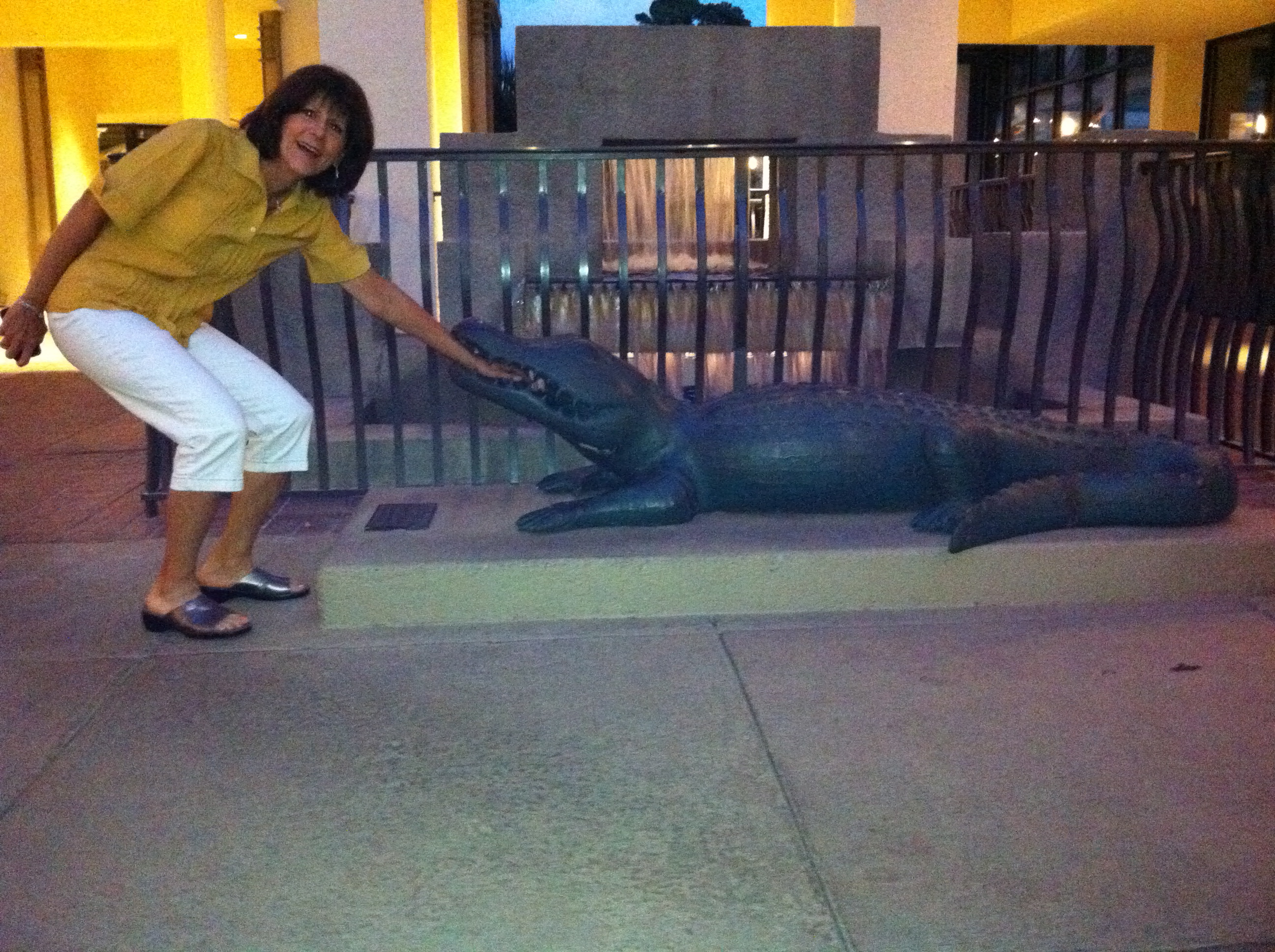
Freedom is just another word for losing a hand! :-)
“Freedom’s just another word for nothing left to lose!” I’ll bet that if you’re in the Baby Boomer generation, you have heard the preceding quote before. It is a line from a song written by Kris Kristofferson and Fred Foster. The song, “Me And Bobby McGee” was a hit for singer Janis Joplin. Let’s investigate “freedom” and “free” as they relate to us, especially emotionally.

A flag that implies freedom?
If you are an American, then, most likely, you consider yourself to be a free person. Being free generally implies that you can do, within reason, what you want. You can choose where you want to live. Being free means you can come and go at will. You can live where you choose and you are free to choose what you do for a living. But, does having this kind of freedom really mean you are free? What about how you feel regarding the freedom? In other words, if you’re not emotionally free, then are you really free? I think you’re not!
So what is emotional freedom? First and foremost, I think you have to know whether you’re in control of your emotions, or your emotions are in control of you. If the latter is true, you’re not free, but if you are in control of your emotions, then perhaps, you’re emotionally free. I write, perhaps, because being in control of your emotions and then using that control to severely limit what you do in life, will most likely cause you to have less freedom. Wow, this is complex!
Judith Orloff, MD has a twenty-question test on her website designed to help determine if you are emotionally free. After taking the test and reflecting on how you emote, I think you will have a better understanding of your level of emotional freedom. Click here if you wish to see and/or take the test.

Emotional AND Free! :-)
As you read this, you might wonder if I think I’m emotionally free. The short and simple answer is NO! But, I think I’m now closer to emotional freedom than I was a few years ago. For example, on Dr. Orloff’s twenty-question test, I scored a 24. According to her explanation on how to interpret the score, I am at a moderate level of emotional freedom. I’m confident that if I would have taken the test a few years ago, my score would have been much lower. I know I need to improve on such things as, worrying about tomorrow’s to-do list, beating myself up for what has gone wrong and setting limits with people who drain my energy.

I’m doing what I want when I want to do it!
Looking at freedom as emotional freedom, perhaps it would be better to rephrase the beginning quote to: “Emotional freedom is just another two words for nothing left to lose!” :-) Is it? I really don’t think so! In the 80’s, Dr. David Viscott, a popular psychiatrist in California, had his own call-in radio show and television show called, Getting in Touch with Dr. David Viscott. He is reported to have said that emotional freedom is just two words that means you can do what you want when you want to do it. Using Dr. Viscott’s meaning for emotional freedom, leads me to believing that I’m emotionally free when I’m free to believe in myself AND when I feel free to make the most of it.
“Doing what you want when you want to do it,” implies that you choose freely. Choose freely has been a special principle in my life. I have, for a long time, believed that everyone should “Choose freely, live creatively, and think critically.” The previous quote is from John Chafee’s book, “The Thinker’s Way.” I did a post in August of 2009, where I explained the meaning of the quote, from my point of view. For this post, choose freely seems to be a nice way of responding to Dr. Viscott’s emotional freedom meaning.
When you do what you want when you want to do it, then you should choose freely! But, choosing freely means you are choosing AND accepting the responsibility of your choice. Feel free to express your emotions, BUT be responsible for the consequences of doing so. Irresponsible freedom leads to trouble and responsibility without freedom results in feeling displeasure and/or resentment. So, freedom and responsibility should go hand-in-hand. At least, that’s how I see it!

Did you know that “Me And Bobby McGee” was Janis Joplin’s only top ten hit?
Here’s the chorus verse to Me And Bobby McGee as sung by Janis Joplin:
Freedom’s just another word for nothing left to lose,
Nothing don’t mean nothing honey if it ain’t free, now now.
And feeling good was easy, Lord, when he sang the blues,
You know feeling good was good enough for me,
Good enough for me and my Bobby McGee.
Consider the second line – “Nothing don’t mean nothing honey if it ain’t free.” Does this possibly mean: “Emotional freedom doesn’t mean anything if it you aren’t free to do what you want when you want to do it?”??
What do you think, “IS (physical, mental, emotional, etc.) freedom just another word for nothing left to lose?” :-)
Feel free to comment. :-)
Are You A Survivor?
Posted on September 16, 2010 Leave a Comment

Mona Lisa, showing us how to be a survivor! :-)
When “things” get tough, the survivors stand out. Why is it that some people are able deal with whatever life throws at them and others aren’t? When times are tough, some of us seem to have an uncanny ability to focus on overcoming all adversity and the rest of us are overwhelmed by the adversity. Why?

I wish I was a survivor!
We even have entertainment – survivor reality shows – that appeal to our desire to survive. Of course, these reality shows often show some of the worse ways that humans behave in order to survive adversity. But, I guess the bad behavior on these shows adds to the entertainment value. Frankly, I have never enjoyed the shows. On the other hand, I must admit that I haven’t taken the time to watch them enough in order to give a fair overall assessment. I simply haven’t been able to “get into them!”
So, let’s focus on the real survivors in life. These are the survivors that have survived hard times and great adversity. What makes these survivors able to do better than those who don’t survive? What is their secret?

Eh! I survived and I don’t really exist!
Perhaps, the most important characteristic that survivors have is their ability to NOT let adversity bother them. In fact, most survivors face adversity in such a way that those around them have no idea they are going through hard times. They don’t complain or worry about what they’ve lost. They simply look for more options and move on. Instead of dwelling on losses, they dwell on getting-done what needs to be done. They have the attitude that the past is to learn from, the future is to be created and the present is to live in.
Attitude, one’s mental feeling, is extremely important for survival. If one has an attitude of being mad at everyone and everything for her/his adversity and hard times, then much energy will be wasted dwelling on the past. But, if one has an attitude of a clear, powerful, and hopeful intention to survive, then much energy will be directed toward making her/his present and future better. Therefore, instead of being a victim caused by madness, the person becomes a survivor caused by her/his positive attitude. Perhaps, this is what Thomas Jefferson meant when he said, “Nothing can stop the man with the right mental attitude from achieving his goal; nothing on earth can help the man with the wrong mental attitude.”

Earth – Let’s all hope it is a “survivor!”
Now, please don’t think I’m advocating that when faced with adversity and/or hard times, you simply put a smile on your face and pretend everything will get better. A survivor is an action person. When in the act of survival, one must consider all options and/or behaviors. After careful consideration of all options, the survivor will choose appropriately and confidently, allowing her/him to know that things will work out.
And lastly, the survivor must focus on positive thinking. Beliefs and expectations that are positive and realistic are essential to surviving. Considering such things as safety and surety are important, but if they are placed in front of positive beliefs and expectations, then instead of surviving, the person will have a safe and sure hard time! :-(
So, are you a survivor?
Why Wish For Failure?
Posted on September 13, 2010 Leave a Comment

Does “I Want You To Fail” lead to progress?
Should you ever wish for failure? How about saying to someone, “I want you to fail!” Doesn’t that seem like an inappropriate statement to make? Isn’t it always undesirable to wish for failure?
OK, perhaps not! If you heard it in some sporting event and the person who stated it was rooting for the other team, then wanting them to fail seems somewhat appropriate. I’m sure there are other situations, when saying the words, “I want you to fail,” is not too bad. But, suppose someone said it to you, and both of you were on the same team? Perhaps both of you are part of an organization where your work could help or hurt the organization? Wishing for failure in that situation just doesn’t seem appropriate to me.

Limbaugh – “I hope he fails!”
Well, enough what-ifs. In January of 2009, Rush Limbaugh said, “I want you to fail” to President Obama. Actually, those weren’t his exact words. What he said was: “I would be honored if the Drive-By Media headlined me all day long: ‘Limbaugh: I Hope Obama Fails.’ Somebody’s gotta say it.” Later on in the same transcript, he said, “I hope he fails.”
The Limbaugh statement is an example, other than sports, of saying “I want you to fail,” that illustrates how we can make such statements. It has been over a year and a half since he made the statement and perhaps, Limbaugh is getting his wish. According to many, Obama is failing. His approval rating is low and much is now being written about it. But, for the rest of this post, let’s discuss the negatives and positives, if any, of using “I want you to fail,” when all concerned are working toward the same goal.
First, let’s establish what is meant by the word “fail or failure.” Using my dictionary, and considering how the word is used above, an appropriate definition is: “be unsuccessful in achieving one’s goal.”
Why would we want someone to fail when competition is not involved? I don’t know – do you?
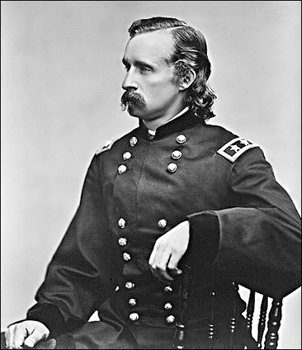
George Custer – The Native Americans got their wish; he failed!
There are at least three kinds of failure. There is failure to anticipate, failure to perceive and failure to carry out a task. I suppose it is the latter kind of failure to which Limbaugh was referring.
When we wish others to fail, while carrying out a task, are we being egocentric? In other words, are we implying that “it’s all about me?”
As you can probably tell by now, I am struggling with this concept of wanting others to fail. In my own mind and heart, I can’t seem to find a justification for wishing someone to fail. Of course, as stated above, I am excluding friendly sports competition, where there is a winner and a loser.

Who wants me to fail?
Our current recession and President Obama’s efforts to help end it, should not, in my opinion, be viewed as some competition. If he somehow is able to lead us out of this recession, then wouldn’t we all, including Mr. Limbaugh, benefit from his efforts? No, wait, maybe he wouldn’t, since he is getting more publicity for wishing the president to fail, then wishing him to succeed. Ah, maybe I have discovered why someone would wish for another to fail.
So, what do I think is appropriate for Rush Limbaugh to say instead of, “I want you to fail?” Considering he is a part of our country, where, if President Obama does fails, then our country will most likely suffer, I would hope for something more supportive yet still reflecting his ideas. For example, “I, Rush Limbaugh, have a better idea than President Obama. I hope the president succeeds, but if he wants a better way to lead our country out of this recession, then here it is…..“

I don’t want you to fail!
If the President uses this idea, then he, Limbaugh, could take credit for it; if the President didn’t use it and our recession worsened, Limbaugh is no worse for it. It seems to be a “no-lose” situation for Rush Limbaugh, and, a positive approach overall. Just my thoughts!
What do you think?
What’s Right OR Wrong With Discipline?
Posted on September 9, 2010 Leave a Comment

Sometimes, “discipline” causes this reaction.
I had an experience recently that resulted in me thinking a lot about the word discipline. My experience involved helping administer a federal government required test to a fourth-grade class. The teacher of the class was supposed to help and when she did, the “discipline” only became worse. The children were simply, undisciplined. What does disciplined/undisciplined really mean?
Discipline is used in many different ways. It is often used as a negative and I can understand why. For example, we use the word to threaten children when we say, “If you don’t behave, I will discipline you!”

These two look like they are well disciplined. :-)
Of course, in education, we group certain studies that help us to learn a particular way of thinking and call each group a discipline. An example is social science. Another example is language arts.
The word, discipline, is also used to describe a method or way of thinking that demonstrates the use of a set of logical principles. In using discipline in this manner we assume that the method or way of thinking in the discipline helps to reason the solution to problems. For example, we have a discipline called history. Another called mathematics. Etc.
OK, so you can see a few of the different ways of using the word discipline. As most of you probably know, the word discipline has a root word of disciple.
What does the word disciple mean? It means a person who learns from another – especially one who then teaches others – or, is an active follower or adherent of someone, or some philosophy, etc.
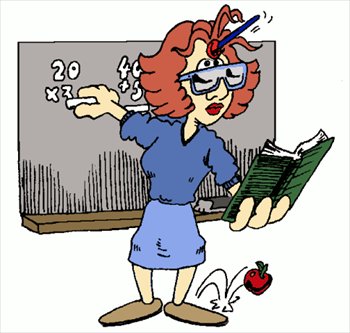
Math is a discipline?
Why is discipline considered by so many to be a bad or negative word? Think about it! If you tell someone s/he needs more discipline, I’ll bet that person thinks you are expressing a negative, instead of a positive. I believe that is the way, at least in most of America, we are brought-up. By brought-up I mean, “to take care of and educate.”
If I say someone, including myself, needs more discipline, it could and often times should be thought of as a positive. I think it should be like saying someone needs work on her/his upper body strength. Or, that someone needs to improve her/his skill of parallel-parking an automobile.
Really, undisciplined actions that harm the ability to have a lawful democratic society must be addressed. The best group of people to impact society are the children. In the long run, teaching children that discipline is a good word and helps us all to have a better world, is essential for promoting a better society. Of course, this is just my thinking.
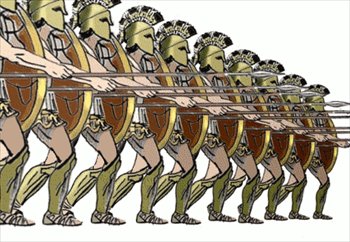
The epitome of discipline?
How can we teach a disciplined way of thinking in an undisciplined society? All of these disciplines that we value (history, science, language arts, mathematics, etc.) require the mind to become disciplined. Do we value this way of thinking. If we do, then let’s make the word a “good” word.
There, I’ve gotten that off of my mind. :-) Thanks for reading.
What do you think about discipline?
Why Be A Risk-Taker?
Posted on September 6, 2010 Leave a Comment

It appears that these two are risk-takers! :-)
In spite of your thoughts after reading the title to this post, let me proclaim: “I do not consider myself a ‘risk-taker’!” In fact, the main reason for writing this post is to learn more about why I should, or should not, be a risk-taker.
My job involves risk-taking!
Is it possible to make yourself into a risk-taker when you’re not one? How can you be a careful person who takes risks? Is being careful the opposite of risk-taking? Is risk-taking a big business?
Most likely, all of the preceding questions make sense with the possible exception of the last one: “Is risk-taking a big business?” I asked that question because it seems to me that amusement parks with thrill rides, sports like football, performances such as tight-wire walking, etc., all have an underlying risk involved and can be part of a big business. Often times, the thrill from the risk becomes the featured element of the big business. For a specific example, consider Six Flags St. Louis and its twelve thrill rides! And, when Six Flags advertises, what do they often promote? You guessed it, the risky thrill rides! So, why do some of us take big risks or respect those who do take them?
There are some folks who take big risks and appear not to be affected by them. But, many of us feel very uneasy when faced with risk-taking. We may become anxious about the risk. Anytime we take risks in life, there is a possibility of loss which can cause (great) anxiety. But, do risks have to be experiences that cause us great anxiety?
Football = Risk-taking?
How can we take risks and not have great anxiety? I think the number one consideration should be foolishness. We should NOT take foolish risks! If a risk seems foolish to you and/or those you respect, then, if at all possible, don’t take the risk. Risk shouldn’t be taken just to prove a point. Risk shouldn’t be taken that lacks, or exhibits a lack of, good sense or judgment. In other words, risk shouldn’t be taken foolishly.
BUT, without risk-taking, we wouldn’t be able to live a fulfilling life. WHAT!!!! Yes, we all must take risks. For example, if we don’t, we most likely won’t find our true love. If we don’t take risks, we won’t be able to gain the respect of others. Without risk-taking, we simply won’t realize our potential.
Ok, so what should a person do in order to handle the need for risk-taking and yet, not be foolish? Consider the following four-step non-foolish risk-taking approach.

I say, worthwhile risk-taking is a necessary part of life!
1) Accept that risk-taking is involved in everything worthwhile.
2) Only take risks that will result in improvement over what you have.
3) Don’t risk what you can’t afford to lose.
4) Don’t worry about the outcome of the risk, but instead focus on the gain or improvement from taking the risk.
After re-reading over these four steps of non-foolish risk-taking, I can’t help but notice how much successful risk-taking depends upon the power of positive thinking. Thinking positively during risk-taking means not focusing on losing, but instead, focusing on gaining, winning, and/or positive outcomes.

I’ll risk this only if I can afford to lose it!
Therefore, worthwhile risk-taking that involves something which is an improvement over what we have and that we can afford to lose, is a necessary part of life. With that consideration, it doesn’t matter if the risk pays off, but just that we did the best we could. If you act like a winner while taking the worthwhile risk, then you have won no matter what the outcome – you are a winner at knowing you are the best person you possibly can be!
Please be a risk-taker and write me a “risky” comment. :-)
Should We Emphasize Empathy?
Posted on September 2, 2010 1 Comment

Putting yourself in another’s “shoe-skates!” Does that count as empathy? :-)
“You know, there’s a lot of talk in this country about the federal deficit. But I think we should talk more about our empathy deficit – the ability to put ourselves in someone else’s shoes; to see the world through the eyes of those who are different from us – the child who’s hungry, the steelworker who’s been laid-off, the family who lost the entire life they built together when the storm came to town.”

We should talk more about our empathy deficit.
Barack Obama
August 11, 2006
Xavier University Commencement Address
New Orleans, Louisiana
The above quote from then, Senator Obama, expresses a point of view about empathy that is getting a lot of press lately. Some see the lack of empathy as a reason for many of our problems with young people. A debate over the value of empathy surfaced recently when President Obama announced his criteria for a Supreme Court justice. And, some are even accusing President Obama of not having empathy.
What is empathy? Do you value empathy? Is empathy a strength or weakness? These questions are a few queries about what I think is an important intellectual trait or virtue.
Empathy – the imaginative act of stepping into another person’s shoes and viewing the world from her/his perspective – is a trait that many great leaders have and many poor leaders need. Roman Krznaric, a teacher who runs courses on how to expand your empathetic imagination and is the expert on empathy at The School of Life in London, believes empathy is the key to success in most human endeavors.
Empathy is different from pity or sympathy. If you see a report on poor people about how they are suffering in today’s economy and you feel sorry for them, then you are not expressing empathy, but most likely you are feeling pity or sympathy. On the other hand, if you try to “put yourself in their shoes,” if you seek the understanding of how they feel, what they feel, when they feel, where they feel, etc., then I believe you are expressing empathy.
When someone demonstrates and chants “death to America!,” it is important for us to not be “deficit in empathy.” By simply saying they hate us and not, figuratively, putting ourselves in their shoes, does nothing but build a wall between us. Usually, when dealing with such people, that wall is torn down with war. Consider people and what resulted from dealing with the likes of, Hitler, Saddam Hussein and members of Al Qaeda. In my opinion, we need to emphasize peace and not war. Empathy is a start to “giving peace a chance!”

Who needs empathy, I’ve got ME!
So how does one develop empathy? I think if we want to develop and understand empathy, it’s important to understand that the opposite of empathy is self-centeredness. Yes, if you want to have empathy you must strive not to be self-centered. Think of it by using the following question: “How can you fairly judge others’ ideas and beliefs unless you learn how to take on the perspectives of others and to accurately think as they think?”
My mom used to say that we should strive to give people the benefit of the doubt. I remember her telling me to give someone the benefit of the doubt on numerous occasions when I was a child and frankly, I really didn’t understand what she meant. Now, after many years since her death, I now understand that she was referring to empathy. The word, empathy, wasn’t in her vocabulary, but I really believe that’s what she meant. To paraphrase a quote, that I think is from Mark Twain,”It’s amazing how much my mom has learned since I’ve grown-up!” :-)
Another point of view regarding empathy can be found by going to the Foundation Of Critical Thinking. When a person is thinking rationally and in a fair-minded manner, intellectual empathy is an essential trait.
So, if a group of people are chanting “death to America,” I believe we need to take on their perspectives and, as accurately as possible, think as they think. Then and only then, should we consider judging them!
What are your thoughts on empathy? Empathetically expressed, of course! :-)


 R2 Thoughts for You