 R2 Thoughts for You
Is Less More?
Posted on August 30, 2010 Leave a Comment
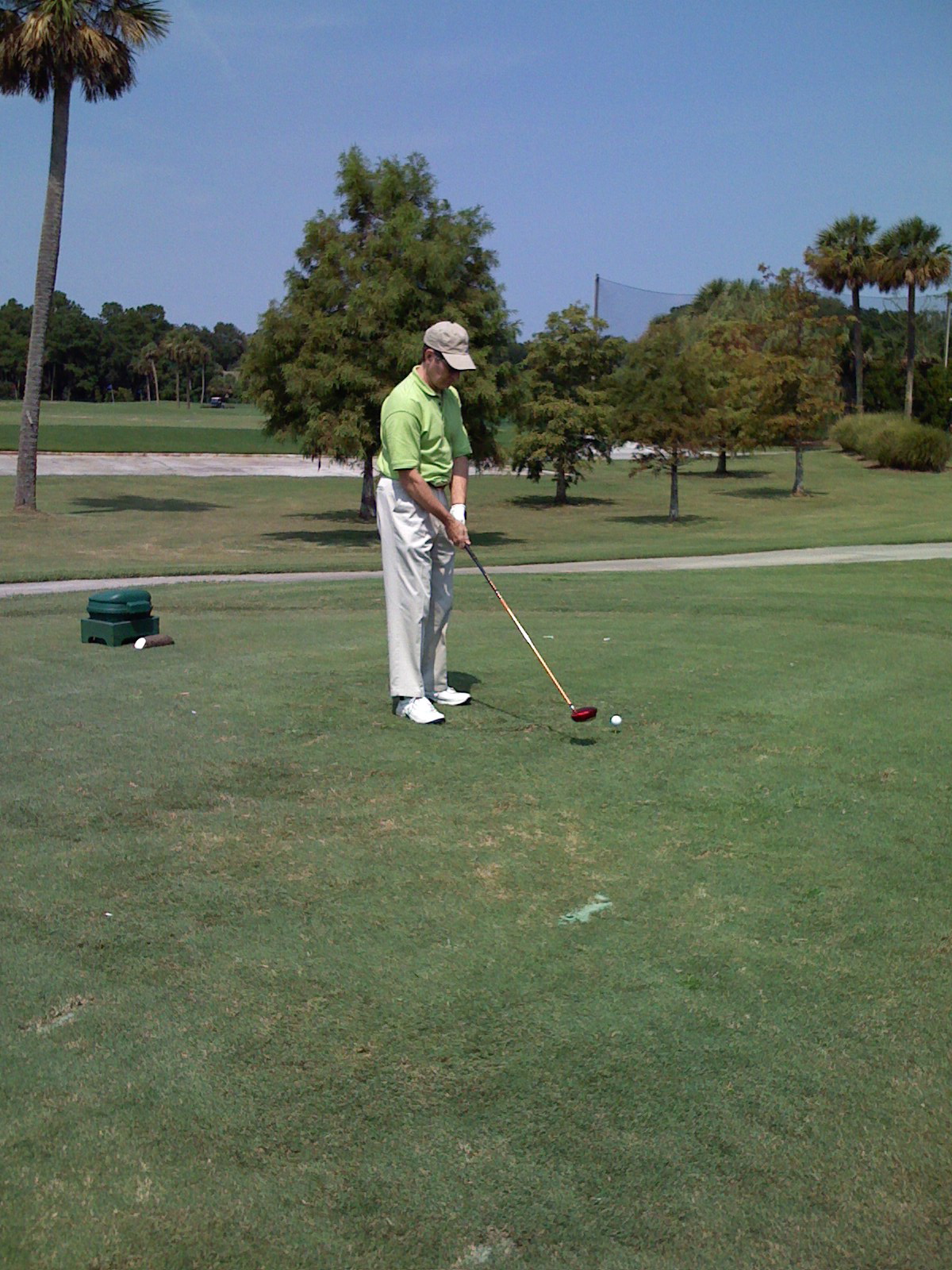
Now here is an example of, “Less Is More!” (Less strokes – More wins:-)
I have heard or read the statement, “Less is more!” numerous times, lately. This has caused me to wonder about the statement and why it is used in many different areas. For example, I’ve seen or heard it used in education, farming, architecture, goal setting, child-rearing, business and poetry. In a recent post, I mentioned that a friend, who had returned from a conference, told me that the main idea of the conference was, “less is more.” So, let’s explore this saying and see if it makes sense, more or less! :-)

If there was LESS of me, there would be MORE of me covered! :-)
Often, the motto of “less is more” is attributed to the architect Ludwig Mies van der Rohe. He used it to describe his aesthetic tactic of arranging components of a building to create an impression of extreme simplicity. Buckminster Fuller also used a form of the motto, “Doing more with less,” as an overall goal of an engineer. But, apparently, it was first used by German poet, Christoph Martin Wieland in 1774, long before van der Rohe or Fuller. Many others have used the motto throughout the last three centuries, including Robert Browning, who included in his poem, Andrea del Sarto, the lines:
“Who strive–you don’t know how the others strive,
To paint a little thing like that you smeared
Carelessly passing with your robes afloat,–
Yet do much less, so much less, Someone says,
(I know his name, no matter)–so much less!
Well, less is more, Lucrezia”
Less is more is now often considered the motto for minimalism. Since minimalism often implies and uses words such as, “extreme simplification, fewest, barest, and basic,” I think it makes sense to have Less Is More as its motto. Let’s now move out of the history of the statement and consider some of its everyday uses and/or applications.

I wouldn’t suggest asking this ostrich where he is going.
I remember hearing a story about a person who was riding an ostrich in Africa. Apparently it’s not only possible to ride an ostrich, but it can travel up to 35 mph with a human on its back. In the story, a man was riding very fast on the back of an ostrich and as he passed a friend standing on the side of the path, his friend yelled, “Where are you going?” The ostrich rider turned toward his friend and yelled back, “I have no idea, ask the ostrich!” Many of us, at work, home and play, live our lives with such intensity and at such a pace that we are like the person riding the ostrich. We have way too much to do and not near enough time to complete it, therefore we are at the mercy of our schedule (ostrich.). We are expected (often with pressure) to multi-task and accomplish an almost impossible extended list of “to-dos.”

When I have LESS to inspect I have MORE accuracy!
So, how can we get out of this rat race or should I write “ostrich race?” :-) Why not try doing less? I know, I know, that sounds like something nice to say and at the same time, too simple. I think that doing less is often very difficult. When we purposefully do less, we might think we are demonstrating laziness and irresponsibility which could lead to being less productive. But, are we doing good work when all we are doing is “riding the ostrich” that decides the direction and quality of all we do for us? Suppose we approach each day in a different way and work to change this “out-of-our-control” pattern? How, you might ask?
Work toward doing less! To do less will require a paradigm shift and/or change for many of us. Doing less will require courage and overcoming a feeling of being lazy and losing productivity. But, doing less may also allow us to enjoy what we accomplish. When we learn to do less of what is unnecessary, we learn to develop a life of productivity that results in feeling good about our life. It increases our self-worth and self-esteem.

If I had LESS to do, I would get MORE done!
Just imagine doing one task at a time and then feeling a sense of calm and fulfillment. Imagine a life that has great meaning because you are focused on the quality completion of each task and knowing that you have had the time to dedicate the required effort. When we are in constant activity and don’t have time to reflect on what we are doing, we often depend upon routines and habits of the past. These routines and habits, without refection, will include many bad ones that, if we spent time thinking about them, then we would never use them.
So, consciously do less and consciously reflect more on what you are doing. Less AND more! :-) This will help us contribute more to our family, workplace, and our own lives. Less “hectic-ness,” less of constant activity, less being out-of-control, less hurried-ness, less bad habits can lead to more happiness, more quality productivity, more calmness, more effectiveness, more contribution, and more of a fulfilling life.
Is less more? It can be. It’s up to you!
More or less, I would love a comment! :-)

How Big Is Your Bucket?
Posted on August 26, 2010 Leave a Comment

Is your bucket big enough to hold all of you? :-)
So, just how big is your bucket? Now, I hope you aren’t thinking I’m asking an inappropriate question. No, I’m not asking, “How big is your derrière?” :-) Please read on.

A rabbit bucket!
I was surfing and searching the internet recently, when I came across a site that pictured different buckets. Some were regular shaped, like a frustum of a cone, while others were more exotic, like the shape of a rabbit. Some were big and some were small, but all were buckets designed to hold “stuff.” I also saw some machine buckets, that by design, were altogether different in look and shape from the first ones I mentioned.

Excavator (machine) Bucket
As I looked at the pictures of the buckets, I began thinking about how we are like buckets. As I see it, human-life comes in all shapes and sizes. If we metaphorically think of a life being whatever will fit in a bucket, then I think we have an excellent way of viewing the human potential.
Let’s think of the bucket as our collection of beliefs, expectations, and thoughts about ourselves and the world around us. How big is that bucket? What shape is that bucket? Who determines the size of your bucket? Are you restricted by staying in the same size bucket? Did your parents, teachers, clergy, etc. give you your bucket? Does your bucket have a hole-in-it ☺ and therefore, you’re leaking (leaving your bucket)?
Is your bucket the shape of a heart?
Continuing with the bucket metaphor, most of us started out with a bucket that was given to us by our parents. Most likely, it was a small and manageable bucket that allowed you to grow in a safe environment. Later, as you became educated and reached matureness, you found your own bucket. What is the shape and size of this new bucket that you are responsible for choosing? Of course, what I’m really asking is, “what is the ‘shape and size’ of your beliefs, expectations, and thoughts about yourself and the world around you?” You see, your life is determined by the shape and size of the bucket (beliefs, expectations, and thoughts) that holds it.
If your life is going to grow to its fullest potential, then you must leave the bucket your parents, teachers, etc. gave you and find one that allows you to grow without their limits. As a child, you were most likely forced to conform so that you would fit into the bucket (beliefs, etc.) that caring adults gave you. When you are an adult, you need to find a bucket with the size and shape that will hold your childhood bucket and still allows you to realize your potential.

Buckets come in a all sizes!
So, take a look at your beliefs, expectations and thoughts. Where did they come from? How are they limiting you? If they came from your childhood bucket, then perhaps you’re still thinking like a child. That’s not necessarily wrong, but you’re most likely not giving yourself the best chance of growing a bigger mind and spirit.
How big is your bucket? Hopefully, it’s much bigger and better than your childhood bucket.
Old Or Young, Why Not Be Creative?
Posted on August 23, 2010 2 Comments

Old or Young – It’s still creative!
Are you of the opinion that the older we get, the less creative we are? Well, of course you wouldn’t hold that opinion if we start at birth and consider just the first few years. As a baby gets older, creativity gets better. Better and greater. But, then after awhile, many seem to reach a peak of creativity that is never surpassed. On the other hand, some of our greatest artists’ (i.e. Picasso and DaVinci) creative output increased in quantity and quality as they aged.

An older Leonardo DaVinci created this now famous “cartoon” of “The Virgin and Child with St. Anne and St. John the Baptist.”
What about the regular or everyday person’s creative mind? Do we, the everyday people, lose our ability to be creative as we age? I don’t think so, but I have encountered many who have low expectations for their creative output. Often, the older adult will proclaim that s/he can’t be creative because of age.
Society seems to expect older adults to be less creative. Consider the expectations of people who live in an older adult community such as a nursing home. Often times where older adults live are referred to as “assisted living” or “rest homes.” Now I realize that a person who is resting can also be creative, but I don’t think that’s what most assume to be true. Perhaps, instead of rest homes or assisted living, they should be called creative living homes. In other words, have the name imply the main focus/purpose of the living area.
But, is it a reasonable expectation for older adults to be creative thinkers? The National Center for Creative Aging states on their homepage that, “Creative expression is important for older people of all cultures and ethnic backgrounds, regardless of economic status, age, or level of physical, emotional, or cognitive functioning.” Psychologists, studying creativity, claim that people who are in their seventies can often produce more new ideas than when they were in their twenties. Another interesting aspect is that the later in life you start a creative endeavor, the more likely you are to continue into old age.

I’m old and creative!
There are many different studies showing how creative thinking helps extend the quality of life. In China, for example, there have been studies showing that old people who are less educated have a higher rate of dementia and Alzheimer’s disease. A reasonable implication is that educated people who have been trained to use their minds, stimulate healthy brain activity. Analysis of brains using PET scans show an increase in blood flow to the brain during times of creative thought. There is also evidence that during creative thought, we have brain wave activity that is associated with the “Aha Experience.” When we use the creative part of our thinking, we have a better chance of solving our own problems, therefore allowing us to remain independent. This is a truly wonderful phenomena for those of us entering the later years of our lives. It provides a method of extending and maintaining our mental lives!
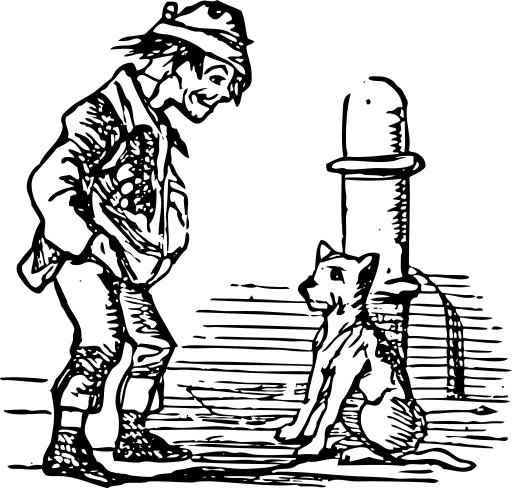
Can an old man teach an old dog new tricks?
I think if we want to live a life that is full of wisdom and creativity, then we should start with that as our expectation. From a personal point of view, I know that since the nineties, I have been conscious of trying to get my body to introduce more serotonin into its system in order to help maintain a healthy brain. It has been shown that during creative thinking, our brains generate more serotonin.
It appears that creative thinking is essential for us to exist. Perhaps, this is why we often see those who have stopped manifesting the use of creative thinking, have also stopped manifesting a fulfilling life.
So, old or young, why not be creative? If you’re young, then creative thinking seems natural and expected. If you’re old then society often “excuses” your lack of creativity. It’s the old, “you can’t teach an old dog new tricks” scenario! But, that’s only an excuse, NOT a good reason! You may not be able to teach an old dog new tricks, BUT you can teach an old human creative thinking. How? By not excusing a lack of creative thinking. :-)
What do you think?
Is It A Reason OR An Excuse?
Posted on August 19, 2010 1 Comment

Excuse or Reason? I can’t catch the carp because I feed them.
Have you ever said something like, “The reason I can’t _Ⓐ_ is because _Ⓑ_?“ If so, do you think a more honest statement would be one in which you replace “The reason” with “My excuse for why?”
As you can most likely tell from the title of this post, my focus in this post will be the use of reason and excuse in response to statements about why we do what we do.

I wonder what’s the reason or excuse for this?
I know that I have often not been correct when using the word reason. Instead of reason, I should have used “excuse.” Here’s a general example:
“The reason I was unable to complete _Ⓐ_ was I didn’t have time.”
I should have said: “My excuse for not being able to complete _Ⓐ_was that I didn’t have time.”
So, what is the difference between reason and excuse? First, the way in which I’m using “reason” in this post needs to be clarified. Reason, as in reasoning, can be used as a process for thinking. For this post, that is NOT the way I’m using it.
In this post, when I refer to reason, I want it to be considered as a basis or cause for a belief, action, fact, event, etc. For example, we might ask our leaders in government: “What is the reason for sending our troops to Iraq?” That question is asking for a reason that is the basis or cause of the action for putting our soldiers in harm’s way.

No excuse, this is a reason for winning! :-)
A subset of reasons are excuses. An excuse is a reason that is offered in extenuation of a fault or for release from an obligation, promise, etc. In other words, when using an excuse as a reason, I try to pass blame, lessen my responsibility, make light of, reduce the seriousness, etc. So is this what we should do?
Is using an excuse for a reason a good way of being “true to yourself” and “doing to others as you would have them do unto you?” In a way, yes! In a good way, NO! What I mean, is yes, you can be true to yourself, but you can’t be honestly true to yourself. And, really, do you want others to do to you in such a way that they are passing blame, lessening responsibility, making light of something you deemed “heavy” and/or reduce the seriousness of something that you feel is serious? I don’t think so!
Let’s consider a specific example of comparing “reason and excuse.”
Reason Statement: I didn’t complete the assignment because I chose to do something else.
Excuse Statement: I didn’t complete the assignment because my friend told me I didn’t have to do it.
Notice how the Excuse Statement attempts to, depending upon how you view it, either pass blame or lessen responsibility. Whereas, the Reason Statement is a direct statement of cause for not completing the assignment.

Reason or Excuse for non-violence?
It is possible to dream up all kinds of examples similar to one I just gave. I have used the title of this post in my own thinking so much that it has become a natural responsive thought when I hear someone make a statement referring to assignment of cause for belief, action, fact, event, etc.
Perhaps, a more important aspect of “reason” versus “excuse” is when a person thinks about a reason/excuse. I think a reason is usually thought of much sooner than an excuse. If there is a deadline involved, the reason is likely thought of before the deadline and the excuse after the deadline. If a reason is thought of before the deadline, then there is a greater chance of taking action that will result in completion before the deadline. This is another case in which, “Be true to yourself!” plays an important role in one’s personal beliefs. Not being true to yourself, simply stated, encourages excuses. Excuses come from deadlines past, promises broken, and self-dishonesty. OUCH!
So, is it important to differentiate between reason and excuse? I think so, especially when the statement is made by me. You see, I’m the one who has to be most concerned with whether or not I’m responsible, reliable, dependable, truthful, etc. In order to be “true to myself” and “do unto others as I would have them do unto me,” it’s important that I give reasons that aren’t excuses. For my actions, a reason that’s not an excuse is all I need to give. If someone else wants to provide an excuse for me, well …
Perhaps, Elbert Hubbard, an early twentieth century artisan and philosopher, said it best with this short statement: “Don’t make excuses, make good!”,
I would love to read your reasons and/or excuses, but make them good. ☺
What Is The Best Teaching Style?
Posted on August 16, 2010 Leave a Comment
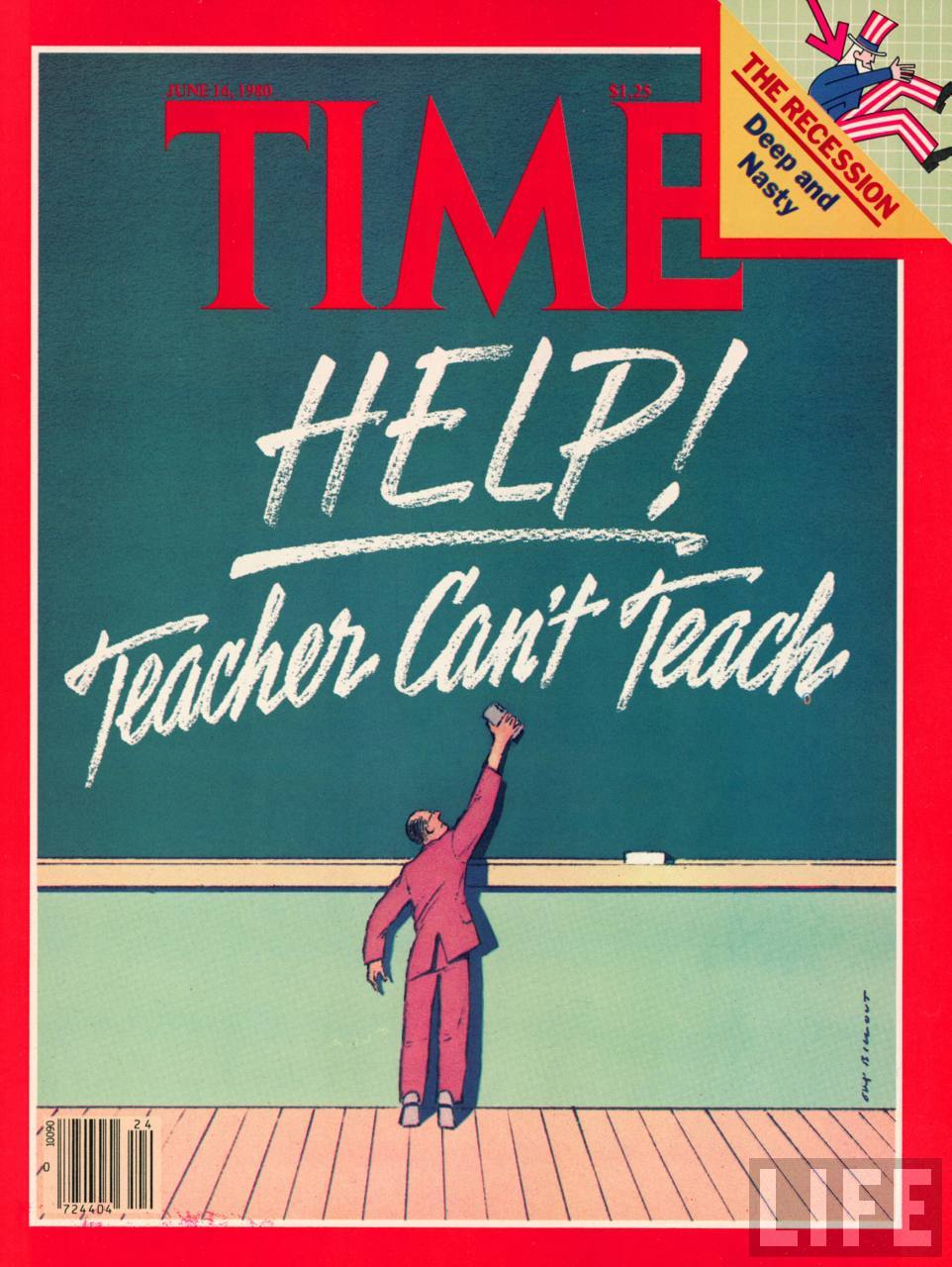
Perhaps the teachers should try a different teaching style!
Everyone, at some time, must be a teacher. What? You don’t believe everyone must be a teacher? All parents must teach. All leaders must teach. All religious clergy must teach. All supervisors must teach. All humans must teach!

Evolve with style! :-)
You see, even if you have no contact with anyone else, but yourself, you would still have to teach. You would have to teach yourself! :-)
In many of my posts, I’ve mentioned that I am a retired teacher. A question you might want to ask me is: “What was your teaching style?” If you asked me such a question, I would immediately rephrase the question to: “What were your teaching styles?” I, of course, have a personality and I’m sure it was manifested in the classroom. My style for a particular class didn’t depend on my personality, but instead, it depended upon the class I was teaching. The class I was teaching was always a group of students. That group of students needed a style of teaching that would help them learn as much and as well as possible.
I’m sure you have heard of different learning styles. Three that often were manifested in my classes were visual, auditory, and tactile learning styles. Now, when we say someone is a visual learner, we don’t mean that s/he only learns visually, but we are saying that s/he usually learns better visually. Just because a student learns better using a particular style, doesn’t mean that’s the only way s/he can learn.

Evidence of a good teaching style?
From a teacher’s point of view, it’s important to consider the different learning styles represented in the classroom and then adapt the teaching style, as much as possible, to fit the needs of the students’ learning styles. This is complex and in this case, diversity in the classroom makes it more so. The more diverse the classroom is – various learning styles, various ethnic and racial backgrounds, various abilities, and in general, various demographics – the more a teacher should adapt her/his teaching style to fit the needs of ALL the students. A teacher who has the attitude of, “It’s my way or the highway!” is setting the class up for many failures.
Ok, so it’s important to be flexible with your styles, but how do you determine what style to use. For example, think of the differences in teaching styles that would be used when comparing the teaching of a 1st grade class with a 12th grade class. Or, the differences in styles used when teaching a class of two students and a class of 200 students. These examples are extreme in comparison, but hopefully, you can see that using different styles are necessary. But, what is the best teaching style? You probably have already guessed what my answer is. There isn’t a best style!

Yea, my learning style matches my teacher’s teaching style!
When I say there isn’t a best teaching style, I mean there isn’t a best style for classes where there is more than one learning style represented AND the classes are different in subject or grade level. Of course, usually classes consist of much diversity, so I’m simply stating that we need different teaching styles for the differences in learning styles, types of students, size of classes, and/or student demographics.
What about parents? Shouldn’t they take this into consideration as well? Absolutely! What about individuals? In other words, should a person who is trying to teach her/himself, take into consideration different teaching styles? Well, yes, but before you can, you must “know thyself!” What style is best for you? On the surface, you might think that’s not important.

Does your learning style allow you to learn from a CD?
Let’s consider the advertisements often seen on TV, magazines and the internet for different learning opportunities. Some encourage you to buy CD’s, put them into your computer and learn. Some offer courses over the internet. Some have most of their teaching and learning opportunities “on the job.” Some require you to live in a dormitory on campus and attend classes on a regular daily schedule. Many of these are not considered “teaching yourself,” but in a sense, aren’t we all learning by teaching ourselves?
Even if we are attending classes on a daily basis, when it comes to learning, aren’t we responsible for the learning and therefore, must choose the teaching (style) that we think will allow us to learn the best? I remember being in a class in college where I eventually ignored the professor and learned best by reading and discussing the content with a classmate. At first, when I tried to learn from the professor, I was literally unlearning more than I was learning. This was an exception in my career as a student, but it was one of the best lessons I have ever learned about “how to learn.”
In summary, I think we should avoid, as much as possible, trying to use a teaching or learning style that is a “one-size-fits-all.” If learning is, metaphorically speaking, a set of holes and teaching is a set of pegs, we don’t want to have all pegs the same shape if all of the holes aren’t. In other words, we don’t want to try a put square pegs into round holes! :-)
What’s your teaching style?
Is “Balance” The Greatest Asset Of A Close Relationship?
Posted on August 12, 2010 1 Comment
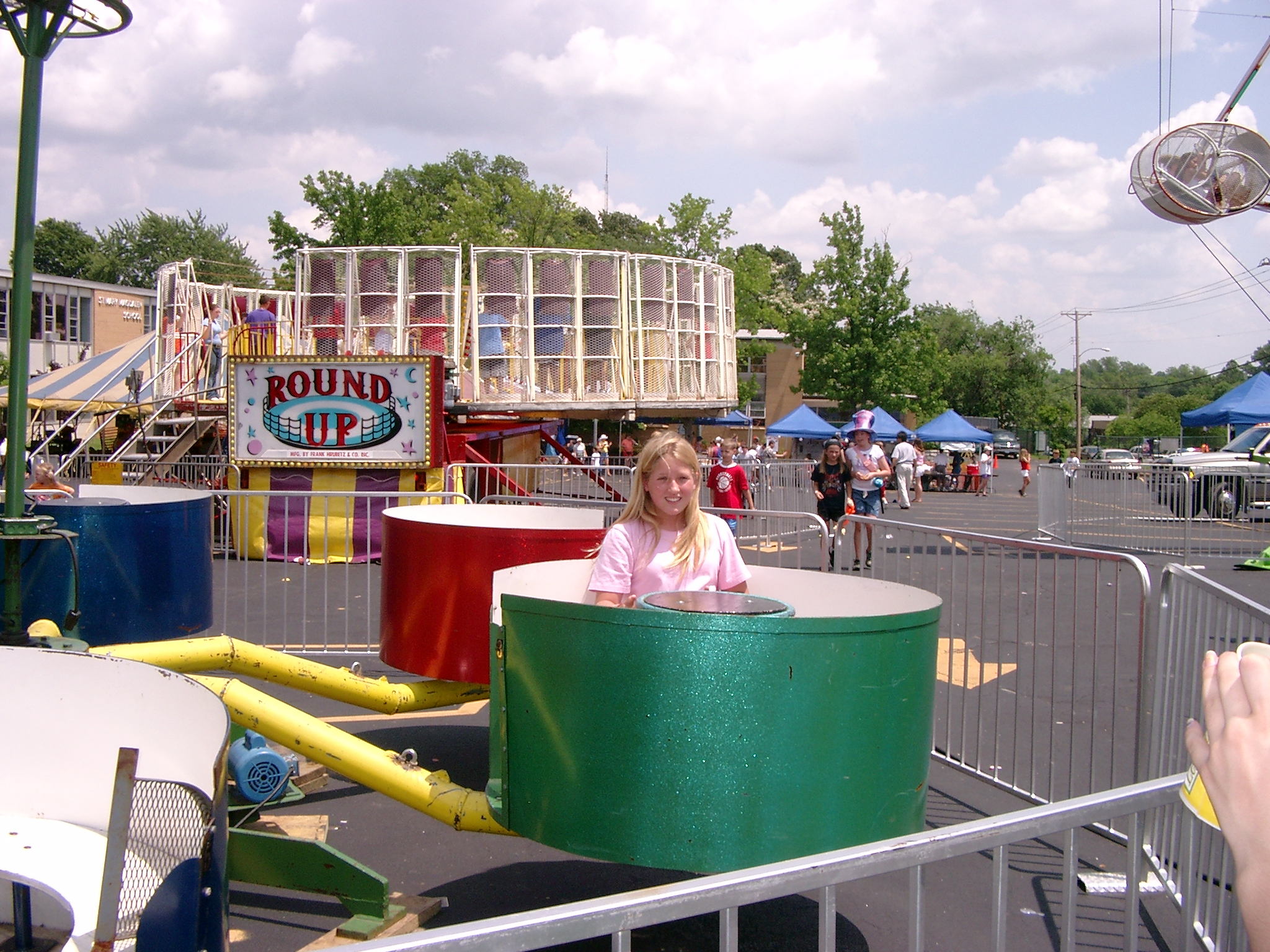
Does she need balance in this part of her life? :-)
Many times, in the recent past, I’ve encountered people who seemed to have lost their “balance.” These people appear to be missing an important something in their lives. All of the people are adults, and they represent the gamut of possible adult ages. Some are young, others are middle-aged and yes, there are the old ones. :-)

Hopefully, this rock won’t lose its balance.
So why do they all appear to have lost their balance? This is a puzzling question, since there seems to be only one common factor between all of them. The common factor that I noticed is that each person has lost, or never has had, a significant close relationship with another mature adult. Is that important?
I’ll admit that I didn’t, until now, think that having a relationship was important for a person’s balance in life. But, that begs the question, “what is meant by a person’s balance in life?” Well, after I started writing this, I decided to “google” balance in life.” Of course, there were many hits, and some of the websites that “bubbled-to-the-top” were interesting. One of them referred to the “Wheel Of Life.” The Wheel Of Life is a visual organizer that gives you a vivid visual representation of the way your life is currently, compared with the way you’d ideally like it to be. I immediately noticed how their example showed the importance of significant others in our lives. Here, in example 1, is a sample of the Wheel Of Life as shown on the site.
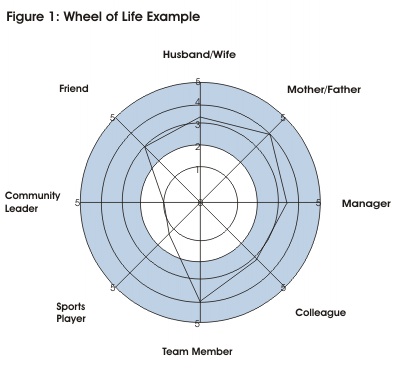
Notice the potential “significant” others around the wheel.
The wheel is designed to be used as a tool to help you map out your life as it is in relationship to your significant other. The picture is only an example. As you look at the example, you can see how this Wheel Of Life shows Community Leaders and Sports Players as not as important as the others. Again, this is to be used as a visual organizer, not necessarily as a final solution.
A lot of the sites discuss balance in the workplace. Click here for an example. Though I don’t deny the importance of balance in the workplace, in this post, I want to focus on balance and the effect of not having a meaningful relationship outside of the workplace.
There are many authors who have written about balance and especially, how having balance in your life affects your work. But, as the following quote from Catherine Pulsifer so clearly implies, it’s much bigger than just work.
“Looking back at the times where I allowed my work to create stress and frustration in my life I now realize what I thought was important really was not. I am not saying you should not take your work seriously, what I am saying is that we need to realize that life is all about balance.”
—Catherine Pulsifer, from Briefcase with an Engine
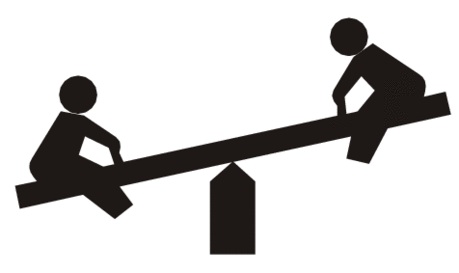
“Significant Others” demonstrating how to have balance in life!
So, if we follow the logic of Pulsifer’s quote, then there is more to life than the life at work. This is what I think I have observed with the many people who I think have lost their balance. I’m confident that, at least with the ones I’m thinking about, there is a different factor involved. What is that factor? Metaphorically, I think it’s the “other end of the seesaw.” In order to keep a seesaw balanced, there needs to be weights that are approximately the same, but opposite in affect on each end of the seesaw. I’m using the word “affect” in the sense that the influence by the significant other adds balance to the life of both – similar to the influence by both people on the ends of a seesaw.
Like with a seesaw, it’s difficult to keep balance when there is only one weight (person). I realize there will be exceptions and that there are some people who do very well without another person to help them “keep balance.” Having stated that, I’ve seen many who have lost their balance when through death, divorce, or break-ups, they no longer have a meaningful relationship with a significant other. Another thing I find amazing, is how many have lost their balance when the relationship they previously had been, from my point of view, a bad one. How can this be? On first thought, it seems like ending a relationship that is bad would be a positive event in one’s life. But, in many cases, it appears to result in a less happy life. OUCH!
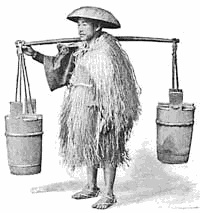
This person has a balanced relationship with his burden! :-)
It appears that even if a balancing relationship with a significant other is less than ideal, there is still a great amount of good in it for both people. I know my parents didn’t have an ideal relationship, but upon reflection, they did seem to keep each other balanced. When my Dad died, my Mom was lost. Even after a reasonable mourning period, she couldn’t seem to find a way of being complete.
After observing my Mom’s experience and that of many others, I’ve noticed that there is one other factor that I haven’t mentioned yet, which is common to all who have lost their balance. They all proclaim to not need another relationship. In other words, they claim to be comfortable or happy alone – some say they prefer to be alone. Is this a defense mechanism? Maybe, but what are they defending? Their self-esteem? Perhaps!
Since most of my posts are written as a writing-for-learning exercise, you might ask what I’ve learned from this post? Well, my answer is that I think we often undervalue the importance of having a balancing relationship. Too often, we discount the value of working toward developing and/or keeping a meaningful relationship. We need to understand that we can live without significant others, but the quality of our lives will undoubtedly be lessened.

Stephen Stills – “Love The One Your With”
As I was writing the previous paragraph, a few lines from Stephen Stills‘ 1970 song, “Love The One Your With,” popped into my mind. I searched for the lyrics and an appropriate excerpt is listed below. Perhaps, many of my unbalanced friends need to realize the great value of having a balancing relationship and, at the same time, lose their perfectionist’s attitude of having to find the “perfect” person.
Excerpt From: “Love The One Your With”
Don’t be angry, don’t be sad,
Don’t sit cryin’ over good things you’ve had,
There’s a girl right next to you
And she’s just waiting for something you do.
Well, there’s a rose in a fisted glove
And the eagle flies with the dove
And if you can’t be with the one you love
Love the one you’re with
Love the one you’re with
So, in summary:
For the sake of balance and quality of life, seek a “balancing significant-other”
AND
If you can’t be with the one you think is perfect, then stay with and treat the one you’re with as though s/he is perfect :-)
What Makes You Effective At Work?
Posted on August 9, 2010 Leave a Comment

Follow this “simple attitude statement” and you will be more effective at work!
Recently, I was reflecting on my work career. I retired over ten years ago, but I have had various odd jobs since then. Now, I realize that working part-time is not the same as full-time. And, I also realize that having been out of the job market for as long as I have, I can’t speak from personal experience about what it’s like to be working full-time in 2010.

Will this help the teachers to be more effective?
OK, so I have tried to qualify and quantify my more recent background regarding my experience in the workplace. During my career as a full-time teacher, I think most would say that I was more effective than ineffective. When I was effective, what made me so? This is what I have been mulling over in my mind. What makes a person effective while at work?
In order to be more effective at work, first and foremost, I think you need to feel that you CAN be more effective. Related to effectiveness is productivity. Do you feel you are productive and/or effective at work? If not, then perhaps, you are having trouble with self-esteem and/or self-worth. That can lead to being less effective and productive which can, in turn, make you feel even worse about your work and self. It becomes a vicious cycle of less effectiveness leads to lower self-worth to less productivity to even lower self-esteem and self-worth and to even less effectiveness and … Obviously, this is not good for you or your work.

Some details about an effective worker! :-)
This cycle of less effectiveness and productivity to lower self-esteem and self-worth needs to be reversed. I can remember, when I first started teaching full-time, of being in such a cycle of ineffectiveness and low productivity. In my case, I was having a difficult time of managing time. I remember thinking in a “linear-fashion” regarding the completion of tasks. For example, in the beginning of my career, when I was preparing for teaching one of my three different subject matter classes, I would start and finish one class preparation before starting another. What often happened was that I would use up too much time on the first preparation and not have enough time to effectively prepare for the other classes. Basically, I was over-preparing for the first class at the expense of the remaining two. When I taught the first subject matter class, I felt I was effective and productive, but then the other two under-prepared classes made me feel ineffective and generally, non-productive. Why? Because I was ineffective and non-productive. Ouch!
So, what did I do to solve the problem? I solved the problem by preparing for all three classes, “piece-by-piece.” I would do a quick overview of all classes, then work on each class for just a few minutes, before moving to another one. This, in a sense, allowed me to work on all classes at the same time. I no longer viewed my work as individual tasks, but instead, as a holistic endeavor. Using a “spin-off” of a well known idiom, I would look at the forest and then the trees, AND I would look at the trees and then the forest, over and over and over… I now view this method as a form of time-sharing or multitasking. So, you might ask: “How and when did you create this solution to your problem?”
This worker doesn’t seem to be effective!
Well, one day as I was preparing for one of my classes (Computer Programming), I had an aha experience. This was during the early 70’s, and the computer I was using for the class was a mainframe computer that was located off-campus. My students would use a modem and enter their data over the telephone in order to send it to the computer. Often times, there would be five or more students using the computer at the same time. Though, from the students’ point of view, it seemed like the computer was running all of the students’ programs at the same time, it was in reality, time-sharing. It would do a little of one student’s set of programmed instructions and then a little of another’s and so on. The computer was doing this at such a fast speed that it appeared to be doing all of the students’ programs at once.
The aha experience was that I could do the same thing the computer was doing to manage my time. So, I time-shared by first, completing a “little piece of preparation” for one class, and then moving to another and so on. It worked! I discovered that when I time-shared, routine aspects of the preparation went a lot faster. It was a little like working on an assembly line.

What makes these two effective?
Well, this was a long explanation for an example of how I was able to become more effective and therefore, more productive at work. Of course, if you are feeling less effective at work, your situation will most likely be different from mine. And, as you can imagine, I had other problems relating to effectiveness and productivity. Having stated that, I did find it much easier to deal with ineffectiveness after solving the time-management problem.
I realized that getting control of my time and managing it as well as possible, was essential to being effective. Besides time-management, I also found that accepting, as part of my job, the responsibility of life-long learning and actively developing working relationships with my co-workers, were most helpful in being effective and productive at work.
So, what makes us effective at work? I don’t know about you, but for me, nurturing a good sense of self-worth was powerful. I was able to improve my self-worth by focusing on time management, good relationships and life-long learning. Though these aren’t necessarily easy, I found the effort to make them a part of my work-life, very worthwhile. Worthwhile because I experienced an increase in my self-worth and effectiveness at work. There seemed to be a balancing act between self-worth and effectiveness. Perhaps, “balancing act” isn’t the correct phrase. Another possible way of phrasing this, is to say that there is a good, but vicious cycle of working toward increasing self-worth and effectiveness, where as you work on one, the other increases and vice-versa.
What are your worthy and/or effective thoughts?
Should You “Could Have” Instead Of “Should Have?”
Posted on August 5, 2010 1 Comment

This “coulda” or “shoulda” been a Venetian experience? :-)
Last year I wrote a post entitled: S2 – A Product Of Silverstein & Seuss. In the post, I used the following poem written by Shel Silverstein.

Shel Silverstein
Woulda-Coulda-Shoulda
By Shel Silverstein
All the Woulda-Coulda-Shouldas
Layin’ in the sun,
Talkin’ ’bout the things
They woulda coulda shoulda done…
But those Woulda-Coulda-Shouldas
All ran away and hid
From one little Did.
Recently, a friend made the following statement: “I should have, or maybe, could have been rich, if I would have bought Apple Computer stock when I graduated from college.” The instant he said that, I thought of the Silverstein poem. I asked him if he would like to hear a poem by Shel Silverstein, that would be an appropriate response to his statement? He answered: “If it’s THAT poem, NO!” I said: “Yep – same old poem.” Why did I think of the poem and have it memorized, you might wonder?

Woulda-coulda-shoulda bought some of this!
Well, when I was teaching, I quoted the poem to many of my students who approached me and made a statement about how s/he would have, could have, and/or should have done more studying, homework, … Usually this would happen at the end of the grading period and the grade s/he earned wasn’t what was desired. I would also put the poem in the section of my class syllabus where I explained how different grades are earned. Because I have used it so much, I have the poem memorized. Whenever I hear someone use the expressions, would have, could have, and/or should have, I automatically think of the poem.
After my friend made his statement about not buying Apple Computer stock, I not only thought of the poem, but I also started thinking about the differences between woulda, coulda and shoulda. As you can see from the statement he made, all three expressions (would have – woulda, could have – coulda, & should have – shoulda) were used. First of all, I suppose would have in his statement should be replaced with had. I’m not a purist with the English language (as I’m sure you can see from my writing:-) and I’m really more interested in the should have & could have expressions for this discussion. The would have expression, as used by my friend, can be replaced by had, but from my point of view, they both have the same meaning. On the other hand, if the statement used only one of should or could, then I think we have an interesting possible change that tells us something about what he believes regarding the statement.

Do I really need more exercise?
Let’s consider another example. Suppose you say: “I should have exercised more.” Now, ask yourself why you should have done so? Is your answer, “Everybody thinks I should have.” Or perhaps, “I’m just too fat.” Really, when we use the words, should have, aren’t we often pressuring ourselves more than is necessary? Aren’t we trying to not only do something for ourselves, but also satisfy someone or something else.
Going back to my example of, “I should have exercised more,” and changing it to, “I could have exercised more,” sounds to me, much friendlier. When someone tells me, you should have, I immediately become defensive. I realize, you may not feel the same, but I do think most of us dislike hearing what we should do or should have done. It seems to imply that someone else is trying to tell us how to run our lives. When someone tells me, you could have, I think the person is not telling me how to run my life, but instead, just giving me possibilities to consider. A much friendlier approach! Whether it’s someone else or me talking about what should or could be done, the word could just seems friendlier.
So, should WE use “could have” instead of “should have?” Or, should (or could:-) the previous question be worded better by asking, could we have used ‘could have,’ instead of ‘should have?’ :-)
Wow, I don’t know how to answer that one!
What do you think?
Isn’t Prejudice Often The Result Of Labels?
Posted on August 2, 2010 Leave a Comment

Are these labels prejudicial?
Labels are an everyday part of our lives. We are all given labels, give labels, and seek labels. Sometimes the labels are just part of life. Consider the labels of: mother, father, daughter, son, wife, husband, young, old, child, … Sometimes we “earn” labels. Consider the labels of: rich, poor, president, student, athlete, valedictorian, doctor, employed, prisoner, soldier … Sometimes our demeanor results in us having labels attached to us. Consider the labels of: happy, sad, vivacious, sullen, bubbly, … The point is that labels are an unavoidable part of our lives.
This ruler needs labels!
I think labels are important since they help us order our lives. Consider the label of soldier. The instant we learn that a person has the label of soldier, we know a lot more about the person than before. We are able to put that person in a category and better understand her/him. I think the same is true for any of the above-listed labels.
Let’s consider the label of rich compared to poor. How do these two labels help me order my life? Well, when I hear or see those two labels, whether used for my condition or someone else’s condition, I immediately start an ordering process in my mind. I see the label as a description of human condition. I think the rich person has different needs than the poor person. The rich person’s needs might be related to status in society, whereas the poor person’s needs might be related to food and shelter. There are many other “pre-judging” thoughts related to the two labels, but I think you can see my point.

Should we label this man as “rich?”
Labels help bring order to our lives by giving us a way to categorize and understand things. But, they also make it easy for us to “pre-judge.” Of course, pre-judge is a term that is often written without the hyphen and therefore, is better known as prejudice. Many consider prejudice to be a negative word. I have often heard people say that, in general, we should not be prejudice. Personally, I think that’s impossible. Simply stated, we must pre-judge or be prejudice in order to think.
Consider what it would be like if we never pre-judged and/or was prejudice. Consider an extreme example of a person walking alone on a dark street and noticing a group of people who, from her point of view, have the appearance of being mean, rough, seedy, unkept, dirty, etc. Should she pre-judge or be prejudice? Absolutely! Some say prejudice is pre-judgement without reason. Well, how much time for reason would she have? Most likely, very little. Should she walk up to the group and ask each a question about his personal beliefs? I think she should pre-judge or be prejudice and remove herself from the area as quickly as possible. The point is, we all are prejudice, BUT we must be aware of our prejudices and constantly work toward verifying those judgements.
Ok, so let’s consider how labels can be bad. As a teacher, I would often hear others talk about students who had various labels. For example, there were labels of: smart, slow-learner, learning disabled, nerd, jock, and social butterfly. These students would usually have characteristics that allowed me to see how they got their labels, but usually, the labels were only a one-dimensional description that didn’t fit holistically.

Quack! :-)
Labels are often temporary. Sometimes the person labeled slow-learner turns out to be a genius. Sometimes the person labeled jock turns out to dislike sports and is great in a non-sports area like the theater. Now, I realize that as you read this, you might be thinking about the old saying of: “If it looks like a duck, swims like a duck, and quacks like a duck, then it probably is a duck.” Of course, we might put a label on something when we first encounter it AND that label might be the best overall description of it, no matter how much reasoning we use. The key is, we need to be aware of how much evidence we have about the correctness of the label, how much good reasoning we have used to verify it, and what the standards for assessing the correctness of the label were.

2008 “Red & Blue” states.
Consider how labels can cause us to literally stop our thinking if we aren’t careful. I’ve heard of Catholics who refuse to talk with Protestants. I’ve heard of Americans (non-Muslim Americans) who refuse to talk to Muslims. I’ve heard of liberals who refuse to consider the ideas of conservatives.
In 2000, the media started using the labels of red states and blue states. Texas is a red state and California is a blue state. What does that mean? Ok, I know that it implies that a red state voted predominately republican and a blue state voted predominately democrat. But, are the labels fair? Fair in the sense that if the media uses such a label to describe a whole state, does the label correctly describe the voters of that state? Does the label correctly describe the population of the state when less than 50% of those eligible to vote did so? I think these types of labels do little more than attempt to give a simple, and often, incorrect description for a complex situation.
Just because I look like an “angry nerd,” am I?
What about labels that we give ourselves? What label have you used for yourself. I often say that I’m obsessive compulsive. Really, am I? I have compulsive tendencies at times, but should I label myself as obsessive compulsive just because I sometimes have these tendencies? I don’t think so. Now that I think deeper about saying I’m obsessive compulsive, I think I definitely don’t fit the definition. It’s simply a label I use in order to excuse some of my behavior. Notice I wrote “excuse” and not “give a reason for.” It’s an excuse, not a reason! :-)
Using this post as a writing for learning exercise, I now think I have learned something valuable regarding how I label myself. I shouldn’t use labels for myself that are negative. What good will it do? There is a chance that the effect will be to lower my self-esteem and perhaps, become a self-fulfilling prophecy. And, by using that label, I’m also encouraging prejudicial thinking about who I am. Ouch!
So, is prejudice the result of labels? I think it can be. Do labels often encourage prejudicial thinking? Absolutely!
How about a comment, even if it is prejudicial? :-)
Is Life A Paradox?
Posted on July 29, 2010 7 Comments
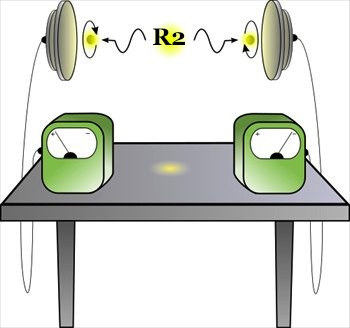
R2 in the middle of a Paradox Experiment! :-)
Is my life a paradox? I remember attending a meeting many years ago and a speaker at the meeting asked: “Would all extroverts please raise their hands.” I didn’t raise my hand and my friends around me asked: “Ron, why didn’t you raise your hand?” I said: “Because I’m an introvert.” They all said, in unison: “You are?” They thought the opposite. I immediately came to the realization that there is a contradiction between what I think and others think about me. You see, I now realize that I’m an introvert that’s an extrovert! Well, that’s a paradox, isn’t it? Now, don’t get this mixed-up with two doctors – a pair-of-docs! :-)
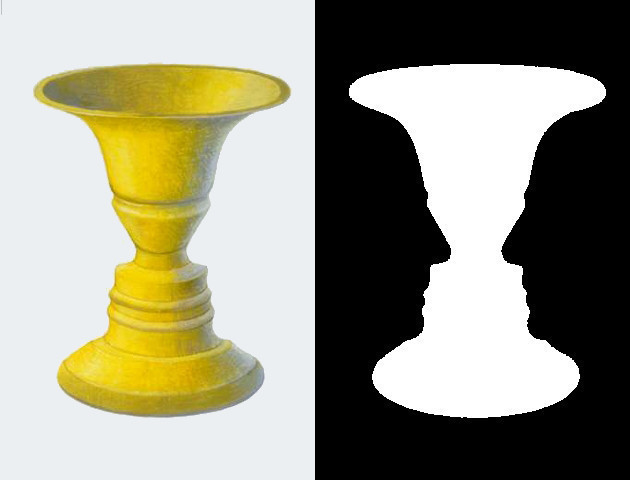
A vase or a “pair of docs?”
Ok, so what is a paradox? Here are some definitions from the Merriam-Webster dictionary:
a: a statement that is seemingly contradictory or opposed to common sense and yet is perhaps true
b: a self-contradictory statement that at first seems true
c: an argument that apparently derives self-contradictory conclusions by valid deduction from acceptable premises
d: one (as a person, situation, or action) having seemingly contradictory qualities or phases
Let’s summarize these different aspects of a paradox into one statement. For this discussion, a paradox is something that at least appears contradictory, unbelievable or doesn’t make sense, but is likely true. My statement that I’m an introvert that’s an extrovert appears contradictory, but is likely true. In my mind, I think I’m an introvert, but many others think I’m an extrovert. I’m an introverted extrovert – a paradox!
Of course, there are many other paradoxes besides me. :-) Consider something as simple as: “Please ignore this sentence.” Or, this one: “I try hard to be lazy.”
How about this paradox that proves R2 exists? :-)
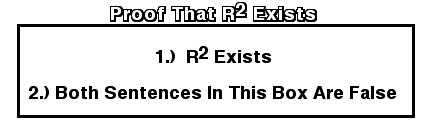
We can make the idea behind the preceding paradox even simpler, by stating what is often called the Liar’s Paradox: THIS SENTENCE IS FALSE! Think about it – if it is true, then it is false and if it is false, then it is true. Wow! There are more paradoxes that have similar contradictions, but let’s move on to some different types of contradictions that get closer to answering the question: “Is my life a paradox?”
Visually, we can have paradoxes. Sometimes, they are called optical illusions. Consider the following.

Penrose or “Impossible” Triangle

“Drawing Hands” by M C Escher

“Waterfall” by M C Escher
The first picture is called the Penrose Triangle, named after Roger Penrose. The other two were created by M C Escher. There are many more “visual contradictions” that act as paradoxes. These types of visual drawings are sometimes called, “impossible constructions.”
The next two pictures help to show how the “impossible can be possible!” :-)

Impossible Triangle sculpture, East Perth, Australia. The structure is actually disjointed, and was photographed from one of the two spots that it was designed to be seen from.

The Penrose triangles in Waterfall by M. C. Escher
I took the following two pictures last year, while in Washington DC .

Sculpture Park “3D” view of the house

Sculpture Park “2D” View of House
The two above pictures are of the same house, just different points of view. The “sculpture” is about 6″ thick with a length of about 10′ and height of 6′. Visual paradox?

“Up or Down” the up and down stairs!
I remember a friend of mine, after returning from a conference about improving the quality of teaching, telling me that the main idea of the conference was, “Less is more!“ I think his main idea statement meant that by doing less, we can actually accomplish more. In this case, I think the statement referred to the problem of a crowded curriculum and that by teaching less topics, but having the students learn them better, actually results in more learning. But, doesn’t that present a paradox? Doesn’t it, at least on first inspection, appear to be contradictory or absurd, but may, in fact, be true?
I think in so many ways, life does appear to be a paradox. This is especially true when looking at life’s complexities from only one point of view. Here are five examples.
A friend of mine has a most wonderful and gentle spouse, from my point of view, but he is inconsiderate and mean when behind closed doors.
Another person is shy and reserved, yet loves speaking in front of people.
There are many among us who have more leisure time, but less fun.
There are more couples with two incomes, but we also have more divorces.
We have more and faster ways of communication, but less communication.

Is it a “duck” or a “rabbit?”
Then, there are paradoxes about life itself.
Being born is a death sentence.
We have been able to add many years to our life, but hardly any life to our years.
We have learned how to make a living, but not how to make a life.
If you want to succeed in life, then you must increase your failure rate.
Too often a couple will pass up a “close” moment for fear of rejection.
Most of the paradoxes I have listed are not original. If life is a paradox and all of us are alive, then I think it will be difficult to find paradoxes that are unique to any individual. Having stated that, let me finish this post with some examples of paradoxes, as I see it, from my own life.
My obsessive-compulsive behavior causes me to feel comfortable with responsibility. (It gives me the confidence that I will follow through and complete whatever I take responsibility for.)
I have a strong desire to be in a state of not wanting.
Sometimes, I like to have disrupting noise and visuals (i.e. television) when I want to go to sleep.
I often do my better thinking when I’m distracted.
I like completing projects, but I don’t want to be without something to do.
I like change and I like routine.
I want to live somewhere else and I want the comfort of having a long history in the place where I’m living.

See if these circles move when you know they are not moving! Note: if you click on the picture you will see a larger version.
I like long drives and I like to get there quickly.
I like to exercise, but I don’t like to sweat.
I have a lot of confidence and I have a lot of doubt.
I like my hair short and I like long hair.
I want a new car, but I like driving an old car.
I want to know if I have any health problems, but I don’t want to find out if I do.
I like being a liberal and a conservative.
In the Summer, I prefer the Winter and in the Winter, I prefer the Summer.
Etc………..
So, is life a paradox? At least some of my life is paradoxical! How about yours?


 R2 Thoughts for You