 R2 Thoughts for You
Why Can’t You Focus?
Posted on April 12, 2010 Leave a Comment

Can you “focus” in order to see a boat towing two others?
Why can’t you focus? I think you can! Usually, it’s you don’t instead of you can’t. I know many people who do their best work at the last minute. Why? Generally, they know they are nearing a deadline and based on the need to finish now, they really focus on their tasks. Of course, there might be other reasons for last minute “work like crazy to get the job done” performances, but I think, most of the time, the problem is a focus problem.

Sunset – if only I could focus!
But, how does one solve a focus problem? On the surface that may seem like a easy and trivial question. It is and it isn’t. It isn’t, in the sense that focusing requires our minds to rule out all unrelated thoughts, while allowing us to concentrate on the thought at hand. Wow! that’s sounds tough! It is and it isn’t. Wait a minute, I’ve “heard” this before.:-)
Ok, it’s tough to rule out all unrelated thoughts, but not impossible. In fact, I think we often have to do this in order to successfully live in today’s world. In the past, as a student, I encountered many different teachers who continuously asked me to pay attention or focus. As a teacher, I encouraged my students to pay attention and often times, I specifically asked them to focus. Sometimes, I would ask the class to focus by saying, Hocus Pocus – It’s Time To Focus. I did a post last May in which that “saying” was the title and I provided more insight regarding it’s value. (To visit the post, please click on the title.) The point is, that it is NOT impossible to exclude all unrelated thoughts regarding a “task-at-hand” and focus on what is needed in order to complete the task. But, how do we exclude all unrelated thoughts?

Sunset – Yes, I CAN focus! :-)
As mentioned in the first paragraph, many people do their best work when faced with a deadline. Why? It’s because that’s when the person knows s/he has to focus in order for the task to be completed. I think it is not the deadline that helps boost productivity, but the incredible power of focusing one’s attention on what needs to be done. Why can’t we perform this well all of the time?
I believe we all have the ability to perform at our best. One of the main reasons we don’t perform at our best is our lack of controlling and focusing our attention on what needs to be done.
Focusing means we need to control what we are thinking and what we are believing. For example, if I had to have a post ready for a blog by tomorrow, then I have to think I can do it and believe in my ability to do it.
Also, in order to focus, we often need to change our attitude about the task. For example, suppose I have the mental feeling (attitude) about the task of writing for this blog as one of dislike. Once I recognized how I felt, I would realize my focus problem was only my attitude at that time. You see, I consciously enjoy writing for this blog. It’s only sometimes, subconsciously, that I feel I dislike it. In the past, as a young student, I did not like writing and often tried to avoid it. In order to be the best person and teacher that I could be, I had to change my attitude regarding writing. Change, I did, and now I love the act of writing! I suppose any subconscious feelings of disliking the act of writing for this blog would only be “leftovers” from a time past. :-)

Duck is my focus!
The ability to be able to focus is one that we have complete control over. It is a skill that we can teach ourselves. There are many resources on the web that can be helpful. Here are links to two such sites: Focusing on Concentration & Mental Clarity/Focusing Skills. I think if you learn how to skillfully focus on the task at hand, then your life will change for the better. It helps eliminate so many of the negative traits in life, such as procrastination, confusion, forgetfulness, …
So, why can’t you focus? Maybe, because you are focusing on can’t instead of can! :-)
Please focus on a comment.

What Does “Sonshine” Mean?
Posted on April 8, 2010 5 Comments
 Let’s make a slight change to the first line of the old Stevie Wonder song quoted in the picture of the sun to the left of these words.
——
You are the “sonshine” of my life
That’s why I’ll always be around,
You are the apple of my eye,
Forever you’ll stay in my heart.
——
So, I’ll bet you are wondering what the meaning of the title and beginning poem is about. Well, first let me make it clear that I borrowed this from the first verse of Stevie Wonder’s lyrics to You Are The Sunshine Of My Life. Secondly, the word “sonshine” refers to my son and how he is like sunshine that breaks though the clouds on a gray day. Truly, a mood changing beam of brightness in a dark abyss!

The Sun!
Without getting too specific, our son has helped us recently through some emotional times. He has offered and given to us, my wife and me, counseling, friendship, support and love. I am so proud of the man he has become. His strength, tenderness, thoughtfulness, patience and rationality is something this father respects more than can be expressed with these words.
But, I am writing this as a post for more than just praising my son. I have used the first four lines of You Are The Sunshine Of My Life because of some strong feelings I’ve had lately AND its melody, of which I haven’t been able to get out of my head. As hinted earlier, the word sonshine is a “play on words” that I used in place of sunshine in the Stevie Wonder song.
Recently, after spending some time with our son, I found myself humming the melody of You are the sunshine of my life. That song, for some unknown reason, has always seemed like a happy tune to me. Whenever I have heard it on the radio, I have been uplifted by the song. It’s one of those songs that helps bring joy in my life. This is exactly what I have experienced as a result of the relationship I have with my son. He brings joy to my life!

The Son!
As I was writing the previous paragraph, I couldn’t help thinking about my mother and one of her favorite songs, “Joy To The World,” by Three Dog Night. That song would help bring joy into her life each time she heard it. Also, she would often hum the tune to help change her mood from “down-to-up.” In my case, Stevie Wonder’s tune is not necessarily serving the same purpose as Joy To The World did for my mother; it is now representing someone who has, at times, helped change my mood from “down-to-up.”
As I reread what I had written so far, I realized that you might be wondering about the overall purpose for this post. Well, I wanted to not only outwardly announce my feelings for my son, but also use this as a way to learn about my feelings. As you may have read in my blog before, one of the purposes for it, is to use it as a forum to “write for learning.“ In this post, I wanted to learn what and how I really felt inside my mind. You see, too often in my past, I have not expressed what I really feel. As I am writing this, I am actively learning and expressing what I feel. Wow, this “writing for learning” is really working. Yea! :-)

The Sonshine!
In the past, I have been rightfully accused of not being an outwardly warm and demonstratively caring person. For example, I can remember, as a small boy, begging my mother to not make me hug my aunts when we traveled to Des Moines, Iowa for our biannual family visit. I can also reflect on numerous times, while my children were growing up, that I wasn’t as outwardly warm and caring as they, nor I, wanted me to be. Though I’ve not been as warm and outwardly caring in my body language, I have always felt, inwardly, a feeling of warmth for all of my relatives – aunts, siblings, children, etc. Perhaps, this post will help some readers “see” what feelings are really inside of me, but still not expressed outwardly.
So, what does “sonshine” mean to me? It means: like the sunshine strengthens and brightens my life on the outside, my son strengthens and brightens my life on the inside. He is my “sonshine!” :-)
How about a comment on sonshine or sunshine? :-)
“Retrospection!” Or “Why Reflect On Life?”
Posted on April 5, 2010 Leave a Comment

Is a rainbow a life reflection?
Last Summer, Bill, a friend of mine from my college days, contacted me through Facebook. He had lived overseas for quite awhile and we had lost touch with each other during that time. After arriving back in the States, he did a search for my name on Facebook and after successfully finding me, he sent me an e-mail. We have exchanged many e-mails since then – most of them for the purpose of trying to catch-up on over thirty years of life.
Last Fall, in one of my e-mails to Bill, I asked if he would write something for my blog. He said he would, and recently he sent me the following poem entitled: Life’s Reflections. I read it and really liked it. While I prepared it for this post, I asked him to give me some personal background information. Bill responded by asking me to only say: “I am an old college friend who has done a lot of retrospection about life and sent it to you.“
Retrospection – What a great word! It usually implies looking back and/or reviewing past events or situations in one’s own life. Considering that and reading his poem, I can see my ever-thoughtful friend, Bill Reed, looking back and reviewing his life in pleasing poetic prose. (Pleasing poetic prose – don’t you just love the alliteration? :-)
Enjoy reflecting with Bill. See if any of your thoughts and feelings are contained within his words.
———————————————————————–
Life’s Reflections
By: Bill D. Reed
Sometimes in life’s passing days;
What we dream or desire will pass away.
Those things we hold so true and dear;
May be challenged by negative thoughts and fear.
No man is an island you heard it said;
But in truth we are all alone at the end of the day.
For what we possess at life’s end;
Are the accumulated deeds to the creator we send.
What did I do to follow the Golden Rule?
Was I kind and thoughtful or was I deceiving and cruel?
Was it the money and power that I craved?
Or, was it kindness and goodness that swayed how I behaved?
Life is not an easy path to follow;
Without values, principles, and virtue it becomes quite hollow.
We must all reflect on the inner light;
And forgive and remember we all share the same plight.
So it goes each passing generation;
Have we made progress for all since our creation.
Did we give more than we have taken?
Did we hold fast to those values we learned not to be forsaken?
———————————————————————–
R2’s “reflections” on Life’s Reflections
I especially like the last six lines of Bill’s poem. Here’s some elaboration.

Wow, my life reflection is bigger than life! :-)
The first two of these lines, “We must all reflect on the inner light; And forgive and remember we all share the same plight,” invites me to look from within and remember that we all share the sidewalk of life.
The next two lines, “So it goes each passing generation; Have we made progress for all since creation,” reminds me to help make our lives better.
The last two lines, “Did we give more than we have taken? – Did we hold fast to those values we learned not to be forsaken?” encourages me to question my legacy.
Of course, these are some of my feelings that I emotionally felt while reading Bill’s poem. Wordsworth defined poetry as “the spontaneous overflow of powerful feelings.” What I have expressed in writing about the last six lines of “Life’s Reflections,” is a spontaneous overflow of the powerful feelings I felt as I read them.
And finally, I end with a “thank-you” poem to my friend.
To Bill
From: Ron
Thank you for you,
And for who you are
However far away;
And for the words you send to me
Thoughtful reflections that say,
What a good friend you must be.
What’s Old About St. Augustine?
Posted on April 1, 2010 1 Comment

R2 at the entrance of the oldest city in the US – St. Augustine, Florida.

Juan Ponce De Leon discovered Florida near the location of St. Augustine in 1513. Did you know that he was less than 5 feet tall?
I recently was vacationing in what many consider to be the oldest city in the United States. I’m referring to St. Augustine, Florida, which is 444 years old and was settled only sixty-nine years after Santo Domingo in today’s Dominican Republic, the oldest continuing European settlement in all of the New World. I knew before I arrived in St. Augustine that it was advertised as the oldest American city, but its long and storied history was generally unknown to me.

The current Fountain Of Youth Archaeological Park is where in 1565 Spanish Admiral Menendez established the first European colony in North America. It was here first and later moved back to the mainland, its current location.
I am not writing this post as a history lesson, but I will include some of the personal historical highlights that I found interesting.
St. Augustine was founded on September 8, 1565 by Pedro Menéndez de Avilés, a Spanish admiral and convoy captain of the treasure fleets in the mid-sixteenth century. Admiral Menéndez was appointed conqueror and commander of the colonization of the Spanish land known as “La Florida,” before the French Protestants (Huguenots) arrived in 1564 on what is now Jacksonville, Florida. Pedro Menéndez’s was charged with the responsibilities of expelling the French Huguenots, occupying La Florida and to Christianize the native inhabitants. Menéndez and his crew first arrived near today’s Cape Canaveral and then sailed north to an inlet the French called the River of Dolphins. He landed there and renamed the site St. Augustine, in honor of the great theologian, whose works and writings contributed significantly to the formation of Catholic Christianity more than 1,500 years ago.

This inlet is now called Matanzas which means slaughters. Here is where the Spanish slaughtered the non-Catholic French soldiers.
As Menéndez and the Spanish were fighting with the French over La Florida, a hurricane hit the French fleet, causing them to be grounded south of St. Augustine near a wide inlet. Menéndez and his soldiers captured the surviving French at the inlet and executed all non-Catholics. This inlet is now called Matanzas which means slaughters.
St. Augustine survived many destructive attacks, fires and hurricanes for the next 100 years, in which it was always rebuilt while using wood for the building material. After a pirate attack in 1668, which resulted in the city being sacked, the Castillo, a great coquina (shellstone) fort was built to replace the last of nine wooden forts. It’s high, thick stone wall and numerous cannons stood as an impregnable and permanent fortress that remains today.

In 1668,the Castillo, a great coquina (shell-stone) fort was built to replace the last of nine wooden forts.
Besides the Castillo and the old entrance (pictured at top of post) to the city, there are a few houses/buildings that were constructed in the early eighteenth century with coquina that are still standing today. The history of St. Augustine is long and interesting. It has The Fountain of Youth, “discovered” by Ponce de Leon and Flagler College, named for Henry Flagler, a self-made millionaire, who with John D. Rockefeller founded the Standard Oil Company. Flagler, in the late nineteenth century, set about the task of building a great Gilded Age empire of hotels and railroads that extended from St. Augustine south to Key West, Florida. He employed the Spanish Colonial Revival as the architectural style for his huge hotels. The Ponce de Leon Hotel in the old city of St. Augustine stills stands today and functions as Flagler College.
St. Augustine has had a long life with historical significance. It has some beautiful architecture and an abundance of scenic beauty. There have been numerous famous people who have spent significant time in St. Augustine – personalities such as, Ponce de Leon, Pedro Menéndez de Avilés, Francis Drake and Henry Morrison Flagler. It was a continuously inhabited city for nearly three centuries before being acquired by the United States in 1821.

St. Augustine may be old, but R2 has found a way to be young! :-)
So, what’s old about St. Augustine? St. Augustine is what’s old about it. On my second day of visiting St. Augustine, I was in the oldest house, next to the oldest street in the oldest city in the United States. Wow!

The Gonzalez-Alvarez House (The oldest house)!

Aviles Street, the oldest street named in honor of the birthplace of Pedro Menedez de Aviles (founder of St. Augustine)

The oldest pub in the oldest city, but it didn’t have any old wine! :-)
Is Stealing, Purloining, Filching, Lifting, Pinching Or Swiping Ever Justified?
Posted on March 29, 2010 1 Comment

Justified Stealing?? Liv Tyler kissing mother Bebe Buell at film premiere of her “Stealing Beauty” June 11, 1996
***Special note: As some of my regular readers might have noticed, I did not publish a post last Thursday. This is the first time I have missed my self-imposed schedule of publishing every Monday and Thursday for over four months. This post provides, indirectly, why I missed last Thursday.
“The robb’d that smiles, steals something from the thief” :-)
-William Shakespeare
(1) Did you ever steal, purloin, filch, lift, pinch or swipe something?
(2) Since steal, purloin, filch, lift, pinch and swipe are synonyms, do they have the same meaning?
(3) Is stealing, purloining, filching, lifting, pinching or swiping ever justified?

This Cowboy might purloin you! :-)
The purpose for the previous three questions is to encourage your mind to think about something that recently happened to me. Yes, you guessed it, we (my wife and I) were robbed. Our house was broken into, while we were gone, and some “stuff” is missing. For reasons related to the investigation, I will not be specific in this post regarding the break-in and what was taken, but I will try to be specific regarding my feelings about it. And, as usual, I will use this as a “writing for learning” exercise.
Referring back to the three questions at the beginning of this post, the answer to the first question is yes, the second question is no, and the last question is maybe. At least, that is what I think. I am not basing this on anything other than my own thinking, feelings and values.
You see, I think that everyone, at least once in her/his life, has been involved in some kind of theft. Most people have at least filched: stolen something of little value. Ok, I’ll admit to you the reader that I have filched at least once in my life. :-( I’m not proud of making that statement, but in the spirit of being truthful I must make it. Please understand that I am not saying that since I only filched, it’s ok. It isn’t – period.

I suppose you are ONLY going to filch me!
I sincerely believe that everyone should strive to not steal. Having stated that, I realize there are circumstances where it seems like the right thing to do. For example, stealing food from someone who has much in order to feed a starving baby can seem justified and the right thing to do.
What about the other synonyms? First let me explain each. As mentioned before, “to filch” means stealing something of little value. “To purloin” means to make off with something, often in a breach of trust: he purloined the key to his uncle’s safe-deposit box. “To swipe” usually means quick and furtive snatching or seizing: he swiped a necklace from the counter. “To lift” is to take something surreptitiously and keep it for oneself: a pickpocket lifted a wallet from the back pocket of a person on the bus. “To pinch” means to take something by or as if picking it up between the thumb and the fingers: the boy pinched a ten-dollar bill from his mother’s purse. “To steal” is the most general word used for taking something that isn’t yours and it usually implies severe wrong-doing. Therefore, the answer to my second question, “Since steal, purloin, filch, lift, pinch and swipe are synonyms, do they have the same meaning?” is no!

I’ll lift this to find who “lifted” them.
My last question, “Is stealing, purloining, filching, lifting, pinching or swiping ever justified?” is difficult. As mentioned before, it is easy to dream up cases where stealing can be justified. To feed a starving baby or to escape from a life-threatening situation might be examples where stealing can be “justified.” I put the word justified in quotes because I’m unsure if stealing and justified should be legitimately connected. The reason I’m unsure is due to how I feel as a victim of the act of stealing. As a victim, I can’t justify it. But, as the feeling of being victimized decreases over time, I’m sure I’ll have a different point of view and most likely, better understand how stealing can sometimes be justified. I just don’t know at this time. What do you think?
“A person who steals bread during a famine is not treated as a thief.”
-Yusuf Islam
“All stealing is comparative. If you come to absolutes, pray who does not steal?”
-Ralph Waldo Emerson
Should Packing For A Vacation Be Difficult And Stressful?
Posted on March 22, 2010 Leave a Comment
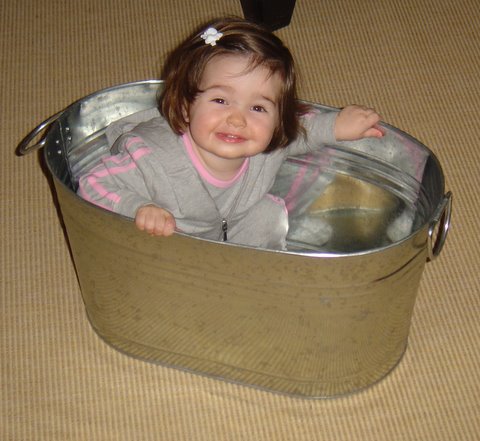
What’s so difficult? I’m all packed and ready to go! :-)
By reading the title of this post, you can most likely tell what I have been doing. Yes, I have been packing for a vacation. In the past, every time I have packed for a vacation I found it perplexing. It seemed like no matter how much I wanted it to not be confusing and/or puzzling, it was as though I was packing to move out of my house and to another country. I was just as confused and puzzled as I would have been if trying to solve a major complex problem. Why? Ok, ok, I’ll admit that I am stretching the truth about my packing. But, it really isn’t as easy as I think it should be considering that I have done it more times than I can remember.
Why some of us are so bothered by this is the big question of the moment? I have friends who have their spouses pack for them. I guess that is a solution, if you so desire. Frankly, I don’t want that option. There is no way that my wife could pack for me AND I would feel comfortable that high-maintenance me would be satisfied with her attempt. Of course, in the future I may not want/need as much as I “think” I need now. But, this time, I am packing for a vacation that is suppose to be fun and having what I think I need adds to the fun. :-)

There’s less stress when your suitcase holds your entire wardrobe.
Chris Guillebeau on his website, The Art of Non-Conformity, has an article entitled, Packing List. I read the article last Spring and have tried to use some of his ideas to decrease my puzzlement with packing. His article started with his biggest secret: “packing light is actually easier than bringing a ton of stuff.” He claims that his travel-stress is directly proportionate to the amount of stuff he carries around. I don’t disagree with him, but Mr. Guillebeau is usually traveling long distances on airplanes with many plane changes. I am packing for a road trip where I am driving long distances and then staying at one place for at least a week or more. On the other hand, I do agree with packing as light as possible. It’s just so difficult to decide what to pack so I have everything I need/want and have it “packed light.”
Often, when I return from a vacation, I have many pieces of clothing that I haven’t worn. It’s then that I realize I could have packed less. How can I determine that when I’m packing to leave? And, if I spend more time methodically thinking about packing lighter, then don’t I make packing more difficult at the expense of returning home with all originally packed items having been used?
Another one of Mr. Guillebeau’s idea’s that I have found extremely useful is having bags/suitcases that are always packed in the same way with location of items always positioned in the same place. Probably, considering all of the ideas I have tried in order to simply the packing process and to know while traveling where items are located, this has been the most useful. I now have bags/suitcases dedicated to particular sets of items. When packing, I no longer have to wonder where to put items; I simply put items in the bag/suitcase that I have always put them in. It gives me a feeling of home, where I have cabinets, shelves, drawers and a closet to place items in an organized manner for quick retrieval. In a way, living out of the suitcase/bag then becomes “just like home.” :-)

A neatly packed suitcase in the event of Americans having to evacuate a military base. Location: Morocco Date taken: 1957
Ok, the two ideas of (1) pack light/keep it simple and (2) bags/suitcases dedicated to particular sets of items, have been useful, but I still find packing to be more difficult than I think necessary. Why should it be so difficult? What can I do to decrease the difficultness?
As I see it, packing, no matter what you do, will involve a certain amount of difficultness and/or stress. What I need to do is try to decrease the amount of difficultness and stress. I think I have made great strides in lessening my problems with always trying to pack light and dedicate suitcases and bags to particular sets of items. But, I still must accept that packing for a vacation will have some amount of stress and difficultness. Perhaps vacationing (fun) and packing (stress) are a form of dualism; they are two “opposed parts” of which you can’t have one without the other. They are hopelessly interconnected and conflicting!
Should packing for a vacation be difficult and stressful? I don’t know if the word “should” is appropriate. If the question is changed to, “Can packing for a vacation be made less stressful and difficult?“, then the answer is maybe. :-)
What do you think?
What Does “I Love You” Mean To You?
Posted on March 18, 2010 2 Comments

An “I love you” hug!
What does “I love you” mean to you? I can imagine that you might respond with something like, “It means I love you!” In other words, the question is simple and can’t be elaborated on for any deeper meaning. Well, let’s see if we can find deeper and different meanings in those three simple words.
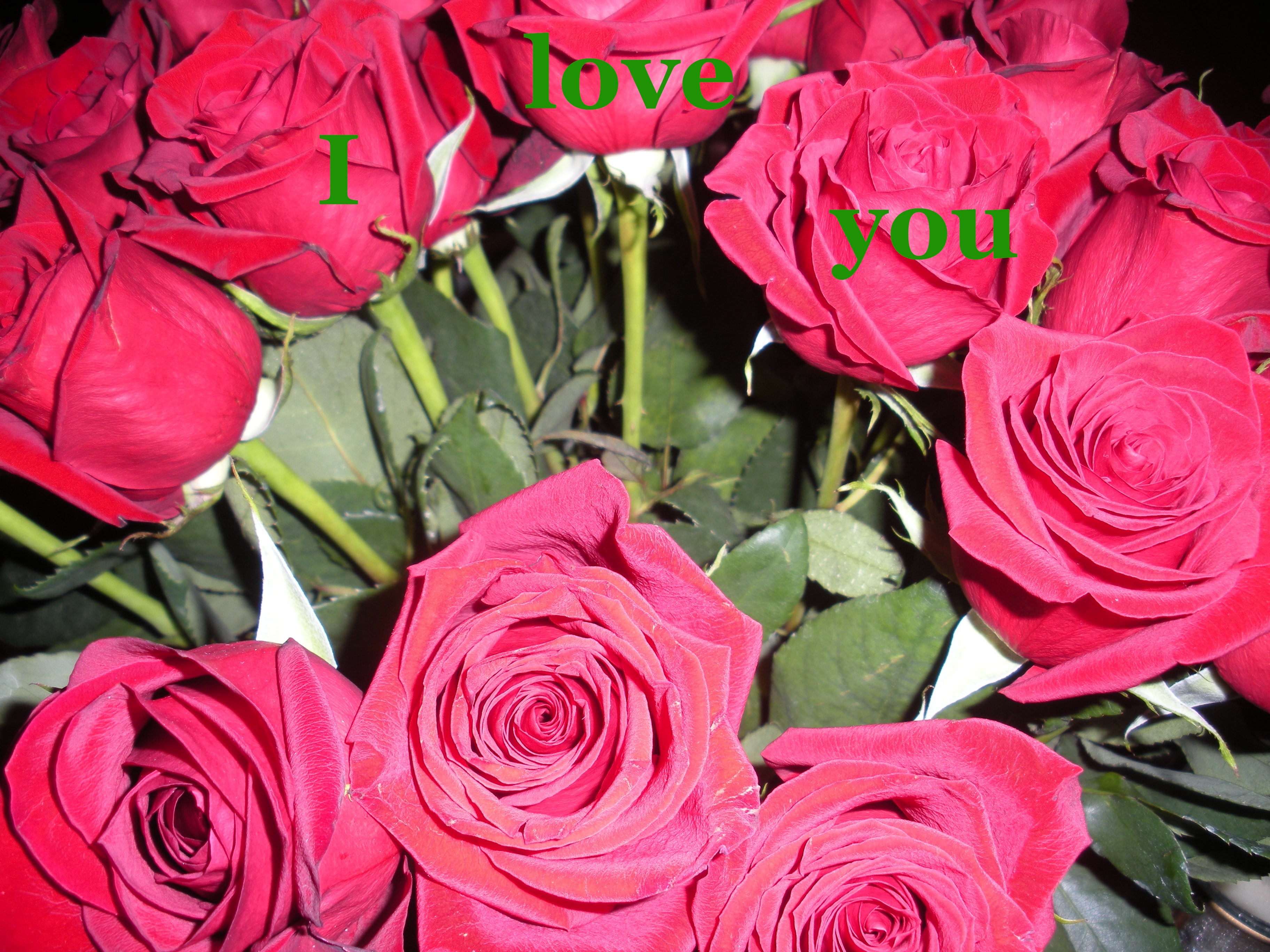
I love you roses :-)
Does I love you mean you love me like my father loved my mother before he died? Does I love you mean you love me like Jennifer Aniston loved Brad Pitt before they divorced? Does I love you mean you love me like two trusted friends love each other? I think the words, I love you, are more emotionally charged than most other phrases in the English language. I also thing that I love you doesn’t necessarily mean the same thing to the receiver and the giver.
When you say I love you, it can be an opportunity to learn about yourself. Those words have so much meaning because they contain you. You have a meaning for I love you that is tied to meanings derived from childhood, past family and non-family relations, including numerous meanings that we get from various other sources.
I love you is one of the strongest emotionally charged statements that we can make. Think about saying I love you to individuals in a diverse group. For example, think about how emotionally charged and different the statement can be when you say it to your mother, your brother, your friend, your roommate, your grandparent, your coach, your lover, your teacher, your preacher, your leader … Now consider another less emotionally charged phrase like, I admire you. To say, I love you, to your mother, your brother, etc… has more emotion in it when compared with, I admire you. Again, the point is that the statement, I love you, is very strong and emotionally charged.
Because of its strong and emotionally charged nature, I love you includes many feelings that might be painful and hardly ever referred to. If, for example, you had been hurt badly in the past when someone said to you, I love you, then you might associate the phrase with emotional pain. Now, suppose someone in the present says, I love you and really means it. But, you, having associated it with emotional pain, consider it to be false love. You have incorrectly projected a false love feeling on true love. Your mind has associated a negative feeling from the past to a present feeling that should have been positive, but is perceived negative by you. Ouch!
Perhaps, instead of allowing our minds to associate the phrase, I love you with negative feelings from the past, we should “train” our minds to associate the phrase with our present feelings about ourselves. You see, it’s important for all of us to have a caring relationship with ourselves. Consider this question, “If you were living with you, would you want to stay with you?” If the answer is not yes, then change what needs to be changed in order to love yourself. The first person you must have a love affair with is you! Only when you love yourself, will you be able to have successful loving relationships with others.
Try this. Go into a private place by yourself and say, “I Love You!” to yourself. After you do, then think how you felt about saying it. Did you feel any negative feelings? If so, why? Are you associating negative feelings from the past to your present statement about loving yourself? When you say, I love you, to yourself are you reflecting on a time when you didn’t love yourself? Shouldn’t you love yourself now? Perhaps, if you don’t think saying I love you to yourself is appropriate, then try replacing the word love with hate, like, dislike, admire, etc… Does any other word sound better than love? Personally, I think the only word that is appropriate is love!
Ok, so really, what does I love you mean? Getting rid of all past negative associations, it means: I LOVE YOU!
I would LOVE a comment. :-)
Is It More Stressful To Become A Better Person?
Posted on March 15, 2010 1 Comment

Visualize Paris in Las Vegas! Is it better? :-)
Do you strive to become a better person? If so, then do you have more stress because you are trying to improve?
When you are attempting to become a better person, you undoubtedly will try to behave differently. Whenever you act differently than you really believe yourself to be, you automatically produce more stress.
It really doesn’t matter whether or not your new way of behaving is better or worse than the old, you can still generate more stress. Anything that is significantly different can produce stress. So, if you think you need to become a better person, which will require you to act differently, then how will you change without stressing yourself?

I’m having a ball as I change for the better. :-)
I, personally, have changed in the past by just throwing myself into a situation where I would act differently than before and then would continue with this different behavior until it became a comfortable and consistent form of behavior. For example, when I was younger, I was an extremely bad sore loser. No matter what type of contest or game I participated in, I would be angry, sullen and revengeful any time I would lose. I was a sore loser! I later changed that behavior by literally throwing myself into losing situations and denying myself any expression of anger and/or revenge. Eventually, I became comfortable not being a sore loser. This was stressful, difficult and good. But, is there a better way?
I have written quite a few posts where I discuss the power of visualization. The most recent was entitled, When Should You Consider What You Aren’t? To visit the post, please click on the title. In that post I discussed how visualization can help us make the future what we would like for it to be.
Visualization can also help us become better people. In other words, it can help make our future self what we want it to be. In my previous example of changing the habit of being a sore loser, I did not use visualization, but instead, I got rid of the bad habit by using a visionless method of brute force. As mentioned before, it was difficult and stressful.

I have a lot of “change stress” that I can’t visualize!
A better and often less stressful way of changing behavior is to change the mental picture you have of yourself. Visualize by rehearsing in your mind the way you see yourself acting in the new and better you. Do this over and over again, without worrying or stressing over it. Simply imagine, visualize and rehearse the new you in your head. Soon it won’t feel like a new behavior, but instead something that you are very familiar with. It will feel like something that you routinely do.
If you use visualization to help you become a better person, then it won’t seem like such a big change. This is because you have already made it a routine part of your life. The only stress remaining is from the excitement you have from being the new and changed you. No stress from the anxiety of change! Wow!
So, is it more stressful to become a better person? Not necessarily – at least, that is the way I visualize it.:-)
I am visualizing a comment from you. :-)
Really, How Old Are You?
Posted on March 11, 2010 Leave a Comment

Does this life have a spiritual age?
I’m sure the question in the title seems somewhat simplistic to you. “Really, how old are you?” when asked in normal conversation is easy for most of us. We simply respond with the number of whole years since our birth. For example, if you were born on June 29, 1946, then as of this date (March 11, 2010), you are sixty-three years old. Whereas, if you were born on January 29, 1946, then you would say you are sixty-four years old. Of course you could be more exact by adding part of a year or listing your age in days. But, normally when we are asked to give our age, we respond in whole years since our birth. That’s officially know as chronological age.

My mental age is greater than my chronological age!
An inconvenient fact about the number we give as our chronological age is that we can’t do a thing about it. It never changes from being the time measured from birth, but yet it always changes while we are living. :-)
I read recently that there are other numbers we could give when someone asks how old we are. We could tell the person our physiological age. This is a person’s age as estimated by his or her body’s health and probable life expectancy. Our physiological age is often less than our chronological age when we are in good shape and living a healthy life style. There are many people who are sixty years old and have physiological ages of forty years or less; there are also many who are forty years old and have physiological ages of sixty-plus years.
Emotional age is another measure we sometimes use in reference to our emotional maturity. It can change a lot over a lifetime. Older adults can act like children and some adults can act like they are fixed in a certain state of life. For example, an adult might be emotionally fixed in adolescence when comes to her/his sexuality.

What’s your emotional age?
What about that controversial measure known as the mental age? This age usually involves a comparison of a person’s performance on a comprehensive test with her/his chronological age. The age is often considered controversial because it is used to determine the intelligence quotient or IQ. Most people have an average IQ (85 – 130) and from my experience, in general, a person’s mental age is seldom referred to.
I have also heard of spiritual age. It has nothing to do with any of the other ages mentioned before. Apparently, it is an age that is very subjective and reflects how spiritually comfortable a person is. Over my lifetime I have observed a change in my spiritual age. I can’t give you my spiritual age number, but I have had various levels of “spiritual comfortableness.” But, what is my current spiritual age? I have no idea!
So, how old am I? Well, I don’t know my physiological age, but I think (or wish;-) it is less than my chronological age. Over the years, I have had it determined by some non-scientific programs and each time my physiological age was less than my chronological age. Yea! :-)
I think my emotional age is appropriate, my mental age is normal and my spiritual age is comfortable. This leads me to the only age I can give with any reasonable amount of accuracy – my chronological age. I am my first example in the first paragraph of this post. By referring to that paragraph, you now know within a day how old I am.

Really, how old am I?
Well, on Earth, I’m 63 years old as I write this post. But, if I want to give a lesser number, then I could choose my age in terms of Martian years which is 33.8 years old. For a much larger number, I could choose my age in terms of years on Mercury – 264.3 years.
Of course age is only one of the measures we use regularly. Another measure many of us consider to be important is weight. On Earth, I weight about 175 pounds. Interestingly, on Mars and Mercury I would weigh about the same and considerably less – on Mars, 65.9 pounds, and on Mercury, 66.1 pounds. How’s that for losing weight? :-)
If you are interested in determining your own age, weight and/or learning more about why the differences exist on different planets, then please click here.
Really, how old am I? I don’t know, I’m confused. :-)
Is Change Different for Older Adults When Compared to Younger Adults?
Posted on March 8, 2010 1 Comment

Cherry Blossoms in Washington DC – Do young adults see this “change” differently than older adults?
Does change affect the older adults differently than the younger ones? This is an interesting question for me since I am an older adult. I became interested in how change affects us after realizing that many of the commercials I have been watching and listening to on television were really encouraging the viewer to change. Recently, on the evening news, I saw commercials encouraging me to change my eating habits, my medications and in general, my lifestyle. Of course, that is not exactly the way it was presented, but that is how I interpreted what I saw and heard.

These are all about quality.
As a member of the baby-boom population, I see many commercials featuring people in my age group encouraging the viewer to try particular products that would be appropriate for my generation. Products like medicine for heart disease and sexual dysfunction are advertised on the major network evening news shows on a regular basis.
I have noticed that when advertisements are directed toward the older adults there is a strong emphasis on quality. The commercials push quality and seem to assume that the older adults will spend more on products for the sake of quality. I guess that makes sense, because an older person will naturally look for deeper meaning as compared to the younger adult. The experience and knowledge that the older person has gained, due to having lived longer, will allow her/him to understand the relationship between various concepts more quickly.

These adults are happy with their change. :-)
I have been writing a lot about change recently. In fact, I think it is “safe to say” that in at least twenty-five of my posts you will find change as a central theme.
Without change we wouldn’t have learning or life, at least, not in the manner that we currently have. Think about it! Whenever you learn, you must change your mind. Life implies change; growth, movement, adaptation, organization, reproduction are all part of life and involve change. So change is a necessary part of who we are. But, since change is a constant part of life, it naturally will affect the older adults in a different way when compared to the younger. The older adults have experienced more change and therefore, don’t find it as much of a novelty as the younger adult does.
Younger adults, in my opinion, don’t value quality as much as their older counterparts. David Wolfe, the principal author of Ageless Marketing: Strategies for Reaching the Hearts and Minds of the New Customer Majority, proclaims that there is a new dominance of the marketplace by people in the second half of life. These middle age and older adults often have their experiential desires overtake materialistic desires in their influence on lifestyles and buying behavior. So, when change occurs in their life, they value the quality of the experience over the quantity. When an older adult considers changing, the quality of the change is usually more important than the features or novelty of the change.

My experiential desires have overtaken my materialistic desires.
So, is change different for older adults when compared to younger adults? In general, yes! Of course, there will always be exceptions, but when attempting to reach a particular group for advertising, government programs, education, etc., it is useful to consider the difference. In advertising, this is especially important since the new customer majority is now middle age and older.
Lynn Hall, an author for young adults, once wrote: “We did not change as we grew older; we just became more clearly ourselves.” To expand on that thought, we could say that change affects the older adults by making them more clearly themselves.:-)
If you write a comment, perhaps we will “more clearly” see you. :-)


 R2 Thoughts for You