 R2 Thoughts for You
How Does Deception Hurt?
Posted on December 24, 2009 Leave a Comment

H. S. Clay House
Special note to my readers. The following is about deception and the effect it had on me. I readily admit that I was inspired to write this post after my visit to the H. S. Clay House. My visit there is used as an example of a time that I experienced the emotional feeling of being deceived.
My wife and I were deceived recently. The title of this posting asks a question that I have been reflecting on since then. How does deception hurt?
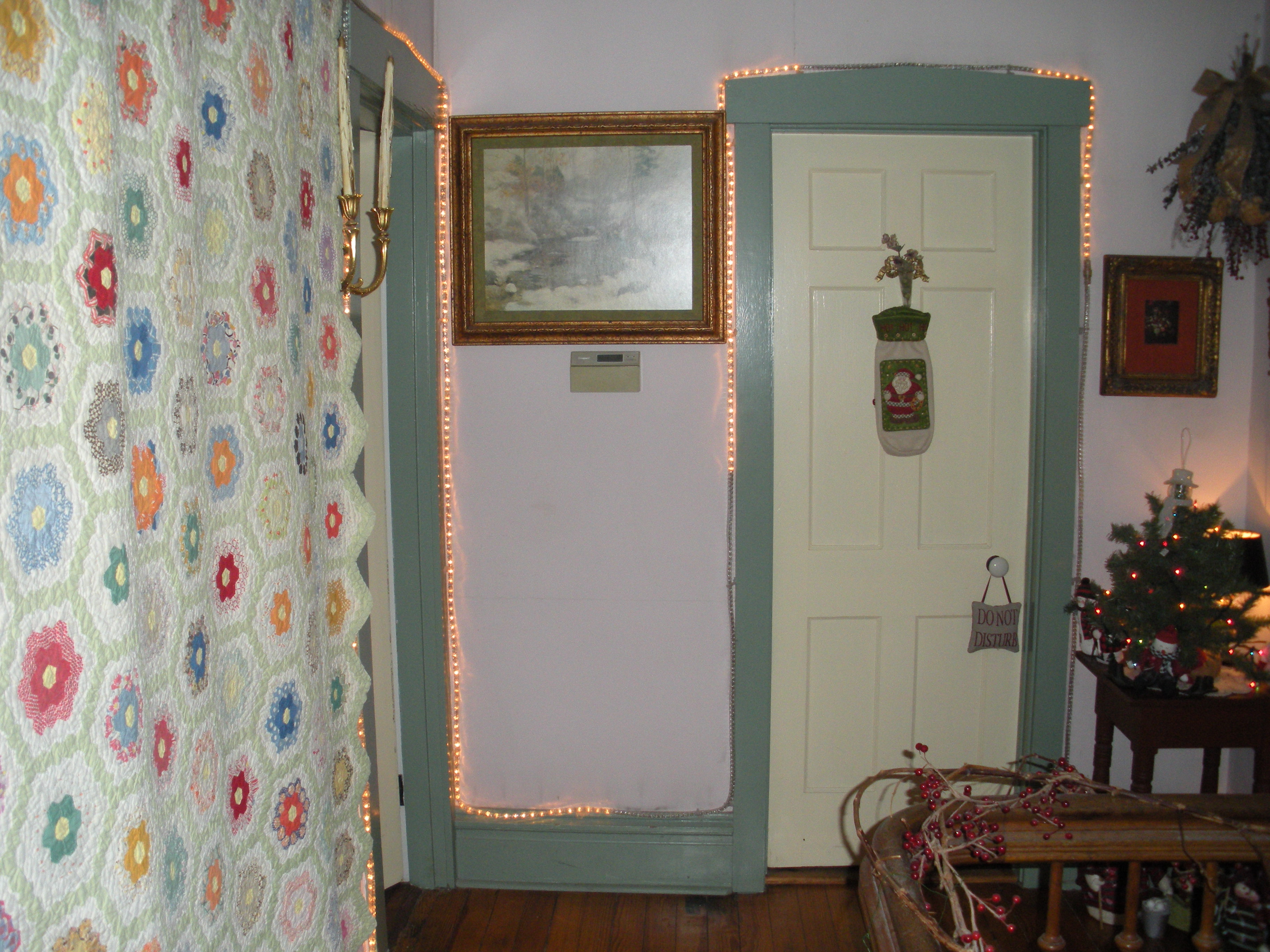
“Private” bath door. Our room’s door is to the left after the quilt.
Before I explore that question, let me explain the situation where we experienced the deception. Our wedding anniversary was on Wednesday, the day before Thanksgiving. Due to our son and granddaughters arriving from Kansas City for a visit, we were unable to celebrate our anniversary on its actual day. So instead, we decided to celebrate later and made reservations at a bed and breakfast in Augusta, MO, called the H. S. Clay House. We made the reservations for Friday, the week after Thanksgiving.
Augusta, Missouri was having their 26th Annual Christmas Candlelight Walk on that Friday and we thought attending it would add a nice touch to our anniversary celebration. We searched the internet and found the before-mentioned bed and breakfast was located in the middle of the candlelight walk. How nice to have our anniversary celebration in the middle of a beautiful candlelight walk. And, with our room having windows that offered us a view looking out over the festivities. Wow! My wife and I were looking forward to what we thought would be an ideal time. And then, deception and reality hit!

“Private” bath door and suite entrance across the hall from our door.
Anytime we are deciding on what bed and breakfast to reserve, one of the important amenities we always insist on having is a private bath. When we contacted the owner of the bed and breakfast, we were offered Marie’s Room, one of three rooms that featured: a large room with a queen size bed, sitting area and private bath. Here is exactly the way it was worded on the website, “Marie’s, Robert’s and Courtney’s Room are large rooms with a queen size bed, sitting area and private bath.”
When we were shown Marie’s Room, I asked, “where is the bath?” We were shown a bathroom out in the hall. In other words, we had to leave our room and go into the hall and then go into the bath. I asked, “is it private or do we have to share it with the other two rooms?” We were told there was a bath and a half downstairs AND the bath is private, if you close the door. So, there was a toilet for each room, one upstairs and two downstairs, but none are specifically assigned to any room. Is that what is meant by a “private bath?”

Here’s a view of the steps leading to the one and half baths.
My wife and I have stayed in many bed and breakfasts, hotels, motels, lodges, and villas during the past thirty years. Over that time, we have never encountered the meaning of “private” bath to be anything other than a bath that is exclusively for the use of those staying in the rented room.
You might question why this is a “big deal” for me. First, and foremost, I am what you might call, “high maintenance.” I like to be prepared for whatever needs might arise during a stay away from home. I like to have a bathroom where I can organize all toiletries and feel comfortable leaving them out. When we are traveling, I like to find a place that enables me to have a “home away from home.” This is especially true when I am staying at a special place to celebrate a special anniversary. And, to compound this, my wife wasn’t feeling well.
When we left our home to travel to the bed and breakfast, I knew my wife wasn’t feeling well. I thought, considering what was advertised and the price we paid for the room, that it would be thoughtfully arranged, restful and we could at least watch the candlelight walk from a window in our “comfortable” room.
Here are a few examples that made our “comfortable” room uncomfortable. Marie’s Room was so cluttered we had little space for our clothes. The door to the room wouldn’t lock from the outside, so we had no security when we we left to go to dinner. In case there was an emergency use of a restroom needed, we had little confidence that an empty one would be available. For my wife, who wasn’t feeling well, and for “high maintenance me,” it just wasn’t a comfortable place to celebrate an anniversary or have a healthy restful sleep.
So what did we do? We left at 10:00 PM and went home (a one hour trip). We lost a lot of money, primarily due to deception. You see, the feeling of being deceived caused us not to be able to make the best out of a bad situation of “being under the weather.” If we had only known that we did not have a private bath, then we would have stayed at home once my wife realized her state of health. Oh, well!

Allegorical etching illustrating some of the world’s miseries: Worry and Crime (or Deception) on horseback pulling behind them a cart containing Discord, Avarice, etc. which are rolling over items representing knowlege and enlightenment.
Johann Wolfgang von Goethe once wrote, “We are never deceived; we deceive ourselves.” I suppose this could apply to us. Perhaps, we deceived ourselves because we never specifically asked if our “private bath” was dedicated to only us until we were shown our room at check-in time. Arghhhhhh…….!
E. R. Beadle is quoted as saying, “Half the work that is done in the world is to make things appear what they are not.“ This one, in my opinion, is most appropriate. I believe that what was written on the website of the bed and breakfast, regarding the room we rented, was to make things appear what they are not.
So how does deception hurt? It hurts to be taken advantage of. It hurts to pay money for something you don’t get. It hurts to have a special event ruined by false advertisement. It hurts how deception always hurts.
It is a helpless, emotional pain and you know you’ve been treated with disdain. OUCH!
What do you think?
Why Am I Greedy?
Posted on December 21, 2009 1 Comment
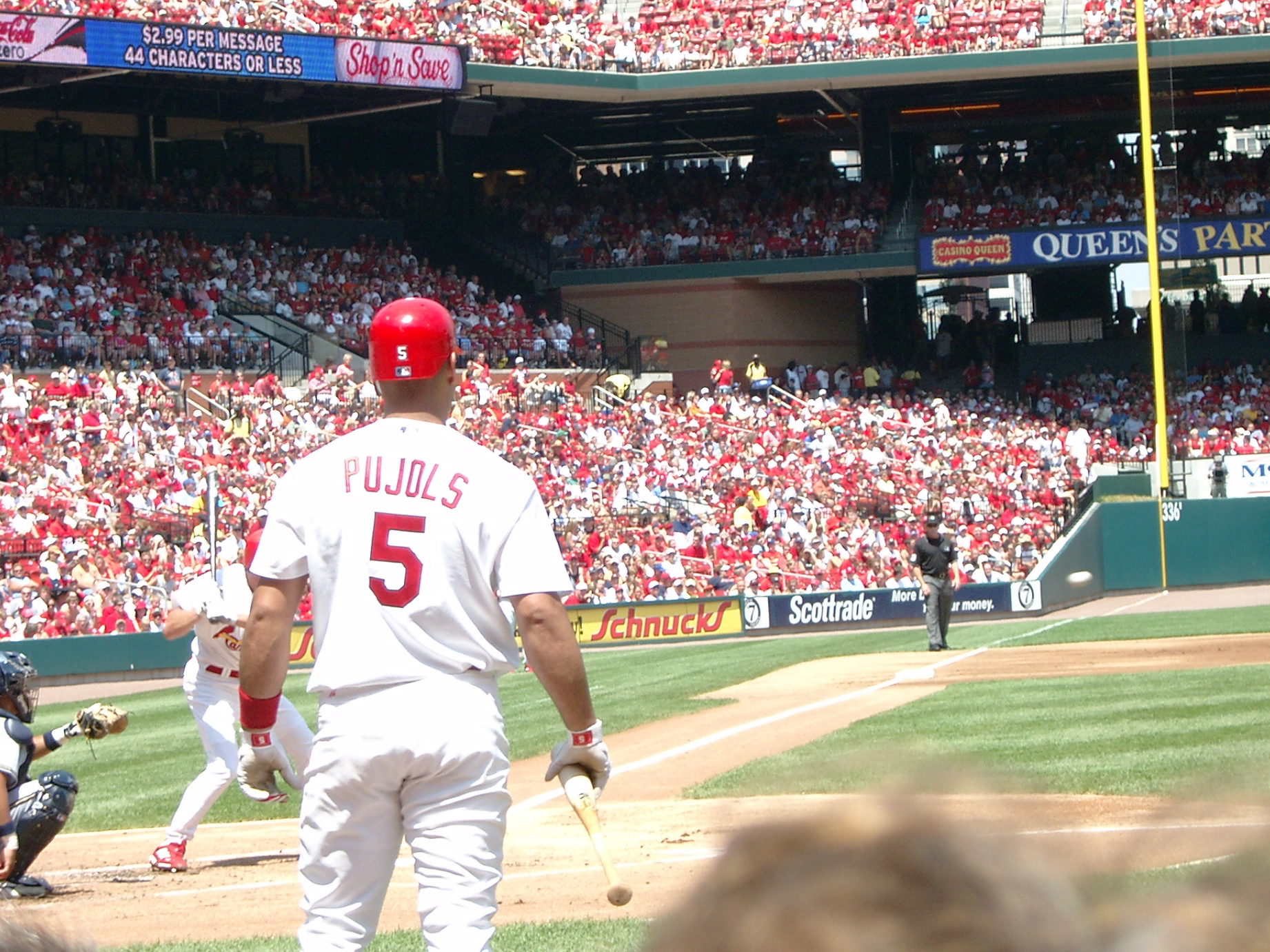
Are Cardinal baseball fans greedy because they want Albert Pujols to hit a home run every time he is at bat?
A question that I have asked myself many times is, “Why am I greedy?” I must admit that I am a little embarrassed admitting that I have felt greedy. You see, I was raised in a religion that taught me that greed is one of the seven deadly sins. Greed has always been, in my mind, something to disdain. So, why am I greedy?

A close-up of a fantastic Parisian shop window displaying “greed” in a featured theme of the Seven Capital Sins.
Before exploring the answer to this question, let’s establish what greed is. My dictionary states that greed is, “excessive or rapacious desire, especially for wealth or possessions.” Well, when I carefully analyze the definition and compare it to what I feel, then I think I have only a “little bit of” greed.
Two synonyms of greed are avarice and covetousness. Avarice implies excessive or insatiable desire for wealth or gain. Covetousness implies inordinately or wrongly desirous of wealth or possessions. I don’t think that avarice or covetousness applies to what I felt, but I still can only find one word, uhhh, make that three words, to describe it: “little bit greedy.”
How have I been a “little bit greedy?” A few years ago, I was given a small amount of money. Believe me, it wasn’t much, but it was a lot more than I ever thought I would be given.
When my mom and dad died, they had nothing to will me. I knew of no one that would give me anything. Then, all of a sudden, I was given an unexpected gift. Immediately, I shared some of it with my family. I took what was left and put it in the bank and started spending it on gifts for Christmas and updating our house.
It wasn’t long before I realized that the gift was almost gone. This is when the feeling of “little bit greedy” roared its head. I started awakening at night and thinking about what had been spent and why I did it. Happiness over receiving the gift was replaced with regret for having spent the money. I started hoarding what was left. It didn’t then, and it doesn’t now, make any sense to me. On the other hand, I know in my heart that I felt, at least, “a little bit greedy.”
I am greedy for your love AND for love of the cupcake! Is my greed a bad trait?
Having an experience of feeling a “little bit greedy,” and observing various friends go through comparable experiences, has made me realize how greed affects us. I have observed friends who have hurt family members and made enemies of their friends, all because of greed. It is a very negative emotion.
The opposite of greed is generosity. I’ll admit that I have never considered myself to be very generous. On the other hand, I think I am generous enough to be considered not greedy. That is, until the before-mentioned incident.
Here is the weird thing I discovered and felt about greed. The feeling of greed brought out a feeling of want in me. Horace, an ancient Roman Poet, once wrote, “He who is greedy is always in want.” I suppose that makes sense, because greed implies an extreme desire and therefore, a feeling of want is only natural. I just didn’t expect that.
Back in June, I did a posting entitled, “What Kind Of Wolf Do You Feed?“ In that posting I quoted a parable from the Native American Indian Legends, that compared two wolves metaphorically representing good and bad traits found in humans. When I wrote that post, I did not focus on greed, but remember thinking how I have sometimes fed the wrong wolf. For more about this, please visit that posting by clicking here, or the link in the title given at the beginning of this paragraph.

Is being greedy about “recycling knowledge” bad?
So, why am I greedy? Well, being greedy is a natural thing and it isn’t always a bad thing.
What?!!!!
Greed is natural, in the sense that we are naturally desirous of many essential things – love, food, praise, knowledge, etc.. It isn’t bad, in my opinion, when we are greedy about something like knowledge, excellence, justice, etc.
The point I’m trying to make is that greed isn’t something we should expect, nor necessarily consider, to be a weakness in character. I suppose, like most things, we need to consider each individual case.
I’ll admit that greed “leans” toward the negative, but we shouldn’t say someone is a bad person due to greed. But, we should consider greed to be a “red flag alert,” warning us to carefully look at the particular greed that is being manifested.
Why am I greedy? Because I’m human.
Should I be greedy? Usually no, but sometimes, yes.
When should I be greedy? Depends! :-)
I’ll admit that I’m greedy for your comments. ;-)
Who Uses Stereotypes?
Posted on December 17, 2009 1 Comment

George Carlin, May, 1990
Recently, I heard someone say, “that’s solid.” The person was referring to a the “Hippie Dippie Weatherman” routine by George Carlin. It’s a very funny routine that’s considered to be a classic. I found the statement, that’s solid, rather interesting. It reminded me of the meaning of the word, “stereotype.” The literal meaning of stereotype is “solid-kind” when viewed from its Greek roots, but we normally interpret it to mean, “solid impression.”
Now, the “Hippie Dippie Weatherman” is a solid impression or stereotype. A solid impression of a weatherman who acts like he is a hippie. My dictionary states that stereotype is, “a widely held, but fixed and oversimplified image or idea of a particular type of person or thing.” A stereotype is nothing more than a short-cut or thought-saving device for our minds. It enables us to not have to think for ourselves.
The “Hippie Dippie Weatherman” is a pre-packaged image that tells us immediately about the character in question. The person is a hippie who is “dippie” and tries to predict the weather – a stereotype in the sense that we all can “see” the person without having any other information. A fixed and oversimplified image of a person.

“Blue Collar” workers leaving Pennsylvania shipyards in Beaumont, Texas, June, 1943.
Really, using a stereotype is allowing someone else to do our thinking for us. Many words that are considered loaded and negative are stereotypes. There are many examples and just to name a few, consider the fixed and oversimplified images that are formed in minds by the words: Liberal, Conservative, Geek, Nerd, Hippie, Wasp, Uncle Tom, Homer Simpson, Jewish Princess, Dykes and Blue Collar. These words don’t have to be stereotypes, but they do tend to cause stereotypical images in our minds.

Who does she love?
Often, when we hear that someone is a hippie, we tend to conjure an image of someone whose values are rooted in love and peace. The person might be into communal living, drugs and liberalism. These are just a few of the ideas associated with the word hippie. The point is that hippie is definitely a “solid impression” on one’s mind. It is, for lack of a better term, a stereotypical word!
So, who uses stereotypes? Well, all of us do, now and then. I have used the words, country boy, when describing myself. I use country boy as a stereotype of who I am. On the other hand, I haven’t lived in the country for forty-five years. Am I really a country boy, or am I trying to quickly place a solid impression in one’s mind? Probably the latter.
I think people sometimes use stereotypes when trying to describe other people in a negative fashion. For example, consider how the Nazis described the Gypsies and Jews. Consider how the liberals talk about the conservatives. Consider how the conservatives talk about the liberals. Consider how the sexists talk about the gays. Consider how we often have a “one size fits all” word for a group that we are wanting to describe in some negative way.

Why call him a Muslim when he isn’t?
When President Obama was running for president, he was incorrectly called a Muslim. When he was referred to as a Muslim, the people who did so were using the word “Muslim,” in a stereotypical manner. They were trying to do the thinking for those who listened to them.
Stereotypical statements are often oversimplified and overgeneralized statements that should be avoided, if at all possible. Very seldom are they appropriate. If you are a woman, then how do you feel if someone says, “I know what you think because you are a woman.” Ouch!
Humans are all unique and entirely too diverse for us to expect a stereotype to be appropriate.
Who uses stereotypes? Hopefully, not us!
What do you think?
“Should” You “Want” To Change?
Posted on December 14, 2009 Leave a Comment

“Change” that is beautiful!

“Should” we, or do we “want” to change these?
What makes a person change? I would guess you find the question too general to answer. A person changes for various reasons. Most likely, the question should be: what makes a person want to change? Does a person have to want to change before s/he changes? What makes a person want to change? Uhmmmmm….????
Let’s explore the last question in the previous paragraph. I know I often think that I, or someone else, should change. But, that’s not what I asked. I think it happens often, probably too much, that someone will say, or at least think, that another person should change. But, “should change” and “want to change” are two different things.
It’s easy to find reasons for why someone should change. Consider, for example, someone who is driving in an unsafe manner. If s/he continues to do so, lives could be in danger. That person should change her/his driving habits. But, what would make that person want to change? Uhmmmmmmm….???
You see, if a person changes because someone else thinks s/he should, then the change is the result of pressure and concern from outside themselves. Perhaps, a family member doesn’t approve what s/he is doing. Perhaps, it is a policeman that is demanding the change. The person may be changing because of fear of punishment. There are many possible outside reasons that might cause someone to think s/he should change.

Should this contain change OR do you want this to contain change. :-)
I think when the change is due to outside pressure, there’s a good chance the change will vanish as soon as the outside pressure is gone. I know that when I was sixteen and driving with my step-father in the car, I drove in a very safe manner. But, when he wasn’t with me, my driving was not as safe. It wasn’t until I felt pressure, from within, to change into a safe driver, that I became a much more defensive and careful driver.
So, what caused me to change my driving habits? When I was seventeen and riding with an older brother of a friend of mine, I experienced a car ride that reawakened a memory that had been suppressed for over ten years.
You see, my father was killed in a car accident when I was five years old. My mom and I were in that same accident which caused her to be recuperating in the hospital for over three months. I had only minor cuts, but I did retain a “five year-old boy memory” of the tragic incident.

The memory of an accident made me want to change!
The memory of that tragic accident was suppressed, until the day I was riding with my friend’s older brother. During that ride, my friend’s brother was showing-off and we had a “close-call” that reminded me of the crash that killed my father. From that day on, I have been a defensive and careful driver. That was forty-six years ago. I wanted to change my driving habits as opposed to me, or someone else, thinking I should change.
When I changed my driving habits, I started to imagine myself as a defensive and careful driver. I had a reason that I told everyone, including myself, why I drove in such a defensive and careful manner. I wanted to changed and felt comfortable with my reasoning.
I think this “process” that I went through, for wanting to change, can be applied in many situations by anyone.
The process is:
(1) imagine the change,
(2) constantly view yourself as a changed person, and
(3) always proudly admit to yourself and others that you are that changed person.
Of course, you might fall back to your old ways now and then, but if and when you do, you will most likely feel uncomfortable in this unwanted behavior and soon seek the more comfortable path.
The key is to create, in your mind, the change you want and not the change you should.
For a change, you should comment – oops – (I want you to) want to comment. :-)
“Are Disasters Opportunities” And “Is Nothing Free?”
Posted on December 10, 2009 Leave a Comment

A machine created to run smoothly but do “nothing.” Is this nothing, “free?”
I once read about a person who had been successful at turning disasters into opportunities. Though I don’t remember a lot about how the person was so successful dealing with disasters, I do remember the following quote from the article: “I did it for nothing, because nothing is free.” It’s an interesting statement because, on the surface, it seems to give a good reason for doing something for nothing. Perhaps, in some strange way, it’s a good reason for procrastination.:-) On the other hand, the part that provides a reason for why it’s done for nothing is debatable.
Is nothing free? Yes, but only when its value is not positive or negative. So, what do I mean by that? Consider when nothing is food needed for nourishment. Does the food that you don’t get have value? Yes, and from the effect it has on you, the value is negative, but still a value.
There are many cases that I can imagine where nothing is not free. Consider doing nothing when someone is trying to conquer and enslave you. In such a case, nothing is not free, but could cause you to not be free.:-) And, what about nothing as your pay for a job that costs you much physical and mental hardship? The point here is that nothing is often not free.
I think the person who used “I did it for nothing, because nothing is free,” was talking about starting from nothing after a disaster, and then turning the disaster into an opportunity. Of course, this is a very admirable goal. Having stated that, it seems impossible to set goals for making a disaster become an opportunity. First, we would have to plan for a disaster while not knowing the impact, and then set goals from the consequences of the disaster to make it an opportunity. Wow! It’s one thing to plan for a disaster, but to plan for all possible consequences of the disaster, and then plan for making it an opportunity, is a bit much.
Now, there is a lesson to be learned here. I don’t think we should or could, have a goal of turning disasters into specific opportunities, but we can and should, look for opportunities that are unexpected. A disaster will undoubtedly involve some change, and if we look for unexpected opportunities during and after the change, we have a good positive way of dealing with what was originally, an unfortunate situation.
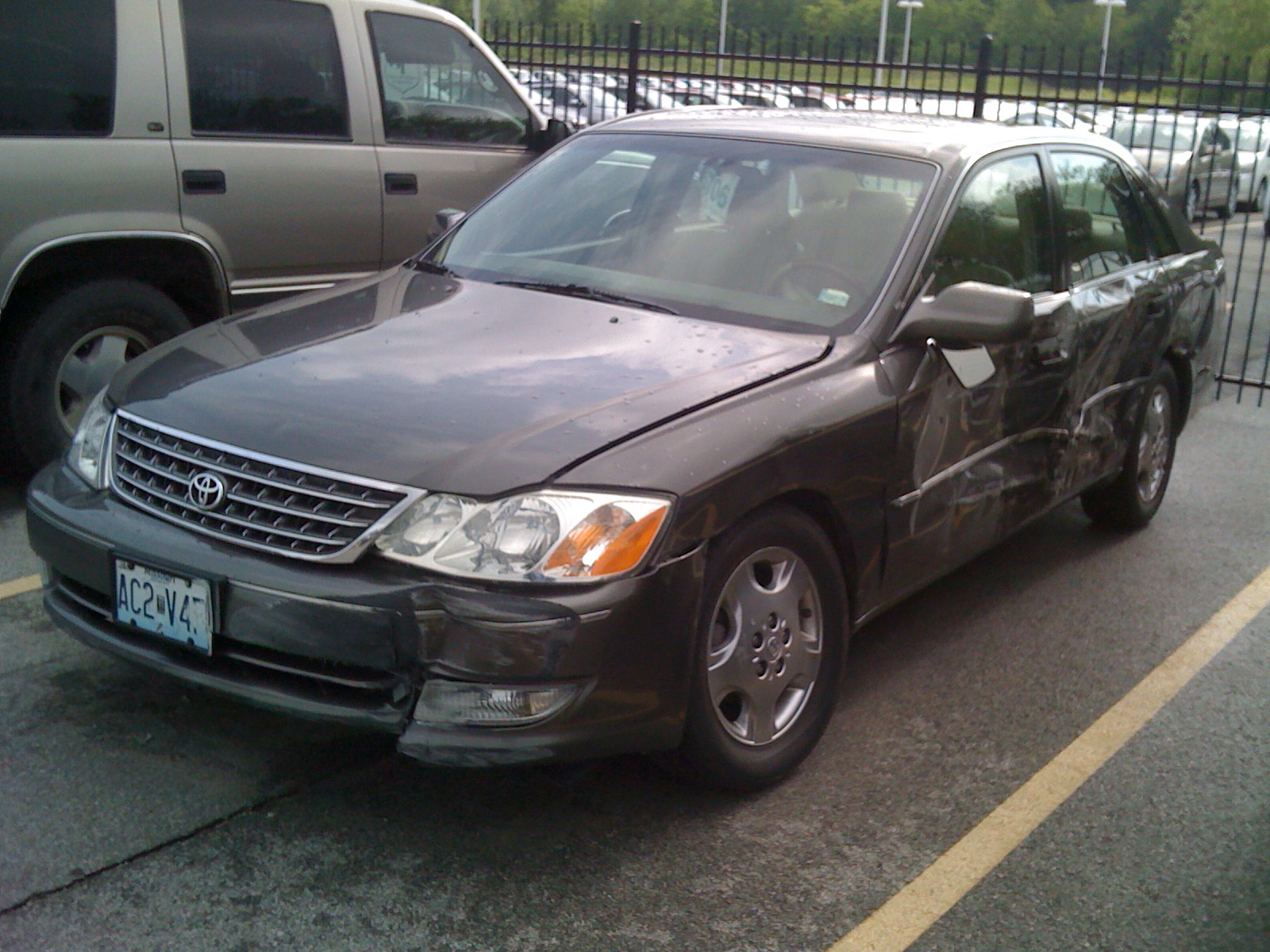
Here’s the disaster that became an unexpected opportunity.
An example of an unexpected opportunity from a disaster occurred in my life last Spring. My wife was in a car accident that totaled our car. Though she, thankfully, was not hurt, our car was a “disaster” in many ways. The extended warranty on the car had just expired and we had the car in excellent condition with only 100,000 miles – ready to be driven for another 100,000 miles.
The car was a Toyota Avalon, fully loaded. I thought there was no way we would be able to replace it and therefore, would have to go deep in debt just to get something comparable. We spent a few days looking at used cars on reputable car dealers’ lots. The ones we found all had approximately the same mileage, but lacked the security of knowing the exact history that we knew about our Avalon. Buying one of them would cause us to pay a lot more than what the insurance would give us for our wrecked car, and we would end up with a less reliable car that likely wouldn’t last any longer.

We’ve got nothing and it’s seldom free!
One of the questions on my mind, before our car was totaled, was “how were we going to be able to replace the Avalon when it could no longer make the cross-country vacation driving we had become accustomed to?” I could foresee that, in about three years, we would have to replace our Avalon. So, if our car hadn’t been totaled, we still would have to deal with a major expense in the somewhat near future. The “opportunity” to get a different car was moved from the future to the present.
Our totaled car, though not major when compared to the financial disasters I have recently read about in newspapers, was still a financial disaster for my wife and I. We decided to seriously seek an unanticipated or unexpected opportunity from this disaster.
We went on Craig’s List and looked for low mileage cars that would be appropriate for cross-country driving. Within one day we found a car with 30,000 miles, in perfect condition, and it even had a better color than our wrecked car. The only caveat being the car was one year older than the Avalon. But, it was very low mileage, came with a complete verifiable history record, and was only a few dollars more than what the insurance company gave us for our Avalon. An unexpected opportunity from a disaster!
Is nothing free? When our car was totaled, we went from having a good car to nothing. Of course, because of the insurance settlement we had a check for about 70% of our old car’s Blue Book value. But, we did not have a car. So, with respect to our car, we had nothing. Was “that” nothing free? Free, as in “no cost?” No!
Is nothing free? Seldom, is my answer.
What’s your?
Do You Trust Yourself?
Posted on December 7, 2009 2 Comments
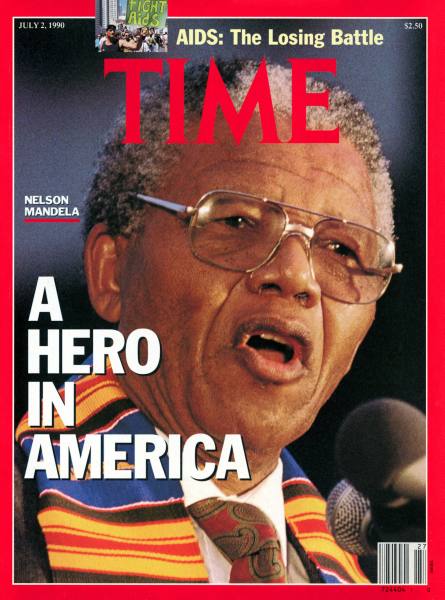
TIME cover 07-02-1990 “A Hero in America” w. South African activist Nelson Mandela
Should you trust yourself? Are you considered trustworthy? I’ve been doing a lot of thinking about “trust” lately.
Over the past few weeks, while watching the news on television or reading newspapers, I’ve noticed many reports about our country’s health care fiasco. Often mentioned is how many of our citizens don’t trust the government to run the “public option.” Also, I’m reading and hearing that many don’t trust President Obama. This has caused me to think about whether or not I’m considered trustworthy.

Aung San Suu Kyi
What does it mean to be trustworthy? Looking at this question from a historical point of view, I know that most of the great leaders have been people who were considered trustworthy. They were people who could be counted or relied upon, at least by their followers. For whatever position s/he historically had, the followers of the great person thought s/he did the right thing.
Examples of recent leaders who have manifested trustworthiness to a large number of followers are Aung San Suu Kyi, Nelson Mandela, Abraham Lincoln and President Obama. Well, that’s nice to know, but how can we use this to help us become better people? Of course, I am assuming that one aspect of being a better person is being trustworthy.

Let’s talk the talk, while we walk the walk!
I think that a trustworthy person does the right thing, no matter what it is and no matter when it needs to be done. They share relevant and appropriate information in a clear and accurate manner. A trustworthy person says what s/he means and means what s/he says. A trustworthy person “talks the talk and walks the walk.”
I know when I am asked to write recommendations, one of the attributes I try to address regarding the person I am recommending is her/his character. I think a person who is trustworthy, is a person who is manifesting a very important aspect of character. It’s not the only one I consider, but an important one. Now, I realize that even crooks might trust each other, but that still doesn’t discount the importance of the quality of trustworthiness.
Of course, being trustworthy is a quality that, when earned, doesn’t last forever. By this, I mean we must earn trust over and over again. It’s very easy to lose trust, and when it is lost, it often takes a long time to regain it. In other words, trust is like fragile glass; it is easy to break and very difficult to put back together.
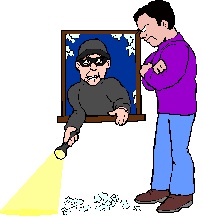
Sorry, I don’t trust crooks!
So, how do you become trustworthy in a positive way? Well, first you must have good values, like honesty and respect, that are manifested in your behavior. Your behavior should demonstrate what you believe in, and as mentioned above, “talk the talk and walk the walk.” You should admit your mistakes and not try to make them appear as belonging to someone else. And, you should trust yourself.
Ralph Waldo Emerson is reported to have said, “Self–trust is the first secret of success.” Indeed, if we are to be successful, then we must have self-trust. Self-trust enables us to be confident, and happy to live with ourselves.
Do you trust yourself? Please answer the following questions.
Do you work to earn your trust?
Do you generally try to “do the right thing?”
Are you honest with yourself?
Do you readily admit your mistakes to yourself?
Do you think you can be relied upon?
Do you love yourself?
If you answered “yes” to all of the questions, then most likely, you trust yourself. Do you?
The best proof of love is trust. —Joyce Brothers
Are you proving your love?
I would love to read your comment. Trust me, I will personally respond to your response. :-)
Do You Make Choices Based On Fear and/or Hate?
Posted on December 3, 2009 Leave a Comment

No Fear, No Hate, Just Love! Photo by Nickolas Murray, (1892 – 1965) Taken 1939 MCCALL STYLE & BEAUTY

I’m running because I’m afraid, but I love dogs!
How often do we make choices based on fear? Recently, I turned on my radio and the first thing I heard was the following question, “If you were asked to choose between fear, hate or love, which would you choose?” The person who was asked the question immediately responded, “love!” I remember thinking, “that’s obvious!”
I wasn’t able to listen much longer, but from what little time I did, I think the person who asked the question was trying to explain how we often make choices based on fear and/or hate, when love is another reasonable choice.
Let’s look at how we might choose hate and fear, instead of love. Suppose you are looking at a menu in a restaurant and you notice they offer, as a special, an entree that contains one of your favorite fishes. It is a fish that you love to eat. You also notice that one of the sides is a vegetable that you hate. Suppose, because of hating the side vegetable, you don’t choose the special entree. Your choice was based on hate.
It also may have been based on fear. How, you ask? Sometimes we are afraid to ask if the vegetable that we hate can be replaced with something else. In this case, we chose hate and fear, instead of love.
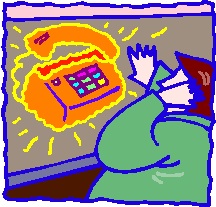
I hate talking on the telephone, but I love talking to people!
The choosing of hate and fear over love can happen in many other ways. Sometimes, when you make choices that cause you to avoid success, you have chosen hate and/or fear over love. You may have avoided success because you hated doing something, or you were afraid of the commitment.
We all should love ourselves enough to try not to harm our physical health. But, we often make choices out of hate or fear that are harmful to our health. Take, for example, exercising for good health. I know that I hate doing it, but love myself enough to overcome that hate.
Sometimes, I find myself thinking of not exercising out of fear. You see, if I feel a little sore from a previous activity, I sometimes have a fear of hurting myself. Usually, after thinking about it, I realize that the fear is unfounded. All I have to do is take it easy until my muscles “loosen up.” Generally, my fear is more of an excuse than a good reason.
I’m afraid of the computer; should I love it?
Why do we not set goals? Why do we deny what we know is true? Why do we allow others to have our power? Why do we give up control of our own health? Why do we let others affect our emotions? Why do we choose negative emotions over positive emotions? I think it has a lot to do with choosing fear and/or hate instead of love.
Is is possible for fear, hate and love to be felt at the same time? I don’t think so. When we choose fear and/or hate, we are literally, “shutting the door” on love.
So, what should we do? The first thing to do is to make yourself aware of your choices and what they are based on. Next, bring love to the forefront of your mind. Realize that, if you are feeling fear and/or hate, then they need to be replaced with love. And then, do it!
Have no fear (or hate), this is a love seat! :-)
Don’t choose fear and/or hate. Choose Love!
I would love to read your comment. ;-)
Is “We Always Do It This Way” A Good Reason?
Posted on November 30, 2009 Leave a Comment
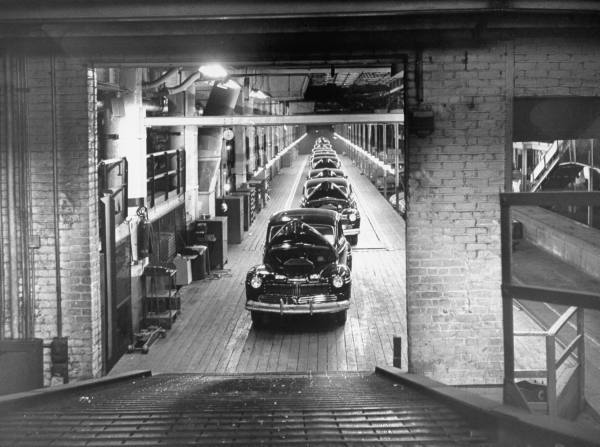
In April 1947, The Assembly line of Ford plant is halted for the day of Henry Ford’s funeral

Our world is constantly, a “new idea!”
Throughout my life and on many different occasions, I have heard a reason for doing something stated as, “we always do it this way.” Of course, there is some merit in doing something because it was proven to work in the past. If we are familiar with what we have done, then we will have a certain degree of confidence in doing it like before. If it has worked in the past, then we readily assume that it will work in the present. And, it might.
So, why consider doing it differently? If we do something a certain way because, “we always do it that way,” then what are we giving up by not trying a different way?
Consider Henry Ford and his invention of the Ford assembly line. He decided to have the cars move to the workers instead of the “we always do it this way” of having the workers move to the cars. That simple switch revolutionized the automobile industry. How did he think of this? I’ll bet he didn’t know exactly what the result would be when he decided to change his assembly line. I’ll also bet he was operating on a hunch. He decided to do something that wasn’t the way it had always been done.
How can we get out of the rut of doing something the way it has always been done? One way is by using the old education saying of, “start with a clean slate.” Literally, start out with nothing from the past. I’m not saying we shouldn’t use past knowledge, but I am saying we should set it aside as much as possible in order to have a fresh new look at what we are trying to do. Do some “what if-ing.” Consider the implications and consequences of the “what if’s” and then, if they seem reasonable, try them.

I’m starting with a clean slate!
Starting out with a clean slate allows the creative part of thinking to be manifested. As long as we use our critical thinking to help assess the creative output from our mind, we should be able to have fresh approaches to problems, while still using what we know from the “way we have always done it.”
For a change, consider trying new approaches to some of the mundane parts of your life. Instead of mowing your grass by going back and forth, try going round and round. Instead of going to the grocery store using your usual route, try a completely different one that takes you past a new area. Instead of eating a salad at the beginning of the meal, try eating it at the end of the meal. There are many times during a normal day that we could change our approach and reason of “we always do it this way.”

I’m eating my salad for dessert!
By getting rid of the reason, “we always do it this way,” we will be able to have a new look at our future. Too often, people are stuck in the past by not trying new ways of doing things.
Think about it – if you always do things a certain way based on previous methods, then your vision of the future is like the past. You have nothing new to look forward to. This is especially true for those of us who are “up there in years.” We have so much history that we can’t imagine a new and different way of doing something. “That’s the way we’ve always done it!”
How about a fresh and new look on life? Let’s use the philosophy behind the statement, “we always do it this way” sparingly.
Consider changing the statement to, “we always DID it that way, but now we are considering new ways.”
Please consider a comment for a new way. :-)
What Does The Baby Boomers’ Generation Have To Be Thankful For?
Posted on November 26, 2009 1 Comment

Let’s Give Peace A Chance! A Symbol From The Sixties!

The Beatles in 1964 – The beginning of “Beatlemania.”

Yippie led anti-election protestors outside City Hall, San Francisco, CA, Oct. 1968
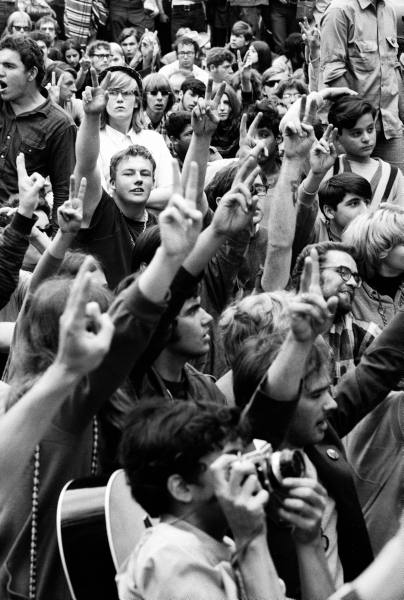
Peace sign flashing, anti-election protestors in Grant Park during a demonstration against the Democratic National Convention, Chicago, IL, Aug. 1968

Shirtless male drummer & dress-wearing female flutist jamming during Woodstock music festival, Bethel, NY, Aug. 1969

The Jackson Five with their parents, Joseph and Katherine. They signed with Motown in November of 1968

Astronaut Edwin Aldrin saluting American flag after being second man on moon during Apollo II mission, July 1969
Having been born in 1946, I am considered to be a “baby-boomer.” In fact, the baby-boomer generation began with Americans born in 1946.
My father met my mother in 1944 while he was in the Navy, fighting in World War 2, and she was a comptometer operator in San Francisco. He was discharged in 1945, they married and I was born in June of 1946, along with over 3,400,000 other Americans, thereby “starting a boom” in the population that continued through 1964.
In the Spring of 1964, I graduated from St. Dominic High School in O’Fallon, MO, and five years later, in the Spring of 1969, I graduated from Truman State University (aka Northeast Missouri State University).
As you can see, I was in high school and college during the “sixties“ – the time when many expressions we currently assume always had meaning, actually came into existence. So, what are some of these expressions that are used when referring to that era?
The following are all expressions that I remember from the sixties. I have each expression in hypertext, in case you would like to read more about them. Also, in parenthesis, is the time in my life when I first heard the expression.
Sex, Drugs and Rock N Roll (in college)
Make Love, Not War (in college)
Flower Power (in college)
Hippies (in college)
Beatlemania (in high school)
Woodstock (Summer after graduation from college)
Motown (in high school)
Turn On, Tune In, Drop Out (in college)
Civil Rights Movement (in high school)
Yippies (in college)
Man Walking On The Moon (Summer after graduation from college)
Along with the expressions mentioned above, there are many pictures and/or symbols that reflect that era – the time when many baby boomers “came of age.” I hope you will find the pictures, at the beginning of this posting, interesting and enlightening.
Ok, now you can see a little of what this baby boomer encountered during the sixties. Perhaps, I should rephrase the question in the title and write, “What does the beginning baby boomers’ generation have to be thankful for?” Should we be thankful for Beatlemania? Should we be thankful for Woodstock? Should we be thankful for the civil rights movement? Should we be thankful for a man walking on the moon? Should we be thankful for … I say, YES!
These are all important parts of our history. They helped shape our society into one that is much more diverse and rich in population, culture, art, politics, music, science, etc. We all need to be thankful for our history that helped us learn and grow into a generation that has more education, more privileges and a greater quality of life than any previous generation.
I’m thankful today for my life – truly a gift, which is why it is called the present! :-)
Happy Thanksgiving To All!
Who Or What Controls Your Emotions?
Posted on November 23, 2009 Leave a Comment

Actor John Barrymore with his daughter Diana demonstrating “happiness” emotion on Feb. 15, 1942
Last Spring, I did a posting entitled, “You Make Me Emote!“ In the posting, I declared that each person is responsible for her/his emotions. In other words, for example, it is incorrect for a person to say someone else made her/him angry. In this posting, I would like to explore the cause of our emotions.
So, what causes our emotions? What causes me to feel angry? Suppose someone hits me with his fist. The first thing I feel is the physical pain of being hit. The next feeling that I might feel is one of being angry. What caused the feeling of anger? Is it because I’m feeling physical pain? No, because the feeling of physical pain doesn’t always produce the emotional feeling of anger. Take, for example, the pain resulting from accidentally bumping your head while getting into a car. Usually, there would be no emotional feeling of anger. The point is, that a certain emotional feeling doesn’t necessarily come from a particular physical feeling. So what causes these things we call emotions?
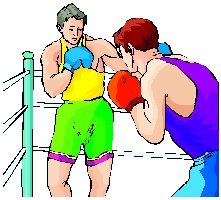
Should a boxer get angry because of getting hit in the head?
I have a simple three letter answer. YOU! Yes, you are the cause of your own emotions. I know in my previously mentioned posting, that I never specifically stated that each person causes her/his emotions. Instead, I talked about owning our emotions and not blaming anyone else for them. We not only own our emotions, but we also cause them.
So, if I cause my emotions, then how can I control them? I think we cause our emotions through our thoughts. Let’s consider the previous example of being hit by someone’s fist. I mentioned feeling the physical pain that was followed with the feeling of anger. The feeling of anger may have been immediately replaced with a feeling of warmth, if, for example, I was hit by a two year-old child. In other words, after thinking about who and why I was hit, the emotional feeling changed from anger to warmth. It would be natural to assume that the two year-old child meant no harm.
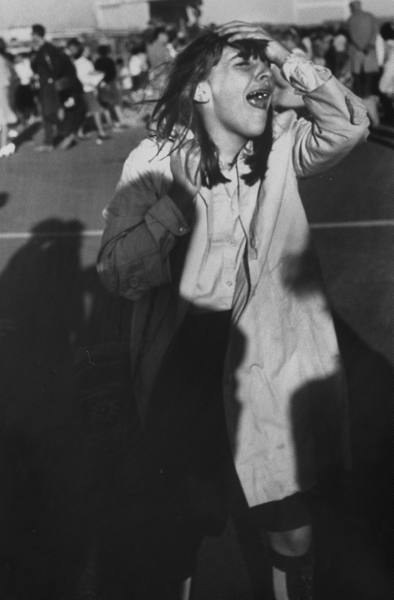
August 1964,`Beatle’ fan overcome by emotion as long-haired quartet arrive.
Let’s follow this line of thinking a little further. We not only own our emotions, but we cause them. We cause them through our thinking. If it’s our thinking that causes emotions, then it seems natural to use our thinking to control our emotions. Let’s return again to the example of getting hit by someone’s fist. What kind of thinking causes me to emotionally respond with anger? Perhaps, I think the person who hit me, did so as an expression of anger. My response may have resulted from some “eye for an eye, tooth for a tooth” thinking. In other words, that person is angry so I will be angry at her/him. Another way of thinking, in this situation, is to use the Christian philosophy of, “turn the other cheek.” This could cause the person who did the hitting to feel embarrassed, due to not getting the response s/he expected. Though my examples may not be that good, I hope you can see how the cause of our emotions could be, and most likely is, our own thinking.
Now, let’s address the question in the title. Who or what controls your emotions?
First, who controls them? YOU!
Secondly, what controls your emotions? YOUR THINKING!

Did he choose to be happy?
Sometimes, I find my emotions are controlling me. In a way, that makes perfect sense. You see, my thinking causes my emotions and I control my thinking. It is possible for me to think of harming someone and then become angry. The anger then leads to me looking and acting angry. But, if I change my thinking and instead of thinking in a harmful way, I think of not harming, then my mind will most likely not become angry. The anger comes from how and what is being thought by the person who is angry. Don’t let anger control you, but let you control the anger.
We are not emoting due to what happens; we are emoting due to what we think about what happens.
You have control over your comment(s). I’m looking forward to reading yours.


 R2 Thoughts for You