 R2 Thoughts for You
If Not For “When,” What Would I Be Now?
Posted on November 8, 2010 2 Comments

This picture was taken when I was two and shows me with my Mother and Father. Yes, that's a cigarette in her hand. :-)
Many years ago I wrote a poem about my parents, entitled: “When.” It was written five years after my last living-parent, my mother, had died.
The structure and format of what I wrote came from a William Blake poem, entitled: “The Chimney Sweeper.” After reading the first two lines of The Chimney Sweeper, “When my mother died I was very young, And my father sold me while yet my tongue…,” I immediately knew what the theme of my poetic tribute to my parents would be. The poem I wrote is at the end of this post and I’m sure you will see Blake’s flavor, at least at the beginning.

This picture was taken when my sister was two (I'm not in the picture) and with my Mother and Dad (step-father).
For some background information regarding my parents and to help you better understand what I wrote, here is a little history. My father died when I was five years old and my mother remarried. Therefore, I have had two “Dads” and one Mom. Chronologically, my father died in 1951, my step-father in 1971 and my mother in 1989.
I’ll readily admit that I was feeling somewhat nostalgic for a few years after my mom died and that added to my inspiration for the verse. The poem was written in 1994 after my wife and I had visited some of her extended family in Greece. I did a post inspired by that adventure, where I tried to verbalize how my interactions with the Greeks changed my thinking regarding the way I prioritize the important aspects of people when I initially meet them. Please click here if you would like to read the post. I felt even more nostalgic after that family trip. On approximately the five-year anniversary of my mother’s death, this poem was created.
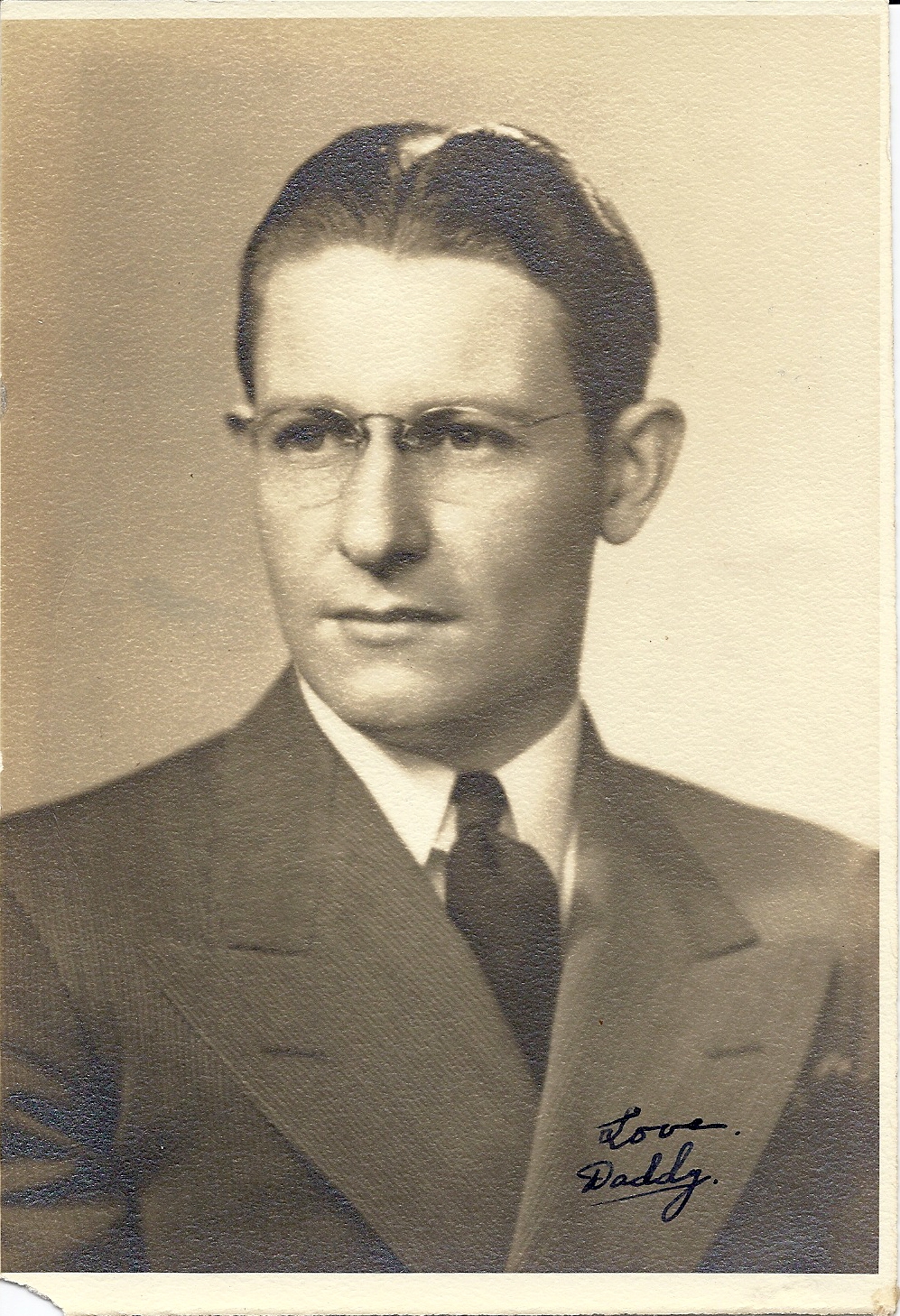
A new picture of my Dad from my "newly discovered" sister. Thanks, Sandy!
Since I wrote the poem, I’ve had an interesting and delightful encounter with a sister that I didn’t know existed until two weeks ago. Trying to write about this encounter seems a bit unreal, but here’s how it happened. My son was driving in from Kansas City, MO, to visit, and due to being caught in a traffic-jam, turned off of I-70, one exit sooner than he should. Having noticed that the exit he used was the same as the one that led to where his grandfather was buried, he decided to visit the grave before continuing his trip.
When my son arrived at the grave site of my father, he noticed a note in a plastic bag near the grave. On the note was contact information about a daughter that my father had before he married my mother. When my son arrived at my home and handed me the note, I immediately contacted my newly discovered sister. We have had a delightful beginning of what I hope is a long and close relationship. As you can most likely imagine, this poem has even more meaning now than it did when I wrote it.
This tribute poem, was and is, an attempt to emotionally describe my thoughts regarding these three important people in my life. Please note that, in the poem, I refer to three parents — Father, Mother and Dad. Dad is my step-father.
When my father died, when my dad died, when mother died – If not for when, what would I be now?
Because my father lived, because my dad lived and because my mother lived – I am what I am!
WHEN
–Ron Rogers 10/16/94
When my father died I was very young,
And my mother told me while yet my tongue,
Let out so little noise of weep and sorrow,
I thought today was no different from tomorrow.
When my dad died I was young in years,
And my mother told me while yet my ears,
Heard much about the noise of sorrow,
I thought today was less than tomorrow.
When my mother died I was working fine,
And my sister told me while yet my mind,
Felt much about the loss and sorrow,
I thought today was made for tomorrow.
When tomorrow arrived I was here today,
And myself told me while yet I pray,
That so little is known about my sorrow,
For I thought today was my tomorrow.

Why Focus On Yourself?
Posted on November 4, 2010 Leave a Comment
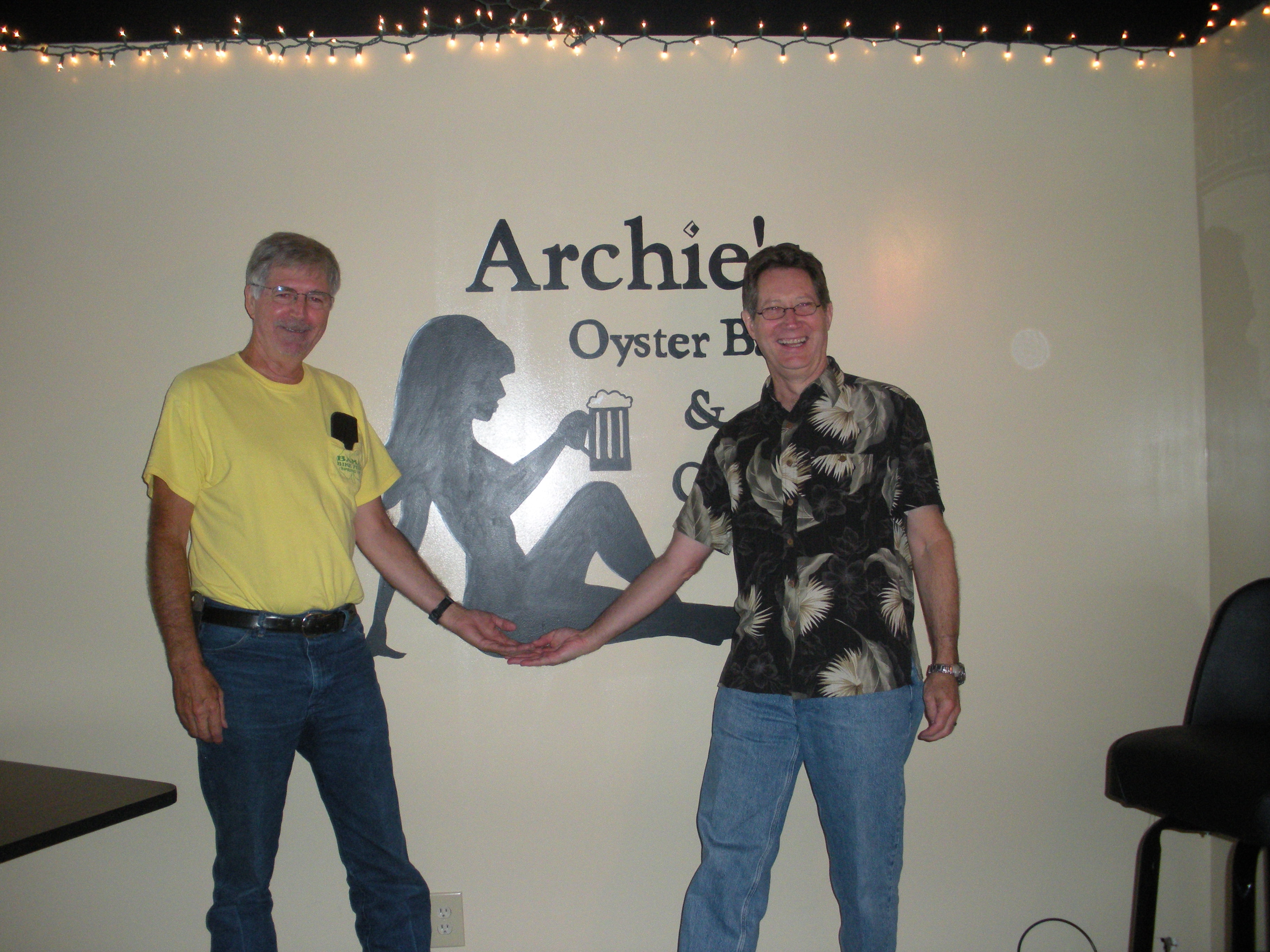
What are these two guys focusing on? Do you think they have low or high self-esteem? :-)
Why focus on yourself? By asking that question, you might assume that I’m indirectly promoting egocentrism. Absolutely not! Egocentrism – regarding oneself as the center of everything – is often considered to be the major impediment to critical thinking. I think we should focus on ourselves, but not in an egocentric way. What does that mean?

Do you think me, Betty Boop, should focus on me?
Well, one important reason to focus on ourselves is to help us improve. You see, many of us are very quick to point out the many faults and problems that others have. It is not unusual to hear people routinely talk about the imperfections and defects of others. I think many who are so quick to point out the problems of others are trying to reassure those who are listening that they are confident with a high dose of self-esteem. But, do they have a such a high-dose?
Generally, what good is done by pointing out the faults of others? In a twisted manner, aren’t they just trying to make themselves look better and “more perfect” than the ones they are finding fault with? Take, for example, how some people will point out the faults of others in matters of preference. Preference choices such as style, taste, beauty and music are simply choices that one makes and they usually depend entirely upon what a person prefers. There usually isn’t a right or wrong choice, just a choice! There’s no fault to find in such choices. Where is the fault if you prefer baggy-pants? What is wrong with preferring the taste of vanilla? Why is it a problem if you think a certain painting is beautiful? What defect do you have just because you like “smooth and relaxing elevator-music?”
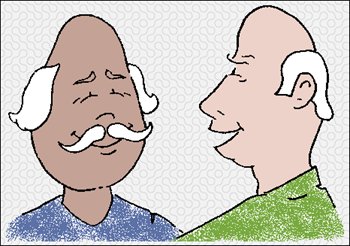
As I focused on you, I noticed that you have an "egg-head!"
Regarding high self-esteem, do you think that people who have high self-esteem think they are perfect? Is that how and why a person has high self-esteem – because the person thinks s/he is perfect? I don’t think so! Actually, it’s quite the opposite. In my opinion, the people with low self-esteem tend to point out the defects and faults of others. People with high self-esteem are confident enough with who they are to focus on themselves. They find it much easier than someone with low self-esteem to look for ways in which they can improve.
People with low self-esteem will often find and point out the faults of others in order to make themselves feel better. I think that the low self-esteem people do not want to focus on their own problems because of low self-confidence. This, of course, is only an opinion. As a person who has, now and then, an episode of low self-esteem, I can safely say that is how I would react. When I’ve felt low self-esteem, it seemed so natural to point out faults in others. If for no other reason than to direct criticism away from me. Now please don’t misunderstand the using of myself as an example. I am not professing a problem that I think I have, but simply using this as a humble example of how and why I think this way.
Here's one way to focus on yourself!
You see, I think that people with high self-esteem will naturally look for ways to improve. I also believe that all people will have times of high and low self-esteem. But, a reasonable question you might have is: “Am I, overall, a person of high self-esteem or low self-esteem?” I think, though I will have at least a small feeling of low self-esteem from time to time, I am generally a person with high self-esteem. And, frankly, I don’t mind focusing on myself, especially, when it comes to daily self-improvement through self-assessment.
What does it mean to be a person with high self-esteem? I think it means the person is always seeking ways to improve. The person with high self-esteem will know that you must be aware of your problems before you can solve them. S/he will be humble and honest enough to look for ways to improve and feel competent and capable of doing what needs to be done. Therefore, a person who has or wants high self-esteem will have to spend time focusing on her/himself!
So, why focus on yourself? To find your problems that you need to solve, to discover your mistakes that you need to learn from, and to change what you don’t like about what you are focusing on!
Please consider a focused or un-focused comment. :-)
Do You Like Paraprosdokian Statements?
Posted on November 1, 2010 5 Comments
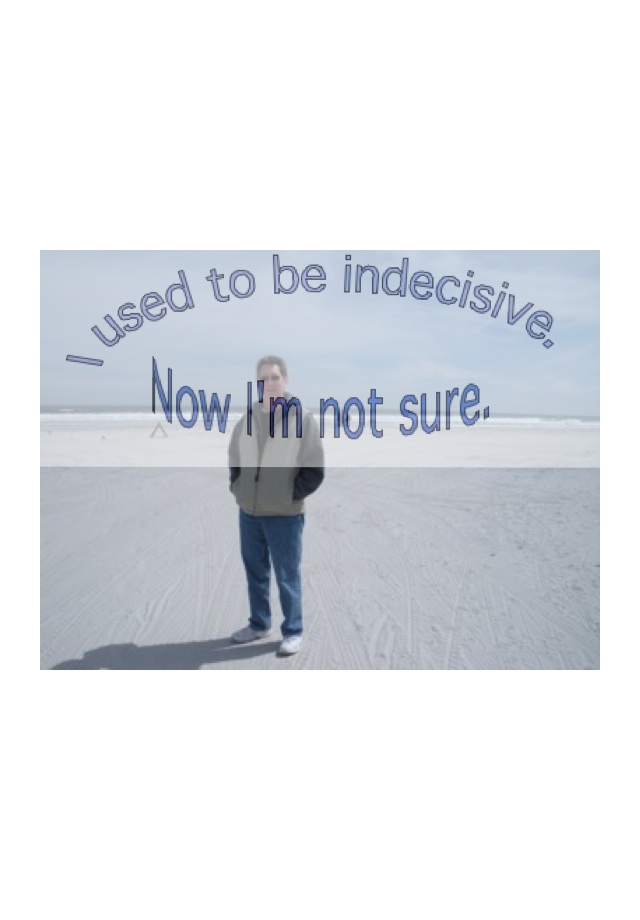
Do you like paraprosdokian statements? I certainly do! A friend of mine sent me a list of paraprosdokian statements a few months ago. I saved the list for use in a future post on this blog. Well, the future is now! :-)
So what are paraprosdokian statements? Well, they are sentences (figures of speech) where the latter part of the statement(s) is surprising or unexpected in a way that causes the reader or listener to reframe or reinterpret the first part. Wow, you’re probably thinking, “I want to see some examples!” Well, think no more! :-)
Here are three examples to start us out.
1. The early bird might get the worm, but the second mouse gets the cheese.
2. You do not need a parachute to skydive. You only need a parachute to skydive twice.
3. Some cause happiness wherever they go. Others whenever they go.
Many famous people have used paraprosdokian phrases for humor and/or statements of wisdom.

"I belong to no organized party. I am a Democrat."
1. “He was at his best when the going was good.” –Alistair Cooke on the Duke of Windsor
2. “Take my wife—please.” –Henny Youngman
3. “I belong to no organized party. I am a Democrat.” –Will Rogers
4. “You can always count on Americans to do the right thing – after they’ve tried everything else.” –Winston Churchill
5. “I’ve had a perfectly wonderful evening, but this wasn’t it.” –Groucho Marx
Paraprosdokian, as derived from it Greek roots, means “beyond expectation.” Reading and thinking about the eight paraprosdokian phrases I’ve listed so far, I hope you can see how the name reflects what happens in our minds while perusing them. Some of our better comedians have used paraprosdokian phrases as a foundation of their humor.
Often, the paraprosdokian statement will change the meaning of a word in the first part by making use of a words potential double meaning. Here is an example: “Where there’s a will, I want to be in it.” That one makes use to the double meaning of the word, “will.”

“You held your breath and the door for me.”
Sometimes though, the potential double meaning in a paraprosdokian phrase makes use of synonyms like “light” and “bright” in the following two sentences: “Light travels faster than sound. This is why some people appear bright until you hear them speak.” Another variation of making use of a potential double meaning of a word is provided by Alanis Morissette, who used the word “held” and sang, “You held your breath and the door for me.”
Here are five more paraprosdokian phrases that make use of a potential double meaning of a word.
1. War does not determine who is right — only who is left.
2. Two guys walked into a bar. The third one ducked.
3. Change is inevitable, except from a vending machine.

"Time flies like an arrow; fruit flies like a banana."
4. “Time flies like an arrow; fruit flies like a banana.” –Groucho Marx
5. “There’s a bunch of different crunches that affect the abs … my favorite is Nestle.” –Shmuel Breban
As mentioned at the beginning of this post, my friend sent me an e-mail containing a list of paraprosdokian phrases. I’ve used some above and here are the rest of them. Enjoy!
Paraprosdokian Phrases:
Ø I asked God for a bike, but I know God doesn’t work that way. So I stole a bike and asked for forgiveness.

"The last thing I want to do is hurt you. But it's still on the list."
Ø Do not argue with an idiot. He will drag you down to his level and beat you with experience.
Ø The last thing I want to do is hurt you. But it’s still on the list.
Ø If I agreed with you we’d both be wrong.
Ø We never really grow up, we only learn how to act in public.
Ø Knowledge is knowing a tomato is a fruit; Wisdom is not putting it in a fruit salad.
Ø Evening news is where they begin with ‘Good evening’, and then proceed to tell you why it isn’t.
Ø To steal ideas from one person is plagiarism. To steal from many is research.
Ø A bus station is where a bus stops. A train station is where a train stops. On my desk, I have a work station.
"I didn't say it was your fault, I said I was blaming you."
Ø How is it one careless match can start a forest fire, but it takes a whole box to start a campfire?
Ø I thought I wanted a career, turns out I just wanted pay checks.
Ø A bank is a place that will lend you money, if you can prove that you don’t need it.
Ø Whenever I fill out an application, in the part that says “If an emergency, notify:” I put “DOCTOR”.
Ø I didn’t say it was your fault, I said I was blaming you.
Ø Why does someone believe you when you say there are four billion stars, but check when you say the paint is wet?
Ø Women will never be equal to men until they can walk down the street with a bald head and a beer gut, and still think they are sexy.

"The voices in my head may not be real, but they have some good ideas!"
Ø Why do Americans choose from just two people to run for president and 50 for Miss America ?
Ø Behind every successful man is his woman. Behind the fall of a successful man is usually another woman.
Ø A clear conscience is usually the sign of a bad memory.
Ø The voices in my head may not be real, but they have some good ideas!
Ø Always borrow money from a pessimist. He won’t expect it back.
Ø A diplomat is someone who can tell you to go to hell in such a way that you will look forward to the trip.
Ø Hospitality: making your guests feel like they’re at home, even if you wish they were.
Ø Money can’t buy happiness, but it sure makes misery easier to live with.
Ø There’s a fine line between cuddling, and holding someone down so they can’t get away.

"I always take life with a grain of salt, plus a slice of lemon, and a shot of tequila."
Ø I always take life with a grain of salt, plus a slice of lemon, and a shot of tequila.
Ø When tempted to fight fire with fire, remember that the Fire Department usually uses water.
Ø To be sure of hitting the target, shoot first and call whatever you hit the target.
Ø Nostalgia isn’t what it used to be.
Ø Some people hear voices. Some see invisible people. Others have no imagination whatsoever.
Ø A bus is a vehicle that runs twice as fast when you are after it as when you are in it.
Ø If you are supposed to learn from your mistakes, why do some people have more than one child?
So, do you like paraprosdokian phrases?
“Paraprosdokianly” speaking, you’re never too old to learn something stupid! :-)
Is It Rude To Be Nude?
Posted on October 28, 2010 4 Comments

Venus Anadyomene (Venus rising from the sea) from a Pompeian mural. Is this a rude painting?
Is it rude (behavior) to be nude?
Ok, so what is this post about? Why, in the world, would I want to write about nudity and rudeness? These are two good questions and I have only one answer – because I’m curious to know why we humans (especially me) react to nudity in the way I observe we do.

Covered in clay on a Spanish nude beach! Is this rude?
So, what is my observation regarding nudity? Generally, nudity in public is considered an inappropriate or rude expression/behavior. Overall, from my point of view, nudity is acceptable in private, but unacceptable in public. Of course, there are many diverse exceptions such as bath houses, art sculptures and paintings, medical examinations, very young children, and nude beaches. I realize, that some of you might disagree with some or all of my exceptions; let’s just agree to disagree! :-)
Before going any further with this discussion, let’s try to define what is meant to be nude or nudity. Nudity is the state of wearing no clothing according to Wikipedia. There are other uses of nude, for example, in law, nude implies, “without consideration or other legal essential: said esp. of contracts.” For this post, I am going to use nude and nudity to mean being completely naked, uncovered and/or without clothing. Of course, we run into some rather interesting questions using the definition of nudity as the state of wearing no clothing. More about this later! :-)

Topless women in Portland, Maine. Is this rude?
A few years ago, a relative of mine mentioned that two children were running nude along the street and she thought that was rude. I asked, “How old are the children?” She said: “One was very small and maybe, because she was so young, that it was ok for her to run nude, but the other child was at least three years-old and that was just rude of the parents to allow such a thing!” Was it rudeness for the parents to allow a two year-old and three year-old to run nude along the street?
Last April (4/03/2010), approximately two dozen women marched through the streets of Portland, Maine without any clothing from the waist up. Were they nude? Well, sort of. In fact, according to Ty McDowell, the organizer of the group of women, they were challenging the double standard regarding male and female nudity. If a man and woman are without clothing from the waist up, he isn’t nude from the waist up, but she is. Is it rude for her to be nude (from the waist up)?

Badu falling to the ground naked amid sounds of a gunshot - near the area where John F Kennedy was shot in 1963. Is this rude?
Three weeks before the ladies in Maine removed their tops and marched through the streets or Portland, Erykah Badu received a fine for disorderly conduct during the filming of a music video entitled, “Window Seat.” Ms. Badu, while filming the video, stripped naked and feigned being shot in the head near the park where John F. Kennedy was assassinated in 1963. The fine wasn’t for feigning being shot in the head, but for being naked in public. Was it rude for Erykah Badu to be nude in public?
Perhaps, we should consider what the word rude means before discussing this any further. There are many meanings of rude, but the ones I think are applicable to this discussion are: rude implies insulting, uncivil, vulgar and/or obscene behavior and/or action. So, considering the three previous examples, are any examples of being rude because of nudity? I think the last two examples were in the same category and perhaps, would be considered an act of rudeness. They both were promoting a sense of the female body as a subject, and therefore, we could consider their demonstrations as instructional. In other words, they both attempted to move away from using the female body as an object. But, the first example was about the nudity of little children in public. This, I think, is in a different category. From my point of view, the nudity of the little children was not about using them as an object or subject. They were simply running nude along the street and my relative saw them. Were they insulting, uncivil, vulgar or obscene? I don’t know!
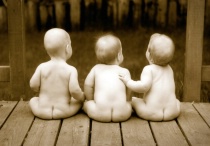
Nude babies. Is this rude?
The rudeness about nudeness and how it applies to children is perplexing. If you “google” baby pictures, you will find an unbelievable number of nude babies. Is this an expression of rudeness? Of course, if you “google” nude women or nude men you will find an unbelievable number of nude pictures. I suppose “googling” nude women or men is not a fair assessment regarding the rudeness of nudity. On the other hand, if we consider how nudity is “allowed” in the general public, we do have a double standard between men and women. In order to not be nude, generally both men and women must have their genitalia covered, but women have an added condition of having to cover their breasts. This is the double standard that the women in Portland, Maine were marching against. Why do we have different standards for what constitutes nudity between men and women? Is this more rudeness in nudeness? :-)
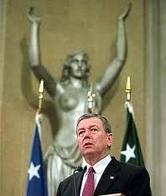
John Ashcroft in front of one of the statues that was covered with the blue drapes. Is this a "rude nude?"
Back in 2002, the United States government installed two blue drapes at a cost of $8000, so two partially nude statues could be hidden in the Great Hall of the Department of Justice. ABC News reported that then Attorney General John Ashcroft ordered the statues covered because he didn’t like being photographed in front of them. Is it rudeness to have nude statues?
Arts students often report a new respect for nudity after taking an art class on nudity. From cave pictures to modern photography, nudity has been portrayed without shame. David a sculpture created by the Italian Renaissance artist, Michelangelo, is considered a masterpiece. But, the statue, created in the early 1500s, is of a completely nude human male. The original statue is now housed in Florence, Italy, at The Gallery of the Accademia di Belle Arti. Is it rude (insulting, uncivil, vulgar or obscene) to proudly display the nude “David?”

Michelangelo's David - Is this a rude presentation of a nude male?
One of the main purposes of my blog is, “writing for learning.” So, have I learned anything about rudeness and nudeness? Reflecting on what I have written, I think nudity is a lot more complex than I initially expected. What I mean by complex as related to nudity is that like art, it seems to be in the “eye of the beholder,” BUT nudity is also in the “eye of the present culture.” Whether nudity is an expression of art, gender, childhood, culture, beauty, life, … OR rudeness is in the “eye of complex society.” Ouch!
Is it rude (behavior) to be nude? I don’t know, but I do need to take a bath and that means I will have to be rude nude! :-)
What do you think?
Do You Think In A Fuzzy Manner?
Posted on October 25, 2010 Leave a Comment
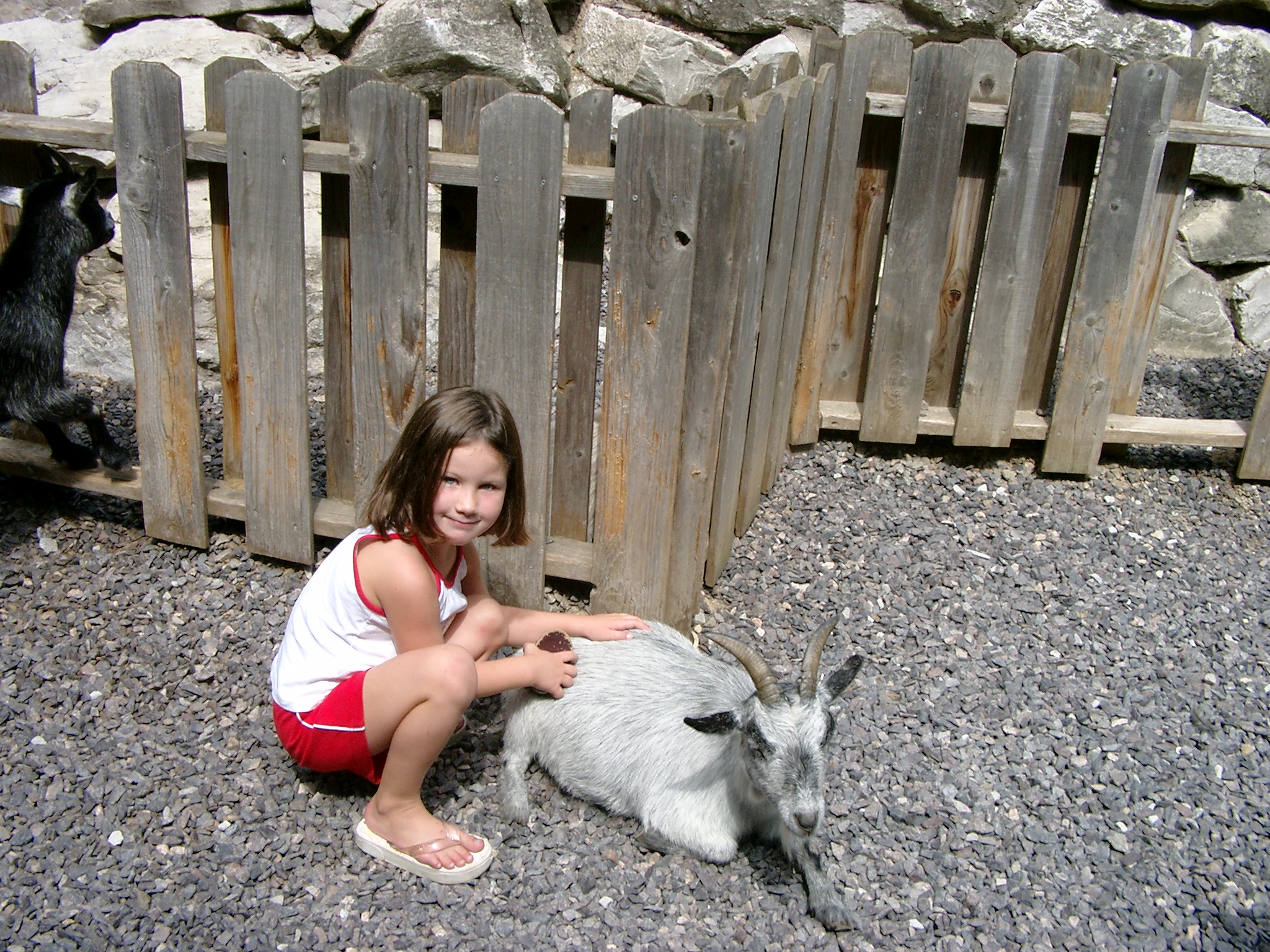
Is this beautiful young girl thinking in a fuzzy manner? :-)
While in college, I remember using the word logic and thinking it was the root of any reasonable answer to any problem. In fact, my classmates and I usually restricted our arguments to the use of Aristotelian logic. We normally argued issues using a logic that only offered options of good or bad, right or wrong, true or false, black or white, high or low, up or down, yea or nay, yes or no, etc. …. I was a mathematics major and this kind of logic made perfect sense. The answer is either correct or not correct. At least, that is the way most problems turned-out. Of course, once in a while, I would run into a problem, usually involving probability, that had an answer that was better than before, BUT not necessarily correct or incorrect. In these kind of problems, there would be an answer that included an extra statement of, for example, “this answer has a 10% error margin.” So, in other words, the answer has a chance of not being correct, but is correct most of the time. That is sort of fuzzy, isn’t it?
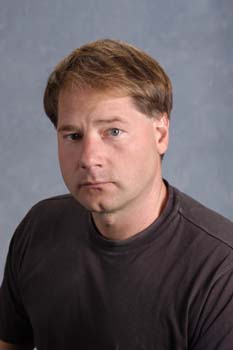
Bart Kosko - "The Fuzzy Thinker"
I read a book a few years back that was entitled, Fuzzy Thinking: The New Science Of Fuzzy Logic, by Bart Kosko. Mr. Kosko is a leader in the field of fuzzy logic or fuzzy thinking. He, in his book, shows the value of using this kind to thinking and how, when applied to life, is most likely as valuable as Aristotelian thinking. There have been scholarly papers showing the value of using fuzzy logic. Having stated all of this, is there really any value in a “new” logic for the regular everyday person when Aristotelian logic has served us well for thousands of years? Well, yes, if it improves the thinking of the regular everyday person.
I have observed many examples of thinking that we might call either-or thinking. This kind of thinking is what I was referring to in the first paragraph. I think using this kind of thinking can be dangerous when it is the exclusive way of thought. Often times in life, there are shades of gray, instead of, black or white. How can we say someone is good or bad? If we say someone is good, don’t we mean that the person is good to a certain degree, but not always good?

Aristotle - The original "either - or" thinker!
People who use only, either-or thinking, cannot, OR will not, consider the complexity of most situations. Of course, we will use Aristotelian (either-or) logic for analysis, at least, as a first analysis. After a first analysis, we generally have just that – a first of many analyses. In a certain way, this is very much related to prejudice. Prejudice, fundamentally, means “pre-judge” – something we all must do. YES, we all pre-judge, but we should not stop our judging with our first judgement. After all, most of the time, we are not really like a judge in a court of law, but, instead, we are more like a scientist looking for the best solution to a problem. At least, that is the way I think we should view our thinking process.
I think that most people who want to exclusively use either-or thinking, are not seeing the many degrees of difference that exist between opposites, such as, good and bad, right or wrong, etc. If they did, then they would have to use complex thinking skills and not be absolutely certain about most things. When they don’t consider the shades of gray, they get only black or white. Even a “black and white movie film,” has shades of gray. :-)
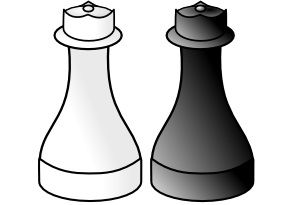
"Black and White" thinking is good when playing chess?
Where do we see a lack of fuzzy thinking in everyday life? Look at the local or national news media. Consider the following expressions: “you’re either with us or against us,” “if you’re not a liberal then you’re a conservative,” “all ear-marks are bad,” “America – love it or leave it,” “universal health care is socialism,” “all tax cuts are good,” “big government is bad,” and “government regulation of financial systems is bad.”
So, what should we do? Well, one thing to do, is to not look at our world as something that is based on either-or thinking. In other words, look for the complexity of the situation before deciding what to think. Be aware of your own thinking. Use critical thinking – think about your thinking, while you’re thinking, and strive to make your thinking better, by using good intellectual thinking standards to assess it. Self-awareness is crucial in order to improve how you think. You must open your mind to different possibilities, so you don’t get stuck in the either-or world. Accept a world where, between the two poles of Aristotle, (i.e. good OR bad) there is a Fuzzy part (i.e. good AND bad).
Does this make you feel “fuzzy all over?” :-)
Is Self-Empathy An Oxymoron?
Posted on October 21, 2010 Leave a Comment
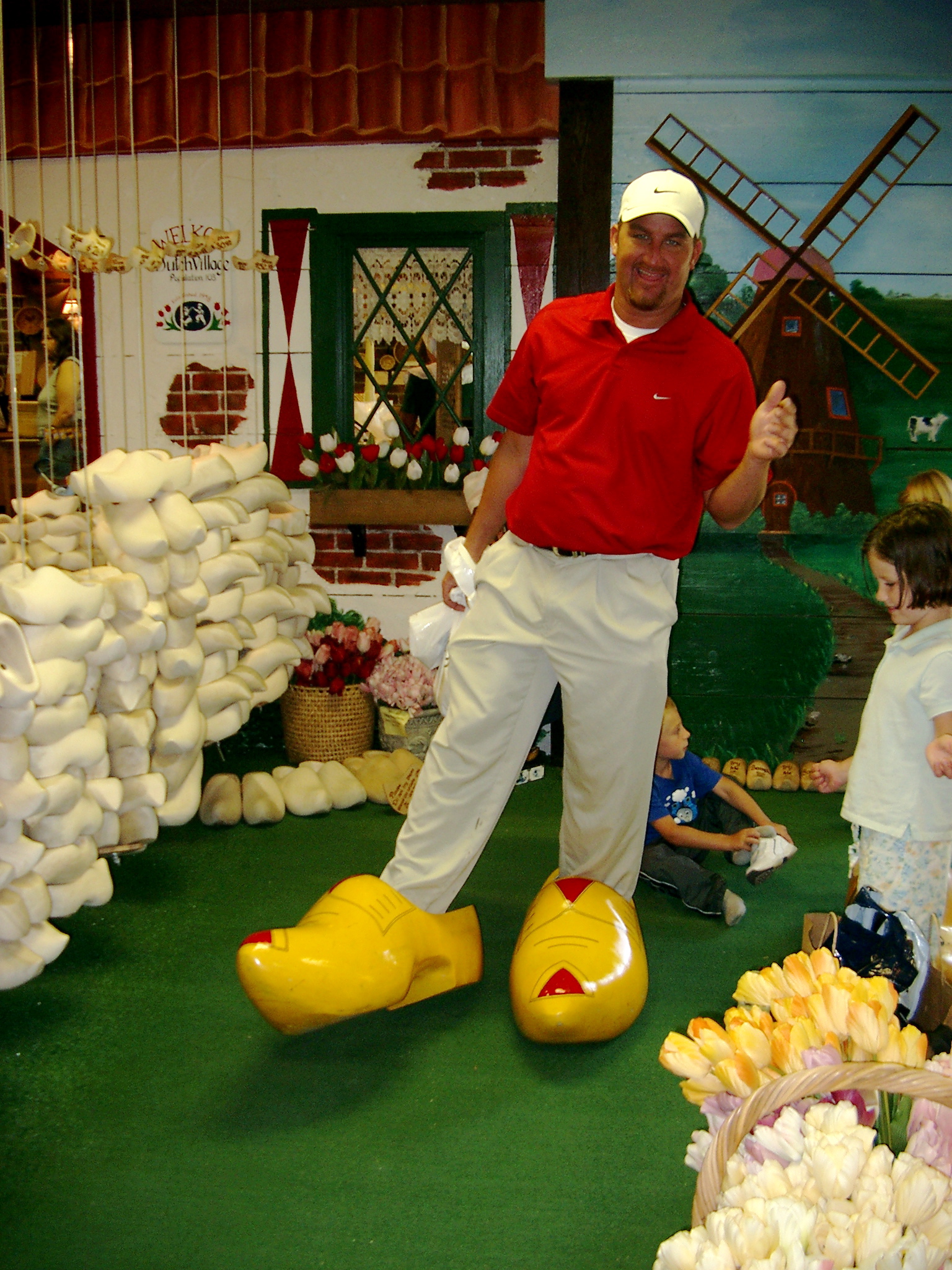
Putting yourself in your own shoes!
Self-empathy and oxymoron are two interesting words. When we put two seemingly contradictory words together we have what is known as an oxymoron. Examples like, “good grief,” “wise fool,” and “jumbo shrimp” illustrate what are normally consider oxymorons. Sometimes, it’s helps to add other words to clarify the reason for putting the two contradictory words together. Two examples of adding another word are the expressions, “little big man” and “now and then.” I mention these different kinds of oxymorons because in the title I ask, “Is self-empathy an oxymoron?” The correct answer is most likely no. On the other hand, the meaning of “oxymoron” is more about the contradiction than the words. So, for the sake of “whatever,” let’s pretend there is at least an oxymoronic flavor to self-empathy. :-)
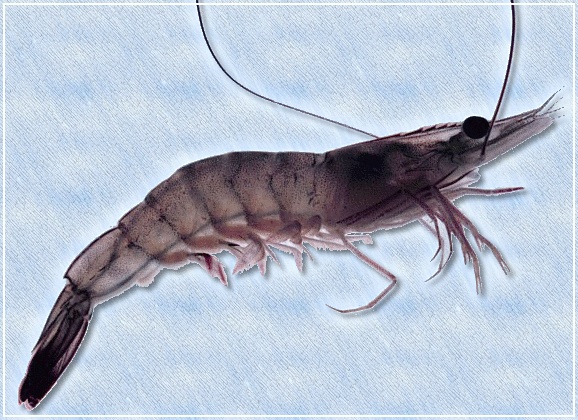
Here's an oxymoron; a jumbo shrimp!
Empathy (I have written about empathy in a previous posting), where you “put yourself in another’s shoes,” is an important way of thinking when assessing others. But self-empathy? Of course! We should always assess ourselves – shouldn’t we? A statement that I have used often is: “Self-assess, to know yourself best!” Therefore, self-empathy, where we put ourselves in our own shoes, will be like looking at ourselves in a mirror. And, we all know how important a mirror is when we are shaving, putting on make-up, etc. In that sense, self-empathy is like using a mental mirror on our thinking.
OK, all of this self-empathy stuff is good, but how, specifically, can it help us? Consider the above mirror example. When you look into a mirror, what do you see? From personal experience, I know sometimes I see something that isn’t really there. You see, I will focus on a particular spot on my face and see my face as imperfect. In other words, using and hopefully, not abusing, a well-known metaphor, “I can’t see the forest because of the trees.” I focus on one bad tree and see an ugly forest. I’m not saying the spot should not be considered as part of my face, but, I think allowing the spot to take the place of my whole face, is not allowing my thinking to reflect reality.

Can't see the hearts because of the tree! :-)
Another perspective on this concept of self-empathy is the use of the word,”is.” No, no, no, I’m not going to reference the now famous quote from Bill Clinton: “It depends on what the meaning of the words ‘is’ is.” :-) What I mean is when someone believes s/he is an optimist, then that person will tend to look at the bright side of life. I think it’s important for a person to believe s/he IS an optimist and not allow current feelings to be a determining factor. An optimist “is” who you are and not, necessarily, what you feel.
I think we behave in ways based on the person we believe we are. If you believe you are a drug addict, then you will tend to behave as a drug addict behaves. If you believe you are an athlete, then you will tend to behave as an athlete behaves. If you believe you are blogger, then you will behave as a blogger behaves. How does a blogger behave? :-)
Of course, you may believe you are something that you aren’t. This is where self-empathy comes in. If we use self-empathy to put ourselves in our own shoes and use good intellectual standards such as clarity, reasonableness, logicalness, significance, relevance, etc. to assess ourselves, then we can determine the “is” we are or want to be. In other words, after this exercise in self-assessment, a person should be able to know what s/he believes about her/himself.

Sometimes, when you put yourself in your own shoes, you discover you have big shoes to fill!
If there is something about you that would like to change, then the first thing to change is how you think about it and how it relates to you. Once you change how you think about yourself, then change how you talk about yourself. For example, consider an optimist and a pessimist. How does a pessimist talk, compared to an optimist? I’m sure you know — the old adage, “Is a glass half empty or half full?” If you want to be an optimist, then you think and say the glass is half full.
Use self-empathy to help with self-assessment. Use self-assessment to improve your thinking. Use your improved thinking to improve your words. Your actions will follow your thinking and talk. Or, another way of summarizing this is: “Talk the Talk AND Walk the Walk”
Do you talk the talk and walk the walk, in such a way that you are who you want to be? Do you use self-empathy?
Is self-empathy an oxymoron? Probably not, but is self-empathy a good intellectual trait to have? Absolutely!
What do you think?
How Can I CREATE (A Solution To A Problem)?
Posted on October 18, 2010 1 Comment
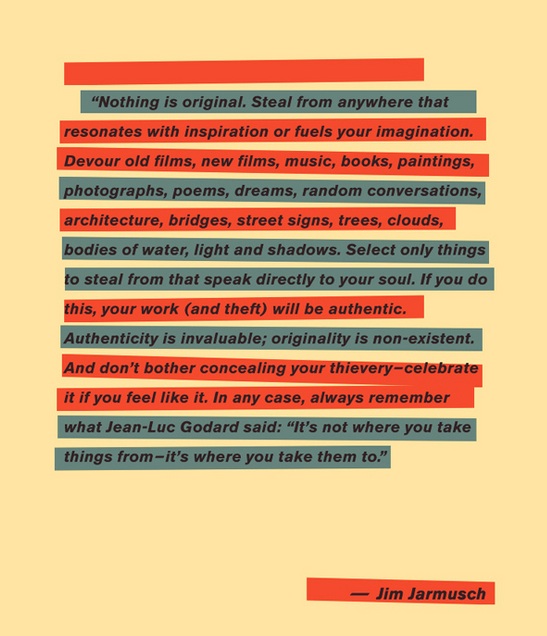
Nothing (I create) is original?
Lately, I have been asked, multiple times, how I decide what to write about on this blog. As soon as I answer: “I start with a question in my mind,” the next question I’m asked is: “Where do you get your ideas AND how do you create the post based on those ideas?” Actually, what I’ve just written is a compilation of many questions relating to my blog and how I write. Ultimately, writing this blog, in the manner that I have chosen to do so, involves creativity in many ways. I approach writing it by creating a question about an “issue/problem” I’m interested in exploring, creating ideas through “research” and/or quiet thinking, and then creating the written/pictorial post.
The biggest problem is creating a good question about a proble
What does the way I create a post for this blog have to do with creating a solution to a problem? Well, for me to create a post on this blog involves the same attributes and/or conditions helpful for solving problems in general. I realize many people think that creativity is not something which can be necessarily broken-down and analyzed. Some think that a person is either creative or not. I don’t agree!
I am in the “school of creative thought” ☺ which believes a person can improve her/his creativity through learning. I am not saying we can become as good or better than another person in our creative thinking, but I am saying we can always improve our current level of creativity. In other words, we should never accept that we aren’t able to be creative, nor should we ever accept that we can’t improve our creative thinking.
Ok, so I think everyone can improve her/his creative thinking and therefore, can be more creative, BUT how does one do so? Well, first and foremost, I think in order to improve creative thinking, a person should “sit quietly alone and think awhile.” The key is to be alone. Not alone as a hermit might be, but alone, inactive, and away from any busy regular routine. For helping me to improve the creative thinking needed for my blog, I have chosen a corner of my living room that has a big comfortable chair where I can go to “sit and think awhile.” Of course, I don’t always go there to create ideas, but I know it is there, as a “safe harbor” that usually affords me the quiet place to think creatively.
Just sitting and thinking! :-)
When I am sitting alone and thinking, what do I think? Well, frankly, I daydream! I literally try to dream without being asleep. Generally, I accomplish this by what-ifing in my mind.
For example, to write this post, I did some daydreaming about “what if someone asks me how I create a post for this blog?” I sat alone quietly and daydreamed about answering the question along with the concepts related to creating a post for the blog. I then started daydreaming about what is involved in becoming a better creative thinker. During the daydreaming part of trying to create a post about how to improve my creative thinking, I played, over and over in my mind, the important individual parts (these parts are summarized at the end of this post).
I’m just sitting and daydreaming about the stocks going up. How’s that for creative thinking? :-)
The daydreaming part is like a “brewing process” that produces bubbles 〪〫〬 of creative output. Eventually some bubbles came to the top, or forefront, of my thinking. It’s these bubbles of creative thought that became the important parts of creating a post for this blog. The next thing I did was risked my self-esteem and I “brought out my creation” or “just did it!” For this part, I needed to forget about whether or not it was reasonable.
Generally, something creative will be unique and initially, difficult to justify through history or logic. Of course, after I risked my self-esteem and just did it, I had to feel comfortable presenting it, while using my own set of standards for assessment. But, those standards for my creative output are mine AND only mine. Examples of the standards I use are “reasonableness, sincerity, originality, curiosity, …” AND always from only my point of view. In fact, I believe that part of my creative process is to create my own set of standards for each creative endeavor.

Einstein – a man who epitomizes the use of critical AND creative thinking
Lastly, throughout this whole creative journey, it’s important to use self-discipline. I cannot just create! I must, in a disciplined manner, have a purpose, use ideas, use and develop concepts, make implications, etc. Using my example of creating a post for this blog, I have to approach it by focusing on my overall main purpose of “writing for learning” and then focusing on the main question (usually contained in the title). The ideas and concepts have to be appropriate for the purpose(s). The point is, I have to use my critical thinking WITH my creative thinking. I think all good creative thinking makes use of critical thinking and all good critical thinking uses creative thinking.
So, what does it take to create a solution to a problem? As promised in an earlier paragraph, here is my summary:

Ehh! What’s up creative docs? My creators, Ben Hardaway, Tex Avery, and Bob Clampett most likely used some of this to create me!
1. Sit quietly alone and think.
2. Daydream “what-ifing.“
3. “Play” the ideas that bubble-up, over and over and over ...
4. Use self-discipline (perseverance) and critical thinking to complete and assess (with your own “created” standards) the creative endeavor.
5. Risk self-esteem and bring out the creation. Put it into action; just do it!
6. Be happy – you know you have done your creative best :-)
I realize that what I have presented here is somewhat different, but please take into consideration that I wanted to create a post using my creative thinking about how I create a creative post! :-)
How about creating a comment?
Why Are We (Americans) Afraid?
Posted on October 14, 2010 4 Comments
 Recently, a friend of mine on Facebook posted the above picture on his wall. Immediately, after viewing it, I decided to write this post. The picture is an online poster that can be downloaded by clicking here. My interest is in what the poster has on it; I especially like the message of: “Americans need to stop being afraid!”

Are we afraid of the “first” Americans?
Are Americans afraid of other Americans? I think it is demonstrated almost daily in the local news reports. Back in 1998, an ABC poll showed that 98 percent of Americans were afraid of 98 percent of Americans. The poll and follow-up report stated that: “Between the criminal element, salesmen, religious zealots, alcoholics, minorities, immigrants, fast-driving teens, employers and panhandlers, a total of 49 in 50 Americans present a fearsome image to the vast majority of their fellow citizens.” The only non-feared Americans were the elderly, infirm and newborns! Wow! From my point of view, I don’t think Americans are any less afraid of other Americans in 2010.

This is the ayyavazhi lotus with soul symbol. The Hindu and Ayyavazhi ideologies are closely tied to each other. Should we fear it?
Are Americans afraid of other religions? Well, we have to go no further than the Muslims trying to build a Mosque two blocks from where the World Trade Center used to be in downtown New York City. Americans have demonstrated over and over their “fear” of Muslims building a Mosque near where 9-11 occurred. Many have also expressed fear regarding whether or not President Obama is a muslim. Consider how Americans, who aren’t Mormons, react to the Mormon religion. Some consider them not Christians and some call them a cult. Americans have expressed fear of Scientology, Pentecostals, and even Hindus, due to Julia Robert’s film, “Eat, Pray, Love”; we appear to be afraid of almost any religion that is different from the one we practice.
The point is that we have Americans afraid of other religions, yet to the best of my knowledge, we have no religion in America that is against America. Some Americans seem to suffer from Theophobia (the fear of gods or religion). Many more most likely suffer from Xenophobia (fear of strangers or foreigners) – assuming they aren’t afraid of the religion they are practicing. This undoubtedly applies to the Americans that fear Muslims.

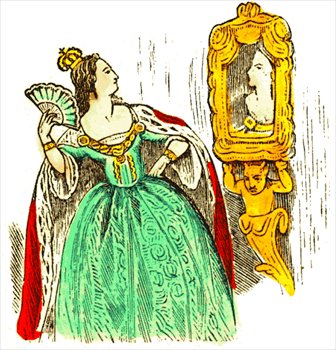
Perhaps, our poor should have to play for their health insurance!
Are Americans afraid of other classes? Is the middle-class afraid of the “rich”-class? Is the rich afraid of the poor? I think the answers to the three previous questions are yes, yes, and yes. This is demonstrated through politics and the debate in congress over laws that affect the various classes. Consider the tax laws and how their structure is meant to favor a particular class when it’s near an election date. Or, consider how the middle-class democrats won’t raise taxes on the rich. How about the rich and middle-class being afraid that the poor will “get something for nothing.” Think about the fear that if all Americans had the same and good health insurance, we would not have insurance companies and pharmaceutical companies making the profit they currently enjoy. A profit that enables a few to get very rich at the expense of the sick.
Speak out as though you’re “always on the air!”
Are Americans afraid of speaking out? Well, Americans shouldn’t be, but I believe many are. Why? I think it has more to do with a lack of appreciation for critical thought than anything else. Too often speaking out has a result of someone else speaking out louder, but not saying anything that adds, in a positive manner, to the conversation. We have non-stop media that uses celebrity talking heads to say the same thing over and over and over …… Seldom is there a concern for fairly addressing opposite points of view, new ideas, important implications, probable consequences, etc.
“We are Americans first. Act like it!” The obvious question here is: “What does it mean to act like an American?” Or, “What does it mean to be an American?” Since I am an American, having been so since I was born, I suppose as long as I act like me, then I’m acting like an American. :-) Of course, that is not what the statement(s) implies. I think we should draw on the history of America and the culture that has evolved over the past two-hundred years in order to answer the question. What is that culture? What does it mean to be an American?

A poster from World War 2. Do Americans still think like this? (note: click on the poster to enlarge)
Let’s consider what Americans aren’t. Americans are not of one race, ancestry, ethnicity, color, religion, or language. Of course, English is considered to be the primary language in America, but a person can be an American and not speak english. So far, it seems that being American simply implies citizenship. But, I’m sure that is not what the picture at the top of this post means. There must be something more to being an American than just citizenship.
Perhaps, if we appeal to the Declaration of Independence, the Constitution and Bill of Rights, then we can answer the question, “What does it mean to be an American?” From the Declaration of Independence we have the ideas of: all men are created equal and they are endowed by their Creator with certain unalienable rights. The important rights that are most often referred to are: life, liberty and the pursuit of happiness. Since this was in the background of thought for our founding fathers, then it seems reasonable to assume that the ideas of life, liberty and the pursuit of happiness reflect American culture. I think being an American also implies an openness to discuss issues (the first amendment in the Bill of Rights involves freedom of speech) and a belief in the vision of America as inspired by the Declaration of Independence and later by the Constitution/Bill of Rights.

We should not be afraid of fellow Americans using their right to speak out, even if we don’t personally agree with what is being said.
Finally, I think acting like an American means that we each openly express this vision of America as seen through its rules and laws, therefore we should not fear where a particular religious group decides to legally build. We should not fear a class we aren’t a part of as long as that class is within its lawful rights. We should not be afraid of fellow Americans using their legal right to speak out, even if we don’t personally agree with what is being said. We should not be afraid of law-abiding American citizens that are different from us. All Americans should, under the law of the land, be encouraged to be Americans who respect each other’s differences, live with liberty and free of being afraid of all of the “others!”
As I re-read what I wrote, I can imagine that many readers will not agree me. Please understand that, as mentioned before, I am an American and all I’m doing is exercising my right to “speak-out” without being afraid! :-)
What do you think?
What Is This Thing Called Love?
Posted on October 11, 2010 3 Comments

What is this thing called love? I know, I know, the previous sentence and title of this post is a title of the song, “What Is This Thing Called Love?“. It’s a jazz tune written by Cole Porter in 1929 for the musical, “Wake Up And Dream.” The tune has now become a jazz standard. As someone who likes jazz, I listen to a lot of it (randomly) on my iPod and I often hear one of my eleven different versions.

Frank Sinatra
Here are the last two verses of Cole Porter’s song, “What Is This Thing Called Love?” If you would like to see and hear a YouTube version of Frank Sinatra singing these two verses, please click here.
what is this thing called love
this funny thing
called love
just who can solve its mystery
why should it make
a fool of me?I saw you there
one wonderful day
you took my heart
and threw it away
that’s why I ask the lord
in heaven above
what is this thing
called love?
So, what is this thing called love? Implications from the above two verses of the song, allows me to conclude that love is a funny thing, can make a fool of me, and will take my heart and throw it away. Well, that’s a fun interpretation, but I doubt if the parts I have picked from the song will add much insight to the question or its answer.
I really want to understand what love is from my point of view. On the surface, it seems like it should be a simple thing, but the more I think of it, the more I’m not sure. Love has so many different meanings. At least, when I looked for definitions and descriptions, I found an incredible amount of diversity. So, what is love (to me)?

Love can be anywhere and everywhere! :-)
Well, love is not friendship, but friendship can be a part of love. Love is not thoughtfulness, but thoughtfulness can be a part of love. Love is not tenderness, but tenderness can be a part of love. Love is not a relationship, but a relationship can be a part of love. As you can see, once I start a sentence with what love is not, I am able to say that what it isn’t, is part of what it is. Wow!
The most common antonym of love is hate. Having stated that, I believe that love is so complex that hate, as an antonym, is insufficient. If I don’t love, it doesn’t necessarily follow that I hate. If I don’t hate, it doesn’t necessarily mean that I love. This love-thing is really hard to nail down. At last, I think I can see what Cole Porter was “getting at” when he wrote: WHAT IS THIS THING CALLED LOVE?
Let’s approach this from a different angle, or point of view. Instead of trying to explain what love is, I’m going to use some quotes that I favor about love and then add comments.
———————————-
First, from Mark Twain.

“Love is the irresistible desire to be irresistibly desired.”
Uhmm. A desire to be desired. Yes, especially when irresistible is added. Love is a strong desire in humans that seems to be universal.
———————————-
Number two is from Elizabeth Browning.

“Love doesn’t make the world go round, love is what makes the ride worthwhile.”
I really like this way of viewing love. It speaks to love as something like spice is to food. Here’s another way to view it, using a food metaphor: “love is like an excellent dessert to an otherwise, average meal.”
———————————-
Number three is from Amantine Lucile Dupin, whose pseudonym is George Sand.
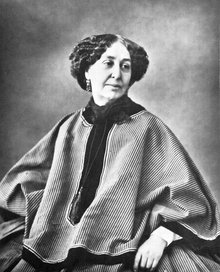
“There is only one happiness in life, to love and be loved.”
This quote is insightful due to singling out love as unique in human emotion. If we would change happiness to unhappiness, then the result, no matter what other emotion we used, would not be complete.
———————————–
Number four is from the Talmud.
“Where love is, no room is too small.”
Have you ever thought about being in a room and choosing who you want with you? No matter what size the room? Uhmmmm…..
————————————
Number five is from Dr. Seuss.

“When you are in Love you can’t fall asleep because reality is better than your dreams.”
I realize this is “metaphorically speaking,” but I think it really hits home regarding love. In love is a feeling that takes precedence over all other aspects of our life. We can’t dream it better. Nicely stated, Dr. Seuss!
The rest of the quotes are anonymous. I list them without comment. They are all sayings that I like and feel have value in helping us with a better answer for the question: What is this thing called love?
————————————
“Just because someone doesn’t love you in the way you want them to, doesn’t mean that they don’t love you with all they’ve got. “
————————————
“Love is friendship set on fire.”
————————————
“My love for you is a journey; Starting at forever, And ending at never.”
————————————
“Love puts the fun in together, The sad in apart, The hope in tomorrow, The joy in the heart.”
————————————
We were given: Two hands to hold. Two legs to walk. Two eyes to see. Two ears to listen. But why only one heart? Because the other was given to someone else. For us to find.
————————————
So, again, what is this thing called love? After considering everything presented in this post, perhaps the best response is that love can only be explained by the person who asks the question. In other words, the meaning of love is entirely created and exists uniquely in the mind of each individual person who seeks the meaning of love. Like “art is in the eyes of the beholder,” this thing called love is in the mind of the beholder! :-)
I WOULD LOVE TO READ YOUR COMMENTS!
Why Seek Wisdom In Aphorisms?
Posted on October 7, 2010 Leave a Comment

“Believe only half of what you see!” :-)
I have always enjoyed reading something that said-a-lot in few words. When I was choosing a major field of study in college, a counselor was discussing with me the various possibilities. She asked me why I was in college and I immediately answered, “To become educated!” She then told me, in order to increase the chance of getting a degree in four years, I should decide on a major now.

“Believe half of what you see” :-)
You see, this conversation with the counselor was taking place when I was enrolling in college and really had no idea of what I wanted my major to be. Her next question was the one that directed me towards mathematics. She asked, “What do you like to read?” I answered, “Writing that says a lot in a few words.” She then said, “Sounds like you want to learn through aphorisms.” I responded, “Well, I guess I do.” (note: I really had no idea what an aphorism was; I didn’t want to appear stupid:-) After that we arrived at, through a process of elimination, my choice to major in mathematics. Why? Well, a page of mathematics can say a lot, and although what is written may not be words, there is usually a multitude of thoughts expressed in a few characters.

Santayana: “Those who cannot remember the past are condemned to repeat it.”
So, why seek wisdom in aphorisms? For me, aphorisms (a concise and/or witty statement of wisdom or opinion) are easy to remember and to mentally grasp. For example, I have used the following aphorism many times throughout the last thirty years: “Metaphorically speaking in education, the journey is more important than the destination.” Here is an example of a well-known aphorism from George Santayana: “Those who cannot remember the past are condemned to repeat it.” Mark Twain is given credit for this one: “Believe nothing you hear, and only half of what you see.”
Friedrich Nietzsche was well-known for his aphorisms and many were controversial due to being at odds with the status quo. Here’s an example from Nietzsche’s writing: “That which does not destroy us makes us stronger.” That one is rather mild compared to some of the other aphorisms he is credited with. Here is an example of his more controversial aphorisms, “He that humbleth himself wishes to be exalted.” I can see why it is considered controversial. Just because someone is humble, in my opinion, doesn’t necessarily imply he wishes to be exalted. Of course, I’m sure many, at least secretly, wish to be exalted because of their humbleness.

Nietzsche: “That which does not destroy us makes us stronger.”
Let’s look a little deeper into some of Nietzsche’s controversial aphorisms. Here are ten of the more controversial ones.
1. There are no facts, only interpretations.
2. Morality is but the herd-instinct in the individual.
3. No one talks more passionately about his right than he who is in the depths of his soul doubts whether he has any.
4. A casual stroll through the lunatic asylum shows that faith does not prove anything.
5. The Kingdom of Heaven is a condition of the heart — not something that comes upon the earth or after death.
6. People who have given us their complete confidence believe that they have a right to ours. The inference is false, a gift confers no rights.
7. Without music, life would be a mistake.
8. The surest way to corrupt a youth is to instruct him to hold in higher esteem those who think alike than those who think differently.
9. In truth, there was only one Christian, and he died on the cross.
10. God is a thought who makes crooked all that is straight.
But, not all of Nietzsche’s “wise” sayings were as controversial.
These, though still somewhat bothersome, provide us with a powerful point of view.
a. Convictions are more dangerous foes of truth than lies.
b. The future influences the present just as much as the past.
c. Whoever despises himself nonetheless respects himself as one who despises.
d. We often refuse to accept an idea merely because the way in which it has been expressed is unsympathetic to us.
“A politician divides mankind into two classes: tools and enemies.”
e. Fear is the mother of morality.
f. The mother of excess is not joy but joylessness.
g. A politician divides mankind into two classes: tools and enemies.
h. What is the mark of liberation? No longer being ashamed in front of oneself.
i. Talking much about oneself can also be a means to conceal oneself.
j. The most common lie is that which one tells himself; lying to others is relatively an exception.

God is dead AND God is love???
Many of Nietzsche’s aphorisms were a direct attack on the feel-good beliefs that people often have about themselves. If we leave emotions out of our interpretations of these quotes, we find that, more than anything else, Nietzsche seems to be asking us for honesty. Some of them can literally cause people to reverse their normal way of thinking. Take for example, his well-known statement, “God is dead.” That particular thought led to the philosophical view of Perspectivism. Perhaps, having this kind of impact is a true sign of a philosopher.
But, again, why seek wisdom in aphorisms? When coming across an exciting and/or interesting idea while reading, I will often not remember it or I will find it meritless when returning to it later. This is especially true when the idea is expressed using a large amount of words. If it isn’t too long and I make an effort to memorize it by rote, then sometimes, I’ll be able to re-capture some of the excitement from before. But, in order to really know it, I need to somehow make it a part of my thinking. For me, that involves getting the idea reduced to a manageable number of words which can then easily and naturally become part of my “recallable” memory. In other words, I need the words to express an idea that becomes a part of my everyday thinking and then can be put back into words whenever I wish to express them.

Aphorisms aren’t needed for this kind of memory! :-)
Aphorisms have traditionally been used as aids for making ideas become part of everyday thinking. Seeking wisdom in or through aphorisms helps us to remember and therefore, we are able to use the wisdom in the future.
In summary, here’s a quote from Cervantes that I think says it all! “An aphorism is the pithy packaging of deep wisdom. It is the consequence of a long process of analysis. It forces the reader to wrestle with it and to be creative with it.”
How about a quotable comment? :-)


 R2 Thoughts for You