 R2 Thoughts for You
What’s So Great About Being An Optimist?
Posted on June 21, 2010 Leave a Comment

Destin, Florida’s snow white beach and emerald water on April 1, 2004. Should we be optimistic that BP’s oil leak won’t change the color of the water or beach?
What’s so great about being an optimist? On the surface, I’m not so sure it is great. You see, an optimist often times gives the impression that s/he is not facing reality. As I write this, BP has a major “oil leak” in the Gulf of Mexico. I have heard “optimists” saying that it’s not as bad as many are proclaiming. The optimists make statements about how we don’t know the effect such a spill of this size will have, so maybe the “pessimists” are wrong with their predictions. Well, yes maybe! But how is this kind of optimism helping us solve the problem. The only problem it seems to be solving is the one that BP has with public relations.

I’m a pessimist and I say wind will never help me power my car!
Well, the purpose of this post is not to discuss the problems in the Gulf of Mexico with BP’s oil leak. These problems are only being used as an example where optimism, in my opinion, was inappropriately manifested. Also, I don’t want to give a negative review or view of optimism. I just want to separate and unite the use of optimism and reality. I think too many people use, or should I write, misuse, optimism too much. When I was teaching, I remember many of my colleagues, including me, would often try to say something “nice” about the academic performance of our students. Many of the students deserved the optimism we expressed, but there were always a few who weren’t deserving and frankly, I think we did a disservice by giving them an optimistic assessment. Looking back on it, I think we were somewhat dishonest with our assessment. OUCH!
Ok, by now you’re probably thinking this is a pessimistic post about being optimistic. Optimistically speaking, I hope it isn’t. :-) You see, just because I think many overuse or misuse optimism, that doesn’t mean optimism isn’t the preferred way of thinking compared to pessimism. Some view optimism as a simple-minded point of view when considering our world with all of its crime, wars, famine, injustice, etc. As mentioned before, optimism often leaves an impression of the optimist not facing reality. Well maybe, but not necessarily. It’s not realistic to pretend there is no pain, war, injustice, etc. and it is simple-minded to ALWAYS be optimistic. Of course, it’s also simple-minded to always be pessimistic.

How should we think and act when it comes to being optimistic and/or pessimistic? How about being a realistic optimist? An optimist who realizes that life will have suffering, injustice, etc. There are many who live or have lived an optimistic life and did so under remarkable and pessimistic conditions. Consider the life of Nelson Mandela who spent 27 years of his life in prison, Viktor Frankl who was a Holocaust survivor and Mother Teresa who for over 45 years ministered to the poor, sick, orphaned, and dying. These are a few examples of well-known people who remained realistically optimistic in pessimistic conditions. Frankl said that the survivors of the Nazi concentration camps were often not the physically strongest, but instead were those who were optimistic about life and found reasons to live with dignity and integrity while horror and death were all around them.

Is this tub half empty or half full? :-)
A realistic optimist has a positive outlook on life and does not go through life with her/his eyes and mind shut. A realistic optimist makes a choice to keep her/his eyes wide open, see life for what it is AND live with hope – no matter what the circumstances may be. Those that are realistically optimistic teach us that in order to live an optimistic life, one must adopt optimism into her/his daily life by choosing to be realistically optimistic day after day, month after month, year after year until life is transformed into one of constant hope.
William Arthur Ward, an American scholar, is given credit for the following quote: “The pessimist complains about the wind; the optimist expects it to change; the realist adjusts the sails.” I think a realistic optimist would simply take note of the direction of the wind, make appropriate adjustments and expect the boat to move in the desired direction .
I’m “realistically & optimistically” looking forward to your comment. :-)

Why Do Wordsmiths Love And Hate English?
Posted on June 17, 2010 1 Comment

In a homonymously manner, I would like to subject you to an interesting e-mail that I received a few months ago that had, as a subject, “For Word Smiths.“ After reading the e-mail, I immediately saved it and decided that in the future, I would do a post on it. Well, the future is now! :-)
Even if you aren’t a wordsmith, there’s a good possibility that you have an appreciation for how difficult the English language can be. There are over 6000 languages in the world plus over 7000 dialects. English, though it’s only one of them, is very challenging to master for many of us.

Shop window with words WHITE’S CONFECTIONERY, COLORED MAN PLACE ONLY written by owner during wartime race riots between blacks and whites which swept the city and required the use of Army troops and martial law to quell. Location: Detroit, MI, US Date taken: June 10, 1943. QUESTION: DOES “WHITE’S” REFER TO THE ‘RACE’ OR THE NAME OF THE ‘OWNER’?
Ok, I know English is not considered to be as difficult to learn as Vietnamese and Japanese, but it can be quite confusing because of pronunciation irregularities and irregular verbs. In English, many words are spelled the same, but sound differently depending on the meaning. (see the numbered examples below) This makes the English language hard to understand, even for people whose native tongue is an English-related language.
Some of the problems with learning and using English come from the use of homonyms, homographs, etc. For example, consider how we can use the word “left.” Left can be used as a direction or side (the opposite of right) or left can be used as the amount that remains (past tense of leave). Of course we have a similar use of the word “right.” Right can be used as a direction or side (the opposite of left) or right can be used as ‘correct’ (i.e. correct in judgement).
Homonym, homograph, heteronym, and capitonym are some classifications of groups of words that help make the English language interesting, complex and confusing. Please click on the “hyper-texted” names of each in the previous sentence to learn more about them.
I must admit that before writing this post, I was not familiar with most of them. Having stated that, I do not, nor did not, have any problem correctly reading the nineteen numbered sentences below. Maybe the language isn’t as hard as I thought! :-)
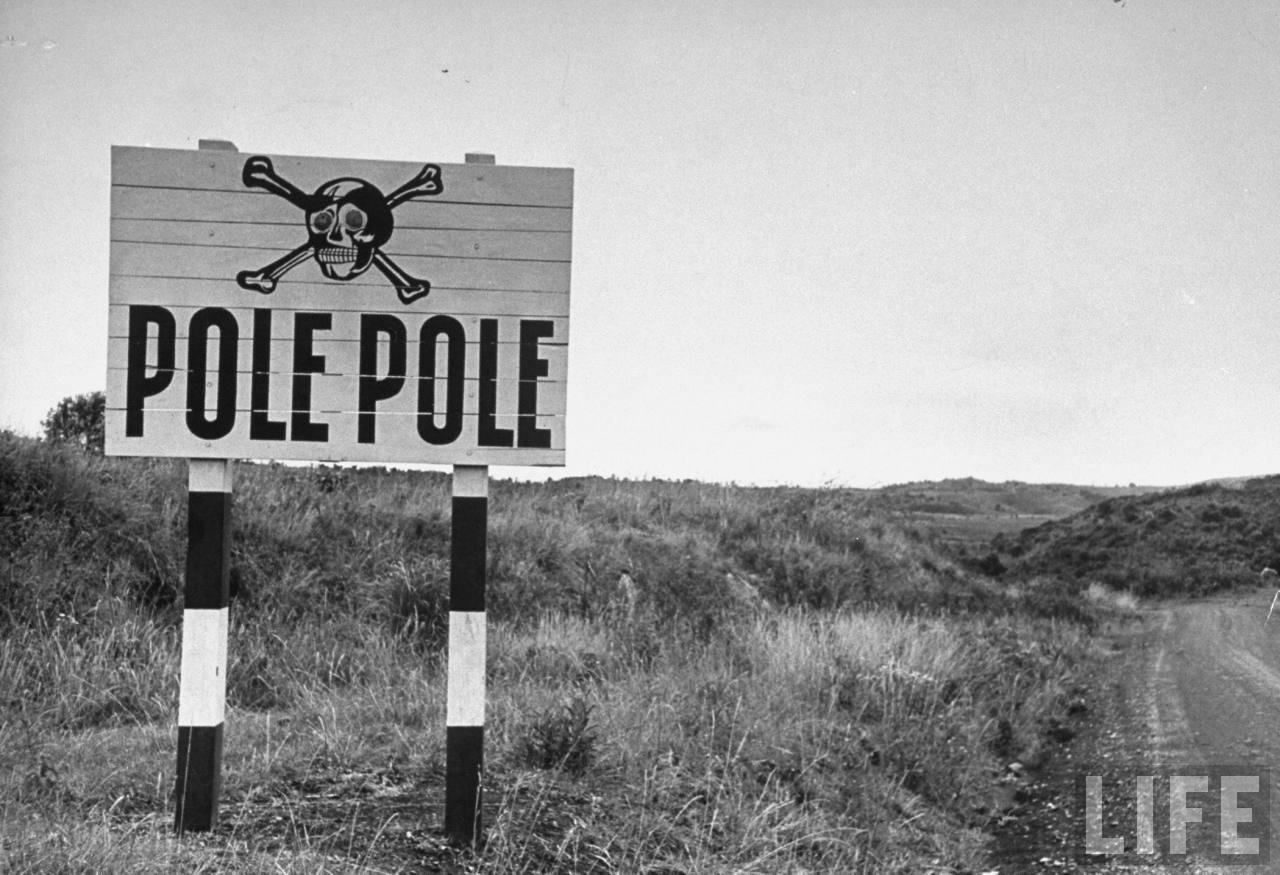
Is this an example of Capitonyms? NO! The words POLE POLE, in this case, mean SLOW in Swahili.
1) The bandage was wound around the wound. (homographs, heteronyms)
2) The farm was used to produce produce . (homonyms)
3) The dump was so full that it had to refuse more refuse. (heteronyms)
4) We must polish the Polish furniture. (Capitonyms)
5) He could lead if he would get the lead out. (heteronyms)
6) The soldier decided to desert his dessert in the desert. (heterographs & heteronyms)
7) Since there is no time like the present, he thought it was time to present the present. (homonyms & homographs)
8) A bass was painted on the head of the bass drum. (heteronyms)
9) When shot at, the dove dove into the bushes. (heteronyms)
10) I did not object to the object. (homonyms)
11) The insurance was invalid for the invalid. (heteronyms)
12) They were too close to the door to close it. (homonyms)
13) The buck does funny things when the does are present. (homographs, heteronyms)
14) A seamstress and a sewer fell down into a sewer line. (homographs, heteronyms)
15) To help with planting, the farmer taught his sow to sow. (homographs, heteronyms)
16) The wind was too strong to wind the sail. (homographs, heteronyms)
17) Upon seeing the tear in the painting I shed a tear. (homographs, heteronyms)
18) I had to subject the subject to a series of tests. (homographs)
19) How can I intimate this to my most intimate friend? (homographs)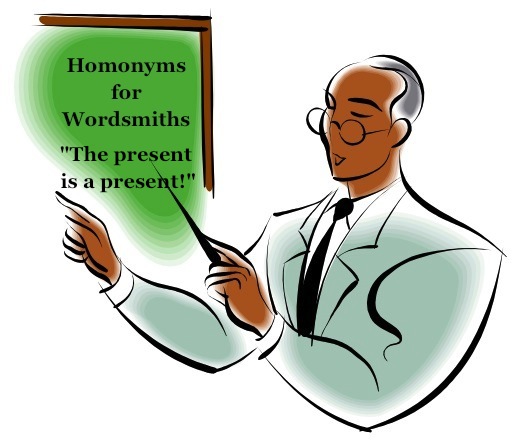
Let’s face it – English is a crazy language. There is no egg in eggplant, nor ham in hamburger; neither apple nor pine in pineapple. English muffins weren’t invented in England or French fries in France. Sweetmeats are candies while sweetbreads, which aren’t sweet, are meat.
If we explore English language paradoxes, we find that quicksand can work slowly, boxing rings are square and a guinea pig is neither from Guinea nor is it a pig.
And, why is it that writers write, but fingers don’t fing, grocers don’t groce and hammers don’t ham? If the plural of tooth is teeth, why isn’t the plural of booth, beeth? One goose, 2 geese. So one moose, 2 meese? One index, 2 indices?
Doesn’t it seem crazy that you can make amends but not one amend? If you have a bunch of odds and ends and get rid of all but one of them, what do you call it?
If teachers taught, why didn’t preachers praught? If a vegetarian eats vegetables, what does a humanitarian eat?

Pineapple: Where is the pine; where is the apple?
Sometimes I think all the English speakers should be committed to an asylum for the “verbally insane.” In what language do people recite at a play and play at a recital? Ship by truck and send cargo by ship? Have noses that run and feet that smell?
How can a slim chance and a fat chance be the same, while a wise man and a wise guy are opposites? You have to marvel at the unique lunacy of a language in which your house can burn up as it burns down, in which you fill in a form by filling it out and in which, an alarm goes off by going on.
English was invented by people, not computers, and it reflects the creativity of the human race, which, of course, is not a race at all. That is why, when the stars are out, they are visible, but when the lights are out, they are invisible.
Why do wordsmiths love and hate English? I don’t know and I have no idea! Oops, that’s an example of homophones that are also heterographs. Discussing those two would make this post too long. Oops, I did it again! :-)
And, I end with another pair of homophones that are also heterographs: “It would be appropriate and right for you to write a comment.” :-)
PS. – Why doesn’t ‘Buick’ rhyme with ‘quick’?
What Is Intimacy?
Posted on June 14, 2010 1 Comment

Can a fountain be intimate?
What is intimacy? Formally, I suppose intimacy is the state of being intimate. But, I think the word intimacy means a lot of different things to different people. Often times, it is equated with sex. This correspondence is at least, incomplete. Yes, sex can be related to intimacy, but being intimate doesn’t necessarily imply or mean that sex is involved.

Are they intimate, or just happy?
So, what is involved when we are intimate? Before I give my opinion on what’s involved, please understand that I am going to restrict this discussion of intimacy to relationships with humans. I realize that intimacy might involve a special animal pet. I have heard of people being intimate with art, automobiles, gardens, houses and even computers (sometimes, my wife accuses me of having an intimate relationship with the computer that I’m typing this post on:-) But, the intimacy discussed here will be the kind that involves relationships between humans.
Consider the following characteristics of being intimate
(1) Sharing most, if not all, of the “closets” of your life. I’m referring to the parts of your life that you only want those, who you are “close” with, to know about. (Notice how “closet” contains “close” :-)
(2) Helping each other to understand our individual meanings and feelings about our lives.
(3) Purposefully creating a climate for helping each other to make self-discoveries.
(4) Welcoming the expression of all feelings and experiences in a tolerant and gracious discussion.
(5) Giving yourself completely in self-revelation to those who are worthy and/or deserving.
(6) Letting go of our defenses and being seen by another for who we are. (Intimacy – into me you see)

The archer of intimacy? :-)
I think all of the characteristics listed above are involved when we are intimate. The last one, which was summarized with, “Intimacy – into me you see” is perhaps the most important of the six listed. Letting go of our defenses and allowing another to really see us for who we are gets at the heart of being intimate. Think about times in your past when you have been intimate. You had to let go of your defenses or you couldn’t have satisfied any of the other characteristics. INTO ME YOU SEE!
I first read the expression into me you see on a blog post by Ed and Deb Shapiro. It’s a good statement that illustrates intimacy, but from only one, or possibly two, points of view. It cleverly points out that intimacy may involve only yourself or you may view intimacy as being intimate with someone else without them reciprocating. They, the Shapiros, also use a different statement, “Into me I see.” I suppose if we put the two together, “Into me you AND I see,” we might get closer to a short and cute statement that explains intimacy. On the other hand, isn’t intimacy a little too complicated to express in such a short and concise manner?

Teenage couple engaged in a titillatingly INTIMATE game of passing a ring from one side to the other using only mouth-held pencils during parlor game while on a date. Location: Oklahoma City, OK, US Date taken: December 1948
Although I elaborated on the last characteristic, I don’t mean to de-emphasize the other five. They are all important characteristics and aren’t meant to be the only ones. For example, intimacy can and should be expressed at times without using words. In other words, the use of body language is important when being intimate. Though that might be important, it isn’t necessarily a characteristic of intimacy. It is, though, a way of manifesting the six characteristics.
In order to be intimate, you need to allow yourself or another person into your soul, mind, body and heart. But, it’s important to realize that not all relationships need be, nor should be, intimate relationships. Many do not deserve your intimacy. Many are simply not worthy.
So, is there anyone you should have an intimate relationship with? Yes! I think you should have an intimate relationship with yourself. Think about it while using the six characteristics listed above. For example, don’t you want to know all of the parts of your life? Shouldn’t you purposefully create a climate for helping yourself make self-discoveries? And, isn’t it appropriate to give yourself completely in self-revelation to yourself? Or, why wouldn’t you let go of your defenses and allow yourself to be seen for who you are? In other words, aren’t the six characteristics of intimacy something that you should manifest.
Will intimacy help our business relationship?
In summary, intimacy in a relationship is a journey that requires each person to reveal her/himself to the other person(s) involved. Intimacy is a process of giving oneself completely in a self-revealing way. Intimacy doesn’t happen through resistance, but instead through “letting go.” Intimacy is never fake and never deceiving, but instead is openly truthful and honest.
What is intimacy? The state of being intimate and …
How about a comment, even if it isn’t intimate? :-)
Are YOU Happy In Your Present Relationships?
Posted on June 10, 2010 1 Comment

Are THEY happy in their relationships?
Have you ever taken a course in school that was designed to help you learn about relationships? Maybe you did, but I think most people haven’t. Are you happy with your relationships? I think most would say they are not as happy as they would like to be. Are your relationships important to you? I think most people would say they are.

Now Here’s a Special Relationship. World War II propaganda poster focusing on the Anglo-American alliance. Hitler and Goebbels are in the background Date: c.1943
Of course, my answers to the previous paragraph’s questions may not be appropriate for you. You may not be able to imagine being happier than you are with your current relationships. On the other hand, if you wait for a little while, most likely you will reach a state of mind where you’re not quite as happy as you would like to be. So, what do you do to learn more about something. Many of us take a course in school. But, it is seldom that you will find a course offered that is designed to help you learn more about relationships. The point is, you normally can’t count on taking a course in school to help you become happier in your relationships.

Teamwork can become a special and happy relationship!
Many of my friends, when asked about whether or not they feel happy and fulfilled in their present relationships, respond with statements like, “I guess I am,” or “We have our ups and downs, but overall, pretty good!” Very few people who I know answer with something like this straight forward response: “Absolutely, couldn’t be more happy or fulfilled.”
When I encounter the “less than happy” responses, I often think about an adage that I have used often, “The journey is more important than the destination.“ I think of this adage because of the apparent manner in which these “less than happy people” are going through life. They are viewing their relationships as a less than enjoyable journey that has a destination of happiness. The relationship is the journey and the destination is (?.) I put a question mark at the end of the previous sentence because, frankly, I see the destination of the relationship to be never-ending. Oh, of course, a relationship might become stronger or weaker over time, but there is no reason to believe that the ultimate destination of a relationship is happiness. Happiness in a relationship isn’t a “place to reach” or a destination, but instead, it is a state of being during a journey. Again, it’s the journey that’s more important! :-)

I’m happy with our relationship!
So, are you happy in your present relationship? If you’re not, who is responsible for you not being happy? YOU!
If your relationship is a “so-so” relationship that seems to be getting worse instead of better, then change it. How? By changing your point of view regarding the relationship.
What I mean by a relation, as used in this post is: the state of being mutually or reciprocally interested OR a way in which two or more people are associated. Therefore, a relationship is: a state of affairs existing between those having relations. If you aren’t happy with a present relationship, then you’re not happy with a state of affairs existing between you and those you are having these relations with. The one person you have control over in the relationship is you. So, who is the one person who makes the changes so you are happier in your present relationship? You guessed it – YOU!
Relationships are nothing more or nothing less than the result of what the people in them say, write, feel, think and/or do. If you want to be happier in your relationships, then ask yourself this question: “How does what I do help make my relationships happier?” Perhaps, you’ll discover that you are making them “unhappier!” Well, if that’s the case, then you know one person who owns the problem. YOU!
How about a comment to help make our relationship happier? :-)
What’s “Tugging” At You From The Future?
Posted on June 7, 2010 Leave a Comment
Where is the “tug” coming from?
Do you feel anything from the future pulling you? Perhaps, a little tug is felt when you celebrate a birthday. Of course, that “tug” may be from the past.:-) Maybe, there’s a yearning for a vacation when you see pictures of your ideal vacation spot.

This hug is a tug from the past! :-)
Most of us are not at the place in our lives where we can, nor should, say that we have accomplished everything we want to accomplish. What about the tug you feel when you think about the goals you still want to reach? Perhaps, you are a person who has no goals? If you are, are you a person who doesn’t want to enjoy success? Are you a person who has an unfulfilled life?
Ok, my intention is not to insult and/or hurt anyone with the previous questions. I would like for you to consider how you feel about where your life is headed. It’s important for us to think in terms of purpose. In order to do that, I think we should have goals. For us to grow in a positive manner, we need goals. For us to change, especially for the better, we need to have goals. I think when we focus on our purpose and goals, we feel a “tug from the future.” In a certain sense, we can relate it directly to our conscience.
Perhaps, as you read this, you’re thinking that goals aren’t important. Consider the following example. Let’s pretend you want to get a job someplace far away from where you are living. You walk or drive to the local train station, go to the ticket counter and asked the person behind the counter for a train ticket. The person would obviously ask, “Where do you want to go?” Suppose you respond with, “I don’t know, just sell me a ticket to somewhere!” My guess is you wouldn’t get a ticket. You see, if you don’t know where you are going, any train track will take you there. If you shoot for NOTHING in life, then you will hit it with amazing accuracy! Goals are absolutely essential in life. They are the things that you should feel tugging at you from the future.

I feel a strong tug from the future!
Ok, so what’s tugging at you from the future? I can imagine many possibilities. Maybe it’s a “worry” that you have about what you are afraid will happen. Maybe it’s a responsibility that you feel is extremely difficult to live up to. Maybe it’s a health problem that will have to be taken care of. Maybe it’s … I don’t want to imply that these before-mentioned future concerns aren’t worthy of tugging at you, but I think that more importantly, your goals are paramount and should take precedence over them.
I believe that having goals is absolutely essential to our existence. A well-known quote from Buddha that comes to mind at this time is, “We are shaped by our thoughts; we become what we think.“ I, like Buddha, think we become what we think. If I think with goals in mind, I have a better chance of becoming what my goals dictate. If I think with purpose in mind, I have a better chance of realizing my purpose.
We should intentionally think about how we want our lives to be. If we don’t, we will repeat the past over and over and over … with only small variations, but always with the same theme. Our lives end up in our own individual ruts with each of us wishing it wasn’t so. We should establish a clear vision of what we want to happen, develop goals to realize that vision and let the “tugging from the future” takeover! Do you feel any strong tugs from the future?
Is a future comment tugging you? If so, get rid of the tug and share your comment. :-)
What Does “Present In The Present” Mean?
Posted on June 3, 2010 12 Comments

Present in the present with presents! :-)
In over forty of my posts during the past year, I have used the statement “present in the present.” What does it mean to be, present in the present? Perhaps, a better question is, what does present in the present mean to me?
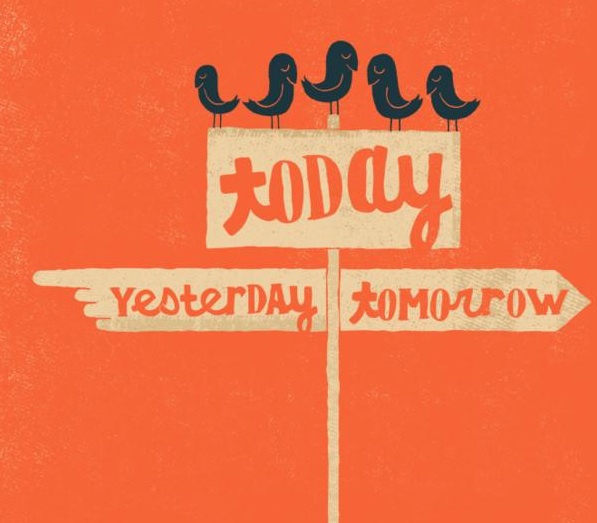
Present in the present, became a part of my vocabulary over twenty years ago. In my classroom, as a teacher, I often used the adage: “Yesterday is history. Tomorrow is a mystery. Today is a gift. That’s why it is called the present.” I’m unsure of the source of that adage since it seems to be an ancient phrase of unknown origin. Many times, I would shorten the adage to, “Let’s treat today as a gift – that’s why it’s called the present!” About twenty years ago, I heard someone say, “Be present in the present!” The statement was used in reference to showing respect to a person who is speaking to you. In other words, when someone is speaking, you should listen attentively and literally, be present in the present.
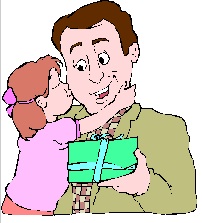
Your presence is a present in the present!
I have found the adage to be a helpful reminder for others and especially, for me. For example, when I’m home alone and working on a project such as blogging, I know that when my wife comes home, a good and respectful thing to do is to be present in the present. When she enters the room, instead of keeping my focus on my blog, I should have the attitude of being present in the present, recognize her presence and listen attentively to what she has to say. Of course, I don’t ALWAYS do that, but it is a reasonable and good plan/goal. :-)
Another way to look at present in the present is to consider that the word “present” is linked to the word “presence.” Presence – the state or fact of being present; current existence or occurrence – describes what being present in the present is. You see, when I am present in the present, my presence becomes part of the experience of everyone that is in the “now” that I am in. They see, hear, feel or in general, sense my presence. They know I am giving them attention and respect – I am, present in the present!

I present my present! :-)
When discussing present in the present with students, I have met with some resistance from those who were focused on achieving their goals. They would often see the two (present in the present & focusing on achieving goals) as contradictory. Their argument was: “How can I be present in the present and remain focused on future goals?” I did not, and still don’t, see this as a dilemma. Yes, focusing on goals is important, but if you’re not giving one-hundred percent in the present, you’re in danger of losing the path to your goal. Imagine taking a trip to a destination that you’re not familiar with. Suppose you develop a map that will take you to your destination, if you follow it. Now, imagine not paying attention to what’s on the map. In other words, you are not present in the present, but only focused on the goal of reaching your destination. In this case, being present in the present means you pay attention to where you presently are in reaching your goal (destination) by checking your present position relative to the map that is designed to help you reach that goal/destination.
So, what does “present in the present” mean? It means that NOW is when you, including those you are with, are making an outward attempt to be present in the life around you. It means NOW is the time for you to make your presence known. Being present in the present is a sign of respect for those you are in a relationship with. It’s a sign of attentiveness for those you’re interacting with. It’s a sign of civility for all who are around you. It’s your present in life! (pun intended:-)
As I reflect on what I have written so far, I realize that I have discovered something about myself relative to present in the present. When I started this blog, I professed that one reason for writing the blog was to “write for learning.” Well, this post has left me with an important lesson learned. You see, even though I have used present in the present with others and myself many times in the past, I didn’t realize until now an important use of it that I had neglected. When I was focused on achieving a goal, I did not fully enjoy life in the present. Instead, I had subconsciously felt that my life would not be optimal until I achieved the goal. This thinking resulted in me not enjoying present life to its fullest. I now realize I need to stop making my enjoyment of life so dependent upon achieving a future goal. It now seems so obvious. Why didn’t I think of this before? Wow, this writing for learning is really working! :-)
What do you “presently” think about being present in the present?
Does Failure Really Exist?
Posted on May 31, 2010 Leave a Comment
 This picture is by Jackson Pollock and once was considered a “failure” by many experts in the art world. Now, it is proudly displayed as an example of good art.
Does failure really exists? Before I answer that question let’s consider some other questions – all related to failure. For each question, I will give an answer or response which represents the first thing that comes to my mind.
>Do I know of anyone who has failed?
Yes and no! I know people who said they failed, but I think they didn’t. I’ve known people who didn’t think they failed, but I think most people would say they did.
>What does failure mean?
Failure is having no success. I realize this is a simplistic and short answer, but I think it is the only way we can think of failure. Too often, failure is the term used when the person who “failed” had much success and still was stuck with the failure label.

Does this prove we are not failures?
>Is failure relative?
Definitely! One person’s failure is another person’s success. Consider a school room setting where one student is considered to have great potential, but doesn’t perform like s/he is expected. Now compare that to another student who is considered to have little potential, yet performs far above her/his perceived ability.
>Are we programmed to believe that failure is bad?
Yes! I think failure is considered to be a negative word. Most people, when hearing the word ‘failure,’ immediately consider it to be something that is bad.
>Are we afraid of failure?
I don’t know about you, but I have always been concerned about being labeled a failure.
>Does everyone experience failure?
This is an interesting question. I have often experienced what many people, including myself, would initially call failure, but many times, upon hindsight, turned out to be just a good learning experience. This, I think, happens to everyone.

Failure is a locked door to success!
>Is failure more of an attitude than something that really happens to a person?
Now, this is a most interesting question and it is also one that I find most difficult to answer. You see, failure does seem to be more of an attitude than something that really happens, BUT how can that be reality? :-) What I mean, is when we have failed and we feel we have failed, it seems real. On the other hand, most failures that I have experienced were not as bad upon hindsight as they seemed when they happened. In fact, always after the failure, I can see a lesson learned, different point of view, etc. that usually allows me to view the “failure” as more attitude and less real failure. Wow!
Please peruse the following quotes about failure from successful people who walked many different paths through life. For each quote, I have provided the author’s name in hypertext, giving you a direct link to a website with more information about her/him.
“We seem to gain wisdom more readily through our failures than through our successes. We always think of failure as the antithesis of success, but it isn’t. Success often lies just the other side of failure.”
“Good people are good because they’ve come to wisdom through failure. We get very little wisdom from success, you know.”
“I have not failed. I’ve just found 10,000 ways that won’t work.”
“Failure is success if we learn from it.”
“Failure is simply the opportunity to begin again, this time more intelligently.”
“Remember that failure is an event, not a person.”
“Failure doesn’t mean you are a failure… it just means you haven’t succeeded yet.”
“I don’t believe in failure. It is not failure if you enjoyed the process.”
“There is no such thing as failure. There are only results.”
The only real failure in life is not to be true to the best one knows.
“Failure is impossible.”
“The only real failure in life is not to be true to the best one knows.”
“One must be a god to be able to tell successes from failures without making a mistake.”

Ok, so it seems to me that successful people don’t necessarily think in terms of failure, but instead, they think in terms of what they can learn from the experience others are calling failure. Instead of labeling oneself a failure, consider it a learning experience AND it is what you make of it.
Almost all of what is called failing involves experience; experience is an important part of the learning process. Why is it that we admire an experienced person and disdain a failure? Perhaps, if we consider failure as nothing more than an experience that we can learn from, then fear of failing and other negative aspects of failure will lessen. Or, if we look at failure the way those successful people quoted above did, then we are much more likely to experience less of it. I fail to see how this won’t lead to success! :-)
Is Being A Victim Only In My Mind?
Posted on May 27, 2010 2 Comments

How do I “measure-up” as a victim?
Have you ever felt like you’re a victim? I definitely have! Consider my post from March 29, entitled, “Is Stealing, Purloining, Filching, Lifting, Pinching Or Swiping Ever Justified?” If you read it, I’m sure you will notice the “victim” coming out of the writing. :-)
Does it help, if you admit that you feel like a victim? Probably not! You see, if you admit that you feel like or are a victim, then you are giving yourself the victim label. I think when you admit to others that you are a victim, then you feel that something happened to you and that you are not responsible for it. On the surface, that seems fine, but if you think about it in a more fair-minded manner, then there is a good chance that you share with the victimizer(s) at least some of the responsibility for being a victim.

Who is responsible for me being the victim?
Of course, you might be a victim and not have any responsibility for it. But, usually, when looking for someone to blame for being victimized, you’ll find that you have a fair share. In the first paragraph, I mentioned a post where I wrote about being a victim and, yes, I do have some blame for what happened. For example, I knew a security system was a good idea, but I just didn’t get around to it until after I was victimized. If a security system had been installed before the “victimizing incident,” then I’m sure the incident wouldn’t have happened. I could have avoided the problem by doing something that I knew should have been done. Besides the security system, there are other “things” I could have done that I now think, because I didn’t, make me partially responsible for being a victim. Ouch!
The point is that we often find ways to blame others for our problems. We ignore our own responsibility and then, when we have a problem, we look for others to blame. I knew, before I was victimized, that I wasn’t being as responsible as I should. But, when the incident occurred, I immediately started looking for someone else, besides myself, to blame. Of course, since my house was broken into, it was easy to shift ALL blame to the burglar(s). In this case, everyone, including the police, seemed to agree with all blame being assigned to the burglar(s). I guess this is an example of, “The majority isn’t always right.” :-)
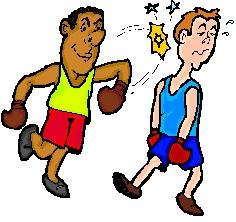
Who is responsible for being a victim?
The problem with feeling like a victim is that I act like a victim. I feel and act like I have less power than before. I feel and act like I’m helpless when facing everyday problems. You see, I start thinking “poor me, everyone is against me, and why does everything happen to me?” when instead, I should be focusing on solving MY problem(s).
Really, we need to look at our problems, not as who is the victim, but who doesn’t share in our culture. For example, in my culture, we don’t burglarize, but in the burglar’s culture they do. This is true for relatively small problems like the burglarizing of my house and big problems like global warming. When crime is a problem, we all have at least some responsibility. When global warming is a problem, we all have at least some responsibility.
When feeling like a victim, let’s look for a way to share ownership of the problem instead of only finding blame. What do you think?
If You Can, Then Should You AND If You Should, Then Can You?
Posted on May 24, 2010 Leave a Comment

Just because I CAN eat these holly berries, SHOULD I?
Just because you can doesn’t mean you should AND just because you should doesn’t mean you can! Ok, so maybe you are wondering what, in the world, inspired me to make that statement? Well, a few days ago I was listening to an interview on KWMU, our local public radio station, when during an interview of a musician it was quoted. I don’t know the name of the person who quoted it, but I do remember how I immediately found it interesting and curious. Is it true and if so, when is it true?
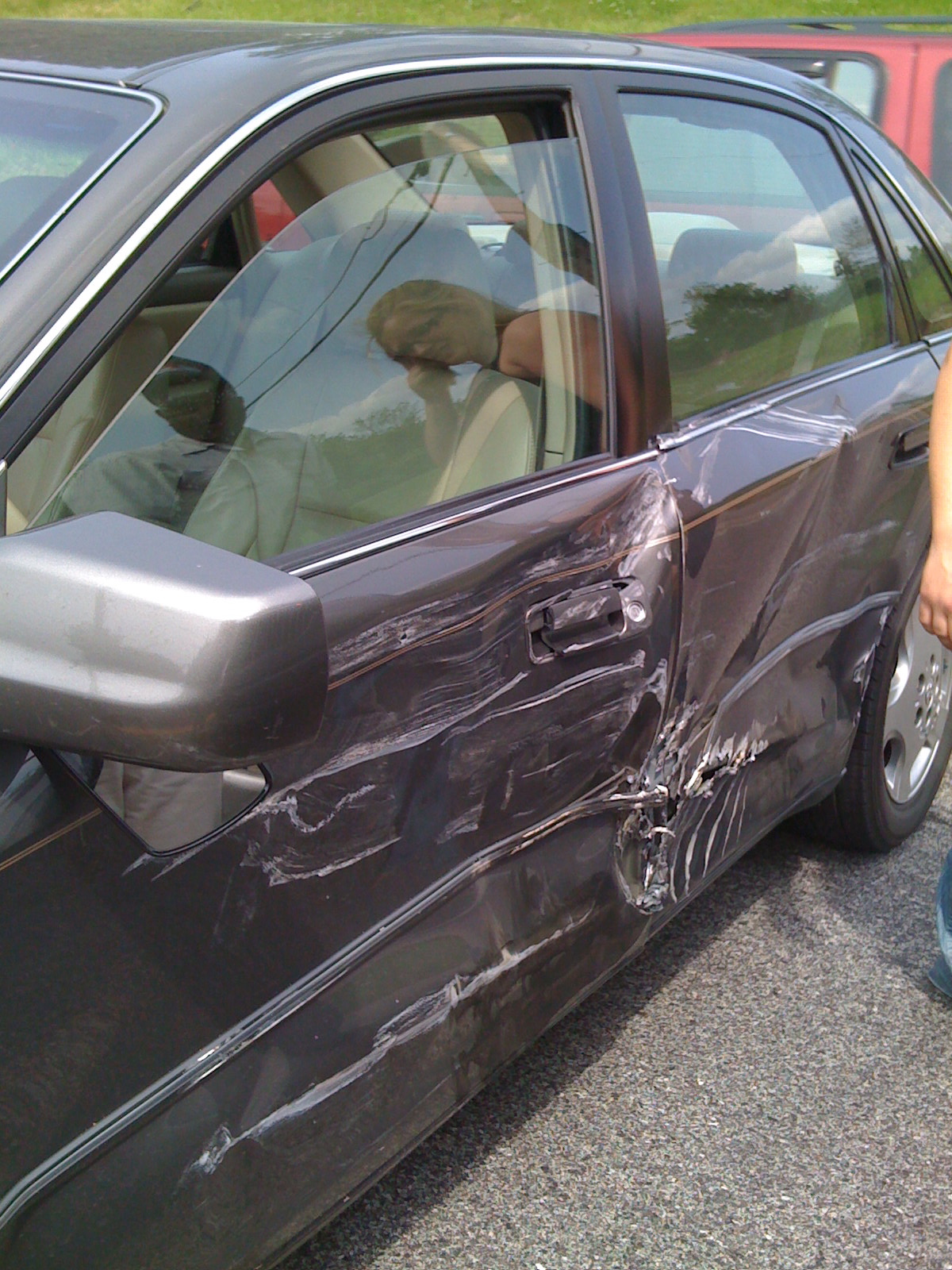
Just because we SHOULD avoid car accidents, CAN we?
If you “google” the first sentence, you will find a lot of websites that make use of: Just because you can doesn’t mean you should. There aren’t so many that make use of the second part: Just because you should doesn’t mean you can. Really, both parts of the compound sentence leave me with reservations, but I’ll admit that the first part, “Just because you can doesn’t mean you should,” is the easiest part for me to accept. I can imagine many cases where just because I can do something, it doesn’t necessarily follow that I should do it. For example, I can shoot a gun at my friend, but I don’t think I should shoot it at my friend. :-)
Let’s look a little deeper into the meaning of each part. First, just because you can doesn’t mean you should, I think is a statement that implies you should “step back” and think about the consequences of what you can do before you do it. I know that isn’t exactly what the statement means, but it does seem to imply that we pause and think before we act. Let’s consider an example of how this might happen. Suppose you can sell a business that employs many people who depend upon the business. You know that if you sell it, the business will be closed and/or moved far away. Suppose you also know that many families will be severely strained if the business closes or moves. So, just because you can sell the business, should you? Uhmmmmmmmmm….
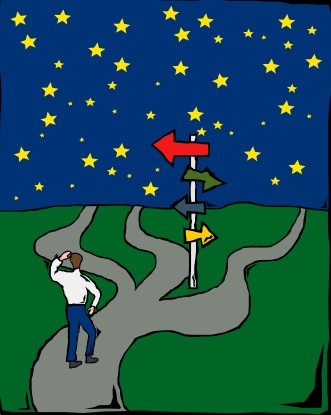
Decisions – Should I, if I can; Can I, if I should?
Just because you should, doesn’t mean you can! What does this statement imply? I think it’s obvious that there are many things we should do, but can’t. For example, I should always eat the right foods, do the right exercise, and in general do the right thing for my health. Can I? No! I don’t think anyone can always do what s/he should. We are destined and/or doomed to be imperfect. It’s part of being human. On the other hand, not doing something that we should do and using the “excuse” that you are imperfect isn’t acceptable. It’s truly an excuse AND not a reason.
Ok, I’ve attempted to show when the statement, Just because you can doesn’t mean you should AND just because you should doesn’t mean you can, is true and when it isn’t. But, in general, besides being a clever play on words and somewhat worthwhile, what value is it to us?

I can speak, but should I?
I think when you, as an American citizen, are looking for a way to be a good citizen while using our First Amendment Right (freedom of speech), will find this helpful. Think about it! Just because you can express yourself as a citizen doesn’t mean you should. Sometimes, it’s important that once your ideas are made clear, you then let others of a different opinion express theirs. And just because you should speak out for or against an issue presented by your democratic government, doesn’t mean you can. Sometimes, it just isn’t possible. Although a democracy is “government by the people,” you can’t always express yourself – even if you should. You won’t always be able to vote even though you should. You won’t always be able to write a letter to a congress-person even though you should. The important thing is to do what you can when you should AND not feel guilty about not doing because you should.
Just because you can leave a comment, doesn’t mean you should, but I will appreciate your comment, if you do! :-)
Are You Determined To Be Determined?
Posted on May 20, 2010 Leave a Comment

Determined to be determined! (Tomb of the Unknown Soldier, Arlington National Cemetery)
Is determination overrated? I have been told that determination is important, but no matter how determined a person is to accomplish something, determination alone, just isn’t enough. I realize you usually need more than determination to be qualified and reach the goal of attaining a position, job, profession, vocation, … On the other hand, too often, if you are not determined to become qualified, then you won’t stick with the program that enables you to reach your goal. Is determination enough? No! Is determination necessary? Usually!
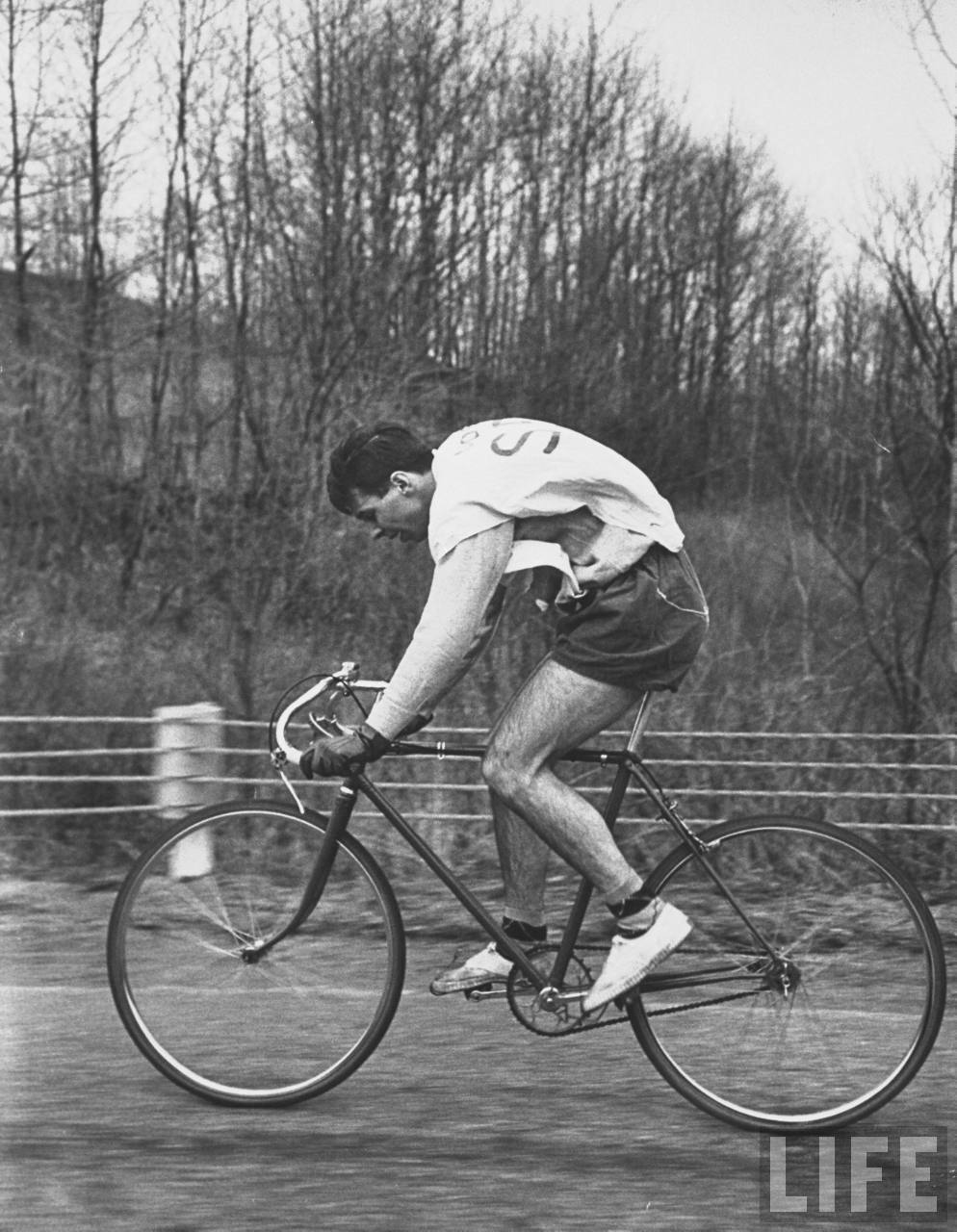
DETERMINED rider Edmond Abdelnoor pumping hard to keep lead. Location: US Date taken: April 1952 Photographer: Yale Joel
When thinking about determination and what it means to me, I can’t help also thinking about passion. You see, often times when I’m determined to accomplish something, I develop a passion for the accomplishment. What I mean is, without a lively or eager interest (passion) for attaining the accomplishment, I find it difficult to remain determined. For example, recently I was being trained for a part-time job and I was required to read a rather large manual and then go over it with three different representatives from the company that was hiring me. I was determined to complete the reading and be prepared for the training, but until I became passionate toward learning the material and accomplishing the training, I was unable to maintain my determination.
Another way of looking at this is to think of determination and passion as an attitude. It was important for me to have the right attitude before I was successfully trained. Isn’t it interesting how important attitude is when we want to successfully accomplish our goals in life?
Perhaps, at this point, it would be useful to formally define determination, passion, and attitude.
Determination: “Direction or tendency to a certain end.”
Passion: “An intense emotion, compelling feeling, enthusiasm, or desire for something.”
Attitude: “How one mentally feels.”
Please note, that you have control of all three of these. In other words, you can control the amount of determination and passion you have for something. You also are completely responsible for your attitude.

This Driver Is Adjusting the Carburetor of His Van at a Service Station after His Vehicle Failed the Carbon Monoxide Test at an Auto Emission Inspection Station in Downtown Cincinnati, Ohio. He Was DETERMINED to Pass So He Could Leave for School Out of State City Employees in the Safety Lane Told Him What Was Wrong and Instructed Him How to Adjust It. after Two Tries the Vehicle Passed and Received an Inspection Sticker. 08/1975
Determination, passion and positive attitude are important attributes to help fight off the natural fear of not being able to accomplish a major goal. It’s often easier to succumb to the negative feeling of disappointment – of not reaching the goal – before you have given a reasonable amount of effort. What happens is you create a self-fulfilling prophecy of failing before you even start. Ouch!
So what should we do in order to avoid the self-fulfilling prophecy of failing? We should develop determination, passion and a positive attitude toward successfully accomplishing our goal(s). I once read the following statement about recovering from strokes: Determination is half the battle. I have heard that statement used in many different situations and in many different forms. Sometimes, determination is replaced with focus. Determination, focus, passion, positive attitude, etc. – they all are implications that our desire to reach goal is important.
I remember a coach that I had for baseball who would say before every game, “this game will be won by the team who wants it most.” His point, of trying to get the team to “want it more,” was an attempt to make us have more determination than our opponents. Of course, there is more to winning a game than determination, but there is little doubt that determination, along with passion and a positive attitude toward playing and winning is important.
So, are you determined to be determined? If you are, then you have reach at least half of the goal of winning. Tommy Lasorda, a great baseball manager, is said to have declared: “The difference between the impossible and the possible lies in a man’s determination.” I think the message behind his statement has been modeled time and time again throughout history from individuals to groups as large as countries. Consider the accomplishments of Olympic athlete Jesse Owens, Microsoft founder Bill Gates, the Allies that won World War 2, etc….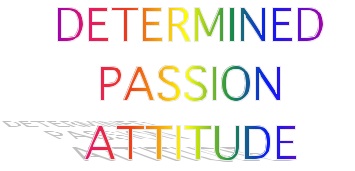
Determination, along with passion and attitude, may not always win against great talent, but it is the factor that causes many humans of ordinary ability to accomplish extraordinary feats. If you think you are lacking in a certain talent, try being determined to be determined in order to make up for what is lacking. It’s been proven, throughout history, to be helpful.
I hope you are determined to share your thoughts regarding determination. :-)


 R2 Thoughts for You