 R2 Thoughts for You
Is There A Life Lesson In Zeno’s Paradox Of The Flying Arrow?
Posted on July 5, 2009 Leave a Comment
 Recently, a dear cousin from Austria sent me a copy of a post from Pico Iyer’s contribution to the Happy Days blog on the New York Times. The post, as I see it, was about how often times in life, “less is more.” Mr. Iyer did a nice job of relating this concept to his personal life. He described how he viewed his life when he was in the corporate world and compared it to a much simpler time while in Japan. I think his essay is worth reading and I encourage all to do so. Having stated that, my intent here is not to review or summarize his post, but to borrow an idea of his – the use of Zeno’s Arrow Paradox – and discuss how it could be used as a metaphor for better understanding our own lives.
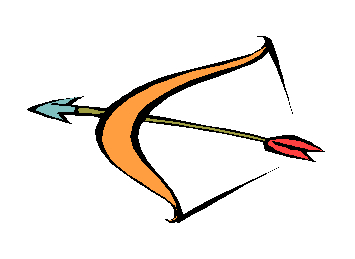
First, let’s look at the arrow paradox. When an archer shoots an arrow, the arrow flies from the bow to the target. If we consider the flight of the arrow at any fixed time, such as a second after it left the bow, then for that instant the arrow is not moving. Consider that instant to be a “snapshot” of the arrow in flight. We, of course, could do this for any single instant. Therefore, motion is nothing more than a series of stillness! WHAT!!!! Viewing the arrow as always being still before it arrives at the target, means that from that point of view, it would never get there. It is always still. Is it? Hopefully, you can see the paradox.
I would like to use the paradox to illustrate how we often seem caught in the same scenario in our own life. Take, for example, getting and keeping a job. Many workers see themselves in a “dead-end” job with no hope of reaching the goal of _?__. You fill in the blank. Consider a relationship with a “significant other.” How many times have we observed or experienced a relationship where there was no progress, no excitement, no “newness” and it seemed that the goal of happiness could never be reached? How about happiness, in general? I have heard many people say to others, “I just want you to be happy.” Or, “it’s OK, just so you’re happy.” But, when have we heard a person say, “At this moment I have reached my goal of being happy?” The person’s “arrow” of striving for happiness has reached it’s target and now there’s nowhere else for the arrow to fly. Really, you see, the flight of the arrow is the most important part of this metaphor, not the target. It’s the pursuit of happiness, not the attainment of happiness. It’s the journey, not the destination.
So, what is the lesson in Zeno’s Paradox of the flying arrow? I think it’s in the flight of the arrow and how we, as humans, view life. We see our life in snapshots of moments. We enjoy and suffer in snapshots of time. We live our life in snapshots of time. The only target we ever will hit is our mortality. It’s not about the target, it’s all about the flight of the arrow!
How about “shooting off” a comment? :-)

What Is Your Life Strategy?
Posted on July 2, 2009 Leave a Comment
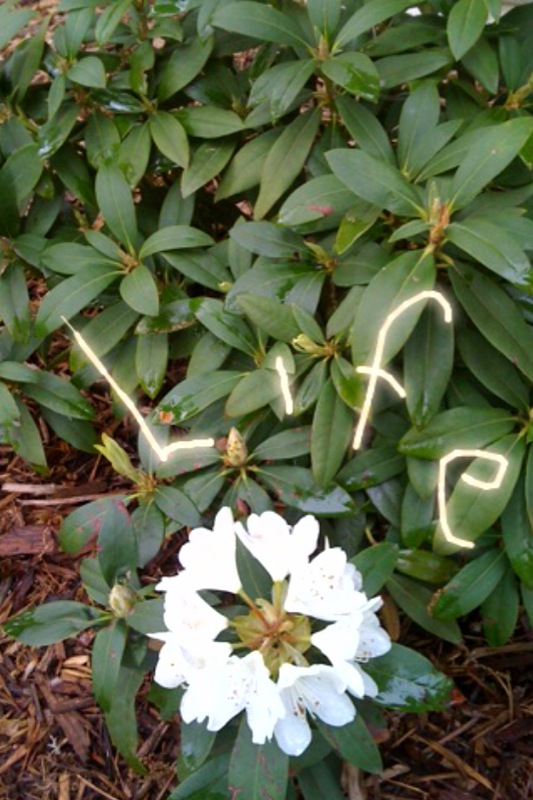
Do you have a picture of your life strategy? The “picture” should be your vision for your life.
Can you demonstrate a process for your life?
Not a plan for your life but a process for your life. More than goals. Goals are like small steps on the marathon walking journey of life. Your life strategy is the process you use to continue your journey of life.
Do you know what your life strategy is?
Not your life plan. A plan gives you the route of your journey and that is valuable but not flexible enough. Often, due to unforseen future variables, the route must change.
What strategy are you using to make your journey what you want it to be?
Our values, our desires, our strengths, our weaknesses – ourselves should be part of our picture of life strategy. The strategy should help shape our values, strengths, etc. Perhaps your strategy uses your religion, politics, education, friends, family and past in various proportions as its guiding principles. In fact, it would be difficult to not use them to some degree. But how do you use them?
The picture of your life strategy is more like an impressionist picture than a clear photograph. It will always contain a certain amount of “fuzziness.” This is because your life strategy picture is static due to the nature of life itself. Life depends on change. Learning depends on change. The nature of life and learning forces us to have a fuzzy picture of our life strategy but at same time, we still need a good picture in order to have a fulfilling life.
A good picture, but a fuzzy one? Yes, a good impressionistic picture that when looking at an individual spot, all you see is a “point of color” that refuses to reflect the whole. Upon looking at the whole, we see the picture for what it is, but at the same time we must accept its “fuzziness.” Though fuzzy, it still can be a work of art that displays a strategy for a good life.

Life – A Little Fuzzy!

Birthday Celebration – What Are We Celebrating?
Posted on June 29, 2009 1 Comment

A smile for all birthday anniversaries:-)
Today is my birthday. Actually, today is the anniversary of my birth. But, of course, we call this day a birthday, even though this isn’t really my “birth” “day.”
What about my question in the title? What are we celebrating when we celebrate a birthday? I find this question to be most interesting. Throughout my life, I have had a special feeling on my birthday. I don’t know how to describe it other than I feel like I deserve to be treated special. Maybe I have had expectations ingrained in my mind that resurfaces each June 29. Perhaps the mental feeling is something like the one I feel at Christmas. At Christmas, I feel like a celebration is in order and of course, Christmas is also a celebration of a birthday. Now please understand, I am NOT comparing myself to Christ. I am only trying to describe a feeling that I think a lot of people have on their birthdays. At least, I’m sure some do.
So, what are we celebrating on a birthday? I think, LIFE. Yes, life and the fact that we have lived another year, therefore satisfying one of our most fundamental drives – to live. When I was a young person going to a church school, I remember being taught about the fundamental drives we humans have. I remember four of them are: to eat, to drink, to reproduce and to live. If my memory is correct, killing oneself was considered bad because it went against human nature or meant doing something “unnatural.”

Is this what “over the hill” means? :-)
As I read over what I have written so far, I believe it is entirely too serious. Come on, Ron (R2), lighten up a little. Ok, that’s an excellent idea. Let’s have a few corny jokes. Since I was once a farm boy, these will be called: “pure corn from the farm jokes.” :-)
Q: What did one candle say to the other?
A: “Don’t birthdays burn you up?”

Don’t birthdays burn you up?:-)
Q: What did the big candle say to the little candle?
A: “You’re too young to go out.”
Q: What does a cat like to eat on his birthday?
A: Mice cream and cake!
Do you agree, that these are “pure corn from the farm?” :-)
I will end with a few quotes from those who have given us thoughts about birthdays and, to say the least, are a bit more insightful than mine.
There is no cure for birth and death save to enjoy the interval. – George Santayana
For all the advances in medicine, there is still no cure for the common birthday. – John Glenn
The really frightening thing about middle age is that you know you’ll grow out of it. – Doris Day
You know you are getting old when the candles cost more than the cake. – Bob Hope
Thanks for the birthday visit.
Meet (Heat) Me In St. Louie!
Posted on June 27, 2009 Leave a Comment
The heat is on! St. Louis is hot, hot, hot…..

Wow, it’s hot, hot, hot…
Today (6/23/09) my car’s thermometer registered 100 degrees as I drove home from having new tires put on. On the radio, the broadcaster declared that the heat index was 106. That means that even though officially, the temperature at the time was 97 degrees, it felt like 106 degrees due to the high humidity. Hot, hot, hot………
So, what should one do when it is so hot? Stay cool and don’t be a fool about ignoring the heat. Or, maybe take the other approach. What other approach, you ask? Embrace the heat. Similar to dealing with cabin fever in the Winter. Assuming access to air-conditioning, stay in and do things that don’t require being outside.
But, embrace the heat? Why not? How about those items that are too stiff in normal weather. :-) For example, those stiff plastic hoses you have always wanted to organize? Set them outside on a day like today and in less than an hour they will be “loose as a goose.” Scrubbing decks and patios is a most appropriate task on hot days. Writing blogs, organizing closets and cleaning basements are great things to do inside when St. Louie turns up the heat. The only minor problem with this approach is the dreaded “cabin fever.”
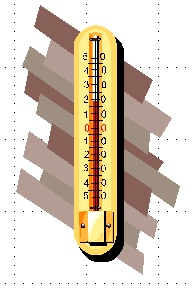
You can’t change it by looking at it.
I remember what it was like before air-conditioning. At least, before I lived in a house that had air-conditioning. I was raised on a farm in an old house that had no air-conditioning, not even an attic fan. We had a few small oscillating fans – that was all. We also had a big front porch that we would often spend time on until late at night. When I went to bed, I remember misting my sheets and then hopping in bed and hoping that I would fall asleep before the misted sheets dried. I also remember taking long liesurely walks down our long country road during the late evenings when it was uncomfortably warm. These are examples of how I fought the heat before air-conditioning.
So now I have air-conditioning and how do I “fight” the heat. Well, instead of going outside to cool off or restrict myself to the coolest spot in the house, I spend my hot time in the house or cabin, therefore, cabin fever. And, what do I do to combat cabin fever? As I mentioned above, I do the same thing I do in the winter. What have we accomplished technologically since I was a young boy? We can now have cabin fever two out of the four seasons. Yea!
Tonight, (6/24/09) I went to Blueberry Hill for, no, not a burger, but this time a nice dish of red beans and rice. Yummy, I pretended I was in New Orleans! Why did I mention this. Cabin Fever, of course. One of the main cures for cabin fever is to get out of the cabin. I did it and I feel cured. :-)
I have heard the following statements many times, but I couldn’t help but think of them now. “If you don’t like the weather in St. Louis, then just wait, because it will change into something you do like.” AND, “The reason people from St. Louis are interesting is because they are used to constant change – the weather.”

No cabin fever in here. How about a hot comment? :-)
Heat, uh, meet me in St. Louie! :-)
What Kind Of Wolf Do You Feed?
Posted on June 25, 2009 1 Comment
The following is a parable from the American Indian Legends. If you “click” on the “Two Wolves Parable” you will see more than one version of it. Though, I have seen it many times, I still find it appropriate for consideration.
 One evening an old Cherokee told his grandson about a battle that goes on inside people. He said, “My son, the battle is between two wolves inside us all. One is Evil. It is anger, envy, jealousy, sorrow, regret, greed, arrogance, self-pity, guilt, resentment, inferiority, lies, false pride, superiority, and ego. The other is Good. It is joy, peace, love, hope, serenity, humility, kindness, benevolence, empathy, generosity, truth, compassion and faith.”
The grandson thought about it for a minute and then asked his grandfather, “Which wolf wins?” The old Cherokee simply replied, “The one you feed.”
The message here seems to be that we have a choice regarding good and evil. We choose evil when we choose to be miserable in anger, self-pity, greed, etc. We choose good when we choose to be happy in love, humility, empathy, etc. Do we really have a choice? Do we actually choose, for example, to be angry? Are we responsible for our anger? I say “yes” for all three questions.
We can choose what wolf to feed. Are the two wolves equal in your mind? Do you think that if you feed the wolf of envy and self-pity, you are making your life better? Isn’t the choice obvious? Why feed the wolf that is, in the long run, a cause of a miserable life? To me, the choice is obvious.
We can choose to be happy or to be sad. The choice we make will influence our daily lives, those that we interact with and our relationships with those around us.
Before I end this, I must point out that the above parable has been used in many blogs. I have found most bloggers using the parable as a “stand alone blog.” What I mean by this, is that most are not giving their personal thoughts regarding the parable. I agree that the message is strong by itself, but I also feel that we need to mentally take it in and “mull it over.” By doing this, we bring the message into our minds in a way that enables us to use it.
When it is time to feed the wolves, be careful which one(s) you feed. Also, be careful what you feed them. Remember, they are carnivorous and might feast on you. :-)
I’m “hungry” for your comments. :-)
The Beginning Of The Rest Of My Blogging Life!
Posted on June 23, 2009 Leave a Comment

Watch out, this can hurt!
So, what do I mean by the title of this blog? It’s in reference to what I have been thinking about since Saturday (June 13). I was at a St. Louis Bloggers Guild meeting and as I listened to the discussions about blogging, someone mentioned a blogger that wrote an interesting blog about a recently built fence. I made a note to myself after hearing that. You see, I rebuilt a fence last Fall and never, since I started blogging in December, did I ever consider writing a blog about that experience. Of course, it was also mentioned how interesting the blogger’s “fence posting” was. (no pun intended :-) No, I’m not going to write about my rebuilding of the fence, but I am going to write about helping my sister paint her house.
Yesterday, my wife and I helped my sister paint the inside of her house. In fact, we were able to complete most, if not all, of the “rolling” yesterday. Was it “back-breaking” work? YES!
I found it unbelievable how it affected my back. To be exact, the lower part of my back. I have had back problems most of my adult life, but for the last year I have been, overall, pain free. The amazing thing is, that over the last year, I had forgotten how “rolling” paint on a wall affects my back. Maybe this is example of, “no pain, no gain,” where the no gain means no gain in memory. :-)

She’s rolling away with no pain – How I envy her!
Another element affecting the hardship of painting yesterday was the heat. You see, one year ago last Spring, a basement wall in my sister’s house caved in. Since then she has had to literally raise the house and put a new basement under it. She is now at the point where she is painting the inside. BUT, she does not yet have air-conditioning. Yesterday was a hot and humid day outside AND inside of her house. SIZZLE, SIZZLE …..!
OK, so now my back is hurt and most likely, will be for quite a few days. That is, if it behaves as it has throughout my life. Of course, I’m hoping for a miracle, where I am awakened in the middle of the night and all of the pain is gone. I’ll continue to wish for the miracle, but at the same time, live in reality. OUCH, it still hurts! :-) Yes, that’s a smile – it’s not all that bad, especially when I stand up and move. Wow, it sure is difficult to rest and stand at the same time. I don’t know how horses can stand it. (pun intended :-)
So what’s the meaning of the title for this post? I am going to change my approach — a little. What I am going to attempt to do is have more postings that “log” my life and give the readers more of my perspectives about my current experience. Is “current experience” an oxymoron? Just wondering!
As you most likely know, the word “blog” is a conflation of two words, web and log. I will try to add more of my log to the web and literally make it a “blog.” :-)

Torture Tool :-)
Hopefully, as I become more experienced at this, the amount of “interestingness” will become greater. But for now, I think I will do some back exercises and vow to remember, “rolling paint can be a life altering experience for me.” This is the beginning of the rest of my Web Log life.
I would love a web log comment.
Life-Long Learning Or Long learning About Life?
Posted on June 21, 2009 2 Comments

Are you learning?
So when do you stop learning? Are you a life-long learner? Have you grown up resisting learning? Is learning something you dread? Do you avoid learning whenever possible?
I think many people would give some “negative leaning” answers to previous five questions. Most humans are born with a natural desire for learning. Most young children have a vibrant curiosity that allows them to investigate and/or study almost anything. So what happens as we get older? Why do so many of us view learning as difficult and unpleasant? We start out as active learners ready to learn almost anything and end up turned off to learning. In fact, I know a lot of people that immediately say no to anything that involves learning something new. Why?
Before I address the “why” of learning that is turned-off, I think it is interesting to note that if you “google” life-long learning, you will get over 700,000,000 hits. Wow! Yes, that is impressive, but what does life-long learning mean to most of us? I think most of the websites about life-long learning refer to programs for adult education classes. There is nothing wrong with that, but learning is something that we should always be doing. In fact, I think humans are always learning, but the question is, what are they learning? It seems to me that the word “focus” comes into to play here. You see, whatever we focus on, either consciously or subconsciously, is usually what we end up learning something about. Of course, interest plays a role in most of our learning. A synonym of interest is curiosity and as mentioned before, almost all children have a vibrant curiosity. OK, so you can most likely see where I’m going with this. We, as humans, are born with a natural curiosity and desire for learning. Sometime during our childhood, we seem to lose this curiosity and desire. Why?
Maybe we get turned off to learning because that is what we are taught to do. Whaaaaat…..? Parents, relatives, teachers, religious leaders, government officials, etc. often teach us, through what they do and how they do it, to expect failure, boredom and disappointment from what we do in life. Many of these people are held in high esteem by children and therefore are believed. Children often behave based on what they believe. In fact, adults usually behave based on what they believe. If we don’t have anything in our education to counter these negative beliefs and behaviors, then they become part of who we are – people who think that learning means failure, boredom and disappointment. OUCH!

What are you learning?
So what should we do, if we have a negative attitude toward learning? Unlearn that negative attitude. Failure is normal. Learn from it. Boredom is a mental feeling that only the person who is bored is responsible for. Disappointment, I believe, is a normal feeling that when experienced, should be treated as an emotion to learn from. In fact, all three, failure, boredom and disappointment are past and present concepts that do not imply what will happen in the future. Learn from them and move on. Is that a simple answer? Yes and no. Yes, in the sense that describing what to do is short and easily stated. No, in the sense that doing it must be done over a complete lifetime with many failures, boring times and disappointments. In other words, we must always be learning how to learn. Also, many studies have shown that active learners stay healthier, live longer and have an outstanding quality of life. Yea!

R2 is learning too!
Is Your Life A Mosaic?
Posted on June 17, 2009 Leave a Comment

Some Broken Parts
Recently, I heard the word “mosaic” used on a radio talk show. The person who used it, followed with a simple explanation that a mosaic is a whole made up of broken pieces. I thought that her simple explanation was an excellent metaphor for life. A life is a whole made up of broken events. Now, let me make something clear; I don’t mean for the word “broken” in this metaphor to imply any strong negativity regarding life. If you think about it, usually an event is only an event when it has a start and finish, therefore, broken within a continuum of time. When we look back on life don’t we see it in terms of different phases, levels, eras or events?
So, how can viewing life as a mosaic be of help to us? I don’t know about you, but I often find myself thinking about my own life in terms of a few outstanding past events and whatever is presently happening. In other words, I am incorrectly thinking that my life is just a few broken “pieces” and not as a beautiful mosaic of which the new “broken” pieces are being added to create an even bigger one. Another idiomatic saying that illustrates this is, “can’t see the forest for the trees.” Though that saying is good, for this posting I will stick with mosaic.
The main point of using “mosaic” as a theme for this posting is how it fits as a metaphor for a life. The mosaic can be a beautiful work of art where the finished product is made up of many broken parts that by themselves, lack the completeness and beauty of the whole. I have often been to a memorial service for someone who has died and been reminded of how a life has such a “mosaic quality.” It is not unusual for those in attendance to make remarks about how the deceased would have loved the memorial. And, what is it, that the deceased would have loved? Usually, it is how beautiful her/his life was when viewed holistically. Not the view of the “last days” or one particular incident, but from childhood to the end. Various events are pointed out, happy times remembered and interesting stories told that demonstrate how the life of the deceased is so fondly admired. In other words, all the “broken events” in one’s life creates a “mosaic work of art (life).”
How about a comment on life as a whole?

The Whole From the Parts
What Is Mathematics?
Posted on June 15, 2009 Leave a Comment
Note regarding this posting: This is a collection of different perspectives about what mathematics is from my point of view. I used these at various times while teaching both full time and part time from 1969 to 2004. I realize this is not in the same “spirit” of most of my other posts. Please reflect on your learning of mathematics and see if any of the points of view expressed in this posting help clarify this all important, but often elusive way of thinking – mathematics.
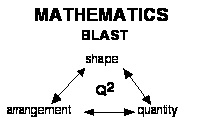
A visual organizer for the different perspectives discussed below
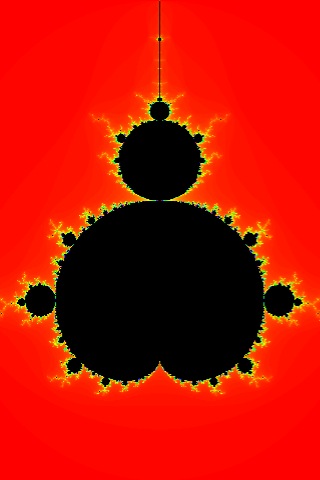
The Mandelbrot Set – created on a computer using mathematics
Consider the following three points of view:
1) Mathematics is a disciplined way of thinking. Often, mathematics is called a discipline. This implies that it is a way of thinking that involves certain rules and regulations. Though this is true it is not complete. When you think mathematically you are often doing a logical study of shape, arrangement, and quantity. The word logical implies that a system of principles, concepts, and assumptions is in the basis of the study. In other words, mathematics is not random thinking with no purpose or structure, but instead, it is a mental process that is based on logic and used to study the relationship between shape, arrangement, and quantity.
2) Q2 – When we think of mathematics, the concept of quantity is often assumed to be involved. Not always is quantity the only thing being considered. Quality (the characteristic element; that which makes something what it is) is generally involved. That leads us to another way of viewing mathematics: mathematics is the mental exercise of quantifying quality and qualifying quantity, therefore Q2.
3) BLAST – Math is a Beautiful Language, Art, Science, and Tool!
Mathematics has at least four roles that it plays in human thought.

A Julia Set – created on a computer using mathematics
Mathematics is a universal LANGUAGE. Language is a symbolic representation of human perceptions. Mathematics has its vocabulary, its symbols, its definitions, and expressions which help us internalize and clarify our thinking and communicate our ideas. Mathematics is a universal language for communicating the ideas of shape, arrangement, and quantity to be understood by all people of different cultures all over the world. It has also become the language of manufacturing, finance, social policy, science, and the technical work force.
Mathematics is an ART. Art is the practice of creating perceptible forms expressive of human feelings. Creative thinking and mathematics have a long, fascinating, and continuing history. The potential for mathematical discovery-the “aha” experience-is in all of us. The creative artists are using more mathematical applications in their workplace than ever before. To view mathematics as not creative is contrary to what has taken place throughout history. Over 200,000 new mathematical theorems, each requiring creative and artistic thought, are proven each year. In the 1990s alone, more theorems were proven than in all of the years prior to that. Each new theorem required the mathematician(s) to create thinking that expressed the affective as well as the cognitive thinking. All mathematics is artistic in human thought.

Not created on a computer using mathematics. This is A Spectacular Image to Celebrate the International Year of Astro – This image of M101 is a composite of data from NASA’s Chandra X-ray Observatory, Spitzer Space Telescope, and Hubble Space
Mathematics is a SCIENCE. Science is an activity which has as its goal the formulation and understanding of a complete model of the universe. Mathematicians observe, experiment, and make conjectures. They investigate, measure, calculate, and classify to explore their questions. Mathematics is not a passive pursuit nor a spectator sport, but rather an active attempt to identify, describe, and explain patterns (arrangements) wherever they exist and in whatever form. In this sense, mathematics can be described as the science of patterns.
Mathematics is a TOOL. A tool is a device designed to extend human powers. Mathematics is a tool to solve problems. Artists, musicians, scientists, athletes, and mechanics all use their tools to paint, compose, experiment, compete, and repair. Mathematicians use mathematics as a tool to solve problems. If a person can correctly interpret a mathematical formula, and identify the proper data to be used in the formula, it is possible to solve problems using mathematics as a tool without resorting to its more aesthetic roles such as science and art.
Therefore, math is a Beautiful Language Art Science Tool! Math is a B.L.A.S.T. :-)
Math is like a bath – it’s most useful when you are in it. Don’t just look at it, get in it! :-)
What Or Where Is Your Dream Place?
Posted on June 12, 2009 Leave a Comment

R2’s Dream Place
Let’s start this out with a dream. If you could live and play in an environment that was your perfect “dream place,” what would it be? What kind of place or environment would allow you to be the best person you could be? OK, take a few minutes out of your busy life and DREAM!
Have you done it? That is, have you completed your dream? I didn’t ask if you accomplished your dream – only, did you actually dream it? :-)
Let’s assume you did the dreaming – so, where was it? Were you in the middle of a meadow that looked like an impressionist’s painting? Were you in the middle of downtown Chicago? Were you on top of a cliff overlooking an ocean that looked like it went on forever? Maybe you dreamt you were in another country. The possible places are only limited by our imaginations.
What was the decor like in your dream? If your dream took you to the woods, was the decor rustic or traditional country? Did your dream have you in the middle of a desert or on a glacier? What did it look like around you in your dream?
Is your dream in a place that you can really visualize? Can you put yourself in the life of your dream and know what it feels like? Can you smell it? Can you taste it? In other words, can you “sense” it? I ask these questions because, I think if you don’t have clarity regarding what your ideal environment is like, then you most likely will not be able to create it. Think about it, what are the chances of a painter creating a picture of a vase of flowers, without first, having a vision or dream of what it should look like? Slim to none, I think.
Before our mind can give us what we want, we must have a clear and strong idea of what that is. We must give strong, vivid and frequent visualizations of our ideal/dream place to our mind before our mind will be able to focus on it. And if you are going to dream, then make your dream as “big” as you can. Big dreams and small dreams take the same amount of mental time. At my age and experience, I have known many who have realized their “dreams.” But, what were their dreams? One of my friend’s dream was to retire and do nothing. Well, he retired and did nothing and now is tired of doing nothing. The point here is to illustrate that we must be careful of our dreams and whether they are really dreams for making our life better or just escaping our current, but temporary hectic life.
Perhaps, the most important lesson from not dreaming is the old, “stopping before you start syndrome.” Don’t quit before you start or when the going gets tough. Of course, quit if you aren’t willing to ask for help. Quit if you don’t believe you can. Quit if you don’t think you deserve it. Quit if you think others are better than you. Quit if ……………..
Don’t quit — believe you can! After all, it’s only a dream. :-)
So, what or where is your dream place? Now that you have dreamt it, start working toward realizing it.
I’m dreaming about your comments. :-)

It starts with a dream!


 R2 Thoughts for You