 R2 Thoughts for You
Do You Value Values?
Posted on January 17, 2011 2 Comments
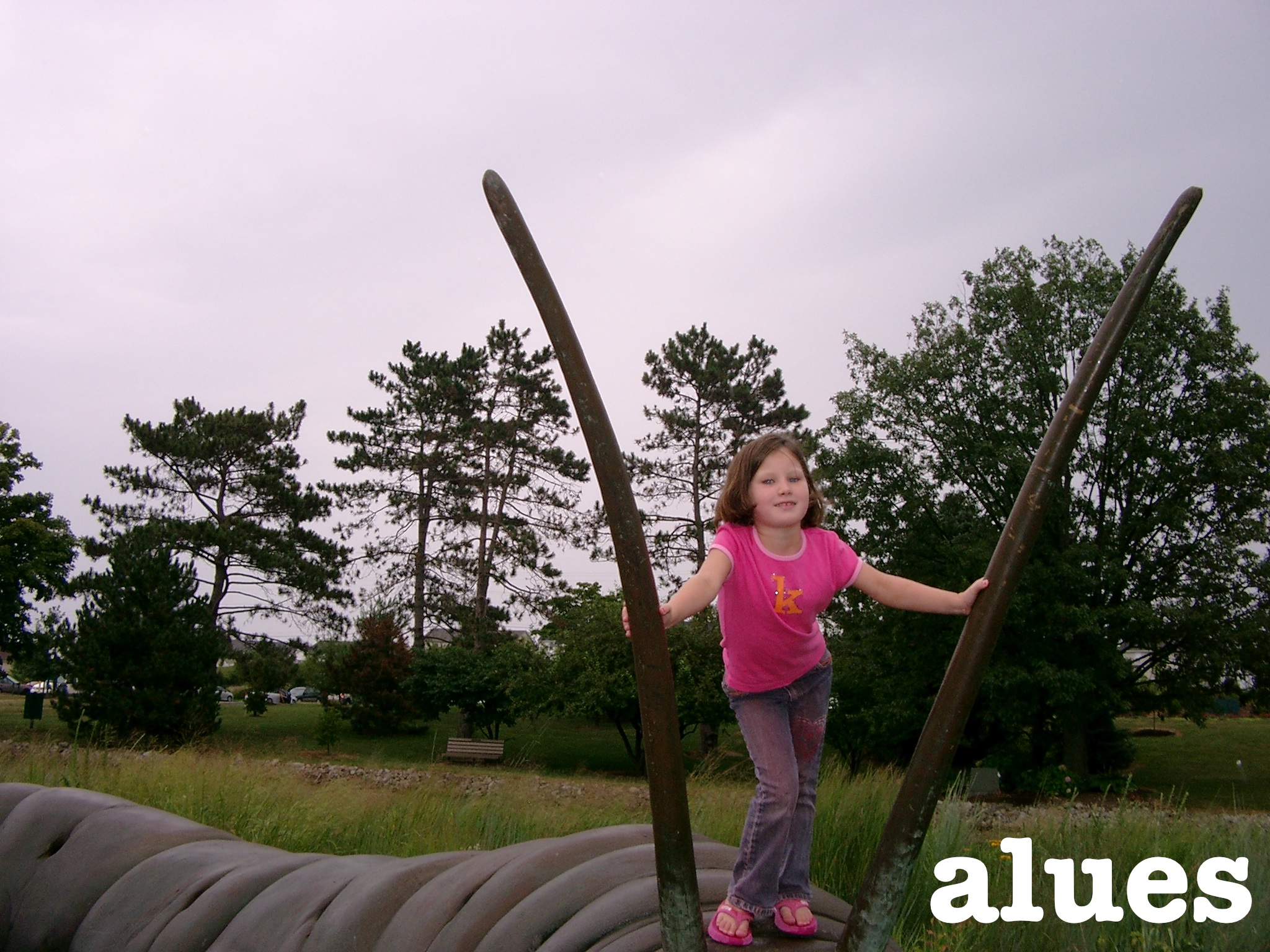
Are your “values” important? Are others’ values important? Most likely, everyone would answer yes to the previous questions. For this post I will concentrate on the values of others and how important it is for us to know them.
I value life and that's what motivates me!
When I was a teacher, I would try to focus on knowing what my students valued. You see, by knowing what they valued, I was able to relate my lessons to what they deemed important and were willing to work for. Now, of course, I’m referring to “good” values. Many of my students, for example, valued their parents’ favor. Other students valued their work for God. And others, valued education as their ticket out of poverty. I believe it is important to know the values of those we wish to motivate. And, as a teacher, I was constantly concerned with motivating my students.
There is no way that I could motivate all of my students based on what each valued, but I could ask and respect each student for their own individual value(s). Ultimately, it is their value(s) that motivate(s) them to do well. As a teacher, boss, parent, etc., we must allow those we are responsible for, to use their values to motivate themselves. Our purpose, metaphorically, is to: “Build a bridge so they can get to the other side, then cheerfully collapse so they will build their own bridges in the future.” In the metaphor, building the bridge represents using values to motivate.

"Build a bridge so they can get to the other side, then cheerfully collapse so they will build their own bridges in the future."
OK, so in order to motivate, it is important to know what the “motivatees” value. How do we find that out? I think by listening and asking. Don’t talk about what you value, but instead, ask what they value. Don’t watch what you do, but instead, watch what they do. Don’t read about what you like, but instead, what they like. Don’t watch what you necessarily are interested in, but instead, watch what they are interested in. I’m sure by now, you see what I’m getting at. In order to motivate someone, you must “build that bridge” from where the person’s interests are, to where you are motivating them. The start of the bridge is where their interest(s) is/are, and the end of the bridge is “the goal of your motivation.”
Yes, in order to motivate there must be a goal – at least that’s what I think. In order to have a goal that the “motivatees” will buy into, we need to appeal to their values.

He's motivated to work toward his goal of being in good physical condition because he values having a muscular-looking body!
So, what value are values? One important value of values is to help with motivation. This is true when someone is trying to motivate another, or self-motivation. When we base what we are doing on good solid values, we, as humans, find it easier to pursue goals. Pursuing goals is easier when we are motivated to do so. Motivation is much easier to attain when we feel that what we are working toward is in sync with our values.
If you want to motivate your children, a team, your employees, etc., then you should present the motivation in terms of something they find meaning in, and not, necessarily, what is meaningful to you. You must know not only what you value, but also, what they value.
Evaluate, then Motivate! :-)
I value your comment(s).

(B) Born-Again Christian And An Agnostic – Why Dialogue?
Posted on January 13, 2011 1 Comment

Who or what created this?
Note: This post is a continuation of my post from January 10, 2011, entitled, “(A) Born-Again Christian And An Agnostic – Why Dialogue?“
 The
The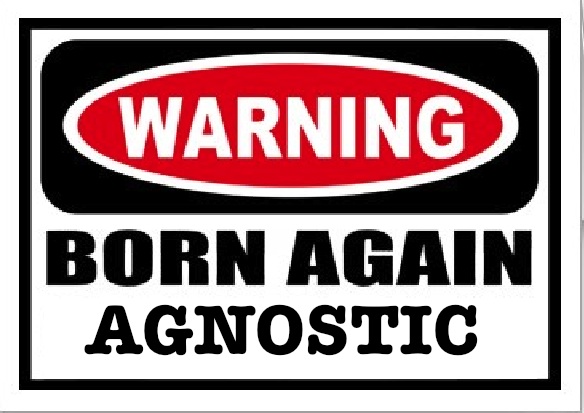 following is fiction, but loosely based on actual correspondences between a Born Again Christian and an Agnostic. In this dialogue, I have named the Born Again Christian, Bac and the Agnostic, Ag. My intention with the post is to present a civil dialogue between two different thinking systems about God and religion. There is no intention for this to be a debate in which there is a “winner.” Enjoy the dialogue and please feel free to comment.
————
***(The following exchange, marked with asterisks, are repeated from January 10’s post.)***
*Ag – All of the posts/links that I referred to previously,
(https://r2blog.com/2009/09/17/what-do-you-know-about-your-feelings-of-awe/ & https://r2blog.com/2009/07/09/do-you-ever-change-your belief/ & https://r2blog.com/2009/02/07/ethical-what-does-it-mean-to-you/ & https://r2blog.com/2009/01/27/why-ten-commandments/ & https://r2blog.com/2009/01/26/religion-and-my-sister/)
deal in some way with my thoughts regarding religion, faith and/or belief in God. I can imagine that, from your point of view, I do look lost – don’t I?
*Bac – I see your point, but I do have unconditional love for you and I will try to help you “not be lost.”
*Ag – I think we will have an interesting conversation regarding religion and especially, why you believe what you believe. How did you come to believing it? What is God? Is everything the work of God?

————
Bac – You ask, “what or who is God?” The very first verse of the Bible, Genesis 1:1 says, “In the beginning God created the heavens and the earth.” He is the Great Creator. When you look at nature around us, and you see the intricacy of a rose, a butterfly, mountains and animals, they can’t just have happened. If you have a wrist watch and someone says where did it come from? The answer is, it was made by a person or company. Where did the things of nature come from? There had to be an intelligent design, a creator. Since I have made many references to the Bible and I want you to have the ability to read in more detail, here’s a King James Version of the New Testament. I’ve taken the liberty of marking some of the very important verses.
Ag – I sincerely thank you for the gift of the KJV New Testament. I’m considering what you marked and have already used the KJV New Testament for resource. I’m having a few problems with understanding. I find the translation a little hard to understand. I think I will have to study, discuss, and in general, reflect on what you have marked. I think the bible is difficult to understand without treating it as a way of life. Also, you referred to Genesis, which isn’t in the New Testament. Do you believe and follow all that is written in the Old Testament?
Bac – You are welcome. Of course, I believe in the Old Testament, especially the book of Genesis. What or who do you think God is?
Ag – As you most likely read, in one of my posts, I think, “God is all that we don’t know.” Another way of thinking about and/or believing in God, is to have God, as thinking done deductively, and science, as thinking done inductively.
To illustrate this, take your belief of God, the Intelligent designer, and deduce specific ideas, concepts, beliefs, etc. For example, God created everything and since I am part of everything, then God created me. Of course, if I create this e-mail, then I will be given credit for its creation. Generally, we won’t go back to the most general statement, but instead, allow me to have “free will.” :-)
Now let’s consider a scientific way of thinking, and through the scientific method I (we) might consider many specific cases and then come up with a general belief. For example, through observations and experiments, Galileo was able to conclude that the earth was not the center of the universe, yet the Catholic church believed it was. Galileo was called before the Inquisition for professing heliocentrism instead of geocentrism. The point here is that geocentrism was taught by a religious belief system to be the correct way of thinking. The belief system was wrong, in my opinion. There must be, so I think, a way to use the Bible as a “guide on the side, but not as a sage on the stage,” paraphrasing an old education mantra.
Bac – Well, for me, that’s certainly a different point of view.
Ag – Yes, it is, especially since I am not professing that the Bible is without error and should be used as an instruction manual. I think using God (deductive) and Science (inductive) together without either as a “supreme court,” allows us to live with and in nature. Actually, this is not so easily explained by using so few words, but hopefully, you see my point. Considering other points of view is good and I will definitely consider the point of view from the Bible. But, I have some more questions. Why do you pray? Yesterday, I was at a ‘Celebration of LIfe’ for my friend, Mary who died last Friday. Where’s Mary and should I pray for her?
Bac – You ask, “Where’s Mary?” The Bible clearly teaches if Mary was saved and born again and had a relationship with Jesus Christ, she is in Heaven with Him. A beautiful example of this is in the Gospel of Luke 23: 39-43. This is part of the Bible that describes the crucifixion of Christ. There were two criminals crucified with Jesus. One of the criminals said, “Remember me when you come into your kingdom.” Jesus answered, “Assuredly, I say to you, today you will be with me in paradise.” If Mary did not have a relationship with Jesus Christ, the Bible teaches that she is lost and is in hell. God created us with a free will; we can either accept Christ or reject Him. We are in no position to know Mary’s heart. The Bible teaches that hell is a very real place. The Bible says the flame and torment in hell is not one that burns out, it is eternal. All of us will have eternal life and life in heaven is eternal with everlasting peace and joy; life in hell will be eternal and everlasting torment.
Ag – Wow, that’s quite a response! I don’t think my friend Mary was saved or born again, AND I do not believe she is in hell. I don’t believe my Dad, who died suddenly in a car accident when I was five-years old, was saved or born again, and I don’t believe he is in hell. Actually, I don’t believe in hell and I’m unsure of heaven. I do believe that we experience a “heaven and hell” while alive. I think heaven and hell are creations of the human mind. If my Dad is in hell, then in order to spend eternity with him, I will have to NOT be saved. ??? What about my Muslim and Jewish friends? What about the little children who have died before they were old enough to save themselves? This doesn’t make sense!
Bac – I want you to know that I love you and am praying for you. More importantly, God loves you with an everlasting love as stated in John 3:16. I hope you keep an open mind and please know that I have unconditional love for you.

Nature is so complex; perhaps, God does play dice!
Ag – Well, it’s nice to be loved. Before we end our dialogue, I would like to add a few more points. I will try to use your gift of the Bible as a guide on my side. As you know, the version you gave me is translated from Greek. In the Greek Orthodox Church, there are times when the priest will challenge the translation from the original Koine Greek and in doing so, will state that since he is Greek and studied the bible in Greek, he knows “better.” A lot can get changed or lost in translation. The old, “lost In translation” issue! :-)
You think of God as the Intelligent Designer and I think of God as “all that I don’t know.” I believe in evolution and you don’t, I assume. I think complex systems are difficult to know and therefore, my God is all that I don’t know. I think many years ago, when less was known, many people attributed to God, things we now don’t attribute to God. “Things“such as weather, fire, etc. used to be unknown and considered only understood by God. Who knows? Perhaps, God plays dice!
I think God exists only in the mind. I think math only exists in the mind. I think this computer I’m typing on exists, physically. I think the lamp near my sofa exists physically. God and math are examples of existence only in the human mind and the computer and lamp are examples of existence in the physical realm.
When I look at nature around us, I see complexity. Like your wrist watch example, if I’m asked, “Where did nature come from?” I will answer, “some person or company.” Not really, but I would consider the “company” to be reasonable, where “company” represents some complex system that I may or may not understand when you ask me.:-)
Lastly, it really is a nice and fulfilling feeling to be loved. God loves me and you love me. But, God only loves me, if I believe in him. (John 3:16) If him is “all that I don’t know,” then I believe in him and all is well. If God is the Creator and therefore, created not only the good, but also the bad, then I’ve got to work on my “believing.” :-) Actually, I think I have to develop a better understanding of love, because love like that just doesn’t make sense.
Thanks Bac, this has been enlightening. You have not convinced me to be a Born-Again Christian and I’m sure I haven’t convinced you to be a “Born-Again Agnostic.” :-)
————
Born-Again Christian and an Agnostic, why dialogue? Because dialogue, as an exchange of ideas or opinions on a particular issue, can help us reach an amicable understanding of each other and help us with that all-important intellectual trait of empathy.
I hope you were able to read the first of this two-part series about an imagined dialogue between a Born-Again Christian and an Agnostic. Together, they manifest some of the confusing thoughts I have about religion, faith, and God. Though much of this was imagined, as mentioned previously, it is loosely based on an actual exchange of ideas. Thanks for reading the dialogue and I look forward to your comments.
(A) Born-Again Christian And An Agnostic – Why Dialogue?
Posted on January 10, 2011 4 Comments

Is this the work of God?
The following is fiction, but loosely based on actual correspondences between a Born Again Christian and an Agnostic. The Born Again Christian is adamant about her/his beliefs, but the Agnostic, being true to form, has many doubts about what s/he believes. In this dialogue, I have named the Born Again Christian, Bac and the Agnostic, Ag. My intention with the post is to present a civil dialogue between two different thinking systems about God and religion. There is no intention for this to be a debate in which there is a “winner.” Enjoy the dialogue and please feel free to comment.
The dialogue begins after there has been correspondences between the two and they both feel it’s time to bring out into the open their beliefs about God and/or religion.
——————
Bac – I have been contemplating for a long time how to confront you and at the same time, be true to who I am.
Ag – Though my friends often disagree with me, I think telling the truth and being forthright is the correct policy for me and any relationships that I have. Bac, you are a “new” relationship for me. Since I first started corresponding with you, I must admit that I have been extremely sensitive regarding our correspondences.
Bac – So, you’re concerned about this new relationship with a person who you just met and that has caused you to be extremely sensitive regarding our correspondences? I don’t think you should be.
Ag – Ok, now let me add one more of my “concerns.” I assume you are very religious. I base that thinking on your signature at the end of each e-mail, along with what you have said and written about your work with your church.
Bac – Well, I am a Born Again Christian. I have a personal relationship with Jesus Christ. John 3:3-7 from the New Testament of the Bible tells a story of a Pharisee named Nicodemus who came to Jesus at night. Nicodemus stated, “we know that thou art a teacher come from God, for no man can do these miracles that thou doest except that God be with him.” Jesus interrupted the conversation and said unto him, “Verily, verily I say unto thee, except a man be born again, he cannot see the kingdom of God.”
Ag – Now, unlike you, I have over the years, gone from religious to NOT. I have always had a spiritual seeking aspect to my being. When I was 12, I converted to Catholicism on my own. In fact, I “shopped” for a religion and decided, by myself, to become Catholic. Then, during my freshman year in college, after taking a philosophy course and having long late night debates with many of my friends, I became a “fallen-away” Catholic. Oh, I would still list Catholic as my religion, but I really didn’t practice.
Bac – I believe in the scriptures and attempt to live my life by the truths of the Holy Bible. I am not perfect, but Jesus offers forgiveness of sins each time I come to Him confessing my wrong doings. My faith is based on the fact that God loves all of us and sent His Son to die on the cross for our sins and raised Him in three days. This, in a nutshell, is the Gospel, the death, burial and resurrection of Jesus Christ. I believe that God loves us with an everlasting love as shown in John 3: 16, “For God so loved the world that He gave His only begotten Son, that whatsoever believeth on Him should not perish, but have everlasting life.”
Ag – Why do you rely so heavily on the Bible when you are corresponding with me?
Bac – The Bible has stood the test of time. It is made up of 66 different books (editor’s note: Christian bibles can range from 66 to 81 books) written by many different authors that were inspired by God and it all fits together, without error. Ag, if you purchased a very complicated piece of equipment, included with the equipment would be an instruction manual. Without that manual, you would not be able to use or operate the equipment. The Bible is my instruction manual and teaches me how to live my life and have fellowship with God.
Ag – Wow, thanks for explaining. I never thought of the Bible as being an instruction manual. When I converted to Catholicism, I studied the Catholic Catechism and the Bible. When I was 32, I became Greek Orthodox, basically because my wife belongs and it made the spiritual part of my life more fulfilling. I’m telling you this so you can understand a little of my past and present thinking about the Bible and God. I really don’t consider myself to be a “good” Greek Orthodox member. Most likely, I should be classified as agnostic. I have so many questions and find belief and faith without knowing to be extremely problematic.
Bac – I can see that you have done some studying of the Bible and have been a member of different organized religions. But, why are you telling me all of this?
Ag – Well, I have had many religious “friends,” over the years, that have the attitude of, It’s my way or the highway! They want little or nothing to do with me because I don’t believe what they believe. They have conditions for whom they relate with and their main condition is, “think like me or don’t relate.”
Bac – Well, that’s not my attitude. But, how different is your thinking from mine and how would I have known the differences?
Ag – I thought, that since you have had some time to peruse my blog, maybe you read:
https://r2blog.com/2009/09/17/what-do-you-know-about-your-feelings-of-awe/
OR

https://r2blog.com/2009/07/09/do-you-ever-change-your-belief/
OR

https://r2blog.com/2009/02/07/ethical-what-does-it-mean-to-you/
OR
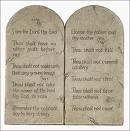
https://r2blog.com/2009/01/27/why-ten-commandments/
OR

https://r2blog.com/2009/01/26/religion-and-my-sister/
Ag – All of these posts deal in some way with my thoughts regarding religion, faith and/or belief in God. I can imagine, from your point of view, I do look lost – don’t I?”
Bac – I see your point, but I do have unconditional love for you and I will try to help you “not be lost.”
Ag – I think we will have an interesting conversation regarding religion and especially, why you believe what you believe. How did you come to believing it? What is God? Is everything the work of God?
——————
The next post (published on January 13, 2011) has part (B) of this dialogue. Please check it out for the rest of the dialogue and, if you haven’t already, please click on the five URLs above to get a little deeper understanding of Ag‘s point of view.
Shouldn’t We Turn Hope Into A Goal?
Posted on January 6, 2011 2 Comments

Take your thought of "hope" and make it a goal!
Recently, I wrote about hope. In the post, entitled, “Is Hope Worth Hoping For?,” I tried to explain why hope is not sufficient as a way of life. I also didn’t give many suggestions or any direction regarding what else we should do besides realize hope is insufficient. Hopefully this short post will shed some light on the darkness of just hoping. :-)

I think she is doing more than just hoping she will catch the bouquet!
Hope tends to be something we wish for and if we do nothing but hope/wish, then we will, most likely, end up with only the wish. Most people want their wishes to come true. Wishing or hoping is only a start. They are good, but then what?
When we hope, we are usually thinking about the future. We hope or wish for a special birthday present. Maybe we hope or wish for a new car. If all we do is hope or wish AND we get what we want, then we have what might be called a miracle. Perhaps, we got it because of a fairy godparent or an angel. It’s not my intent to change your thinking regarding what you believe or have faith in, but I believe, in general, it’s better to not leave one’s wishes and/or hopes depending on angels, fairies and/or miracles.
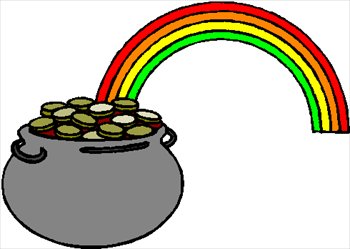
Should you hope for a pot of gold at the end of a rainbow OR make earning a pot of gold your goal?
So what should we do? Turn the hope or wish into a goal. Devise a plan that specifically illustrates how you are going to reach your goal. The word “goal” is used in various sports for a good reason. It describes the end result of a desired outcome. If we use football as an example, the word goal is used for a line that must be reached in order to score. When you are playing football, you hope/wish to reach the goal line in order to score. But just wishing or hoping will most likely not get you there. Instead, your team will huddle, devise a plan and then, attempt to accomplish your goal of getting to the goal line.
Hopefully, you can see my point. Goals are much more specific than hope or wishes. You start with hope, turn it into a goal, and then devise a plan for accomplishing your goal.
PLAN TO MAKE HOPE A GOAL!
Are You At The Mercy Of Now, Or…?
Posted on January 3, 2011 Leave a Comment

Now, here's a different way of considering: "Are you at the mercy of NOW?"
Mercy of what? Of now – now, as in the present? Yes! What does that mean?
Aren’t we at the mercy of fate? Do we have any control over our future? So many questions and so few answers! :-)

The Alamosaurus are truly "stagnant in the present!":-)
In many of my posts, I have emphasized the importance of being present in the present. I think that’s important, but I also think it’s easy to confuse being present in the present with being stagnant in the present.
Let’s briefly consider what it might mean to be, “at the mercy of now.” If a person is at the mercy of now, then whatever s/he is thinking, living, doing, etc. in the present, determines her/his future. Of course, our thoughts, lifestyle, etc. play a role in partially determining our future, but should it be such a determining factor that we are stuck in the now? I think not. Are we at the mercy of what we are now, OR, are we at the mercy of what we are becoming? I think the latter.

I know what I'm "bee-coming.":-)
You see, it boils down to whether you believe you are at the mercy of who you are OR who you are becoming. If you choose who you are, then you’re at the mercy of fate (now). If you choose who you are becoming, then you work toward what you want to be and have more control over your future. Frankly, it’s a belief system that affects what happens to you.
If you believe you have control over your future, then you are usually willing to change. Changing allows you to become someone different and ideally, better than the present you. Here’s an appropriate maxim that summarizes the main idea of this post: “What you are becoming is often more important than what you are accomplishing.” Accomplishing implies present and past. Becoming implies present and future! If you don’t want to be at the mercy of now (fate), then you must constantly try to be the new and “better than now” person. No, not “holier than thou,” just “better than now!” :-)

Sometimes, it's difficult to see how it could be "better than now."
I once heard a story about a depressed college professor for whom therapy, religion nor family were able to help. One day, the professor’s automobile had a flat tire on a major highway, many miles away from help. Unfortunately, the “absent minded professor” had forgotten his cell phone. At first, he didn’t do anything but sit in the car, stunned, and realizing that it had been over thirty years since he had changed a tire. After awhile, even though he wasn’t sure how to use tools needed for changing the tire, he started trying to change it. He read the manual, found the tools, made mistakes, had successes, and eventually, got the spare tire on the car. The whole episode took him two hours. Back in the car, while traveling toward his destination he realized that he no longer was depressed. Why?
For the professor, it was this relatively small and successfully completed task that showed his mind the way to approach larger problems. When we do such things, we realize we really do have more control over our destiny than our present-day thinking reveals. We can do more, if we try! We must believe in ourselves and try. We must dive in and start. We don’t have to be perfect, but we do have to be trying.
Are you at the mercy of now (fate)? Are you at the mercy of what you are trying (becoming)? Hopefully, BECOMING!
When Death Is Present, How Can I Be Present In The Present?
Posted on December 30, 2010 1 Comment

Death and "Present in the Present" seem to be contradictory! What do you think? :-)
Recently, I helped plan a “Celebration Of Life” for a friend who had died. Though her death wasn’t sudden – she had battled cancer for many years – I wasn’t prepared for the over-powering feeling that her death had on me. I found it difficult to concentrate on living in the present when her presence was no longer with us.

Perhaps, celebrating life is better than fighting death!
Though death is a fact of life, it is also the absence of a life that existed in the past. In that sense, while preparing for and participating in ceremonies/gatherings involving the deceased, there was, naturally, much focus on the past. Reflecting on the life of the person who died led me out of the present and into the past.
As I thought about the life and death of my friend, I also reflected on a similar time, four years ago, when my brother-in-law died. My sister held a Celebration Of Life for him a few months after he died and again, I helped plan it. For both of these special celebrations, I found myself much more reflective and philosophical about the past than I am normally. You see, I usually strive to live in the present and when doing so, I often find myself ignoring the past.

"If we were no longer here tomorrow, who would notice AND if someone noticed, what would s/he notice?"
I think living in the present and often times, ignoring the past, has become a defense mechanism for me. So, what am I defending? Well, many of the bad memories I have don’t hurt when they are ignored. Unfortunately, when I ignore the past, I not only ignore the bad things that have happened, but also the good things. For example, when I encounter a friend that I haven’t seen for many years, I’m usually unable to share many of the good times we had together. I think I simply have ignored them for so long that I have forgotten them. Ouch!
One of the prevailing thoughts that I had during both of the Life Celebrations was: “If I was no longer here tomorrow, who would notice AND if someone noticed, what would s/he notice?” Perhaps the best word to describe the feeling that dominated my thinking during that time was regret. Now, by regret, I mean a sense-of-loss and/or the feeling of sorrow and remorse for the loss of a friend, AND in this case, the friend was ME! I think this may be a natural feeling, and at least for me, it’s also a very difficult time to be present in the present. While I’m really not concerned about whether or not I’m noticed when I’m dead, regret still seemed to “sneak in the back-door” of my mind when my close friends died. Wait-a-minute! I wasn’t dead! So, why did I have a feeling of regret for me? This is perplexing and regretful, no pun intended.

For a present to yourself, be "present in the present."
I have often professed that the main purpose of this blog is writing for learning. As I write this post, I have an overwhelming feeling of having come much closer to what I really feel about death – mine and others. For the death of others, I think regret is natural and expected. But, for my own death, which hasn’t occurred yet, why regret? Aha! The only thing I’ve lost is the excitement and fulfillment of being present in the present. You see, by regretting my own death, which hasn’t occurred, I am not present in the present, but instead, present in the future – an impossibility.
That’s it – when death is present, I can be present in the present by consciously focusing on living in the present. Of course, “physically” living in the present is all I can really do, but “mentally” living is a different story. Often times when I’m involved in mental activities such as worrying, anticipating, reflecting, etc., I am either mentally living in the future or past. So, a way to stay present in the present when death is present is to stay focused on my present life! During times of sorrow, like the death of a friend, this may not be simple, but it most likely will be mentally healthful.
May the memory of my dear deceased friends be eternal and may those of us that are living be present in the present!
Is Hope Worth Hoping For?
Posted on December 27, 2010 Leave a Comment

Here’s R2 drinking at the Fountain of Youth and being hopeful! :-)
I hope this post is hopeful. :-)

Does “hope” help me get a strike?
What is hope? When searching for the meaning of hope, I found many definitions, but most relate hope to the following words: trust, wish, expectation, plan, goal or dream. Often, the antonym for hope is pessimism. For this post I would like think of hope in terms of trust, wish, etc., and consider whether we sometimes should not hope and/or be pessimistic. There has been much written about hope and since I’m no expert on the subject, I am going to use what others have written and then give my reaction.
Consider the following proverb:
As long as we have hope, we have direction, the energy to move, and the map to move by. We have a hundred alternatives, a thousand paths and infinity of dreams. Hopeful, we are halfway to where we want to go; Hopeless, we are lost forever.
Hopelessly in love – lost forever? :-)
The message in the proverb is nice and uplifting, but I disagree with what I think is implied. If I’m interpreting it correctly, hope implies direction, alternatives and many paths. I think hope does help with dreams, and being hopeless will lead us toward being lost, but more is needed than hope, in order for us to have direction, energy, etc.
OK, so what do I mean when I say that more is needed than hope? Consider the following quote from Dale Carnegie.
“Most of the important things in the world have been accomplished by people who have kept on trying when there seemed to be no hope at all.”
Mr. Carnegie does not discount hope, but tells us that more than just hope is needed. You see, hope is important and it is only the first step. When there seems to be no hope, then what? After hope, for example, there needs to be commitment to a goal/plan or considering alternate points of view. In other words, we shouldn’t rely only on hope for accomplishing important things.

“Fear grows in darkness; if you think there’s a bogeyman around, turn on the light.”
Another way illustrating this idea is simply describe in this quote from Charlotte Perkins Gilman.
“However, one cannot put a quart in a pint cup.”
Hope alone, will not allow us to put a quart in a pint; it’s important to make our thinking fit reality.
Or, consider the following quote from Dorothy Thompson.
“Fear grows in darkness; if you think there’s a bogeyman around, turn on the light.”
When trying to put a quart in a pint cup, we need more than hope in order to complete the task. Perhaps, a reality check! :-) If you think there is something in a dark room, don’t “hope it” away, but instead, turn on the light.
Hopefully, I have made my point; in my opinion, hope alone is not sufficient. We need hope and ??????; We don’t need hope or ??????
Let’s consider the and ??????
I start with a quote from Don Quixote.
“Sanity may be madness but the maddest of all is to see life as it is and not as it should be.”
This helps us see that we must look toward the future and not accept life as it is. In this sense, hope for a future that is “as it should be,” has us considering the positive aspects of hope.
How about this quote from Lin Yutang?
“However, one cannot put a quart in a pint cup.”
“Hope is like a road in the country; there was never a road, but when many people walk on it, the road comes into existence.”
This is another view, metaphorically speaking, that clarifies how hope is important to help us create “the path we travel in life.” Note, I wrote path, not direction. Uhmmmmm!
Before we get too hopeful about hope, please consider the following from Friedrich Nietzsche.
“Hope is the worst of evils, for it prolongs the torments of man.”
Also, what do you think about the following quote from George Bernard Shaw?
“He who has never hoped can never despair.”
Am I for or against hope? Of course, I am for hope. I’m just pointing out that, in my opinion, hope is a necessary but insufficient feeling for having a fulfilling life.
How about a quote from our current president, Barack Obama, illustrating how important hope is, and has been, to America.
“We’ve been warned against offering the people of this nation false hope. But in the unlikely story that is America, there has never been anything false about hope.”

I’m from Hope!
It’s common to have a president speak of hope. In fact, William Jefferson Clinton, our 42nd president, often spoke about hope. He was from Hope (Arkansas). :-)
Is hope worth hoping for? It is if we follow it with action directed toward accomplishing what we hope for.
My last quote is from Winston Churchill.
“The pessimist sees difficulty in every opportunity. The optimist sees the opportunity in every difficulty.”
An optimist usually expects a favorable outcome and therefore, manifests hope. Churchill states that the optimist sees the opportunity in every difficulty and I would add that the successful optimist also seizes the opportunity that is seen in every difficulty!
I hope you will seize the opportunity and make a comment. :-)
Does Christmas Equal Xmas?
Posted on December 23, 2010 Leave a Comment

Christmas tree OR Xmas tree?
 What does Christmas mean to you? If you are a christian, you most likely know that Christmas is a compound word that is formed using “Christ” and “Mass.” Putting the two words together, it literally means the mass or celebration of Christ.

Is Christmas the celebration of a life?
Jesus Christ is known as the founder or central figure of Christianity. Christmas was, and still is a Christian holiday. It is the calendar date of December 25 and commemorates the birth of Jesus. Ancient Romans also (indirectly) commemorated Jesus’ birth by marking a division of the calendar still in use today. The years before Jesus’ birth are marked as B.C. (Before Christ), and the years after Jesus’ birth are marked A.D. (Anno Domini, which means, in the year of our Lord).
Christmas is a national or public holiday for many people throughout the world. America, along with more than forty other countries, considers Christmas to be a public holiday. As a public holiday, many countries treat it as a day free of work. In the United States, where there is “separation of church and state,” federal workers are the only ones, by law, that do not have to work on Christmas.
 So, what is the meaning of Christmas? I think, in America, the meaning of Christmas depends upon who is asked. It is a holiday with different meanings for different people. If a person is not christian, then Christmas is, most likely, not a religious holiday for her/him. And, if a Christian is an American, who isn’t a federal worker, then Christmas may be a religious holiday but not a public holiday where s/he does not have to work. The point is, that Christmas has become more than a religious holiday and has many different meanings.
Perhaps, since Christmas is more than just a religious holiday, it’s easy to see how some say that Christ has been taken out of Christmas. 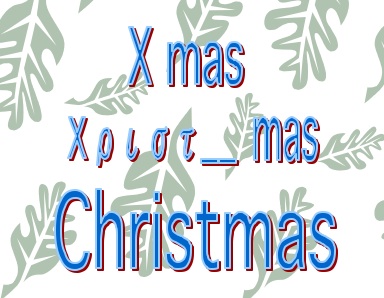 Some say that using Xmas instead of Christmas demonstrates the point that Christ has been removed from Christmas. When I was teaching mathematics, my students would sometimes point out to me that using Xmas instead of Christmas is similar to replacing a known quantity with a variable in an algebraic expression. These students would then try to use this thinking as a “proof” that Christ has been taken out of Christmas.
Does replacing “Christ” with an “X” in Christmas mean that Christ has been taken out of Christmas. NO! You see, Christmas originated as a compound word from the two words, Christ’s and Mass. As an English word, it is derived from the Middle English word, Christemasse and the Old English word, Cristes mæsse, a phrase first recorded in 1038 AD. “Cristes” is from the Greek, Christos and “mæsse” is from the latin word, missa (holy mass).
Ok, but where does the “X” come from? Using the Greek language, Christ is Χριστός. As you can see, the first letter of Christ, in Greek, is the letter “Χ” (chi). “X” has been used as an abbreviation for Christ since the mid-16th century. In the 16th century, there were many people, often illiterate, who found the “X” much easier to write and use than the name, “Christ.” And, of course, Xmas was, and still is often used as an abbreviation for Christmas.
So, does Christmas equal Xmas? Yes, and it has for over 400 years.
Are we taking Christ out of Christmas when we use Xmas. No, we’re just abbreviating Christmas.
Merry Christmas and/or Merry Xmas! :-)
Why Make Plans If Life Never Goes As Planned?
Posted on December 20, 2010 Leave a Comment
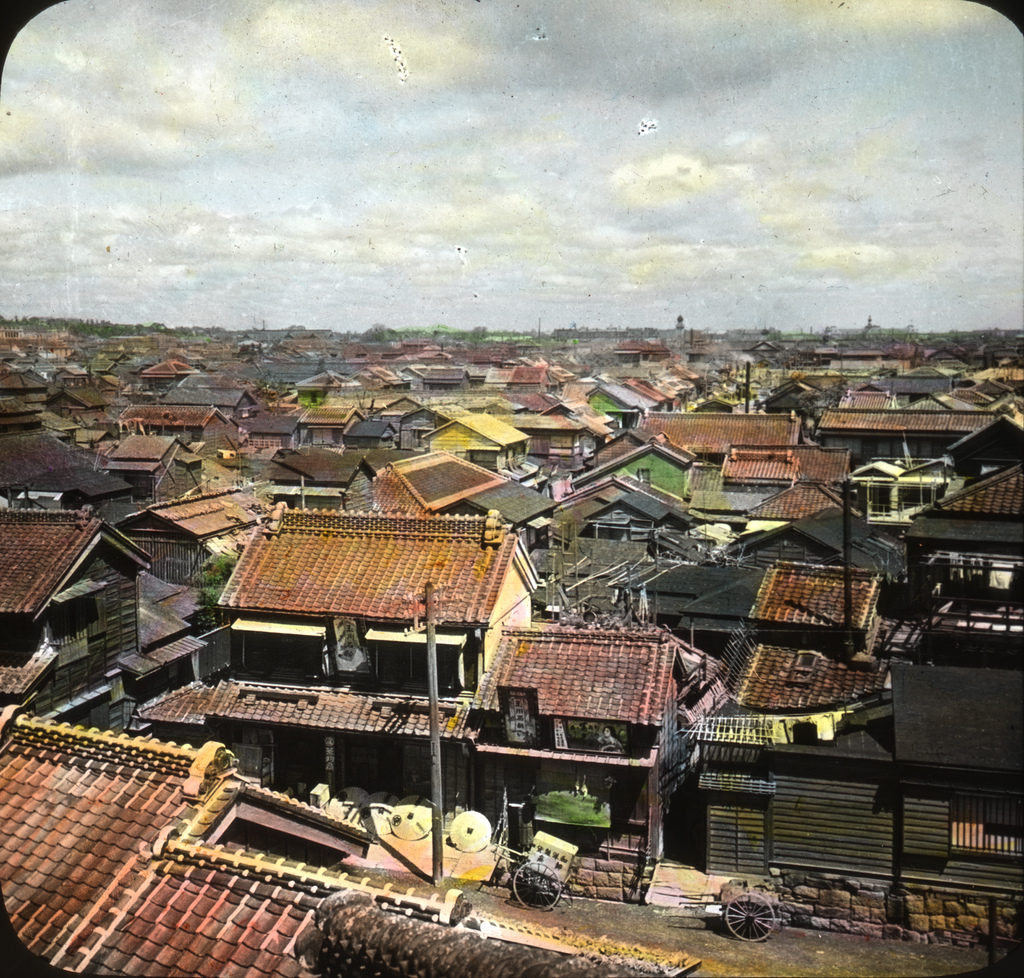
Tokyo in 1923 - What did they plan to do in the future?
Do you make plans? Do you think plans are stupid? I have known many who do.
As a teacher, parent and friend, I have encountered many who think that plans are unnecessary or just, plain stupid. Of course, most of the people who say plans are stupid are not talking about plans for everyday routine items, such as, getting dressed, preparing meals, etc. No, they are saying that planning your life is useless.
Why plan when you don’t have any real control over life? Why plan when things never really turn out like you planned? I’ll admit that in my own life, things never turn out exactly like I plan them. So why plan?

Tokyo today - Was this what they planned for?
What do I do that never works out? Well, I plan by making a goal, breaking it down into “pieces of action,” all designed to help me accomplish my goal over an estimated amount of time. And, then? Well, to put it bluntly, it doesn’t happen. So why plan?
What really happened with my goal and/or plan? Usually, when I accomplish my “much adjusted goal” and look back, I notice that some things took longer, some shorter, and frankly, some were not completed and didn’t need to be. So, why have a plan?

This flu virus has set me "off-plan!" :-(
A plan is still important because, in my opinion, I would not have reached my goal, if I hadn’t made the plan. It’s almost like the saying, “rules are made to be broken.” In one sense, of course rules are not made to be broken, but in another sense, they are. What I mean, is that most of the time, rules are made AND consequences are established at the same time. Why have consequences, if rules are not broken? In that sense, we have an example where plans (rules) are made to be broken.:-)
So, we need to make plans even though they will not necessarily be played out as planned. Think of it as life itself. Your body seems to have a plan, but it never plays out as planned. Your body has a built-in plan of eat, sleep, exercise, etc. and then, for example, a cold virus sets it off-plan. The plan has to be adjusted in order to keep you living. You do so and life continues, BUT not as originally planned. Therefore, life has a plan but it never works out as originally planned. Wow!
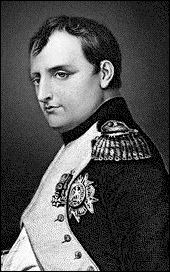
Napoleon's plans ran into Waterloo!
Now, let me make clear that I am NOT saying we shouldn’t plan. I am saying that we should expect our plan to always be faulty. A plan, even if it is faulty, still allows us to achieve our goal. In fact, a plan helps us get started toward change.
One way of viewing life is as a series of changes. Life implies change. A plan can help us to not procrastinate. A plan can help us go in the direction we want to go. A plan can help us decide and be comfortable with a decision, especially, when the situation requires a quick decision.
Why make plans? Perhaps, making plans actually improves one’s quality of life. Planning for quality? Uhmmmm…
I hope you plan to comment. :-)
Is Feeling Good Something That Just Happens To You?
Posted on December 16, 2010 Leave a Comment

Is this the way to make a "happy plan?" :-)
What makes you feel good? Who makes you feel good? Do you have any control over whether or not you feel good? I think these are all good questions and the answers to them can be revealing about whether or not a person is in charge of her/his own happiness.

When I crawl, I feel good.
Think of a time in which you felt good. Who was in control of what made you feel good? Was it you that made you feel good? Or, perhaps, you think that feeling good is something that just happens to you. Is it? If that’s true, then shouldn’t we all just sit and wait for good feelings? And, when you are feeling bad, shouldn’t you just sit and wait for it to pass? Don’t take a pain-killer for pain, just wait for it to pass. Don’t put on warmer clothes when you’re cold, just wait for it to get warm. Now, from my point of view, that kind of thinking is unrealistic.
So, is feeling good something that just happens to you? I don’t think so. I think we all need to make ourselves feel good. Please don’t assume that I’m advocating the consumption of alcohol, drugs, dangerous living, etc. as a way to feel good. Instead, I’m proposing that we make a plan for feeling good. Yes, I’m advocating planning, goal-setting and visualization for feeling good. In other words, a “pleasure-plan.”:-)

I feel good and it just happened to me!
Suppose you make a plan to feel good. What would the plan look like? Would it be a long list? Perhaps, it would be something that allows you four hours of uninterrupted listening of music. How about watching a special movie or cooking a special meal? Of course, you might make an elaborate plan which includes all of what was mentioned before. I’m sure each of us could create a refined plan for pleasure.
Creating the plan might be the easiest part. Actually, following through with the plan could be the most difficult part. You see, many of us feel guilty if we prioritize our schedule in such a way that we put our personal pleasure plan first. It seems to me, in today’s society, a plan that emphasizes personal pleasure is considered selfish and egotistical. Having stated that, what or who should be in charge of your happiness?

Some include this in their "pleasure plan."
It is possible that once in a while, feeling good will just happen to you with no planning. But, usually, if we want to feel good, we will have to do some planning. For example, if you like to travel and that makes you feel good, then you will most likely have to make travel plans. Or, if you enjoy listening to live classical music, then you will have to research where, when and how to attend a live performance. The point is that pleasure-plan is a natural and meaningful compound word!
Another reasonable possibility for your pleasure plan is to create an idea that improves something you are already doing and enjoy. We usually have to plan in order to feel good, so why not consciously make regular plans to do so? It would be a positive act of taking charge of our happiness and our lives.
Who should be in charge of your happiness? YOU!
If not you, then who else and why? I can’t answer because I don’t know. Do you?


 R2 Thoughts for You