 R2 Thoughts for You
Have You Entered The World Of Entropy?
Posted on October 16, 2009 Leave a Comment

Can Thinking Overcome Entropy?
“All things will pass.” “The only thing that doesn’t change is change itself.” “Nothing remains that’s not maintained.” The preceding quotes are all statements that I have used in the past. They all have to do with entropy. Entropy is a law of physics that asserts that all systems that are left unattended will eventually decay or “run down.” I think entropy applies to individuals and relationships. If I don’t maintain my body, it will breakdown. If I don’t maintain my marriage, it will breakdown. In fact, I’m finding it extremely difficult to find anything in my reality that entropy isn’t an integral part. What won’t “decay” if we don’t maintain it?
It seems to me that we can’t defeat entropy. At least, we can’t defeat it as a physical force. Having stated that, we should be able to rise to an expectation and realization that is untouched by entropy. You see, unless new energy is supplied, entropy will “win.” So if we want to continue to enjoy good lives, we must maintain them and pump new energy into them.

Do I Think OR Feel Lazy?
We are surrounded by creation and destruction. They constantly perform before us. I suppose this is one interpretation of Shakespeare’s statement of, “the world is a stage….” :-) In a way, I believe our thinking is immune to decay or entropy. Even though we are constantly making cells and losing cells, the intelligence our bodies use to make cells is always there. In other words, the knowledge of how to make a cell is passed on from one generation of cell to another. Wow, we have just left the world of entropy!

Is The Sun A Creating Or Destructing Force?
It is encouraging to think that we have at least some control over entropy. Of course, I’m talking about having control at the level of thinking. In fact, it’s there that we are able to change the things that are affected by entropy. Take, for example, trying to keep a healthy body. When we use our minds to rationalize how exercise and good eating habits help us keep healthy bodies, we find it much easier to overcome laziness and taste cravings that encourage entropy (an out-of-shape body).
Perhaps, this ability to rise above creation and destruction, gives us a way to break this “duality.” We don’t need to think in an either/or manner. We have more choices for life than creation or destruction. At least, we have one more choice – thinking! With our mind helping us maintain the elements in our life that are affected by entropy, we have a way out of the world of entropy.
So, if you have entered the world through the door of entropy, feel free to leave through the door of your mind. :-)
Do You Agree With The Readers Digest’s “Quotes On Education?”
Posted on October 13, 2009 2 Comments

The Educated Thinker!
Recently, I read a page of “Quotes On Education” from the Readers Digest. Having taught full-time for thirty-one years and often times using quotes on education in my writings to my students, I found their list to be interesting. It was my wife that pointed out the page of quotes. When she did, the first thing that came to my mind was, “this would make a nice posting for my blog.” Well, here it is! :-)
My format for this posting will entail using a quote from the Readers Digest and then follow-up comments by me. Hopefully, you find it interesting and insightful.
Another aspect of this post that I really enjoyed, was researching and reading the biographies of the people who were quoted. I included a link for each, for your reading pleasure. Of course, I have written in other posts about teaching, usually teaching mathematics, but this is the first time I’ve approached education from this perspective. Enjoy!
——————————————————-
“A good education is the next best thing to a pushy mother.” —Charles M. Schulz
There is an implication in this quote that a “pushy mother” is a powerful force in a life. I do find this humorous and valid to the extent that in order to be successful in life, we need to push ourselves like a “pushy mother” would be expected to do. In my experience, pushing yourself to study for the purpose of learning is a formidable and worthwhile task.
“[Learning] is the only thing which the mind can never exhaust … never fear … and never dream of regretting” — T. H. White
This is a very good statement with one exception. Learning is something that many minds easily fear. Why? For many reasons. Many fear the work involved. Many fear change, which learning is almost synonymous with. How can we learn without changing our mind?
“The whole purpose of education is to turn mirrors into windows.” —Sydney J. Harris (journalist)
This, of course, is using a metaphor to clarify the purpose of education. There is some merit to it, but I challenge the implication, as I see it, that education doesn’t include reflection. In my opinion, we need both, a “mirror and a window” in order to describe the purpose of education. I think the purpose of education is, “to turn mirrors into windows and windows into mirrors.”

Can S/He Think?
“Education is a progressive discovery of our own ignorance.” —Will Durant
This is another version of Socrates’ teachings of, “know thyself” and “the only thing I know is that I don’t know anything.” These have stood the test of time.
“I think everyone should go to college and get a degree and then spend six months as a bartender and six months as a cabdriver. Then they would really be educated.” —Al McGuire, basketball coach and commentator
I believe Al McGuire is referring to the value of empathy. Sometimes, before we are able to know what empathy is, we must experience what it’s like to be in “someone else’s shoes.” Though this is a way of developing the trait of intellectual empathy, I don’t think it is the only way. In fact, ideally, we learn without having to experience. Experience is important but not necessary. The next quote from Pete Seeger, gives a different, but relevant response about the role of experience.
“Education is when you read the fine print. Experience is what you get if you don’t.” —Pete Seeger
A “coming in the back door” view, but extremely insightful.
“That is what learning is. You suddenly understand something you’ve understood all your life but in a new way.” —Doris Lessing
A “cute” point of view that describes one aspect of education. I don’t think there is anything we really understand for all of our life. There is always a “time-before” we understood something. This is one of those quotes that offers a point of view describing what is sometimes called the “Aha” moment.
“The mind is not a vessel that needs filling but wood that needs igniting.” —Plutarch
I agree that comparing the mind to a vessel implies limits that don’t exist in our minds. Comparing to wood that needs igniting has value, but I think a better comparison would be to compare the mind to a plant that needs nurturing. I see our minds and learning as something that is constantly changing and needing nurturing like a growing plant.
“Education is what survives when what has been learnt has been forgotten.” —B. F. Skinner

The Thinker That Represents Us?
This is clever, but in my opinion, not true. Here is my version, “Education is what survives when what has been learnt becomes part of our thinking.” :-)
“Genius without education is like silver in the mine.” —Benjamin Franklin
I like this. An excellent metaphor that easily explains the value of education for anyone who is a genius or has a trait of genius.
—————————————-
Do you agree with the Readers Digest’s “Quotes On Education?” You know my thoughts. Of course, I just couldn’t answer yes or no. :-)
Please educate me with your comment. :-)
How Can We Give Peace A Chance?
Posted on October 9, 2009 Leave a Comment

The Peaceful Dove Of Acceptance
Recently, I read a quote from Ariane de Bonvoisin about peace. She said, “On the other side of acceptance is where peace exists, where solutions are.” The quote was taken from her book, The First 30 Days: Your Guide to Making Any Change Easier. After reading the quote, I became curious about this concept called “peace” and what it really means to me. You see, on the surface, I think the opposite of peace is war. Now, I realize that if we don’t have war, we still might not have peace. On the other hand, if we consider absolute opposites, then I guess war does mean the absence of peace.

Resistance ≠ Peace
But, let’s think some more about peace. I suppose we cannot have peace without a great deal of acceptance. If acceptance is where peace exists, then wouldn’t we have to include change as a necessary part of peace. As people attempt to make peace, they must at least be willing to change their minds. Before we can change, we must have acceptance of current reality. And what is the opposite of acceptance? Well, of course, resistance.
Resistance stops change, peace, progress, and in general, growth. Think about it, don’t we see resistance at the root of all “un-peaceful” situations. Consider all of the “wars” we are involved in. Iraq and Afghanistan both have resistance as a reason why there isn’t peace in those two areas of the world. We sometimes call it insurgency, but it’s nothing more or less than resistance. If the “insurgents” wouldn’t resist we would have peace. How about the “war on drugs” or “the war on poverty?” Again, resistance plays a big role when considering the purpose for the wars. If there wasn’t resistance to avoiding drugs or “sharing the wealth” we would have “peace” on those two fronts.
So, how much power is there in “acceptance?” Before writing this, I never thought much about it. I remember using the old sixties/seventies “song quote” from John Lennon, “give peace a chance.” I guess instead of acceptance, I focused on peace. “Just be peaceful,” was my answer to most “war-like” occurrences. Perhaps, if we consider that peace is on the other side of acceptance and focus on acceptance first, then peace will follow more easily.

Let’s Give Peace A Chance!
Let’s consider an everyday personal example. I remember when I first started teaching. I told everyone that I would only teach for a few years and then would leave to find a better paying job. I was resisting the job of teaching because I felt it didn’t pay enough. In fact, I remember being embarrassed that many who had graduated with me from college were making twice what I was making. I would often use a quote by Miguel de Cervantes from his novel, Don Quixote, “that which cost little is less valued.” I felt, as a teacher, I was not valued enough. After resisting the profession for a few years, I realized that though the pay was not comparable to those in other professions, there was more than pay that should be considered. Other than the pay, my “job satisfaction” was high. I came to an acceptance of the job of teaching. When I accepted it, I was at peace with the job and myself. And, when I gave peace a chance, I never considered any other job until I retired. The point is, acceptance came before peace.
Instead of resistance, I think we need to focus on changing our thinking to one of acceptance. When working toward peace, we need to focus on acceptance. When trying to focus on acceptance, appreciation and “the present” must be in the forefront. We need appreciation for the life we have and realize that we live only in the present. Appreciation leads to acceptance and peace can only exist in the present.
So, if you want peace, don’t resist, but instead, look for acceptance. If you want acceptance, then appreciate and be present in the present!
Give peace a chance and R2 a comment! :-)
Does Can’t Mean You Don’t Want To?
Posted on October 6, 2009 Leave a Comment

“Can’t” didn’t get us here!
As a young man, my dad used the saying, “can’t means you don’t want to,” many times when responding to my statement of, “I can’t …”. I remember feeling angry when he would constantly say “can’t means …” to me while I thought I was, proverbially speaking, “stretched as far as I could be stretched.” I felt he didn’t understand my lack of strength, desire, will, motivation, or in general, my inability to actually do what he wanted me to. I now realize he had a point, though I still think he should have given more consideration to my age and immaturity.
Taking into consideration and in spite of what I just wrote, the words, “I can’t” are not necessarily reflecting what it means to be human. If we look at human history, we immediately see it as one of constant improvement of the human experience. Humans are constantly driven toward progress. A saying that I have often used is, “learn from the past, live in the present and make the future better.” That saying “speaks volumes” to valuing progress. We really don’t, as a human race, accept the words, “I can’t.”

The silk road wasn’t formed by “can’t.”
We are constantly working toward improving the status quo. The words, “I can’t” will simply get in the way of normal human behavior. Think about it. If humans had allowed “can’t” to get in the way, then the Greeks, with less than 6000 adult male citizens, wouldn’t have had the impact on democracy we now realize. The sea trade by the Phoenicians, the Silk Road from Asia Minor to China and the “discovery of America” wouldn’t have happened. There would have been no light bulb, no telephone and no automobile. Accepting “I can’t” means no written language, no music, and no books. Human history only reflects an “I can” attitude. Of course, there are set-backs, but we still, as a human race, tend to manifest an “I can” kind of history.
We have a need to grow, to experience achievement, to realize fulfillment and to be better than we were before. As we look at our history, we realize that we are indeed unique in having the trait of always expanding our knowledge. There is no group of animals, other than humans, that have planned and completed visits to faraway places like the moon. We are truly unique with this “I can” attitude.
If my dad was alive now and I told him “I can’t,” I’m sure he would still say “can’t means you don’t want to!” Guess what? I now think I agree with him and would say, “thanks for reminding me that I can!” You see, it’s only human to say, “what if I can?” Yes, I can!
I just realized this is sounding like President Obama’s campaign slogan. Yes I Can! :-)
Can you, or can’t you give a comment? :-)
Can You Imagine Not Having An Imagination?
Posted on October 3, 2009 3 Comments

Imagine Having No Imagination!
Do you have an imagination? Of course you do! Isn’t an imagination as fundamental to a human being as breathing? How could we possibly do any planning without using our imagination(s)? How could we think about the future without using our imagination(s)? We all use our imagination(s) regularly and often times, subconsciously. We sometimes refer to imagination by other names that describe the “kind of imagining” we are doing, such as: day-dreaming, wondering, visualizing, imaging, picturing, supposing, etc….

I’m Looking For My Imagination!
So, how do you use your imagination? Are you using it to help you get the results you want in the future? If not, why not? I think we should use an active imagination to help us live a fulfilling and complete life. Imagining or visualizing the future we want, helps us set a life journey that leads down the path of our desired future. Otherwise, we end up at the mercy of luck or chance. I don’t know about you, but I’m not very lucky when it comes to life endeavors involving chance.
What about the title to this posting? Can you imagine not having an imagination? Of course not. If you imagine then you have an imagination. If you don’t have an imagination, then you can’t imagine! The question we should be asking ourselves is, “how can we use our imagination to help us get the results we want for the future?”

I’ll Just Visualize My Imagination:-)
High-performance athletes have been using this for a long time. They often imagine or visualize the result they desire before attempting it. This, of course, is not only for athletes. If anyone wants to improve in any endeavor, then using the imagination to visualize the outcome is a proven approach to increasing the rate of success. Visualization techniques are not hard to learn. In fact, you already use them when you use your imagination. The important thing is to have conscious control over your imagination and visualization.
When I try to imagine that I don’t have an imagination, I “see” a confused and mindless person. What do you see?
Are You Right, Wrong Or Normal?
Posted on September 30, 2009 Leave a Comment

Is this right, wrong or normal attire?
Are you ever wrong and have a hard time admitting it? If you answered yes to the previous question, then why do you have a hard time? Is it normal to not ever be wrong? Of course not. Is it normal to to not ever be right? Of course not. Is it normal to be normal? Of course!

Garrison Keillor – “all the children are above average in Lake Wobegon!”
Ok, so why do we have such a hard time admitting we are wrong? We all make mistakes, no matter what some people would like for us to believe. It is true, that most successful people are more likely to be wrong now and then due to their ability of not being afraid to take risks. Great inventors, explorers, scientists, composers, etc. have made many mistakes or wrongs before they finally experienced success or “a right.” No one necessarily enjoys being wrong or making a mistake. Everyone, no matter what anyone tries to make you believe, is wrong from time to time. Being wrong, if you are not careful, can affect how you feel about yourself. It’s important to realize that being wrong and right are both normal everyday occurrences for humans.
I think if you have a difficult time admitting you are wrong, then you may be struggling with a self-esteem problem. The problem, it seems to me, is that you are uncertain about your self-esteem. You are lacking in confidence and satisfaction regarding yourself. Ouch! Perhaps, this is why we find children not owning up to their mistakes.
The young minds of children feel that their self-worth depends upon their self-esteem which depends upon being right. They, as young and inexperienced people, don’t have the experience of life to judge what is and isn’t normal. Hummmmm…. I guess that is what what Garrison Keillor meant when he said “all the children are above average.” :-)

You have a right to be wrong!
Perhaps, the main problem with admitting you’re wrong is a lack of humility. When you make a mistake, admitting you’re wrong and not allowing your pride to lower your self-esteem, are the two key factors in dealing with the “wrong” or mistake. This is not as hard as many think it is. Simply admit the mistake by saying something like, “I admit I am wrong and I thank you for correcting me.” Or how about, “You’re right, I was wrong about that. I’m going to learn from this mistake!” When you do this, you are proclaiming to the world that you are a normal imperfect person. When you do this, you give others the opportunity and permission to do the same. In fact, this so-called weakness of “imperfection of being wrong” can actually become enduring qualities of humility, dignity and lovableness.
When we openly admit we are wrong, we are doing the right thing – which is always more important than being right!
What’s So Great About Boone, Charleston And Hilton Head?
Posted on September 27, 2009 Leave a Comment

The Blue Ridge Mountains of Boone, NC. Do you see the “blue ridge?”

Entering The Great Smoky Mountains. Does It “look smoky?”
September 1 to September 13, 2009, was the time span of my last vacation. My wife and I spent two days in Boone, NC, one day in Charleston, SC and one week on Hilton Head Island, SC. This was a driving vacation which resulted in our staying overnight in Knoxville and Chattanooga, TN, as well. It was the third time we have visited Charleston and the sixth time we have spent at least a week on Hilton Head Island. Obviously, we like those two destinations. :-)
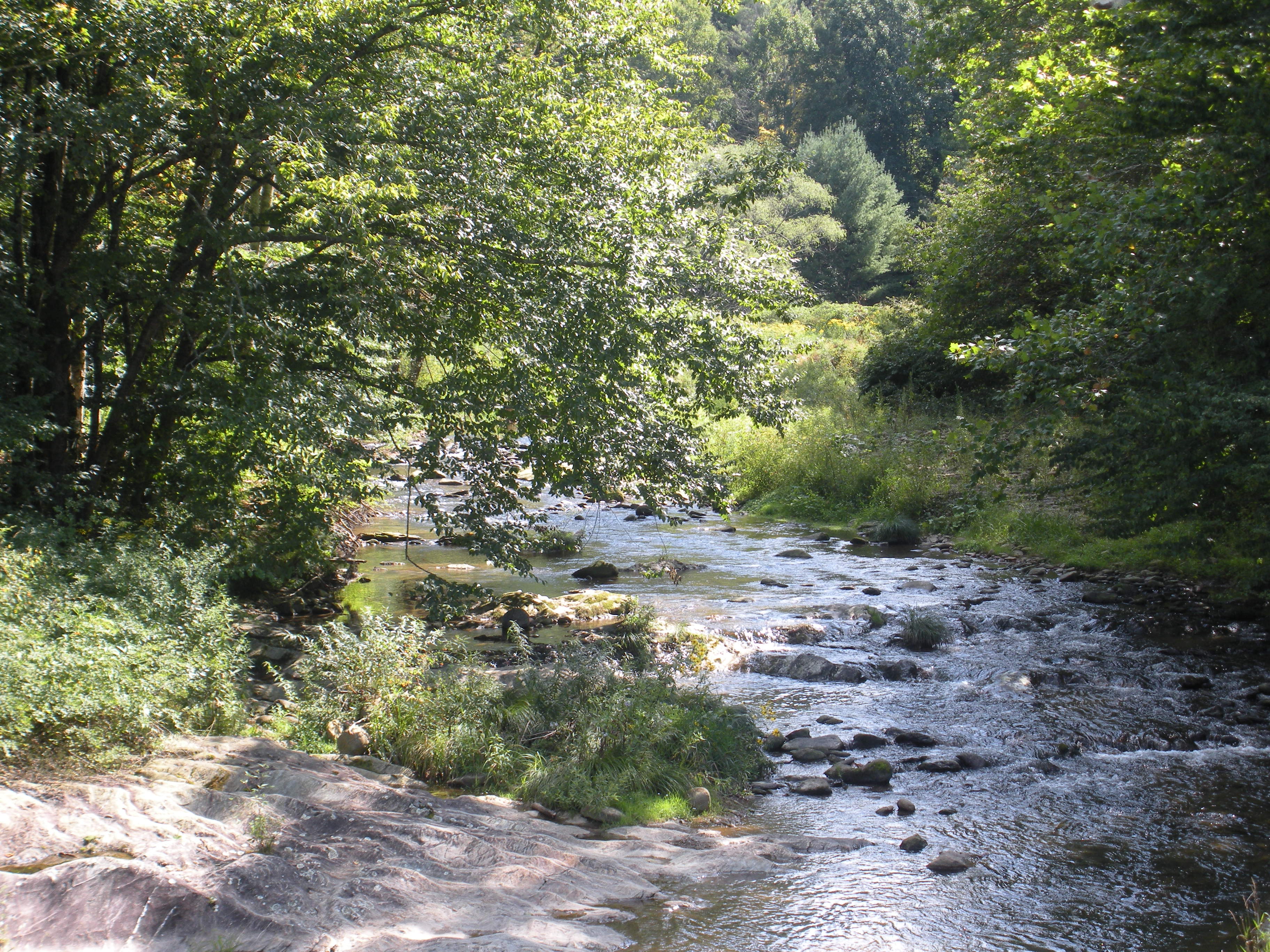
A Blue Ridge Mountain stream behind our friend’s house.
The first day was spent driving to Knoxville, TN. We rested there for the night after a meal at Puleos Grille. The next morning we drove south and east through the Great Smoky Mountain National Park, Asheville, NC, and to Boone, NC. My wife and I have a friend who lives in Boone, NC. We spent two days visiting, sight-seeing in the Blue Ridge Mountains and learning about how our friend does hand-weaving.

Our “weaver” friend’s workshop.

View from our Courtyard Charleston room.
On September 4 we drove to Charleston, SC, where we stayed at the Courtyard Charleston Waterfront. That evening we went to the old part of Charleston for an “unscheduled” French Quarter Art Walk, some shopping and a nice meal at Magnolias restaurant, one of Charleston’s most popular restaurant which is located at the site of the city’s original Customs House (circa 1739). Later that evening, we returned to the Courtyard where I had a white russian literally made by a white Russian. You see, the bartender at the Courtyard was a young white woman from Russia and, well, you know the rest. :-)

Our view from our villa!
After breakfast the following morning, we drove to HIlton Head Island. We had a villa at the Marriott Grande Ocean Resort reserved for the week of September 5 – 12. Upon arriving at the resort we immediately rented bicycles for the week, stocked up on supplies for eating and drinking and I discovered that I left my extra shoes at the Courtyard in Charleston. That meant I had only one pair of shoes for the week. Really, what that meant was that I would have to buy a pair of shoes real soon. :-) I did on Monday at the local outlet mall.
Our week on Hilton Head Island was filled with lots of bicycling, partying with friends, golfing, going out to eat and relaxing. Some of the pictures on this posting give you a visual idea of what it was like.

Biking on the beach of Hilton Head.
We left Hilton Head on Saturday, September 12, and drove to Chattanooga, TN where we had dinner at Portofinos, a restaurant owned by Greeks that serves Italian and Greek food. We have eaten there enough that we now “sort of” know the owners. After a night’s rest, we returned to St. Louis on September 13.

The majestic Atlantic Ocean.
Every vacation starts and ends the same way for me. I’m always happy to leave home and go on vacation and happy to “vacate the vacation” and come home. What’s so great about Boone, Charleston and Hilton Head? It was my latest greatest vacation! :-)

Sunset over Dafuskie Island as viewed from Hiliton Head.
I hope you enjoyed the pictures. There are more photos on my website. Simply point your browser to R2’S PHOTO ALBUMS after arriving at the site. Also, please forgive the format of this post where the “words are woven through the pictures.” I guess this was inspired by our friend, the “Boone Weaver.” :-)
Should We Teach Children How To Deal With Anger?
Posted on September 24, 2009 Leave a Comment

Anger And Violence!
Recently, here in the St. Louis Area, we had an incident on a school bus involving anger and violence. Some reported that the incident was racially motivated. I, personally, do not condone excessive expressions of anger or any violence, period. Having stated that, I think, as many have already said, this is a teachable moment. The “incident” involved a white seventeen year-old and a younger black student. The younger black student “beat-up” the older white student while being filmed by a remote video camera on the bus. Some have claimed it is a “bullying” incident. This may be true, but it does have some unusual circumstances for “bullying.” In the video, a black student with many other black students cheering him on, is constantly hitting on a white student. The white student is older than the black student. The white student appears to be a racial minority on that particular bus. I mention all of this for context. At this time (9/22/09) some students have been expelled over the incident and it has been debated locally and to a lesser degree, nationally.

I’m just angry, but not violent.
My intent here is not to level blame or debate the issue. I am writing about whether or not we should teach children how to deal with anger. As a parent, grandparent and retired teacher, I have had to deal with many cases of inappropriate expressions of anger and violence. As a teacher, I remember many students justifying their violence by saying their victim(s) made them mad or angry. In other words, they did not feel responsible for their anger, but instead, felt the victim(s) of their violence caused them to be angry and therefore, they had a justifiable right to be violent. It’s this aspect of the thinking behind anger that I feel we should try to turn into a teachable moment.
It’s not a secret that there are a lot of angry people in today’s world. Many adults personally and openly expressed anger to children without any reservation. And the adults who openly express their anger to children via the media, make angry role models for all children observing that media. I think all of us, not just the teachers, parents and grandparents, should be concerned about teaching the children how to deal with anger in nonviolent ways.
Before I go any further, let’s establish what violence is. Besides directing your browser to the hyperlink in the previous sentence, please also consider my definition of violence, which is: any expression of extreme anger that hurts another. For any person who cares about another, violence is an outcome of anger that the person would not want those s/he cared about to experience.

My programming doesn’t allow me to be violent.
In my experience, I have not found many who really know what to do about the anger and violence. Many simply say, “Don’t treat people this way,” or “Don’t act that way.” But this has little effect unless they actually differentiate between what they feel and how they behave. You see, all of us will have violent feelings now and then, but there is never a time when we should act out, condone or tolerate violent behavior.
It’s important that we, as a society, “buy into” setting a good example. Yes, that means, all of us, all of the time. Our goal, as a civilized society, is to not condone violence. This means our media must also set a good example, since it is part of our society. In my opinion, there is entirely too much violence openly expressed in our society. Many films, plays, games and life-styles are based on violent experiences. Anger is shown as preceding violence and violence is justified by anger. When our children see and experience this, they are naturally in the process of learning. But, what are they learning? They are learning what we are modeling; they are learning that anger leading to violence is normal and to be expected. Somehow, we have lost the “civil” in civilization!
Let’s give the young people good examples of adults who keep their own tempers under control. Let’s set fair, but firm limits on how they can express hostility and violence. Of course, we do need to provide some safe outlets for expressing their hostility. They should be encouraged to “talk it out.” When dealing with someone who is angry, we need to recognize that s/he might want to harm another person. That doesn’t mean we would condone it; it only means that we are empathizing with her/him. We should be firm in that we can’t allow them to hurt someone. Violence is not a “right” thing to do, period! We need to constantly try to channel the negative energy of anger into something more positive such as understanding and compassion.

Don’t worry, I’m only a mad scientist :-)
Finally, I think it’s important to emphasize that we are responsible for our own emotions. No one can make you mad or glad. You make you mad or glad. You have control over your emotions. No one but you can make you angry. I realize it is not always easy to feel this way, but how else can we ask someone to be responsible for their behavior. Are we going to expect people to be responsible for the results and not require them to be responsible for the thinking that caused the results?
Should all in a civilized society teach children how to deal with anger? YES!
What’s An Easy Way To Give Much Needed Attention/Recognition?
Posted on September 21, 2009 2 Comments

We want recognition and/or attention!
When you want recognition, what do you do? When you want attention, what do you do? You DO want recognition and/or attention, at least once in awhile, don’t you? In case you are one of the few who don’t, then please use your best empathetic thinking to think about recognition/attention and those who want it.
As I think about recognition and attention, the first thing that comes to mind is the strong desire that children have for it. Is it recognition or attention, that children have a strong desire for? What’s the difference? Of course, you the reader, can direct your browser to the two hyperlinks in the previous sentence in order to read a Merriam-Webster’s Online Dictionary definition of each. But, what are the differences to those of us who do not always refer directly to a dictionary for the meaning of words?

This is our kind of recognition :-)
Perhaps, little children seem to want attention more than recognition. They will misbehave, whine, throw a tantrum, etc. When they act inappropriately in that manner, do they want attention or recognition? Well, I guess they want you to give them recognition so they have attention. :-) When you recognize them, they feel they have your attention.
How about adults? Do they have the same needs that children do? Yes, I think so. On the other hand, they usually don’t act out in the same way. Instead of misbehaving, whining, and throwing a tantrum, they will become withdrawn and apathetic. This is what happens in a lot of relationships. Little recognition and attention results in one or more members of the relationship becoming withdrawn. Then, of course, there is less relating and less attention and less relating and less attention, ….
So what is an easy way to solve the problem of too little attention or recognition in a relationship? One small and simple way to help with the problem is to adopt the “lesson” behind a simple statement. Following the message of this statement assures that you are giving attention and recognition. What is that simple statement, you ask? It is: “Be Present In The Present!” When you are with the people you are relating with, actively look at and listen to them.
Be present in the present!

We are present in the present!
*Simple? Yes!
**Easy? Perhaps!
***Worthwhile for a healthy relationship? Absolutely!
Please consider giving me a present by presenting me with a comment in the present. :-)
What Do You Know About Your Feelings Of Awe?
Posted on September 17, 2009 4 Comments

R2(on right) and cousin use the “awesome” view of the Alps from outside Filzmoos, Austria as a backdrop.
I have heard that many who attend church and believe in God, get a feeling of awe and know they are in the presence of God while at church. I don’t doubt they think and/or believe that God is the cause of their awe, but I know I have had such feelings when I’m nowhere near a church. As I have stated in an earlier post, I’m unsure of what to believe regarding God and religion and therefore, assume I’m agnostic. In fact, I wrote that post attempting to explain my beliefs or lack thereof.
Let’s explore this feeling of “awe” that was mentioned earlier. I’ll admit that when I attend a church service and the congregation is, in unison, chanting and singing, that I get a feeling which is best described as joy, glory, or yes, awe. Now, when I see a majestic mountain, a beautiful rainbow or a painted desert scene, I also have an awesome experience. Of course, all of these are the direct products of Mother Nature and often times are directly attributed to God. But, what about the feeling of awe that I have when I see the St. Louis Arch? Or, what about the awesome feeling I have when I see a good uplifting movie? My point is that just because a feeling of “awe” is experienced, there is no way for that to be proof of the presence of God.
Before I go any further, I would like to explain my feeling of awe. It isn’t always the same and words seem inadequate. Sometimes, there is a sense of lightheadedness. Sometimes, there is an overpowering sense of warmth going through my entire body. Sometimes, it is an uncontrollable urge to smile. A specific example where I had all three of the previous descriptions of “awe” occur was when I saw the majestic Alps from the small ski village of Filzmoos, Austria. My wife and I were there in September of 2001 with relatives who usually visit the village during ski season. Of course, there wasn’t any snow in the village at that time of the year, but the mountains that surrounded it were snow capped and “awesome.” That visit stands out in my mind as a time when I had this feeling of awe and I knew, at the time, that I would most likely never experience anything quite like it again. NOTE: The picture at the beginning of this posting is a small example of what I saw, but of course, doesn’t capture the entire feeling. Of course, I have had and will have more feelings of awe, but I’m sure they will be considerably different than that one. Was this feeling reflecting the presence of God or the presence of an uplifting sense of self where I felt this was a unique special time in my life? I think the latter.
I can understand how, due to the lack of being able to explain exactly what causes them, we might attribute these feelings to a higher being. The “agnostic” in me allows for a response of “I just don’t know.” On the other hand, it does not allow me to rationalize that such feelings are proof of a God’s presence. Everybody – Christians, Zoroastrians, Muslims, Jews, Buddhists, Mormons, Hindus, Scientologists, atheists, agnostics, etc.- have these feelings of “awe.” What do these feelings prove? I guess only God knows. :-)
What do you know about your feelings of “awe?”


 R2 Thoughts for You